TAKE-OFF: Supporting aviation in replacing fossil jet fuel
Guest/partner contributor
Posted on: 10 September 2024
The TAKE-OFF project aims at improving the efficiency of the sustainable aviation fuel production chain and ultimately contribute to achieving aviation carbon neutrality.
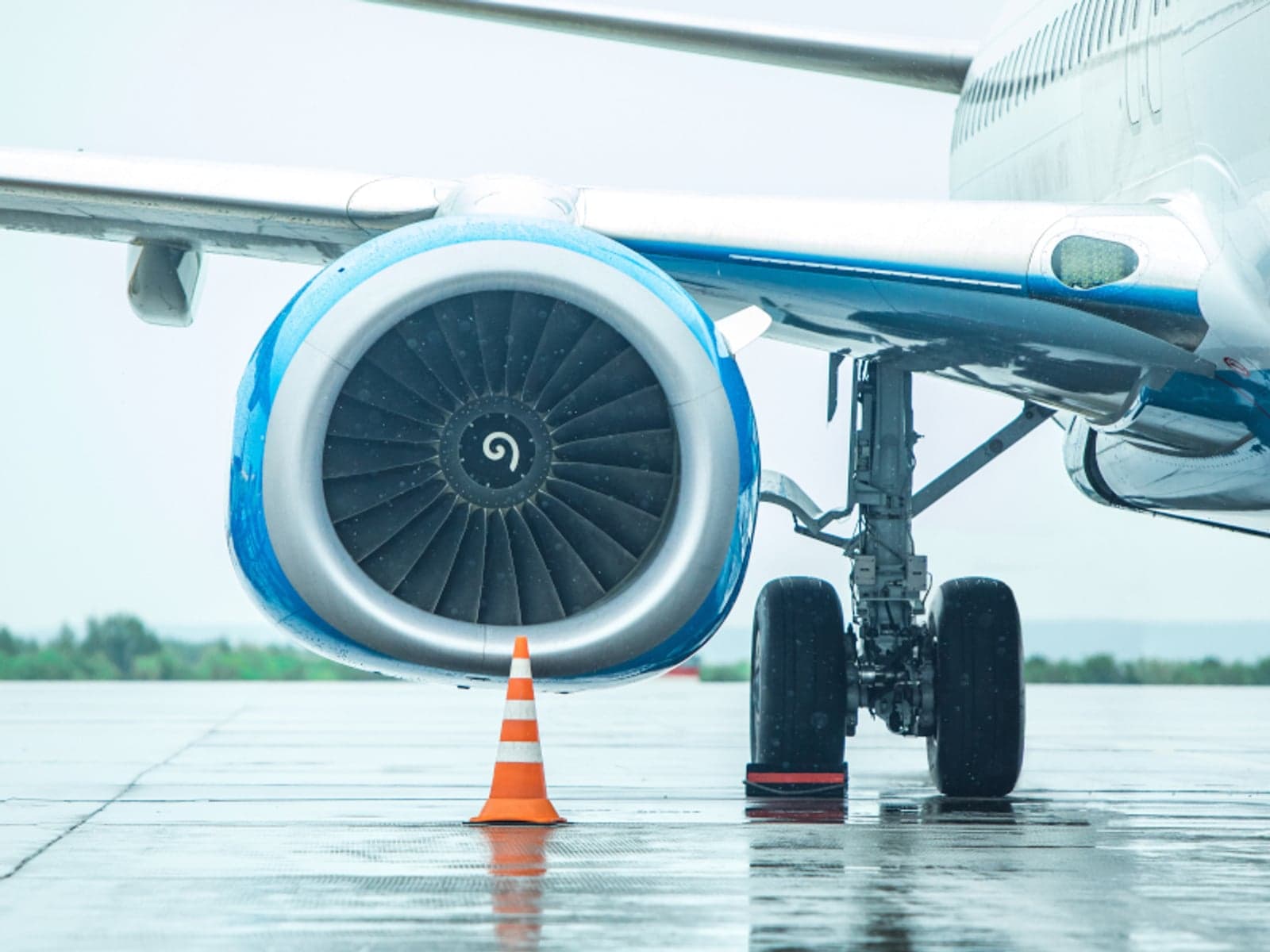
The TAKE-OFF project aims at improving the efficiency of the sustainable aviation fuel production chain and ultimately contribute to achieving aviation carbon neutrality.
Funded by the Horizon 2020 EU program, the project explores the development of a unique technology based on the conversion of carbon dioxide (CO2) and renewable hydrogen to Sustainable Aviation Fuel (SAF).
Today, human activities are emitting close to 60 gigatons of greenhouse gases per year, largely as a result of the combustion of fossil fuels for the generation and use of energy. This enormous amount of CO2 emissions is identified by the international scientific community to be the cause of unequivocal changes in our global climate and the degradation of life on Earth.
To mitigate climate change, the urgency is to reduce emissions, as well as to substitute fossil-based products by implementing circular carbon solutions to generate essential everyday goods and services.
Harnessing carbon capture for sustainable aviation
Solutions exist nowadays in all economic sectors to implement mitigation pathways. Among them, Carbon Capture and Utilisation (CCU) applications are a crucial array of technologies capable of capturing CO2 either from the atmosphere or from flue gases and converting it into essential carbon-containing substances or products such as chemicals, fuels or building materials. This can substitute fossil-based products with functionally equivalent ones and result in significant reductions in CO2 emissions. CCU can be especially useful for those sectors where more conventional mitigation options, such as electrification using renewable energy sources, are particularly difficult to implement.
Among the so-called hard-to-abate industries is aviation. Whereas vehicle electrification is one of the most promising ways to decrease carbon emissions from the road transport sector, fully electric aircraft would require batteries that would be too heavy at the current technology levels.
Find out more about:
EU-funded energy projects
Building Milan’s net zero airport of the future
Airbus and TotalEnergies partner on sustainable fuels
Aviation biofuels (i.e. fuels derived from biomass) constitute today less than 1% of total aviation fuels and it seems hard to significantly increase their production without impacting heavily on land use and food production (Tudge et al., 2021).
Power-to-SAF: A pathway to carbon-neutral aviation
In this context, a substantial part of SAF could be produced by using CCU technology pathways. Such synthetic fuels would therefore replace a portion of fossil jet fuels significantly reducing aviation’s carbon footprint.
The production of such CCU fuels is based on Power-to-X processes, i.e. the use of captured carbon dioxide and renewable electricity to generate renewable hydrogen from water and convert these molecules into products (X), such as hydrocarbons. These renewable fuels of non-biological origin (RFNBOs) do not compete with the food chain and are produced from readily available compounds, water and CO2. Nevertheless, the large-scale deployment of RFNBOs is still hindered by their relatively large cost and energy needs.
Innovation for greener aviation: The TAKE-OFF Project
Against this context, the TAKE-OFF project aims at improving the overall efficiency of the aviation CO2 -based SAF production chain and ultimately contributing to achieving aviation neutrality and a circular economy in view of 2050.
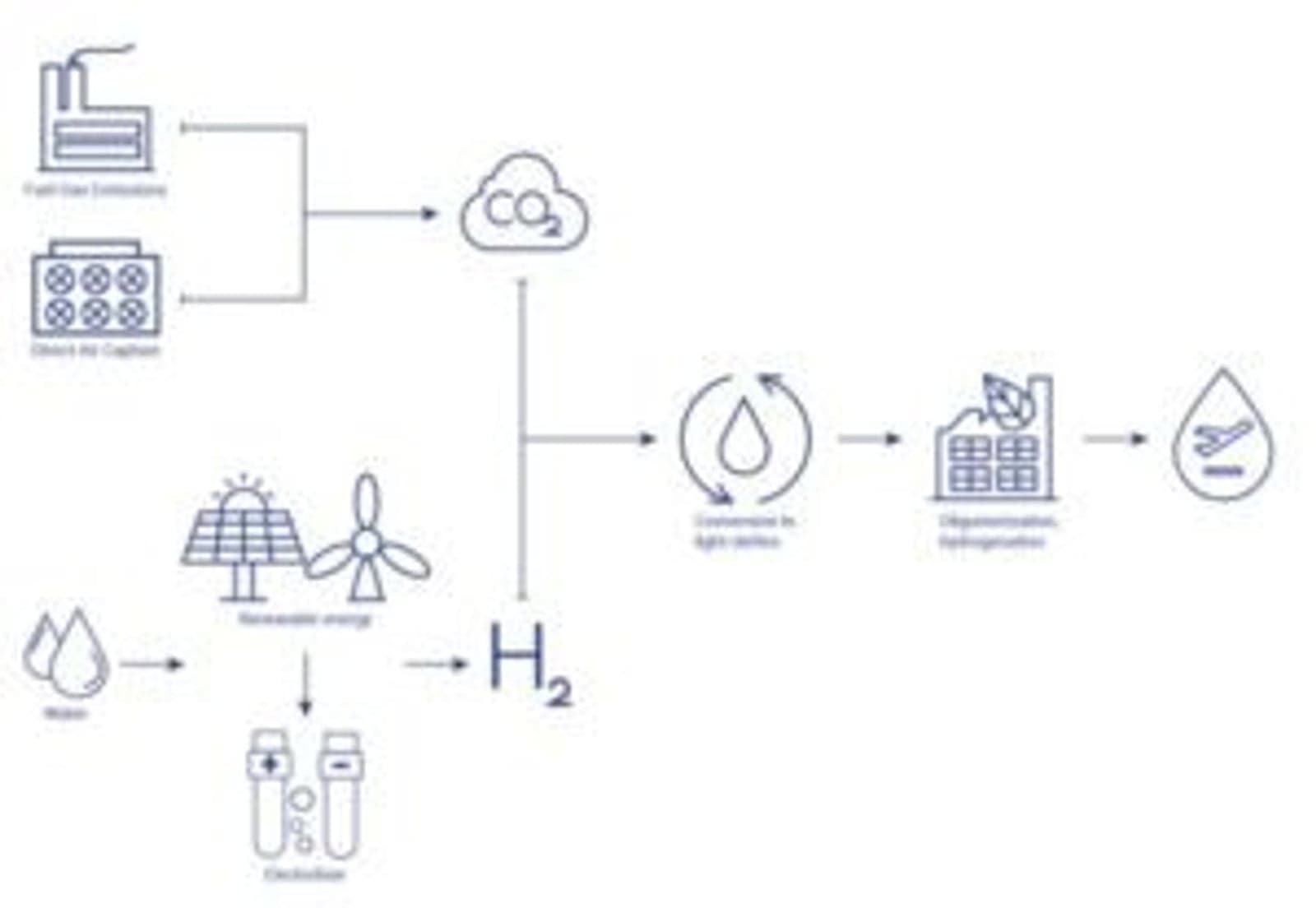
The project plans to develop a next-generation Power-to-SAF process which converts renewable hydrogen and captured CO2 to a class of hydrocarbons called light olefins, such as ethylene and propylene, which then need to be subsequently converted into the final jet fuel through further reactions. For this process, a key parameter is the use of substances such as solvents and catalysts to control and facilitate the chemical reactions.
By intervening in this parameter, significant reductions in energy needs can be achieved:
- The oligomerisation reaction temperature can be lowered, which brings considerable efficiency gains since the energy needs increase with the reaction temperature.
- The optimisation of the TAKE-OFF catalysts not only increases the conversion rate of hydrogen and CO2 into sustainable aviation fuel but also allows to increase in the purity of the final product, reducing subsequent postprocessing operations which are very energy-intensive.
- The use of solvents is altogether avoided in the reactor of the TAKE-OFF project. In this way, the energy needed to heat and regenerate solvents can be spared.
It is estimated that the TAKE-OFF process will lower the cost of the fuel by 25% compared to other sustainable aviation fuels.
Moreover, the composition of TAKE-OFF’s proposed synthetic fuel will achieve lower engine out emissions. The reduction in sulphur emissions with respect to fossil jet fuels is 100% because a general synthetic fuel has no sulphur component emissions, particulate matter emissions will be lower because of technological improvements, and net emissions over the whole lifecycle of the fuel will also be reduced as the fuel is produced from recycled CO2 and renewable hydrogen.
The achievement of this research project will demonstrate on a small scale the economic and environmental advantages of this particular synthetic SAF, thus potentially laying the foundations for a generalisation of the production of such fuel on a larger and industrial scale.
About the Authors:
Antonio La Mantia, Director of Communications and Events at CO2Value Europe.
Pietro Guarato, Technical Officer at CO2 Value Europe.
References:
Tudge S.J., Purvis A., De Palma A. (2021). The impacts of biofuel crops on local biodiversity: a global synthesis. Biodiversity and Conservation 30:2863–2883.
Most popular
Join the community for freeAnd get access to all content
Related projects
TAKE-OFF
1 January 2021 - 31 December 2026
View project