How to embrace circularity in wind power
Guest/partner contributor
Posted on: 9 November 2023
With wind power capacity expected to increase manufacturers are developing circularity solutions to make turbines with a net zero carbon footprint.

With wind power capacity expected to increase exponentially, manufacturers are developing circularity solutions to make turbines with a net zero carbon footprint. Maximilian Schnippering of Siemens Gamesa explains how these breakthroughs are happening.
Over 30 years ago, the world’s first offshore wind farm was built in Denmark. The 4.95MW Vindeby project featured 11 first-of-a-kind wind turbines, produced by a small Danish manufacturer called Bonus Energy.
It’s perhaps apt then that all these years later, Denmark will be the location of another wind power milestone.
In 2027, RWE’s Thor wind farm, located approximately 22 kilometres from Thorsminde on the west coast of Jutland, will be the first project to feature both fully recyclable wind turbine blades and turbine towers made in part with pioneering low-emission steel.
Once operational, the project will be proof that circularity in wind power is possible.
Why wind power needs circularity
Wind turbines are already very sustainable. Compared to gas or coal power plants, their carbon footprint is extremely low. In fact, around 94% of the structure is already commonly recycled, which is often more than in other sectors that use the same materials, such as aerospace and automotive.
Nevertheless, to limit global warming, industry must go further. It must start to incorporate circularity in everything it does, which is to create sustainable models for eliminating waste, reusing all turbine components and extending the lifetime of the existing turbines.
One key area of focus are the blades. In the past, and even sometimes today, many wind turbine blades were, unfortunately, sent to landfill. Their tough fibres and hardy plastic resins make it difficult to sustainably separate the different components for recycling at the end of their life to use as feedstock for new blades.
Turbine blades’ 25-year lifespan and the industry’s comparative youth mean this is not yet a major issue. But given the large targets for installed gigawatts – the EU alone needs 451GW to meet its renewable energy target by 2030 – if no action is taken, it will be.
For example, according to industry trade body WindEurope, the number of blades retiring every year could reach 52,000 tonnes by 2030.
Keen to ensure that the wind industry remains at the forefront of sustainability, WindEurope, supported by its members including Siemens Gamesa, in 2021 called for a Europe-wide landfill ban on decommissioned wind turbine blades by 2025. Austria, Finland, Germany and the Netherlands already have a ban in place.
This is the direction that industry should be heading. European governments, including Germany, the UK, France and the Netherlands are mulling a shift in auction programmes to include non-price criteria such as sustainability, a move that should happen sooner rather than later.
This article is part of the ‘Future Energy Perspectives’ series on Power Engineering International, in which experts from Siemens Energy share their insights into how we can move towards a decarbonised energy system.
Industry’s first recyclable wind turbine blades
While a clear framework that incentivises investment in sustainability along the lifecycle of a wind farm is not yet in place, the technologies to deliver that sustainability already exist.
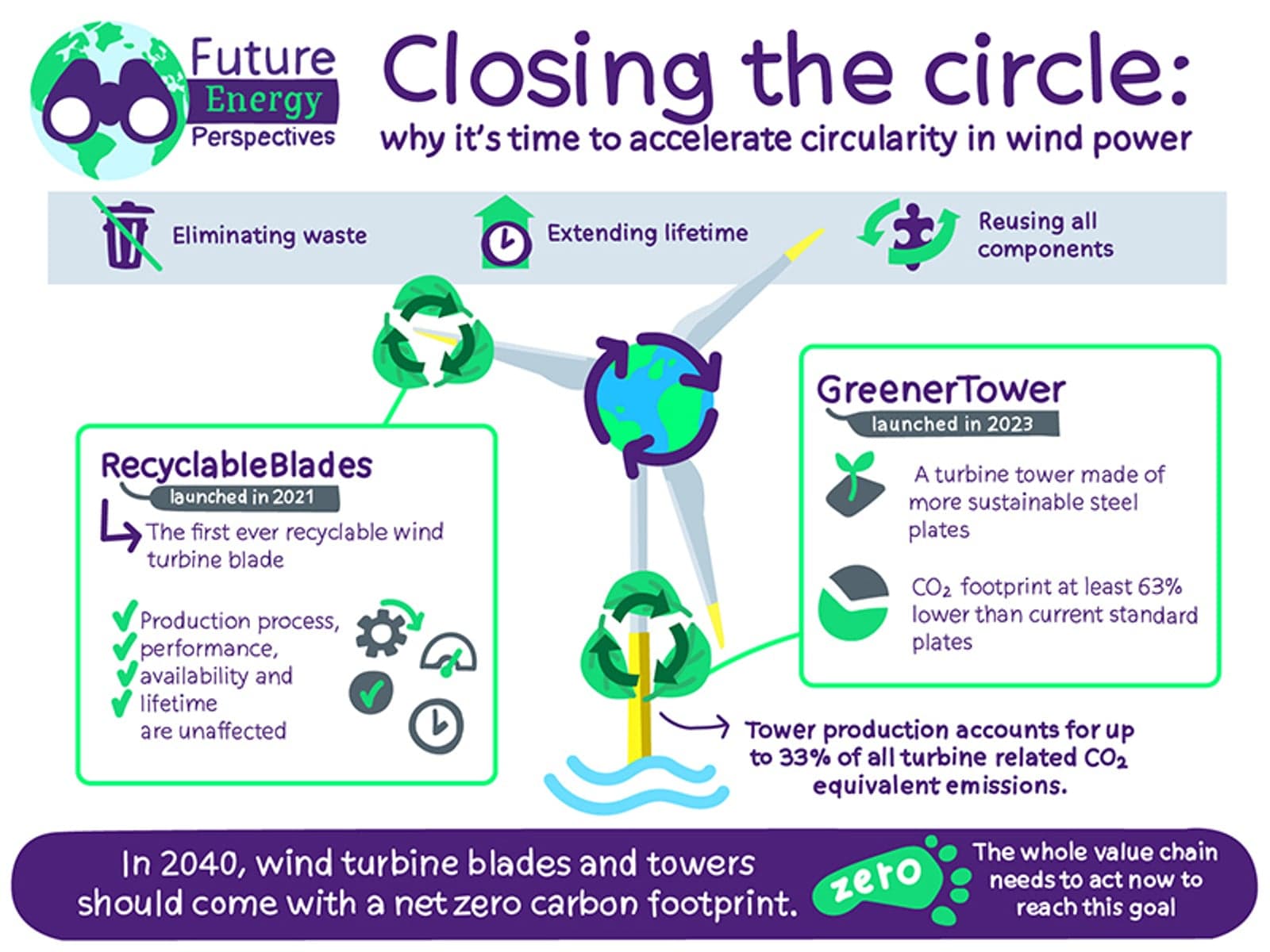
After seven years of development, in 2021 Siemens Gamesa launched the RecyclableBlade, the first-ever recyclable wind turbine blade. This was possible by making slight changes to the resin formula that holds all the components together.
At end-of-life, the resin can be removed using a mild acid solution. The remaining components – including fibreglass and wood – can be reclaimed for recycling and used to create new products such as suitcases, sports equipment and or components for cars.
Besides the resin, there is no change to the production process. Performance, availability and lifetime are also unaffected. Eventually, it is hoped it will be possible to use repurposed material from retired blades to make news ones.
A mere ten months from launch, the first RecyclableBlades were installed at RWE’s Kaskasi offshore project in the North Sea, where they now help produce renewable energy for up to 400,000 German households.
Since this milestone, other projects have followed. In France, 10 of the 64 turbines at the 450MW Calvados offshore wind farm, built by Éolien Maritime France and wpd, will trial RecyclableBlades. And RWE’s largest offshore wind farm under construction – the 1.4GW Sofia in the UK – will deploy 132 recyclable blades on 44 turbines.
A greener turbine tower solution
But the industry cannot stop at blades. Other parts of the turbine need to be decarbonised during the manufacturing process as well, if Siemens Gamesa and other wind power players are to meet their net zero targets.
That’s why reducing the carbon intensity of the steel tower is the obvious next milestone for cutting the carbon footprint further. Up to 40% of a wind turbine’s environmental impact is here, mainly because of the heavy steel plates used in the tower.
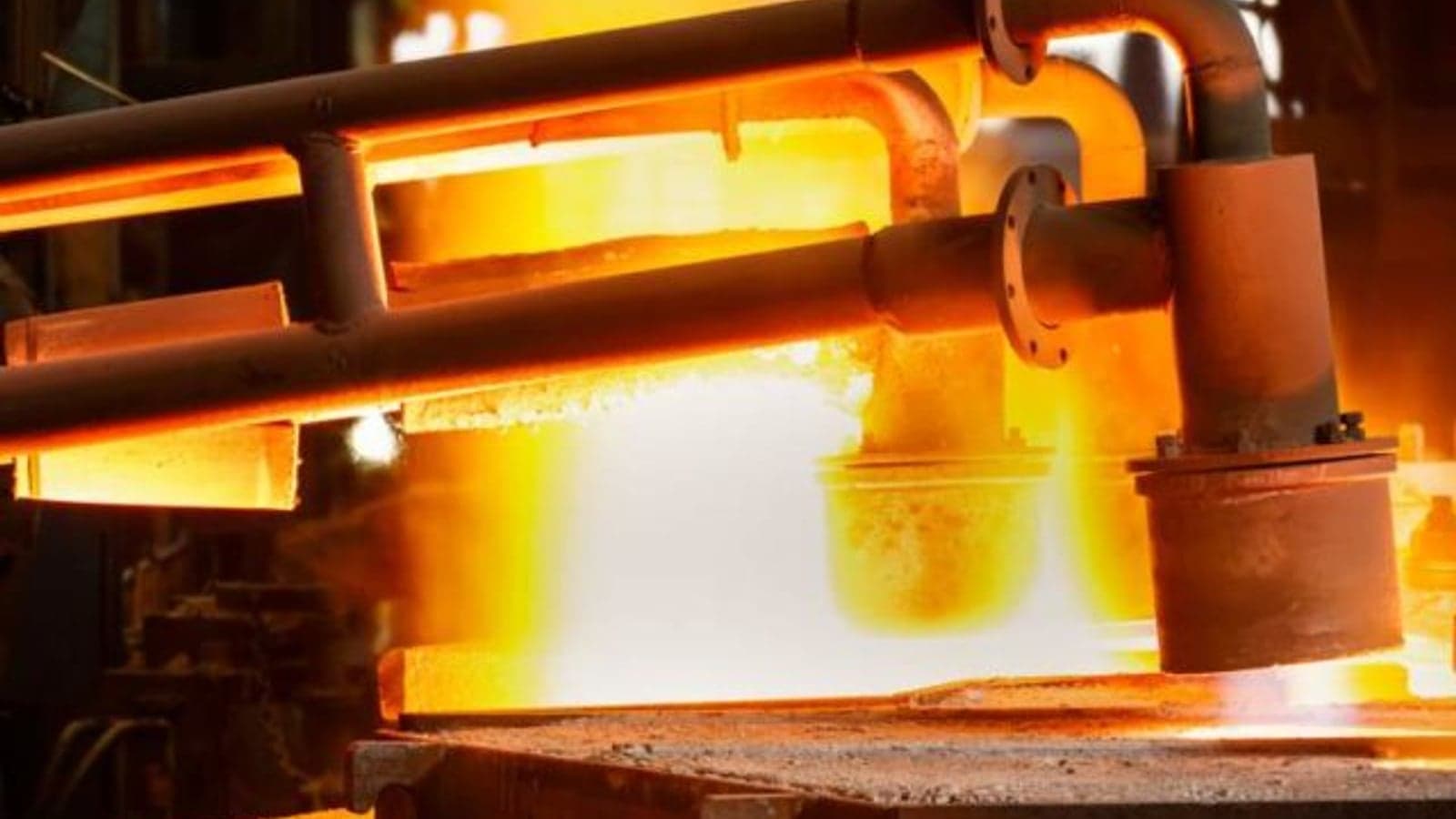
To improve this, it’s first necessary to decarbonise steelmaking. Steel can be infinitely recycled, so decarbonisation can partly be achieved by using scrap steel. This avoids the energy-intensive ironmaking process and calls for more circularity of the metal – more steel to be available for recycling.
Another way is to use renewable energy-powered electric arc furnaces to melt the scrap steel.
The good news is – all this is happening.
In 2023, Siemens Gamesa announced the GreenerTower, a turbine tower made of more sustainable steel plates.
These plates have a CO2 footprint at least 63% lower than current standard plates, while maintaining the same properties and quality.
They will be available from 2024 onwards for both onshore and offshore. Salzgitter AG is the first certified and qualified supplier of the low emission steel.
These towers can have a big impact on the sustainability of wind power projects. According to our internal calculations, if all towers installed by Siemens Gamesa in one year were exchanged with GreenerTowers, it would be the same as removing more than 466,000 cars from the roads in Europe for a year.
Eventually it is hoped that the circularity gap for towers can be closed completely by wind energy powering green hydrogen production through electrolysis.
The hydrogen can be used to power green steel production; the steel can then be used to manufacture new turbine towers which, when decommissioned, can become feedstock for new steel production. And so the cycle continues.
More Future Energy Perspectives
Why it’s time to fast-track carbon capture to future-proof power plants
Decarbonising heat: The hot topic we can’t ignore
Replacing F-gases in switchgear: a revolution in the making
Scaling up clean fuels for net zero
Thor – circularity in action
Now that these more sustainable solutions are available, how has the industry reacted? As we see with the upcoming Thor project, they are already being adopted.
The 1000MW project is set to be Denmark’s largest and will supply clean electricity to around one million Danish households.
It will feature 36 GreenerTowers and 40 turbines with RecyclableBlades. This is in line with developer RWE’s commitment to work towards circularity and net-zero emissions.
Thor shows that it is possible to act now on sustainability.
Siemens Gamesa’s ambition is that both the GreenerTower and RecyclableBlade will be the default option sold to the market by 2040.
But achieving circularity in any industry is difficult, and wind power is no different.
The first challenge that must be negotiated is cost. At present, greener steel towers and recyclable turbine blades are premium products: they provide a benefit to the planet but like other more sustainable solutions, they currently cost more because of it.
Driving down their cost requires reaching economies of scale, and this in turn means increasing demand and adoption, as well as the availability of affordable renewable energy.
The wind power industry continues to be surprising in how willing it is to adopt new technologies, but it must go quicker and policy incentives, such as monetising sustainability features in auctions instead of focusing solely on price, should be in place to support it to do so.
For low-emission steel, there is expected to be significant supply constraints for the next five to ten years. To shore up supply, the steel industry needs to make investments in decarbonising today.
This can be tricky for them; they must know that manufacturers across different industries – supported by their customers – are willing to offtake green steel and in the medium term pay more for it. Strong policymaking is also needed here to help guide steelmakers into making these vital investment decisions.
Market mechanisms to drive adoption
Depending on momentum from policymakers and industry, RecyclableBlades could be standard by 2030. But supportive market mechanisms are needed to achieve this; sustainability needs to be rewarded at the auction process.
For example, Germany’s Federal Network Agency recently launched an offshore wind tender for which bidders will also be ranked partly on the share of renewables used in the manufacturing of turbines.
This is a first step. It can drive competition on sustainability, influencing developers and investors further down the value chain. But we also need to include sustainability at the product level to drive the adoption of recyclable blades and turbine towers with low-emission steel and other sustainability features. This is vital.
Furthermore, carbon pricing mechanisms in Europe can help reduce the cost for less carbon-intensive alternatives. For example, the carbon border adjustment mechanism can level the playing field for low emission steel by increasing the cost of more emission-intensive steel. This will be a big driver in supporting the expansion and uptake of green steel.
Also, for wind turbine blades that can be recycled, recycling supply chains need to be created so that when they reach the end of their life, wind farm operators have options on where to recycle them.
Calling industry to action
It is clear that by 2040, wind turbine blades and towers should come with a net zero carbon footprint.
However, we will only reach this goal if industry acts now. Given the global supply chains needed to deliver this, industry must start engaging today with partners from around the world, be they manufacturers, recyclers or utilities.
It’s time for policymakers to take the lead and put words into action.
Just as Vindeby before demonstrated offshore windpower was possible, so Thor can be the start of a new era of circularity in the sector.
Many firsts: Wind turbine’s path to circularity
- While 94% of a wind turbine is already commonly recycled, to achieve global net zero by 2050, industry must go further. That’s why the wind power industry should incorporate circularity in everything it does, to create sustainable models for eliminating waste and reusing all turbine components.
- Turbines are the first step. The RecyclableBlade is the world’s first recyclable wind turbine blade. The first RecyclableBlades were installed at RWE’s Kaskasi project in the German North Sea.
- The next step is the turbine steel tower – up to 33% of a wind turbine’s environmental impact is here. Siemens Gamesa’s new GreenerTower steel plates will have a CO2 footprint at least 63% lower than those in a standard tower.
- In 2027, RWE’s Thor wind farm, located approximately 22 kilometres from Thorsminde on the west coast of Jutland in Denmark, will be the first project to feature both fully-recyclable wind turbine blades and turbine towers made in-part with pioneering green steel.
- As many companies in the industry aim to be carbon neutral by 2040, wind turbines should come with a net zero carbon footprint by that time. But we will only reach this goal if industry acts now.
ABOUT THE AUTHOR
Maximilian Schnippering is leading the global sustainability team at Siemens Gamesa Renewable Energy. Together with his team, he is working on the improvement of the environmental and social footprints of the assets along the whole value chain. Maximilian holds a PhD from the University of Hamburg.