FlexPlan: a new methodology and tool for future power system flexibility
Guest/partner contributor
Posted on: 14 June 2022
All that motivates the FlexPlan Horizon2020 project, which aims at creating an innovative new methodology and a tool supporting the European System Operators in performing mid-long term planning studies (three grid years: 2030, 2040 and 2050) by considering system flexibility as an alternative to new grid investments.
The ambitious decarbonisation goals for 2050 and beyond push for a steadily increasing penetration of renewable energy sources in Europe and the rest of the world.
This kind of generation is characterized by high variability and this makes the operation of the electric grid much more complex and affected by uncertainty. There is an urgency for resources providing flexibility to the system.
Against this backdrop comes the FlexPlan Horizon2020 project, which aims to create an innovative new methodology and tool to support European system operators in performing mid-to-long-term planning studies (three grid years: 2030, 2040 and 2050) by considering system flexibility as an alternative to new grid investments.
Renewables' variability may typically cause strong congestion for a short duration. This kind of congestion, yet hardly justifying new grid investments, negatively affects the economic efficiency of the system dispatch, by forcing the curtailment of renewable generation and the selection of more expensive resources.
In this case, resorting to system flexibility, storage and/or flexible exercise of the load (demand side management), would for sure improve dispatch efficiency and avoid or strongly reduce RES curtailment.
In addition to the previous motivations, system flexibility could support grid planning in many situations where building new grid infrastructures would meet a too strong public opposition, resulting in excessive approval time.
Building of new storage facilities requires only local permissions, which are much easier to get than the rights-of-way for new extensive electric lines.
Finally, as grid planning is based on the analysis of provisional scenarios and scenarios of generation and load in the mid-long term - added to which, these scenarios have become more and more uncertain in the last period - resorting to system flexibility can help avoiding too uncertain investments which risk to give rise to future stranded costs.
The FlexPlan methodology, instead of analyzing a new investment at a time and considering its economic impact with respect to the status quo situation, elaborates a set of potentially interesting investments (candidates), calculated by a pre-processor, and analyses all of them in one shot by determining the combination that minimises the sum of CAPEX and OPEX.
The formulation of this problem results in a very large Mixed Integer Linear Problem (MILP) which can’t be treated numerically unless sophisticated decomposition techniques (Benders decomposition and decomposition between transmission and distribution planning) are utilised.
Additionally, the FlexPlan methodology includes many other advanced features: integrated transmission-distribution planning; embedded environmental analysis on air quality; carbon footprint and landscape constraints; simultaneous mid- and long-term planning calculation over the three grid years 2030, 2040 and 2050; analysis of the variability of RES and load time series through yearly climatic variants resulting in a probabilistic optimization model; full incorporation of cost-benefit analysis into the target function; and probabilistic security criteria replacing the traditional N-1 criterion.
All of these allow an important step forward with respect to state-of-the-art grid planning tools. Details on the FlexPlan methodology can be found in a paper published for the ENERGIES magazine.
The FlexPlan project is not limited to setting up a new innovative grid planning methodology, but also aims at testing such methodology with six regional cases encompassing altogether nearly the whole European continent.
Each of these cases has the size of a usual system operator planning study or is even bigger by encompassing more than one EU country.
In this way, being able to successfully deploy the six regional cases will prove the usability of the FlexPlan tool by European transmission and distribution system operators.
Additionally, the analysis of the results of the six regional cases will allow FlexPlan to formulate regulatory guidelines to analyze potential barriers to the deployment of such potential as well as possible regulatory provisions to overcome them.
In the following of this paper, the regulatory motivations for the need to consider flexible resources in mid-long term grid planning will be clarified along with the main pillar of the present EU Regulation pointing to that.
Subsequently, we provide a synthetic overview of the flexible resources able to provide the requested flexibility to the grid. Finally, the 6 regional cases of the FlexPlan project are described and considerations are provided on the basis of the first results provided by them.
The regulatory framework
The European Commission explicitly declared the importance of employing flexibility in distribution network in a dedicated section (art.32) of the Directive on Internal Electricity Market (2019/944).
The section requires that network development plans shall also include the use of demand response, energy storage facilities or other resources as an alternative to system expansion.
The same document introduces similar requirements to the transmission system operators (art.51) demanding that the compulsory ten-year network development plans shall fully consider the potential for the use of demand response, energy storage facilities or other resources as alternatives to system expansion.
The linked Regulation (2019/943) states that in order to integrate the growing share of renewable energy, the future electricity system should make use of all available sources of flexibility, particularly demand side solutions and energy storage.
It also stipulates establishment of dedicated network code related to demand response, including rules on aggregation, energy storage, and demand curtailment rules (art.59).
The ENTSO-E's 3rd Guideline for Cost Benefit Analysis (CBA) of Grid Development Projects considers demand flexibility as a consistent part of the estimation of the socio-economic welfare.
Despite the above-mentioned incentives from the EC, the practical experience of using flexibility in grid planning process as an alternative to grid expansion appears to be very limited.
There are several open regulatory issues hindering this, including clear roles and responsibilities, harmonised rules for priority of flexible resources between TSOs and DSOs, allocation of costs and incomes in new common investment projects etc.
Similar points were highlighted by the report 'Roadmap on the Evolution of the Regulatory Framework for Distributed Flexibility' jointly elaborated by ENTSO-E and the European Associations representing DSOs in 2021.
The potential role of flexibility was recently reaffirmed by the EC in its Communication COM/236 (May 2022), which called for enhancing demand response and flexibility mechanisms (including support schemes for storage), accelerated adoption of the forthcoming network code on demand response and necessity for removing innovation barriers on the construction of new electricity infrastructure.
Who can provide grid flexibility?
The EC in its strategic long-term vision for a climate neutral economy, COM(2018) 773, explicitly refers to fast reacting generation, storage and demand response as flexibility sources to integrate renewables into the system.
Storage can behave both as a fast-reacting generator and as a load and, therefore, it is an optimal candidate as flexibility provider.
Energy storage is a concept that can be materialized through several technologies. Each of them possesses characteristics suitable to provide services to the network.
The most appropriate storage technologies for network stationary applications are electrochemical batteries (such as lithium-ion, sodium sulphur, flow batteries), hydrogen storage, compressed air storage, liquid air storage and pumped hydro.
Both transmission and distribution network operators require services from third parties to manage the energy system within safe limits and the expected quality level. Storage can provide most of the requested services at system and network level.
Focusing on congestion issues, characterized by their severity and occurrence, storage technologies should be optimally selected to reduce total system costs by allowing renewables to supply as much demand as possible.
In addition to their technical suitability, storage plants need to meet local installation restrictions such as space availability, security constraints, etc. To help the network extension candidate selection, a candidate pre-processor has been developed within FlexPlan project.
In addition to storage, another promising flexibility provider is demand. It is expected that demand will participate more and more in energy markets.
Demand response (DR) strategies can reshape demand profiles to cope with renewable generation variability. Apart from big industrial and commercial consumers, smaller customers will be able to offer their flexibility through aggregation.
Compared to storage, the expected investment for DR is lower, but calculating the baseline and foreseeing the response level of participants remains a challenge. The FlexPlan methodology permits to consider different levels of DR to solve congestions in the network.
Six regional cases
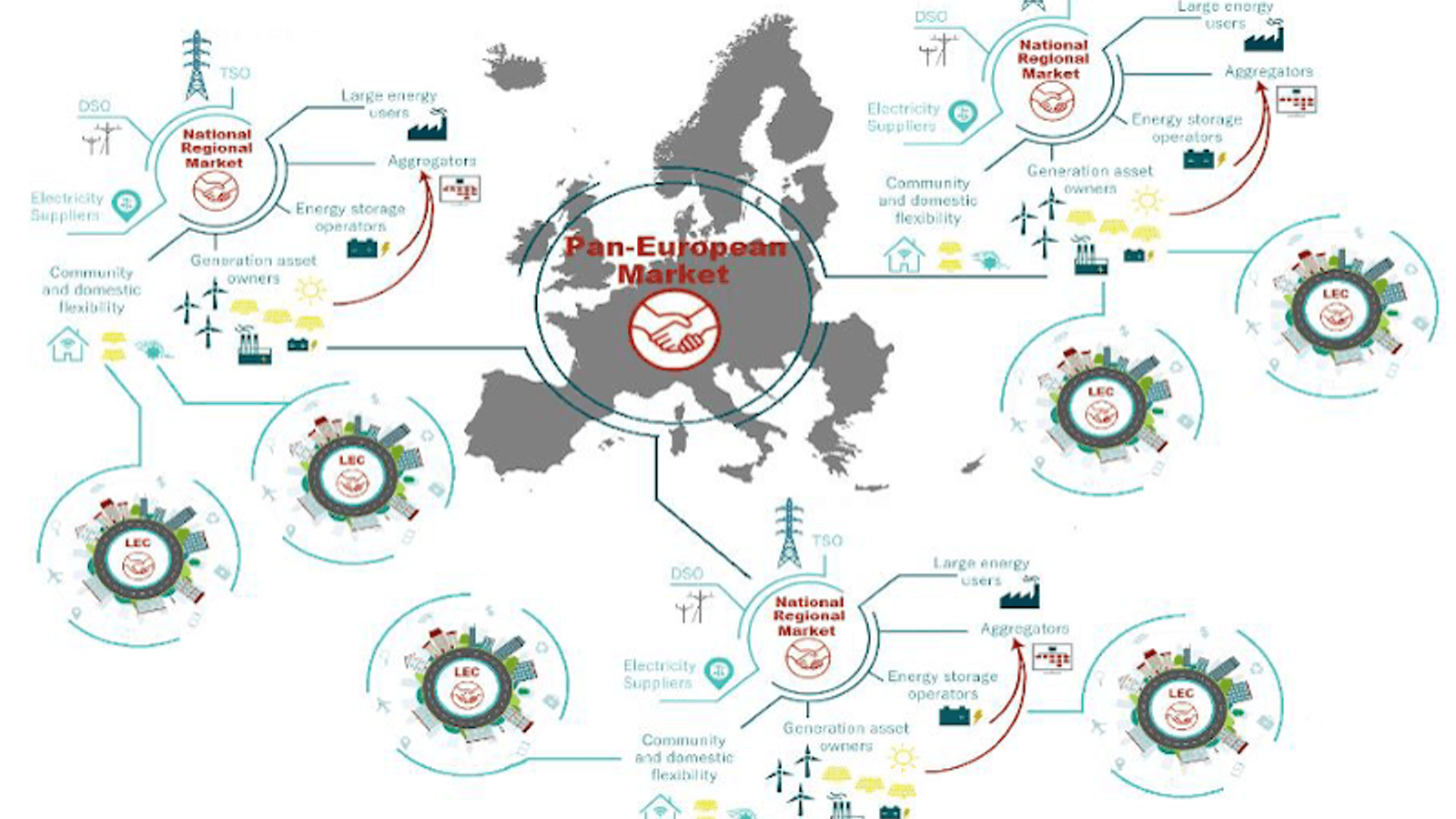
The European energy system is a highly meshed interconnected system. As FlexPlan aims at establishing a new grid planning methodology considering storage and flexibility resources for the pan-European power system, it is of great importance to extend the analysis to an area as wide as possible of the European territory.
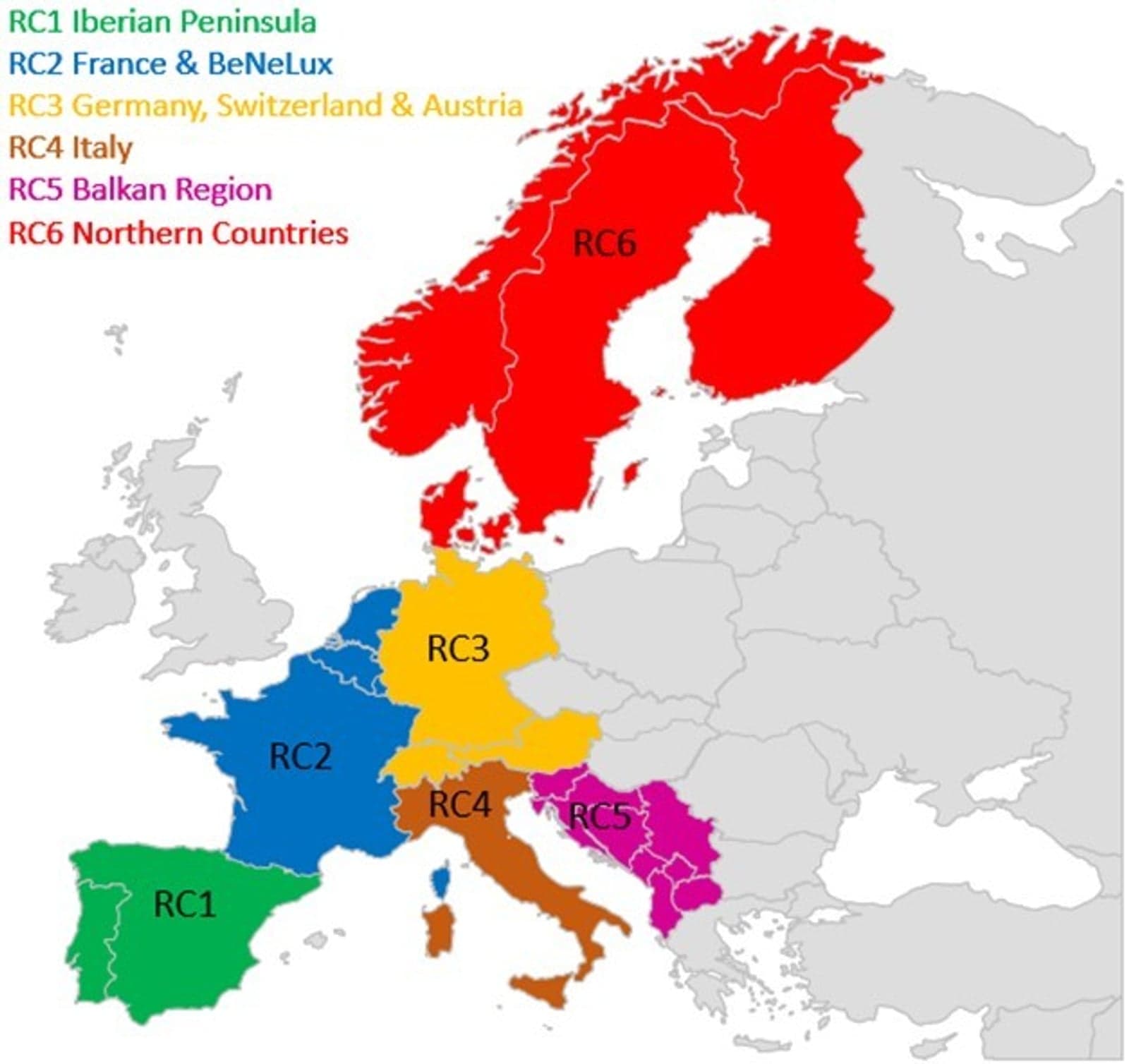
This will allow examining a very high number of cases, which is important for the creation of the regulatory guidelines elaborated in the last phase of the project. For this reason, six detailed regional cases are set up, covering each a significant portion of the European grid (see figure).
In order to provide homogeneous border conditions to all regional cases, a pan-European use case has to be created as well.
For each target year (2030, 2040 and 2050) three different scenarios are examined to model divergent political and regulatory policies, resulting in a total set of nine sets of time-series scenarios data.
The scenario set used in FlexPlan is in line with the 2020 ENTSO-E Ten Year Network Development Plan (TYNDP).
Results presented below include a preliminary analysis of Optimal Power Flow (OPF) simulations with 2030 scenarios but with 2020-2025 grid set-up to highlight grid expansion needs, for four out of six regional cases: Iberian Peninsula, Italy, Northern Countries and France & BeNeLux.
This analysis provides important information on the existence of network congestions, which will be further used within the FlexPlan toolchain to propose the best new candidate infrastructures to reinforce the grid.
The Iberian Peninsula regional case scenario is characterized by a high renewable generation. Storage units (hydro plants with reservoir) balance generation and demand in most of the cases, but generation and load curtailment are also required.
This 2030 scenario causes the congestion of around 3% of the transmission lines and both, level and number of hours of congestions are variable.
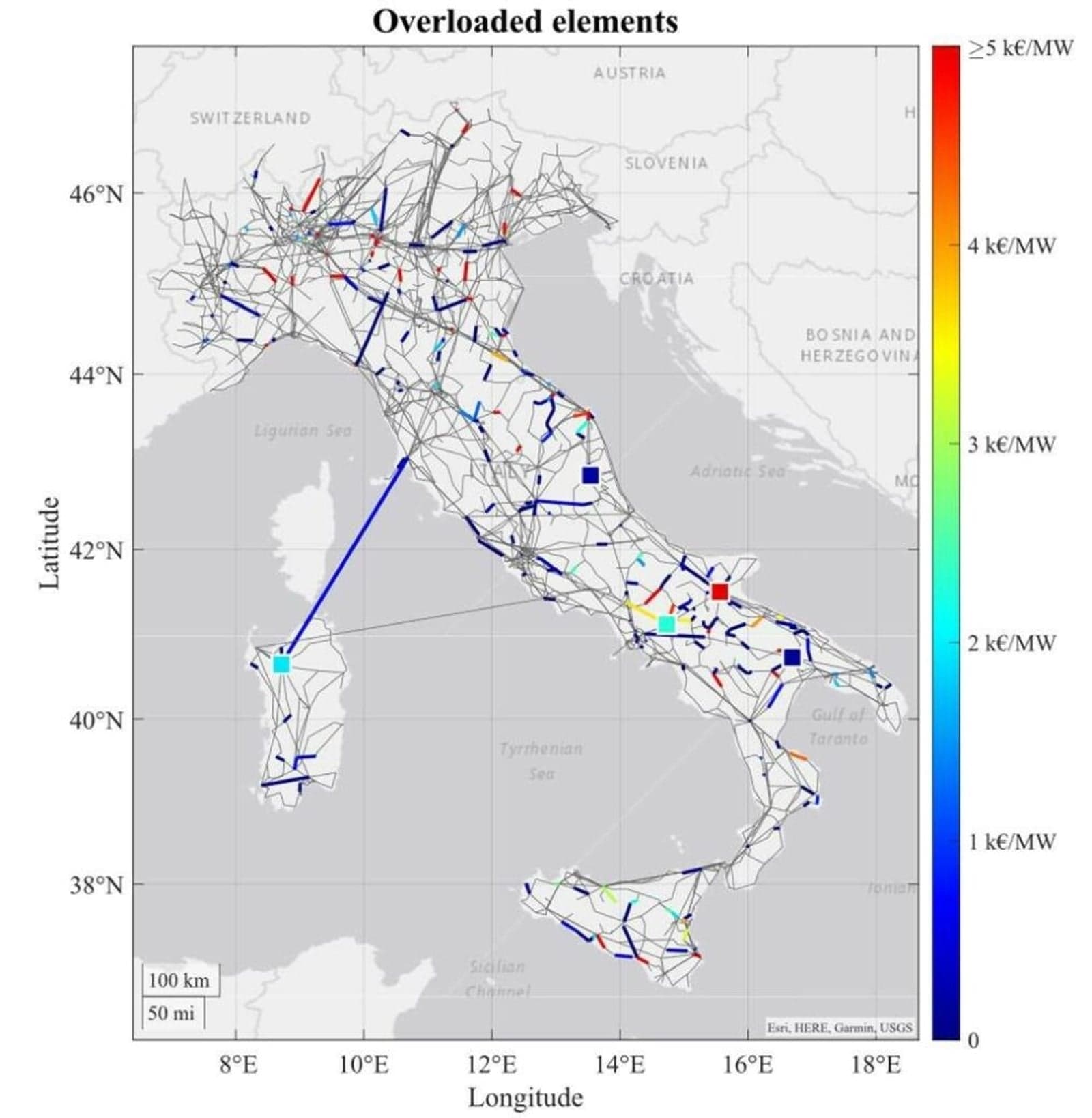
Analyzing congestion locations is particularly useful in order to optimally allocate investments so as to minimize operation costs. The figure below, referred to the Italian regional case, reports, for each HV line (plotted as lines) and transformer (plotted as squares) subject to congestion, the so-called Lagrange multipliers, which correspond to the achievable yearly savings in case their transport capacity could be increased by 1MW.
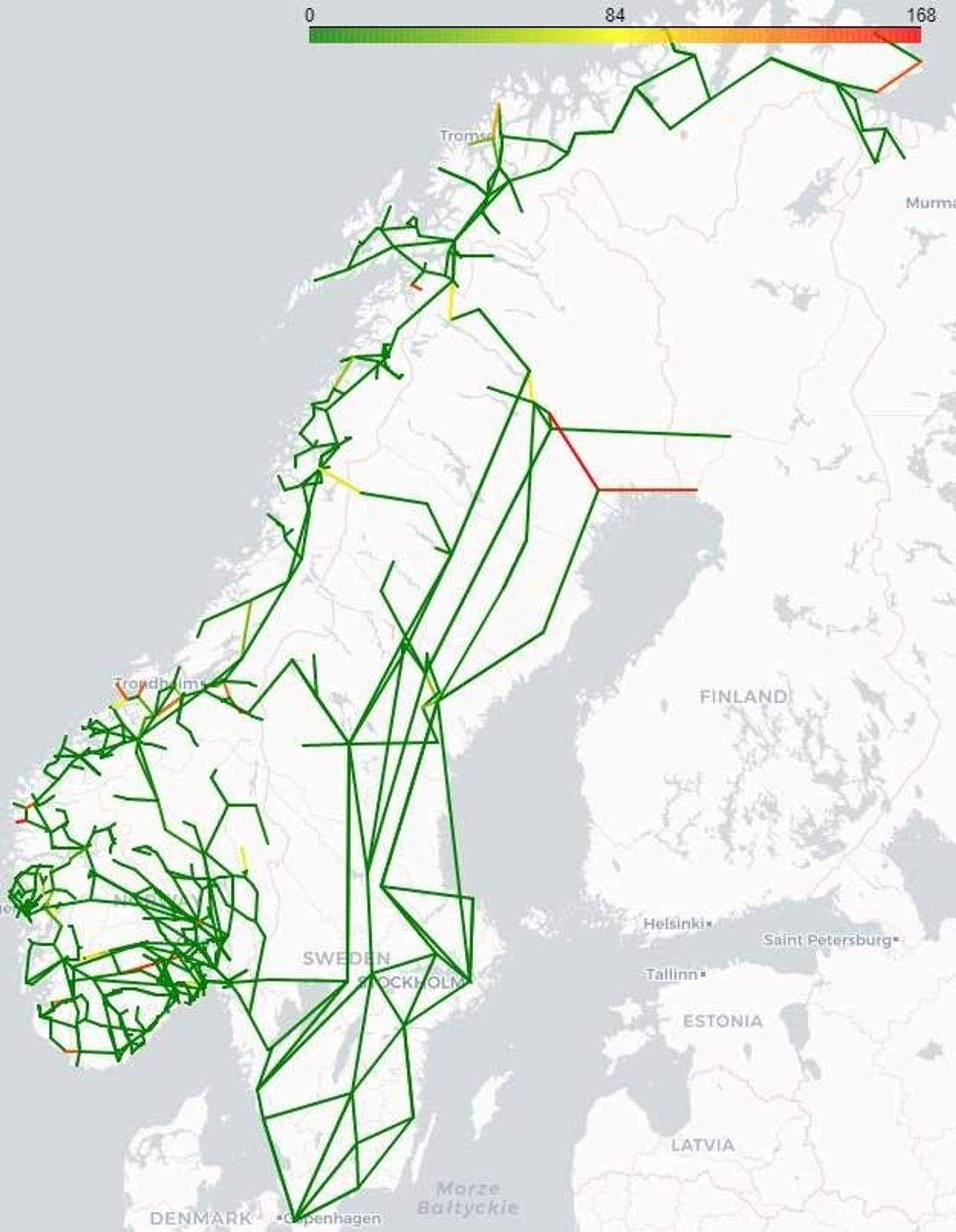
For the Northern Countries regional case, OPF results show congestion on 79 out of 1109 transmission lines, as shown in the figure below. This includes two out of the three transmission corridors in the area of interest.
However, these overload events do not coincide in time, so at any given time there is remaining capacity on two lines out of three.
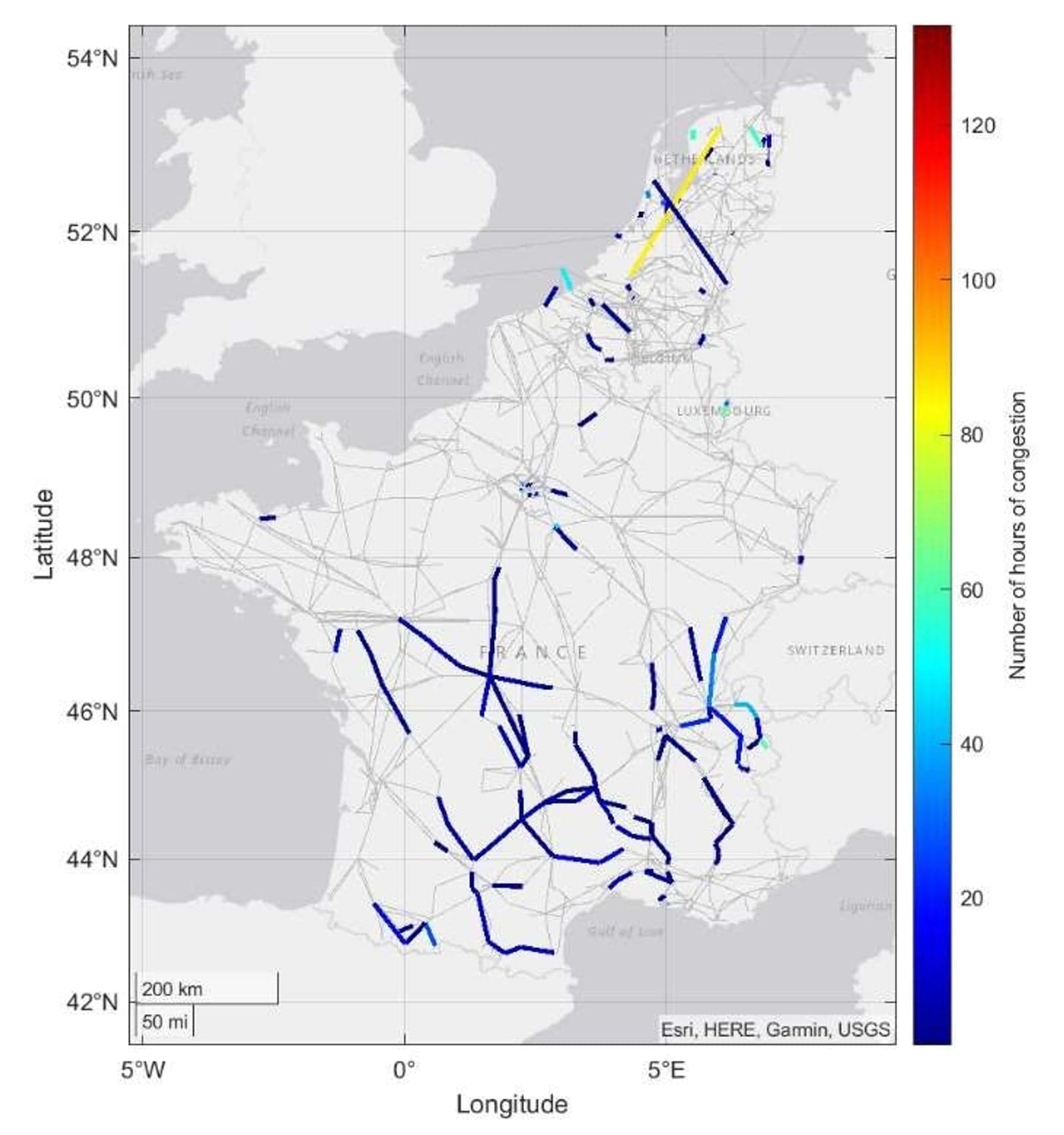
For the France & BeNeLux regional case, France has a similar average amount of hours of grid congestion as the BeNeLux grid, as shown in the figure below.
Two particular connections respectively close to Paris and on the Italian border are congested for roughly 42% of the time. In the BeNeLux grid, most congestion occurs in a line in the Netherlands passing through Amsterdam. Significant congestion is also observed on the Luxembourg-Germany border and in the North of the Netherlands.
Regulatory actions
In the next years, grid planning procedures must change in Europe to facilitate further deployment of variable RES.
This can only be achieved by valorizing the contribution of flexible resources (storage and demand-side management).
However, in order to allow flexibility to play a significant role, some important regulatory actions must be put in place as well:
- Incentivizing private investors to deploy flexibility resources (storage, DSM) where it can be highly useful for the system and to participate in the real time markets to provide contributions to compensate RES variability;
- Pushing TSOs and DSOs to modify planning procedures to favor the deployment of flexibility resources, also keeping in mind TSO-DSO cooperation for acquiring resources from distribution;
- Facilitating the participation of flexibility resources in real time markets by creating a set of specific products;
- Revising the entire market chain architecture so as to favorize participation from distribution while discouraging exercise of market power;
- Paying attention to the new figure of the aggregator, providing a credible and financially sustainable role for it.
The FlexPlan project aims at providing a significant methodologic contribution to improve grid planning procedures and to better integrate flexible resources.
The tools developed by FlexPlan could be a valid help to the European System Operators to include flexibility in their procedures.
The six 6 large regional case developed by FlexPlan demonstrate the applicability of the FlexPlan methodology to real-size cases.
About the authors

Gianluigi Migliavacca is the coordinator of the FlexPlan project, RSE

Aleksandr Egorov is the Leader of the FlexPlan work package developing the Regional Cases, R&D NESTER

Andrei Morch, is the leader of the FlexPlan work package elaborating the regulatory guidelines, SINTEF

Raúl Rodríguez, is the leader of the FlexPlan work package analyzing the potential of flexibility resources and creating the pre-processor software, TECNALIA
Most popular
Join the community for freeAnd get access to all content
Related projects
FLEXPLAN
Related members

Gianluigi Migliavacca
Latest content
+1
Project TradeRES – New market designs for green European power system: preliminary findings
TradeRES is an EU-finded project with the objective of developing and testing an innovative electricity market design that can meet society’s needs in a near 100% renewable power system.
- Guest/partner contributor
- 15/05/2024