Energy Transitions Podcast: Accelerating decarbonised power generation at scale
Pamela Largue
Posted on: 7 November 2023
In this episode, Pamela Largue had a candid conversation with Javier Cavada of Mitsubishi Power EMEA about decarbonising power generation.
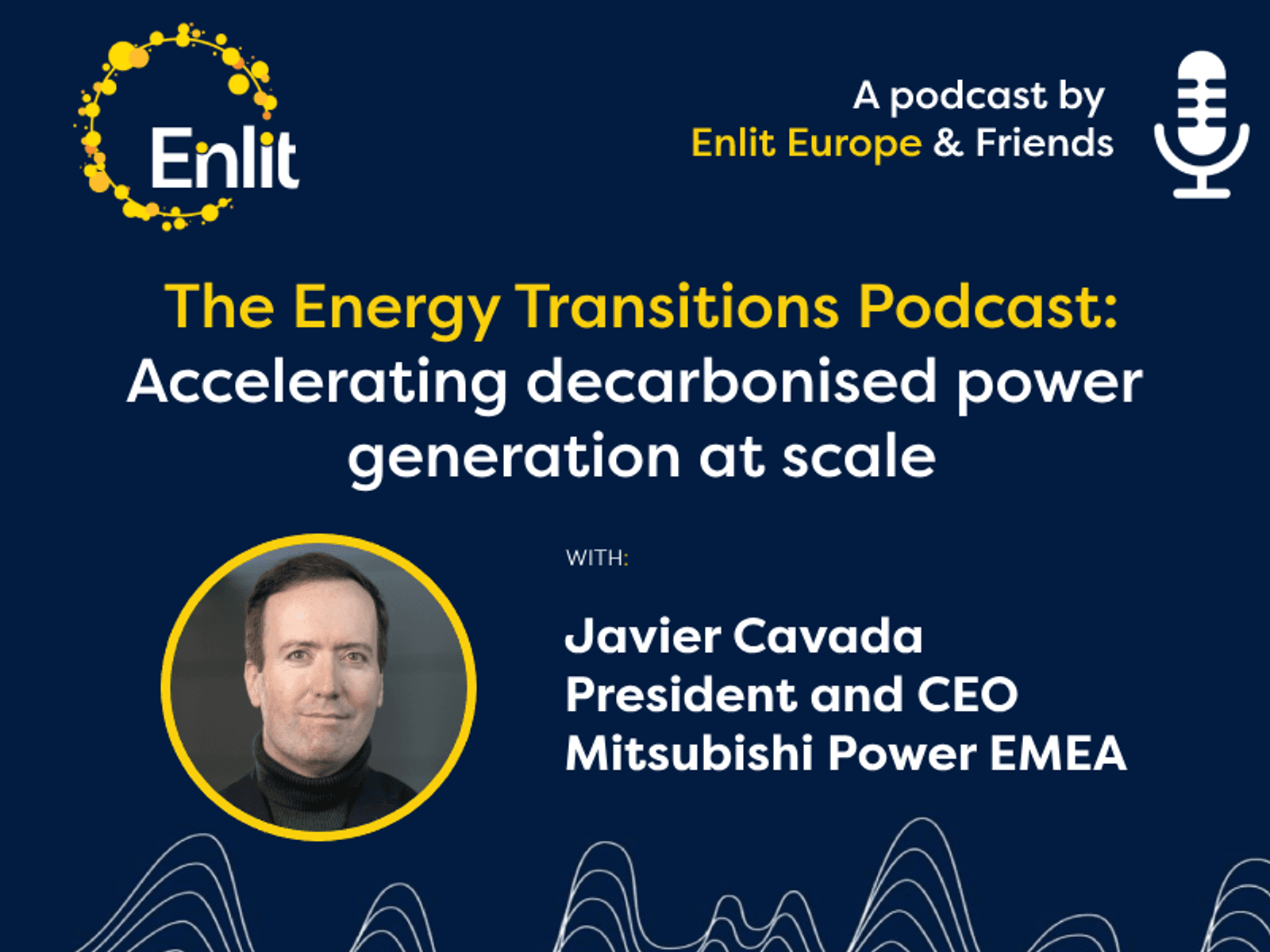
In this episode of the Energy Transitions Podcast, Pamela Largue had a candid conversation with Javier Cavada, President and CEO of Mitsubishi Power EMEA, about why speed and scale must be the focus of our decarbonisation mission.
Javier Cavada spoke to the progress being made in achieving greener power generation, making it clear that all, rather than a select few technologies will help us achieve our energy transition goals. He emphasised that renewable energy is disrupting our energy system, but that this disruption can be managed by making incremental changes, changes that must be driven by unified action. Without unity, stressed Cavada, we can not meet our net zero goals.
The amount of change is to be massive… change of the patterns of behaviour of the society, and to do that we need to change politics… this is something individual countries, cities, companies can not do by themselves…"
Listen to the full episode to learn more about Javier Cavada's view on how to shift from a hydrocarbon-heavy energy system while maximising existing assets, and how the war in Ukraine has emphasised energy sovereignty and impacted decarbonisation. Also, Cavada shares his book recommendations, which may surprise you.
LISTEN NOW
Previous episodes:
Digitalising nuclear power for enhanced grid stability
Time to humanise energy
Sustainable strategies to decarbonise heating
More exclusive insights about energy transition:
Energy transition complexity demands collaboration says Kaluza’s Neel Gulhar
‘The global energy transition is a collaboration, not a competition’ says Wartsila’s Malin Östman
Motor Oil’s energy transition plan in Greece and the Balkans
Latest content
Partner content
+4
Hydrogen: a new class of renewable energy
Hydrogen is increasingly recognised as a key enabler of the energy transition, both as a fuel to decarbonise heavy industry that cannot be simply electrified and as a storage medium for renewable energy. Another important application for hydrogen is its role in grid security, flexibility and stabilisation.
- Guest/partner contributor
- 02/04/2024
Partner content
+2
Are gas turbines the most important link between the past and future of energy generation?
While the world is declining its use of fossil fuels, it cannot and will not be able to stop using fossil fuels in the short term - that’s why there is a need to build resilient energy systems for power generation that can adapt from using fossil fuels to utilising clean energy.
- Guest/partner contributor
- 02/04/2024