Site visit: ZE PAK's decarbonisation strategy in East Poland
Pamela Largue
Posted on: 6 September 2024
ZE PAK's power plant in Konin is demonstrating that coal is in the past and renewable projects are the future, the result of a strategic shift that took place in 2020.
As a result of a strategic shift in 2020, ZE PAK's power plant in Konin is demonstrating that coal is in the past and renewable projects are the future.
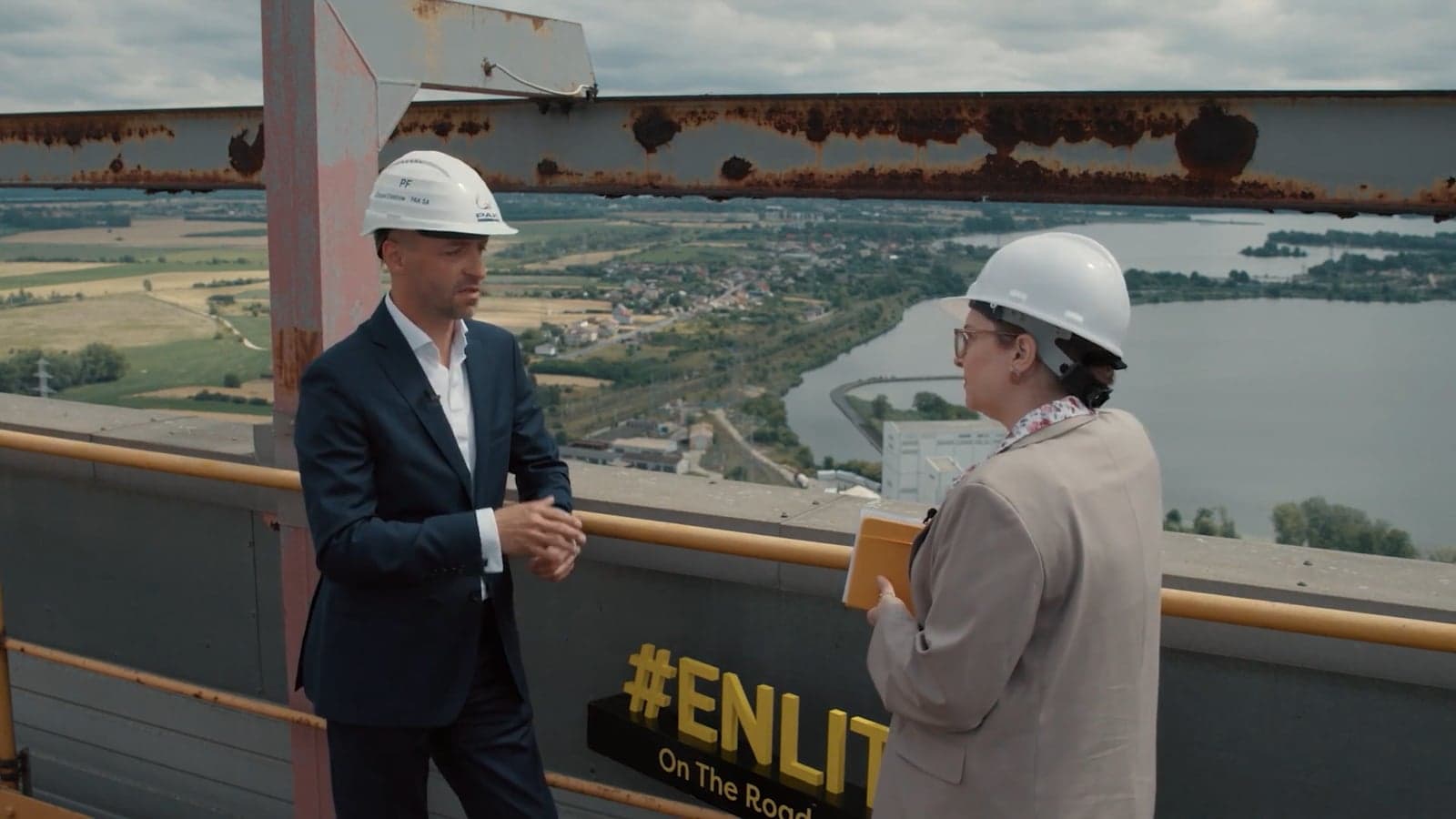
To learn more about ZE PAK's shift in strategic priorities, Enlit on the Road visited the Konin Power Plant and the nearby Pątnów Power Plant and spoke to Vice-president of the ZE PAK Management Board, Maciej Nietopiel.
Fundamental strategic shift
Nietopiel explained that in 2020, ZE PAK announced a strategic pivot to green energy production with an emphasis on decarbonising existing assets.
The shift away from brown coal stemmed from a directive from the company's main shareholder, Zygmunt Solorz, a well-known entrepreneur in Europe. Solorz requested the ZE PAK Board present a new strategy, one that would redefine the company based on renewables and green hydrogen projects.
Solorz also mandated that electricity stop being produced from lignite as soon as possible, a forward-looking plan with some significant challenges in a region built on the back of its coal mines and power stations.
More videos from Poland:
Green ambitions of Polish energy giant Tauron
How to create jobs after coal in the heart of Poland
Podcast: Poland’s progress towards decarbonisation
Hurdles on ZE PAK's decarbonisation strategy journey
Nietopiel emphasised that while ZE PAK's decarbonisation strategy was a strategic priority, it's important not to forget about the people driving the energy transition. The region is famous for electricity production from lignite, which has been mined for more than seven decades, said Nietopiel.
To simply stop lignite electricity production would push the unemployment rate very high and impact the stability of the grid. "It's a process," he said, adding that "you need some time to address social [and] technical issues."
However, ZE PAK is committed to achieving a just transition and EU funds are aiding in this process. "We are collaborating with the European Union...using the EU funds to help those people find other skills and jobs"
Nietopiel, a Konin local, explained that this progress is particularly significant for the region, which has always been connected with coal.
"During those years it was very hard for people to understand it won't last forever..."
However, locals understand now, "They are hoping something will come after the coal, something that gives a better future for them and for their children."
Conversion to biomass
Nietopiel was speaking from the Pątnów Power Plant in Konin, a plant which will be shut at the end of 2025. It's a signal of the progress being made in the region's energy transition.
Another signal of how far Konin has come on its decarbonisation journey is the conversion of the Konin Power Plant into a biomass power plant - the first lignite power plant in Poland to do so - and Nietopiel explained it produces electricity using waste wood chips, certified and sourced locally.
Biomass, he said, is one of ZE PAK's strategic pillars, alongside solar PV and green hydrogen.
A future in green hydrogen
While green hydrogen offers great opportunities for ZE PAK, Nietopiel emphasised: "It's also the challenge."
"The market for green hydrogen is a growing market, but at this moment, we don't know the dynamic for the market."
Currently, ZE PAK is buying green hydrogen to supply their two existing hydrogen stations. They have five stations under construction and will begin green hydrogen production in the near future.
ZE PAK is also involved in the production of hydrogen buses. Said Nietopiel: "It's a totally new project from scratch, we built the factory, we have a prototype of the bus and managed to start commercial production of those busses..."
ZE PAK now sells the buses to Polish cities.
Watch the full video for insights into ZE PAK's transition to clean energy
Related tags
Latest content
+4
Drax and Mitsubishi partner on bioenergy and carbon capture project
Drax Group and Mitsubishi Heavy Industries Engineering have agreed to a long-term contract that will see Drax license and use Mitsubishi's (MHI) unique carbon capture solvent, KS-21TM, to capture CO2 at its power station near Selby, North Yorkshire.
- Enlit Editorial Team
- 10/06/2021
+3
How to create jobs after coal in the heart of Poland
Daniel Baliński, Just Transition Coordinator at Polish energy company ZE PAK SE, to find out about the impact of the energy transition on the company's workforce and how their Jobs After Coal initiative has helped to make a positive difference.
- Pamela Largue
- 06/08/2024