The metaverse: what is it and why does it matter for the energy sector?
Jonathan Spencer Jones
Posted on: 30 January 2023
The metaverse is an inevitable “perfect storm of different technologies coming together”.
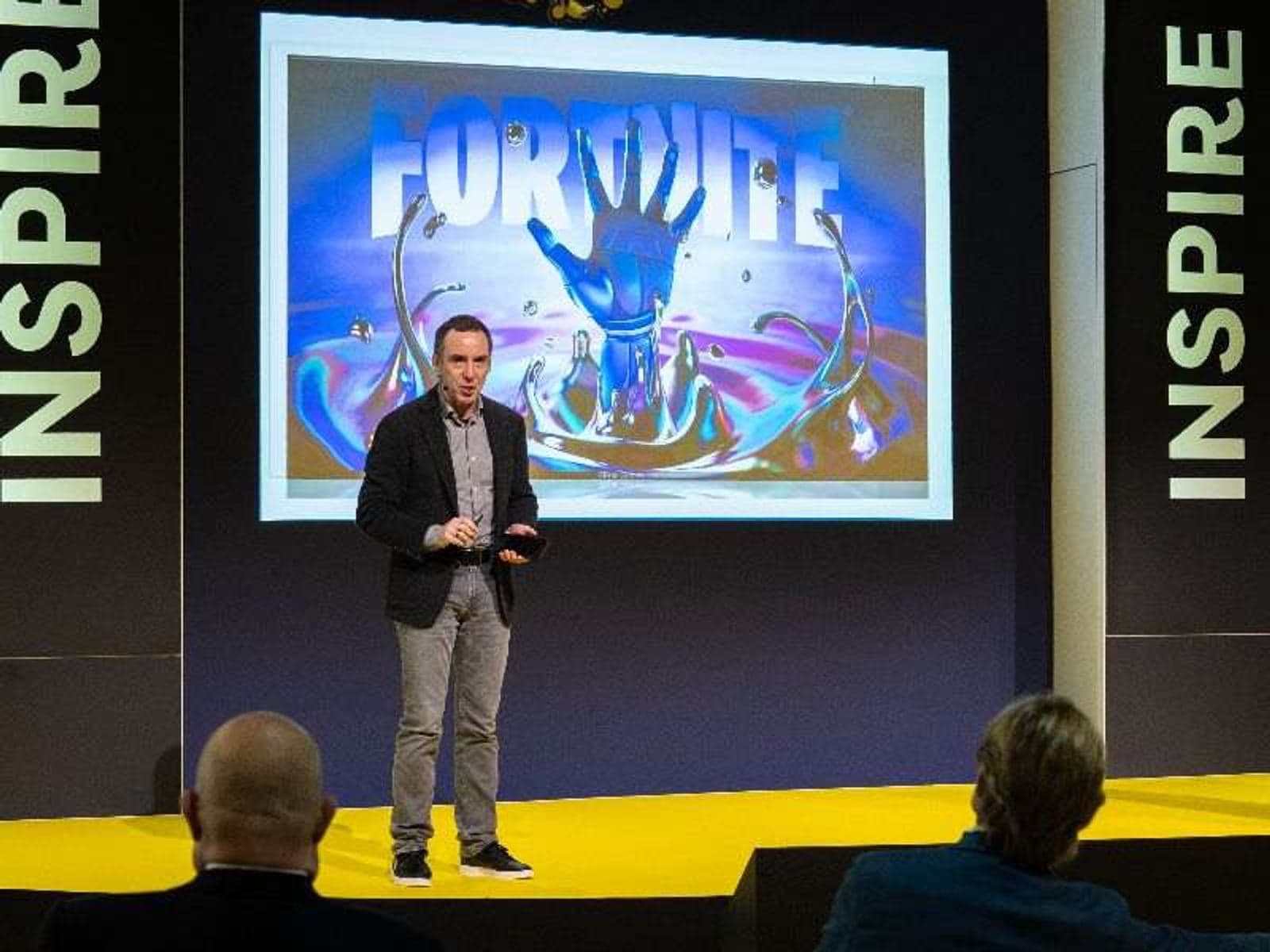
The metaverse is an inevitable “perfect storm of different technologies coming together”
The metaverse, an immersive 3D virtual world, is emerging as the next hype theme – but is expected to have wide-ranging impacts on consumers and businesses alike, including the energy sector.
At this early stage of development, there is no generally agreed definition for the metaverse or understanding of what it will look like ultimately.
Moreover, there are two overlapping but distinct paths emerging – the consumer path, championed among others by - but not to be confused with - Meta, aka Facebook, and the business path, with what Siemens and others have dubbed the ‘industrial metaverse’.
Technology evangelist Kevin O’Donovan in a presentation at Enlit Europe described the metaverse as simply “the next wave of digitalisation”.
Moreover, it is inevitable, he said, as the metaverse is occurring as a “perfect storm of different technologies coming together”, some old, some being built today and others still to come in the future.
What will the metaverse look like for the energy sector?
Building blocks of the metaverse for the energy sector
Digital twins and the metaverse
At the heart of the metaverse as the main building block is the digital twin – or a network of digital twins – which provides a 3D spatial representation of a physical entity, whether on the scale of a single piece of equipment or up to, as is planned, the full earth system.
Features of the digital twin that O’Donovan mentions are that it is ‘persistent’, i.e. that it continues to evolve over time, it is ‘simulative’, i.e. that different conditions may be simulated, it is ‘collaborative’, i.e. that multiple parties can participate, and mirroring software as a service, it has an economy.
“All these characteristics are being built up and they are happening,” he says.
Fabio Veronese, Head of Digital Hub at Enel Grids, one of the first to launch a metaverse named GridVerse, describes it similarly as “a virtual place with a model of our assets where collaborations may be made to create business cases”.
“For us, the GridVerse can be regarded either as the instantiation of the metaverse in the grid or the evolution of the digital twin – they are the same.”
Early use cases that are being enabled in the metaverse of the energy sector include 3D representation for remote assistance to field workers, virtual assistance for worker safety and virtual training.
Alongside Enel, which has years of experience with digital technologies including more recently digital twins – now also partly spun out in its jv subsidiary Gridspertise – the only other utility (of which we are aware) that has announced a metaverse initiative is Dubai Electricity & Water Authority with its DEWAverse.
DEWA traces its metaverse journey back to 2014, with the use of a smart app-enabled Google Glass for fault detection in substations.
Use cases being implemented include a workplace meeting room and workshop, universal customer service agent and the MetaDrone solar panel monitoring and management.
At the launch of DEWAVerse in October 2022. DEWA MD and CEO HE Saeed Mohammed Al Tayer said the metaverse, along with other Fourth Industrial Revolution technologies is being used to “find new opportunities and provide innovative solutions that accelerate growth to enhance Dubai’s position regionally and globally.”
AI, AR, VR and 5G, 6G and the metaverse
While the metaverse requires digital twins as foundational, digital twins do not in themselves make a metaverse. Other technologies also are key.
Artificial intelligence (AI), which just a handful of years ago was attracting a similar hype to metaverse’s today, is finding a place in ever-increasing numbers of analytics and digitalisation offerings and use cases.
Augmented reality (AR) and virtual reality (VR) and their integration in extended reality (XR) will be key for the immersive aspect of the metaverse, but its form almost certainly will be other than the bulky glasses and headsets of today.
Cloud and edge computing and potentially the blockchain-enabled decentralised web3 will be key for the real-time functionality and alongside it 5G and more significantly in the future 6G for seamless connection to the physical world.
5G, still emerging in many locations, provides a speed up to 100 times faster than 4G as well as much lower latency and increased bandwidth, and 6G expected around 2030 should provide a further 100x speed up over 5G as well as further latency and bandwidth gains.
Interoperability in the energy sector's metaverse
Like with other technologies, interoperability is key for frictionless experiences, development and economies and can present enormous opportunities and values, a new briefing paper from Accenture and the World Economic Forum states.
To achieve this frictionless state, good system-wide interoperability of the metaverse should consider interests such as privacy, security and safety.
To enable responsible metaverse interoperability, stakeholders must consider technical, usage and jurisdictional aspects with interoperability across each.
The paper, titled Interoperability in the Metaverse, suggests that given the borderless nature of the metaverse, the multistakeholder and multilateral collaboration will be required to reach a consensus on design choices, best practices, standards and management activities.
To this end to build a metaverse platform the Forum has established a ‘Global Collaboration Village’ with 80 founding member companies, among them DEWA and Enel as energy companies and Schneider Electric from the industry.
Reporting back from the Forum’s 2023 annual meeting and participation in the Village, Schneider Electric’s chief digital officer Peter Weckesser comments having crowdsourced potential industrial applications of the metaverse, with ideas received including virtual product showrooms, collaborative engineering and simulation, and augmenting the work of operators and service professionals with real-time, data-rich, 3D experiences.
“It seems that all these and many more possible applications have something in common: they are all about bringing together technologies to address challenges of the physical world, by giving real people the means to learn, collaborate, act, and essentially create value through a virtual, digitally augmented space.”
And he adds, “much of this can be done with current technologies that are maturing at an unbelievable pace.”