How light could boost performance of fuel cells and lithium-ion batteries
Kelvin Ross
Posted on: 3 May 2022
Breakthrough from scientists at MIT and Technical University of Munich could pave way for improvements in battery charging and storage.
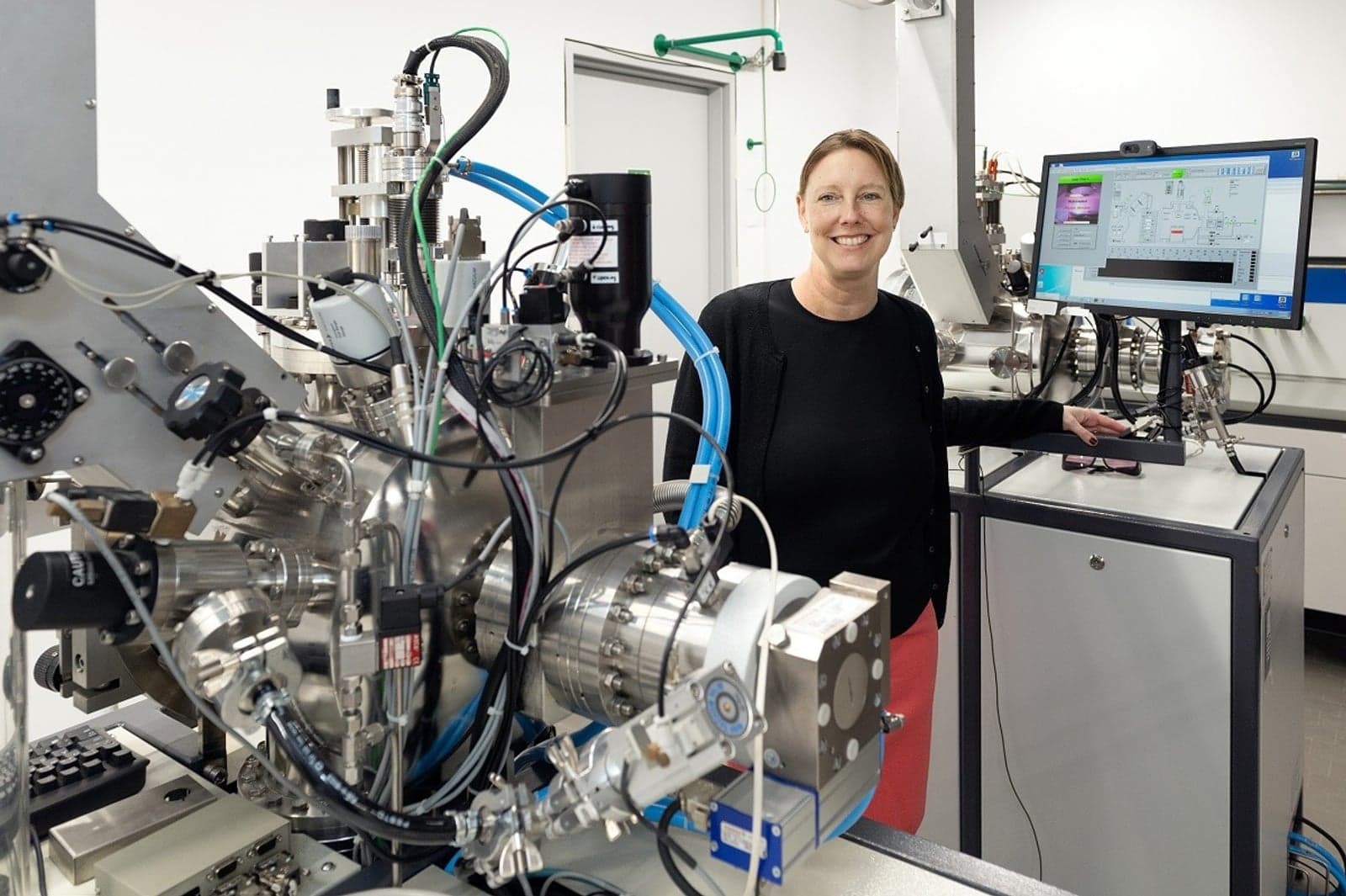
Breakthrough from scientists at Massachusetts Institute of Technology and Technical University of Munich could pave the way for improvements in battery charging, energy storage and more.
A research team have shown for the first time that light can be used to increase the mobility of ions.
A charge can be transported by a material in a number of different ways: the most familiar is the electrical conductivity of metals, where the charge is borne by electrons.
In many devices, however, ions transport the charge. One example is lithium-ion batteries in which lithium ions move during charging and discharging. Similarly, fuel cells rely on the transport of hydrogen and oxygen ions in order to conduct electricity.
Related content
Basque gigafactory can unlock the holy grail of energy storage
Battery passport to be developed in Germany
Ceramics are currently being investigated as solid electrolytes for transporting oxygen ions. But as Prof. Harry L. Tuller of Massachusetts Institute of Technology says: “What we find is that the ionic conductivity – the rate at which the ions can move and, therefore, how efficient the resulting device can be – is often markedly degraded by the fact that the ions get blocked at grain boundaries.”
Light puts ions on the go
In their current publication, Tuller and his colleague Jennifer L. M. Rupp, professor for solid-state electrolyte chemistry at the Technical University of Munich, show how light can be used to reduce the barriers encountered by ions at ceramic grain boundaries.
Many devices based on ion conductivity, such as solid-oxide fuel cells, have to operate at very high temperatures in order for the ions to be able to overcome the grain boundary barriers.
Our dream was to see if we could overcome the barriers using something that doesn’t require heat"
Operating temperatures of up to 700° Celsius, however, present their own challenges: Materials age faster and the infrastructure for maintaining these high temperatures is costly.
“Our dream was to see if we could overcome the barriers using something that doesn’t require heat. Could we get the same conductivities with another tool?” says lead author and PhD student Thomas Defferriere. This tool turned out to be light, which had never been investigated in this context before.
Higher efficiency levels in energy conversion and storage
“Our research shows that illumination of ceramic materials for fuel cells and possibly for batteries in the future can significantly increase ion mobility,” says Rupp.
“In gadolinium-doped cerium oxide, a ceramic used as a solid-state electrolyte in fuel cells, illumination increased conductivity at the grain boundaries by a factor of 3.5.”
This newly-discovered "opto-ionic effect" could find a wide range of applications in the future. For example, it could improve the performance of solid-state electrolytes in tomorrow's lithium-ion batteries and thus facilitate higher charging speeds, or could pave the way to the development of new electrochemical storage and conversion technologies that work at lower temperatures and achieve higher efficiency levels.
Light can also be precisely focused, making it possible to spatially control the ion flow at exactly defined points or to switch conductivity in ceramic materials.
The research of Tuller and Rupp was supported by the US Department of Energy as a part of the Basic Energy Services program, the National Science Foundation of the USA, the Japan Society for the Promotion of Science as a part of the Core-to-Core program, the Swiss National Science Foundation, two Kakenhi Grants-In-Aid for young scientists, and Equinor ASA.
Part of the research was conducted at the Massachusetts Institute of Technology's Materials Research Science and Engineering Center, and another part at the Center for Nanoscale Systems, which belongs to the National Science Foundation's National Nanotechnology Coordinated Infrastructure Network.
Tuller conducts research at the MIT Materials Research Laboratory and at the International Institute for Carbon-Neutral Energy Research (I2CNER) at Kyushu University. Rupp is Associate Professor for Materials Science and Engineering at MIT as well as Professor for solid-state electrolyte chemistry at TUM. She is also chief technology officer of TUMint.Energy Research GmbH.
Latest content
+1
Cubic thermal runaway detection solution for lithium battery energy storage stations
Lithium-ion batteries are currently widely used in the field of energy storage. The high risk of fires and explosions of lithium-ion batteries at energy storage stations has raised significant concerns about the safety of electrochemical energy storage facilities.
- Guest/partner contributor
- 12/12/2024