New project spotlight – Stationary storage with ATENA+ and SPRINT
Jonathan Spencer Jones
Posted on: 10 July 2025
The ATENA+ and SPRINT projects are advancing sodium-ion (Na-ion) battery technologies for stationary storage applications.
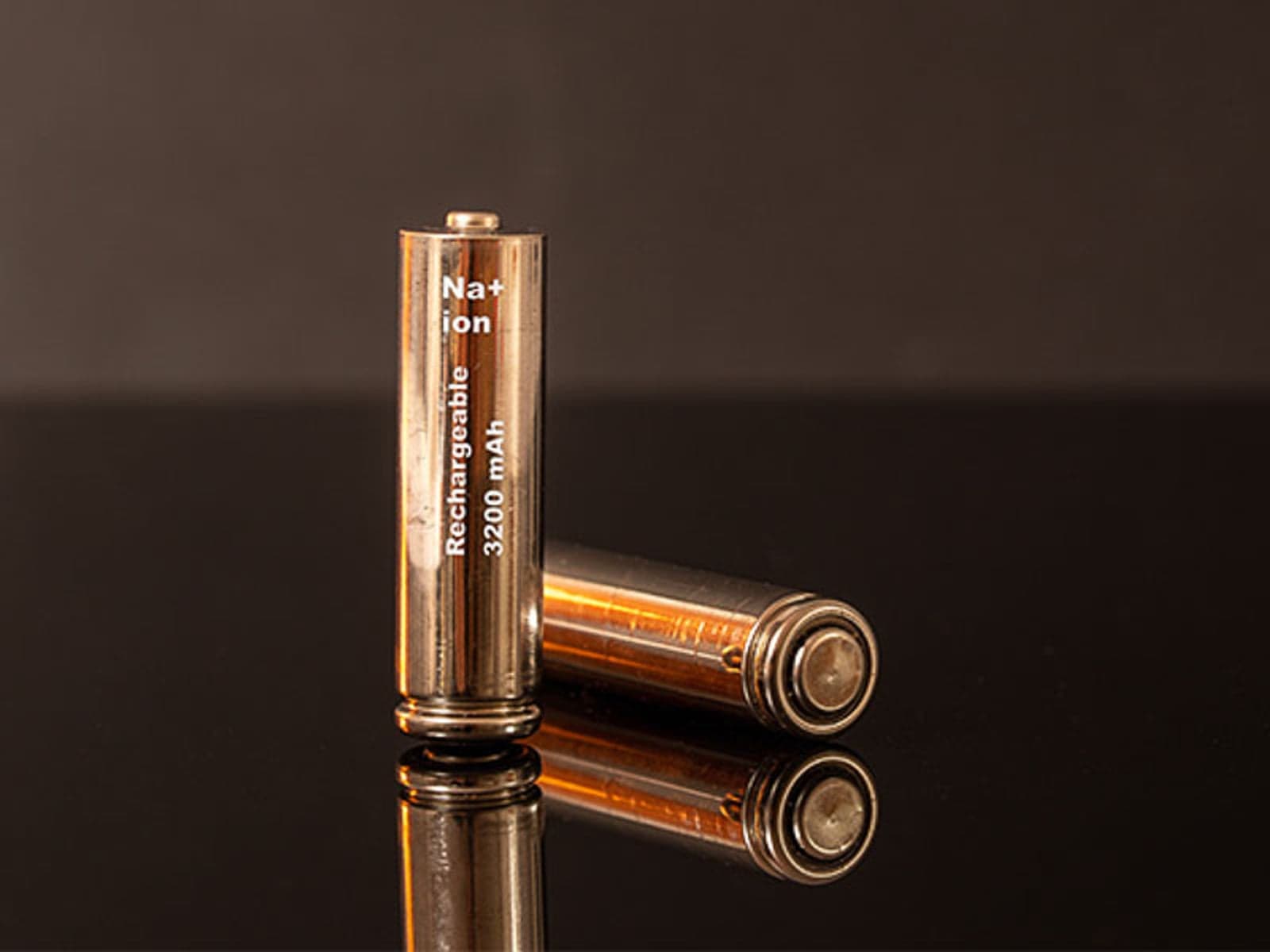
The ATENA+ and SPRINT projects are advancing sodium-ion (Na-ion) battery technologies for stationary storage applications.
The growing demand for stationary energy storage solutions highlights the need for alternatives to lithium-ion batteries. Na-ion batteries offer a promising solution due to their cost-effectiveness, sustainability and lower environmental impact.
However, to rival Li-based technologies, significant advancements are required in performance, safety and scalability.
ATENA+ (Advanced Technology for stationary Energy storage systems in NA-ion) is proposed to demonstrate a new generation of safe, sustainable-by-design, high-performance, cost-effective and fully made-in-Europe Na-ion technology at pre-industrial scale.
Also of interest
EU Energy Projects Podcast: Unpacking the Draghi report with Eurelectric & EASE
The aim of the 48-month project, which started on 1 January 2025, is to demonstrate the manufacturing of up to 80Ah and >2.5kWh modules representative of BESS applications.
Components include:
- Optimising cutting-edge active materials, such as stable cobalt-free layered oxides with minimal nickel content and improved energy density and processability, EU-sourced biobased hard carbon, made from sustainably managed forests, with enhanced capacity, efficiency and material density and customised advanced electrolytes with interphase-stabilising characteristics, high-ionic conductivity and high electrochemical stability.
- Developing environmentally-friendly processing techniques for high-performance electrode production.
- Improving cell and module architecture designs featuring a high reparability level, low maintenance requirement and enhanced safety performance.
- Integrating an advanced battery management system with battery passport capabilities and fine-tuned SoC management to achieve optimal cell performance.
Finally, the technology will be virtually upscaled to full BESS level to evaluate the system’s performance across five different real end-user operating conditions to accelerate post-project technology commercialisation.
ATENA+ is being coordinated by Fundacion Cidetec based in Spain’s Basque Country, which has considerable expertise in battery technologies, and includes 12 other partners from eight countries.
Na-ion as Li-ion alternative
The SPRINT (Sustainable European sodium-ion batteries for stationary applications featuring improved PRocesses, Inherently safe and Non-Toxic materials) project, launched on 1 January 2025 and running over 46-months, is proposed to demonstrate two safe, sustainable, and cost-effective quasi-solid-state Na-ion batteries tailored for stationary applications.
SPRINT intends to harness abundant materials available in EU supply chains, such as novel iron-based pyrophosphate cathode and hard carbon materials, alongside advanced polymer and polymer composite electrolytes, to enhance energy density, cycle life and cost-efficiency.
SPRINT also aims to bring to scale dry electrode processing to enhance the sustainability of battery manufacturing.
Batteries encompassing such solutions will be demonstrated at two demonstration sites in Austria and Lithuania.
The project also intends to engage with international use case providers in countries including Morocco, Tunisia, Kenya, Sierra Leone, etc.
All in all, SPRINT is expected to reduce costs (€0.04/kWh/cycle), enhance energy density (>200Wh/kg and >420Wh/L) and power metrics (>500 W/kg), improve cells' cycle life (projected >5,000 cycles), while ensuring safe operation for a high market penetration.
SPRINT is being coordinated by the Institutt for Energiteknikk in Norway, bringing together 16 other partners from nine countries.