Closing the gap for Europe’s biomethane ambitions
Guest/partner contributor
Posted on: 20 May 2025
A new report from four Horizon Europe projects reviews the path forward for biogas and biomethane production in Europe.
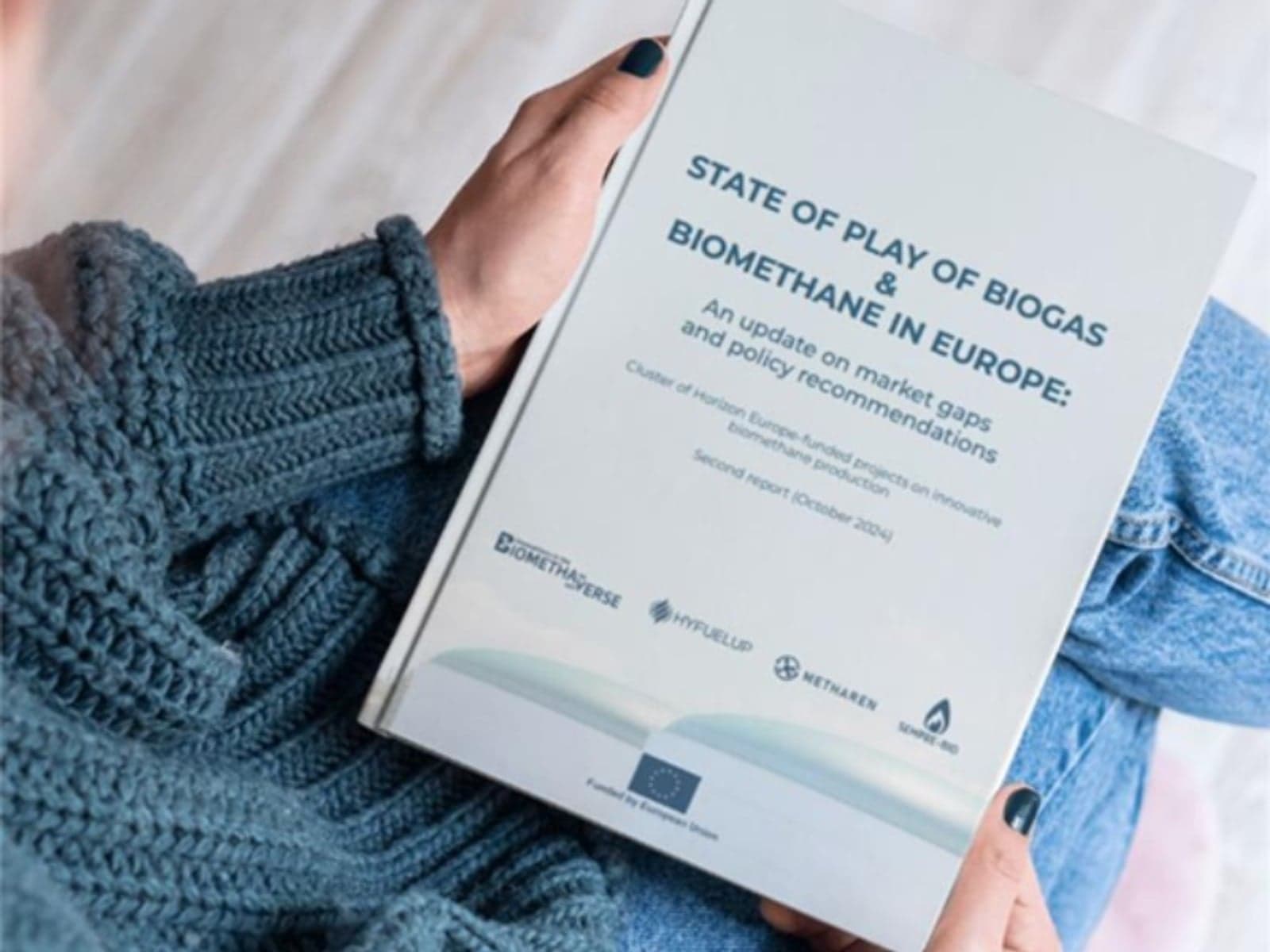
A new report from four Horizon Europe projects reviews the path forward for Europe's biogas and biomethane production.
At the core of Europe’s energy transition lies a bold ambition: to boost biogas and biomethane production to help replace fossil fuels and lower greenhouse gas emissions.
The European Commission has set the target of producing 35 billion cubic metres (bcm) of these renewable gases annually by 2030 under its REPowerEU plan. Yet, the latest national projections hover closer to 30-32bcm, exposing a gap that demands urgent attention.
To confront this challenge, four Horizon Europe projects have teamed up to produce a new report titled ‘State of Play of Biogas & Biomethane in Europe’. Drawing on country-specific data, Biomethaverse, Hyfuelup, Metharen and SEMPRE-BIO offer a broad view of current market conditions, policy gaps and the emerging technologies that could help Europe meet these 2030 targets.
Regulatory fragmentation and persistent hurdles
One of the report’s central findings is that regulatory complexity continues to slow progress. Member states apply EU directives in very different ways, creating a patchwork of national approaches with different permitting processes and market rules.
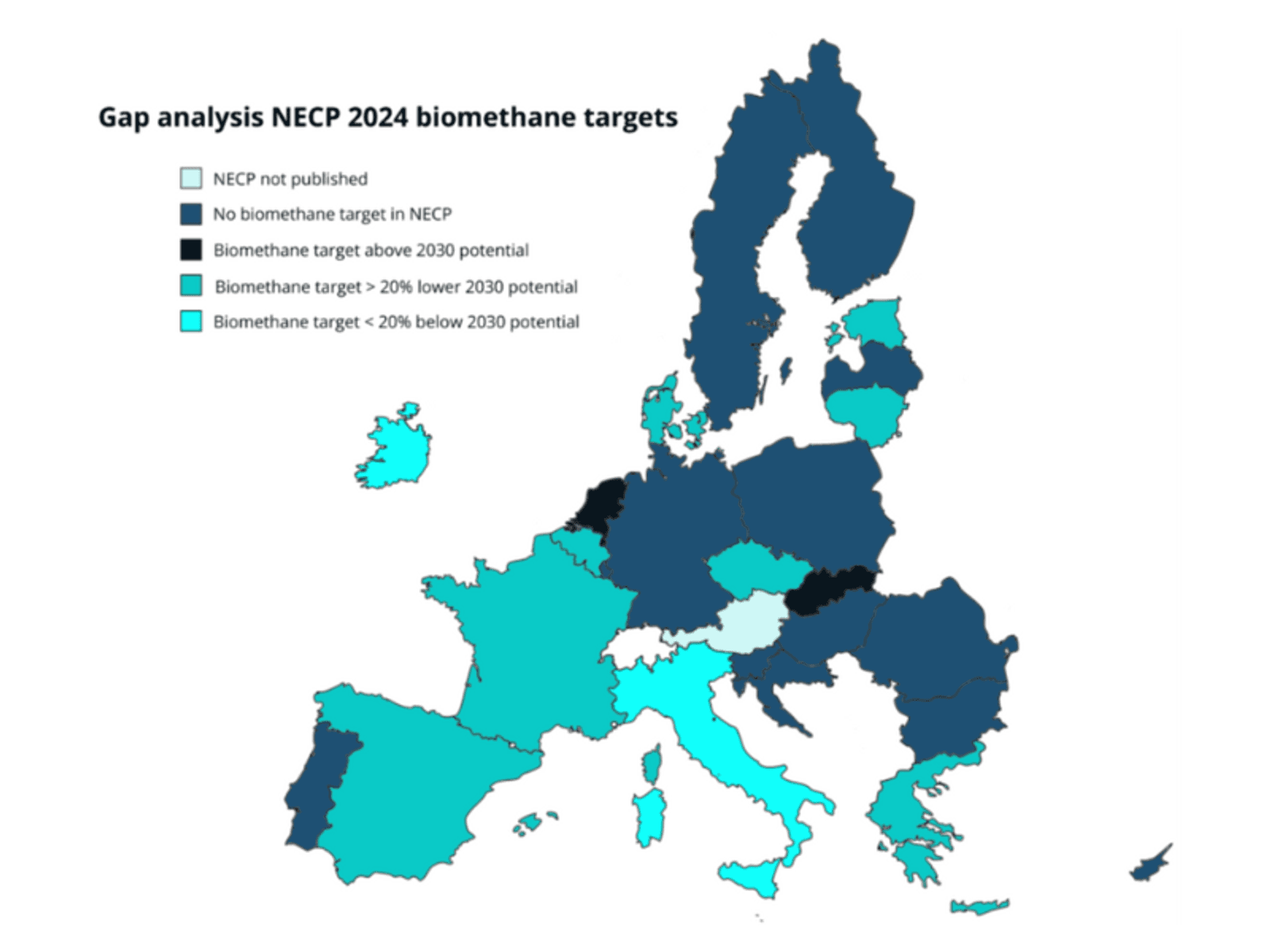
This problem is underscored by delays in updating national energy and climate plans (NECPs). In 2023, only four countries submitted their revisions on time, reflecting the lack of priority given to biomethane in national planning.
Also, projects get mired in bureaucracy, developers struggle to secure financing and even basic tasks like injecting biomethane into existing gas grids can become a formidable undertaking.
On top of that, infrastructure and resource bottlenecks, including limited injection points, a shortage of skilled workers and unpredictable delivery times, further complicate plant construction and operation.
Rising cost pressures for raw materials, technology and labour also jeopardise the financial feasibility of projects, particularly in regions that lack robust policy support.
Toward harmonised certification and cross-border trade
To move the market forward, the report highlights the urgent need for harmonised systems to certify and track renewable gases. Guarantees of origin (GOs) and proofs of sustainability (PoS) remain central to ensuring that biomethane can be bought, sold and transported across national borders without losing its 'green' credentials. Yet, fragmented GO registries and inconsistent reporting stand in the way of an efficient internal market.
The four projects behind the report contend that a more unified approach to cross-border trade would enhance administrative procedures, offer greater transparency to buyers and sellers and encourage investment by reducing uncertainty.
Spotlight on emerging technologies
While anaerobic digestion remains the staple method for producing biomethane, the report notes the emergence of gasification and methanation. Specifically, gasification could account for 9% to 30% of Europe’s biomethane output by 2040, diversifying the sector and further reducing reliance on fossil fuels.
Feedstock choices are also evolving. Many producers have shifted away from growing dedicated energy crops, turning instead to agricultural residues, manure, organic waste and forest biomass. This move can minimise land-use conflicts and is in line with Europe’s broader climate objectives.
The road ahead
Despite the obstacles, the mood is cautiously optimistic. The four Horizon Europe projects call for coherent legislation, stable financial incentives and more robust cross-border collaboration to bridge the gap between the current forecast and the REPowerEU goal. Simplifying red tape, improving infrastructure and ensuring predictable returns on investments are likely to entice both public and private stakeholders.
Importantly, the report stresses that social acceptance must remain front and centre. Communities and local governments need to see clear benefits to fully support biomethane initiatives. At the same time, ensuring strong sustainability practices for long-term industry growth.
The question is whether Europe can turn ambition into action quickly enough to meet the looming 2030 deadline. The four projects are doing their part to push forward. Their combined expertise offers a clear-eyed perspective on where the bottlenecks are and how to ease them.
Following these recommendations will undoubtedly lead to a clear path for Europe’s bold climate aspirations.
About the author

Lucía Salinas leverages a rich background in translation and studies in East Asia and International Relations to bridge gaps between diverse cultures and sectors. She is eager to bring fresh perspectives and serve as a dynamic link, helping to make complex information more accessible and fostering smooth communication at all levels.
Most popular
Join the community for freeAnd get access to all content
Related projects
SEMPRE-BIO
+2
1 November 2022 - 30 April 2026
View project