Home
/
South Africa’s energy crisis explained in five quotes from the state utility’s leadership
South Africa’s energy crisis explained in five quotes from the state utility’s leadership
Julia Kramer
Posted on: 18 May 2023
To give insight into this energy crisis in South Africa, we put five quotes from the leadership of the state-owned utility Eskom in perspective.
While the European energy crisis, caused by the deliberate, sudden drop in gas supply from Russia with exploding gas prices as a result, is slowly fading from the headlines, an energy crisis in South Africa is peaking.
To give insight into this energy crisis that has been in the making for over 15 years and is now crippling the country, we put five quotes from the leadership of South Africa’s state-owned utility Eskom in perspective.
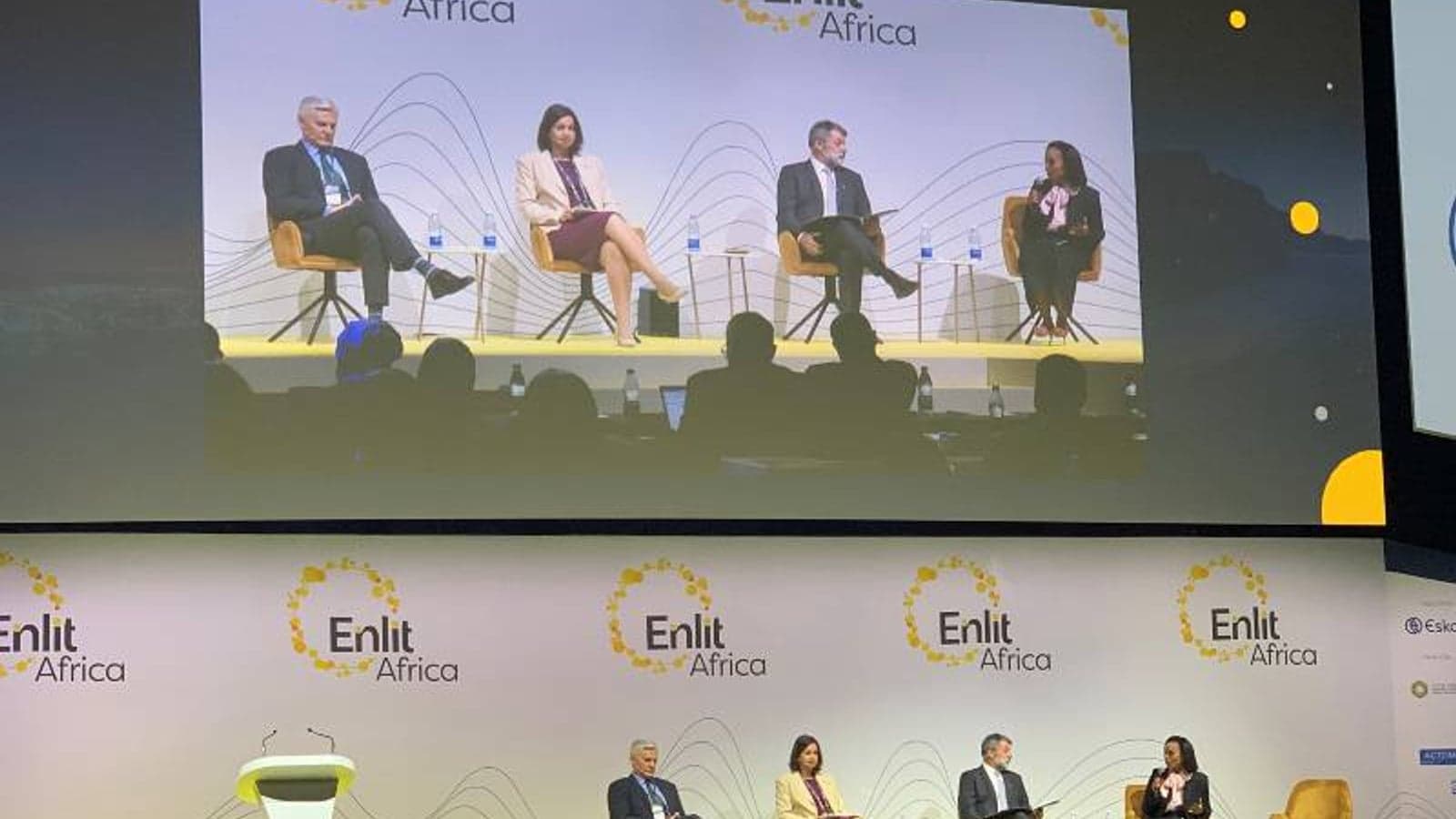
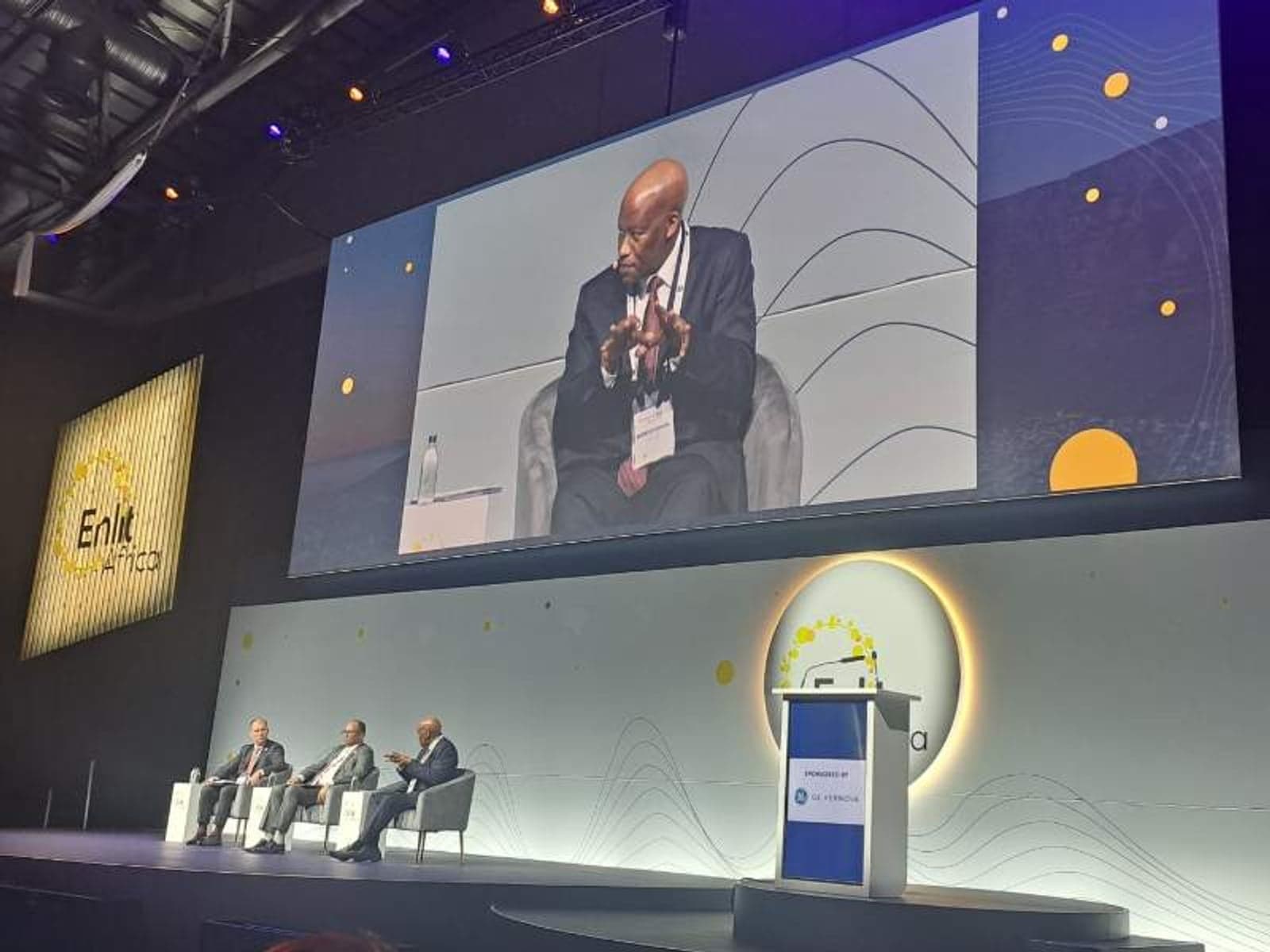
Calib Cassim, the acting CEO of Eskom, and Segomoco Scheppers, General Manager for Transmission, took the stage at Enlit Africa in Cape Town to provide a status update on the challenges and opportunities this 100-year-old utility is facing.
The fireside chat with the senior executives of the utility, guided by James Mackay of the South African Energy Council, happened just days after South Africa reached a new ‘milestone’: On May 9, the average South African had endured an accumulated 34.56 days of blackouts – known locally as 'loadshedding' – matching the previous dubious record set in December 2022.
Eskom is implementing loadshedding as an emergency response to the fact that the country’s power generation facilities are often not able to produce enough electricity to meet demand.
By scheduling regular interruptions to the electricity supply to certain parts of the grid, the utility prevents excessive load on the generation plants.
Loadshedding is a staged approach: the higher the stage, the longer and more frequent the power cuts. Each stage is equal to a reduction of 1000MW of power supplied to the grid.
Loadshedding was first introduced by Eskom in 2007 as an emergency measure. But in the past few years, it has developed into a near-permanent situation. So far, the average South African has experienced 6,2 hours without power per day in 2023. While Cassim and Scheppers were assessing the situation on stage, South Africans were in the midst of stage 6 loadshedding, with up to 9,5 hours without power that day.
The energy crisis is caused by a lack of investment in new power generation capacity, but also due to breakdowns and serious maintenance issues with the existing, ageing coal-fired power plant fleet.
In February, South African President Cyril Ramaphosa declared a national ‘state of disaster’ over the energy crisis and appointed a Minister of Electricity to support Eskom and the existing Minister of Mineral Resources in solving the crisis. However, within two months, the state of disaster was revoked in light of lawsuits challenging the legality of the President’s decision.
Cassim and Scheppers talked openly about the energy crisis in South Africa and how they are trying to manage the grid, and the consumer's expectations.
1. “We are really starting the winter on the back foot of minus 3000MW, which makes it very difficult. We do acknowledge that it will be a tough winter.” - Cassim
Now that South Africans are gearing up for winter, even more eyes are on Eskom. The expected increase in peak demand is set to exert additional pressure and stress on the system, which is already under severe strain during normal operations. According to Cassim, capacity will be 3000MW lower than during last year’s winter. This is because three units of the troubled Kusile coal power plant are not available due to breakage, which equates to 2000MW. In addition, the nuclear power plant Koeberg is not able to provide 900MW to the system due to maintenance of its one remaining functional unit.
“We must acknowledge Eskom’s shortcomings as well,” said Cassim. “On average, the unavailability factor is between 16,000MW up to about 19,000MW, that is key to reducing the impact on the winter outlook.”
Cassim: “For now, the most important [thing] is assisting [the] Generation [department] to manage the winter to the best of our ability, whether it's the support functions, the procurement, the financing, the legal, etcetera. It's key to minimise the impact on loadshedding. During this winter, the reality is going to be tough. If we can keep the peaks at state six or lower, and during off-peaks at stage four, I think we're going to have a successful winter.”
However, Cassim believes there is positive relief on the horizon, referring to Kusile coming back online in December.
“Objective number one is to minimise and keep the loadshedding as low as possible during the winter period. Priority is to make sure we are in control of the grid. That's the most important thing.”
2. “I don’t lose sleep around the blackout as the acting CEO or when I was the CFO, I lose more sleep when we touch stage 8, which we will need to manage.” - Cassim
Cassim claimed that the most frequently asked question he gets about the energy crisis in South Africa is whether the country would plunge into a complete blackout. However, he said he does not lose sleep over this widely-held concern. He said that he has complete confidence in the team and emphasized that there are several control checks that needed to be reached before a blackout would occur and that these are all tested and under control.
Scheppers agreed with Cassim, explaining that a blackout is often caused by external circumstances, such as extreme weather events like in Texas in 2021, not through a loss in generation capacity. Loadshedding, on the contrary, is the controlled reduction of demand to prevent a blackout.
“Control is the operative word: we know what we are doing, and the customers know what is happening. We are unhappy to be there [loadshedding], but we are in control of the situation. As things stand, we will be here for a while. I must commend, despite the unhappiness, I think as a country we are managing this well. We don’t want to be here, but we are handling it well,” said Scheppers.
Cassim explained, however, that managing stage 8 loadshedding is something that does make him lose sleep, knowing how much effort and focus it requires from the responsible teams to manage the system.
3. “The board is currently busy with the interviews for the next CEO of Eskom.” - Cassim
Cassim, originally appointed as the CFO of Eskom, is currently the acting CEO of the utility after André de Ruyter resigned and left the utility in March 2023.
De Ruyter’s resignation caused a lot of upheaval, not least because the day after he handed in his resignation letter, he was rushed to the hospital after what seemed to be cyanide poisoning in his office. The case is currently under investigation with the South African police.
In the lead up to his last day in office, De Ruyter spoke out about the widespread corruption at the utility in an exclusive interview on national television. He also highlighted the direct involvement of senior officials of the South African Government, as well as criminal cartels. These findings were based on privately funded investigations. The Eskom board asked him to leave with ‘immediate effect’ after the explosive interview was aired.
The last word about this affair has not been said yet. De Ruyter recently published a book about his three years as the head of Eskom. Meanwhile, the South African government called for an official inquiry into De Ruyter.
While these investigations unfold, Cassim is holding the fort at Eskom.
Referring to the status of the recruitment process, Cassim said the board is currently interviewing candidates. He hoped that they would be able to appoint a new CEO “as quick as possible, so I can try to normalise my life as well (…) It could be anything between two months to four months. I'm hoping it's not six months, personally.”
4. “The lack of convictions and setting those examples for maybe the more higher profile cases is what is missing to instil the confidence not only within Eskom, but the greater society.” - Cassim
Allegations of corruption at the utility have been around long before De Ruyter’s departure, but his bombshell claims seem to have sparked an urgency to put mechanisms in place to expose corruption and bring cases to court.
According to Cassim, more is now done by the board and management of the utility to flag corruption, such as whistleblowing platforms. “The number of items that have been raised on a monthly basis is increasing and we see that as a positive indicator.”
What seems to frustrate him, however, is that not enough cases lead to convictions.
“Until we get some of the bigger profile cases, those that are charged, land up in orange overalls, it's almost that you get a sense there are no consequences for the malfeasance and breaches of governance. So that's what we need as Eskom and more importantly as a country.”
5. “The National Transmission Company (NTC) South Africa should start trading from November or December this year.” - Scheppers
Beyond the efforts that are being made to expand the generation capacity to solve the energy crisis, the development of the grid is just as important. There is no time to waste on the expansion and strengthening of the grid, said Cassim.
Eskom recently got substantial debt relief from the government, which, according to Cassim, will enable the utility to release capital expenditure in transmission and distribution projects for the next three years. However, in order to really make a difference, the so-called ‘unbundling of Eskom’ needs to be finalized. This project, initiated by President Ramaphosa in 2019, would split the utility into three separate entities: Generation, Transmission, and Distribution.
Once the license has been received, the newly formed, independent National Transmission Company would have better access to funding for transmission investments, since it no longer will be affected by the financial issues from the Eskom mothership. It could also sell and buy power, which should create a more competitive energy market.
According to Scheppers, the NTC could start trading at the end of this year. In parallel, he says, good progress is being made in terms of the complex legal and policy preparation for a wholesale trading market.
“This will have to be part two. (…) We are, as we speak, simulating that competitive market internally. So we are fairly advanced on the systems between ourselves as a market operator internally and our power stations, but this is not impacting the external world. But with the passing of the Electricity Regulation Act, I think it will move us into that dimension,” said Scheppers.