Green hydrogen startup spotlight: Enapter
Heather Johnstone
Posted on: 12 December 2022
Heather Johnstone spotlights Enapter, a new startup venture cutting the costs of green hydrogen production via innovative electrolyser solutions.

Heather Johnstone spotlights Enapter, a new startup venture cutting the costs of green hydrogen production via innovative electrolyser solutions.
Green hydrogen has enormous potential in helping Europe and the rest of the world decarbonise, especially in hard-to-abate sectors, such as heavy industry or heating. But realising this is not without its challenges and one of the most significant is the high cost of green hydrogen compared to either grey or blue.
Having said that, BloombergNEF released a study earlier this year that concluded the sky-rocketing gas prices, brought on by the war in Ukraine, may already mean that green hydrogen is now at cost parity.
According to its Ukraine War Makes Green Hydrogen Competitive study, grey hydrogen now has a levelised cost of $6.71/kg in the EMEA region, while for green or renewable hydrogen it’s $4.84-6.68/kg. Although positive news, we must not allow it to mask what we need to do.
If we’re serious about green hydrogen being a vital part of our energy mix going forward, its cost cannot be dependent on the price of gas (sound familiar?). It must become cost competitive in its own right by bringing its levelised cost down to below $2/kg by 2030.
No easy feat, but it is here where innovation and innovators have a vital role. And one such innovator is Enapter.
Also of interest:
Site visit: How Siemens Energy is future-proofing the gas turbine with hydrogen in Berlin
How Berlin is making the energy switch to hydrogen economically and socially viable
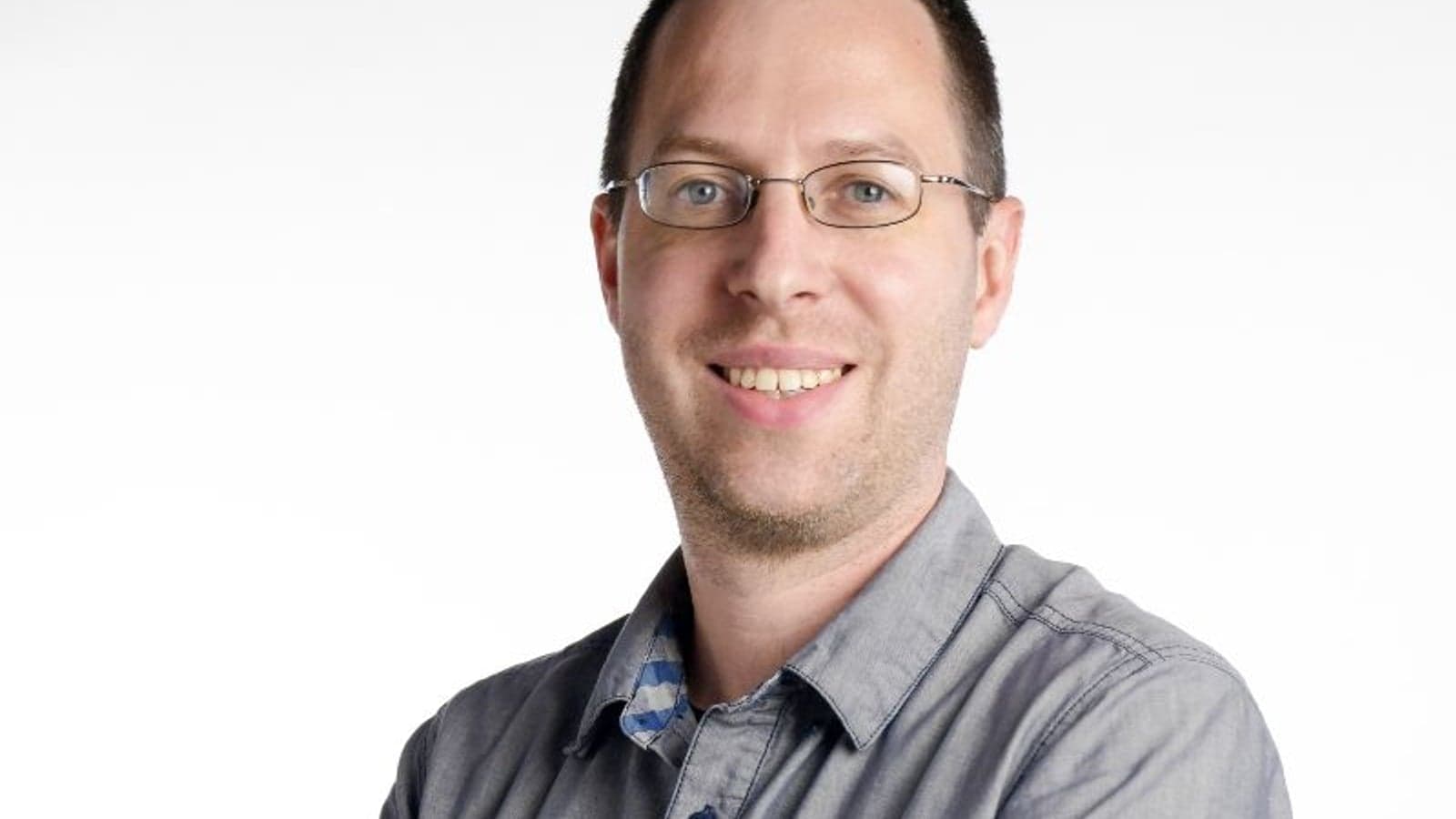
To learn more about the company and how they are advancing green hydrogen, I spoke to Vaitea Cowan, Co-Founder & Head of Communications at Enapter.
What is your green hydrogen solution and what are its USPs?
We are the world leaders in developing and manufacturing AEM electrolysers: green hydrogen generators that combine the advantages of all previous electrolyser technologies. We believe they can make hydrogen affordable and accessible to all.
For a start in terms of USPs, we make products not projects: Our plug-and-play electrolysers can be easily integrated in a fraction of the time traditionally needed to deploy hydrogen.
They also come with our Energy Management System Toolkit for simple software integration, system management and remote control. And they’re modular units that can meet hydrogen needs of any size, whether that be pilot scale with compact EL 4.0 Electrolysers or megawatt-scale with our 1MW AEM Multicore.
So, in short, they’re simple, smart, and scalable. And almost unbeatable on price.
How does your solution genuinely contribute to the successful transition to a low-carbon future?
Today they’ve already been deployed to customers in 52 countries, so they’re already pioneering a low-carbon future in applications as varied as power grid balancing, hydrogen-derived foodstuffs, refuelling, energy back-up for disaster zones, supply of industrial green gas and much more.
Green hydrogen is a truly versatile tool for solving our decarbonisation problems that involve replacing fossil fuels with another molecule, so we’re seeing integration partners and direct customers come up with some amazing solutions in every sector imaginable.
What have the milestones been so far, and what are the next ones?
It all started with the Phi Suea House, the residence of my co-founder Sebastian-Justus Schmidt, which he designed with a first-of-its-kind green hydrogen-based energy system back in 2015, using early AEM electrolyser technology from Italy.
When the company producing these came up for sale, he saw the potential to help tackle the climate crisis and bought it in 2017, renaming it ‘Enapter’ – ‘En’ for energy, ‘apter’ for adapting. Back then, we were a team of 11 and 3 founders.
By 2019, together with our cofounder Jan-Justus, we had opened a Berlin office, greatly expanded our team in Italy and abroad, and boosted production with a new serial production facility in Italy.
Another big year was 2020, with the launch of our third-generation EL 2.1 electrolysers and hitting the stock market with a reverse acquisition.
Last year was also massive, with the ground-breaking of our Enapter Campus production and R&D site in Saerbeck, Germany, and being named as one of the inaugural winners of the Earthshot Prize.
Next up, we expect to finish construction of our production and R&D buildings in Saerbeck around the end of the year, so we’re looking forward to begin making the transition to mass production of our electrolysers. At around the same time, we hope to have our prototype AEM Multicore in operation and be starting to manufacture the first commercial series of these megawatt-scale electrolysers.
What words of wisdom do you have for other start-ups beginning their entrepreneurial journey?
If you have a solid idea and the passion to turn this into reality, do enough due diligence to get a feeling for the market and feasibility, but don’t wait too long before taking action.
Firstly, because we cannot wait to address the climate crisis, and secondly, it’s better to fail fast and learn even faster.