The world needs green molecules: meet the people driving clean hydrogen innovation
Jonathan Spencer Jones
Posted on: 27 May 2025
Meet the pioneers behind two cutting-edge innovation projects helping to future-proof Europe’s energy systems with green hydrogen.
Meet the pioneers behind two cutting-edge innovation projects helping to future-proof Europe’s energy systems with green hydrogen.
“Everything is changing right now and there are a lot of activities ongoing and a lot of people now see hydrogen as one of the important pieces of the energy transition puzzle,” says Åsa Lyckström, a Sustainability Strategist at Siemens Energy.
“Clean hydrogen generated will not just be used as hydrogen, we’ll see it converted to ammonia or e-methanol or other fuels that can be easily transported and stored.”
E-fuels like green hydrogen, offer a sustainable energy solution that can support sectors, from steelmaking to aviation, and are poised to play a central role in decarbonising industries that are otherwise difficult to electrify.
In Europe’s drive to adopt a decarbonised energy system, green hydrogen emerges as a promising, if complex, candidate. Despite its potential, the sector faces significant challenges to widespread adoption. Hydrogen Europe reported in its 2024 Clean Hydrogen Monitor, that hydrogen demand in the region has been dropping – down 15% in 2023 from 2020 – and that the 2024 EU hydrogen strategy 6GW target would not be achieved.
On the other hand, global hydrogen project pipelines have grown by a factor of seven since 2020, from 228 projects to over 1,500 projects by May 2024, with a shift in focus on advancing projects towards final investment decision.
While challenges remain in the form of regulatory blockers, offtake incentives, infrastructure build out and the implementation of certification schemes, the consensus is that clean hydrogen is necessary for Europe’s energy transition – a case of not ‘if’ but ‘when and how’.
Hydrogen’s role in a future energy system
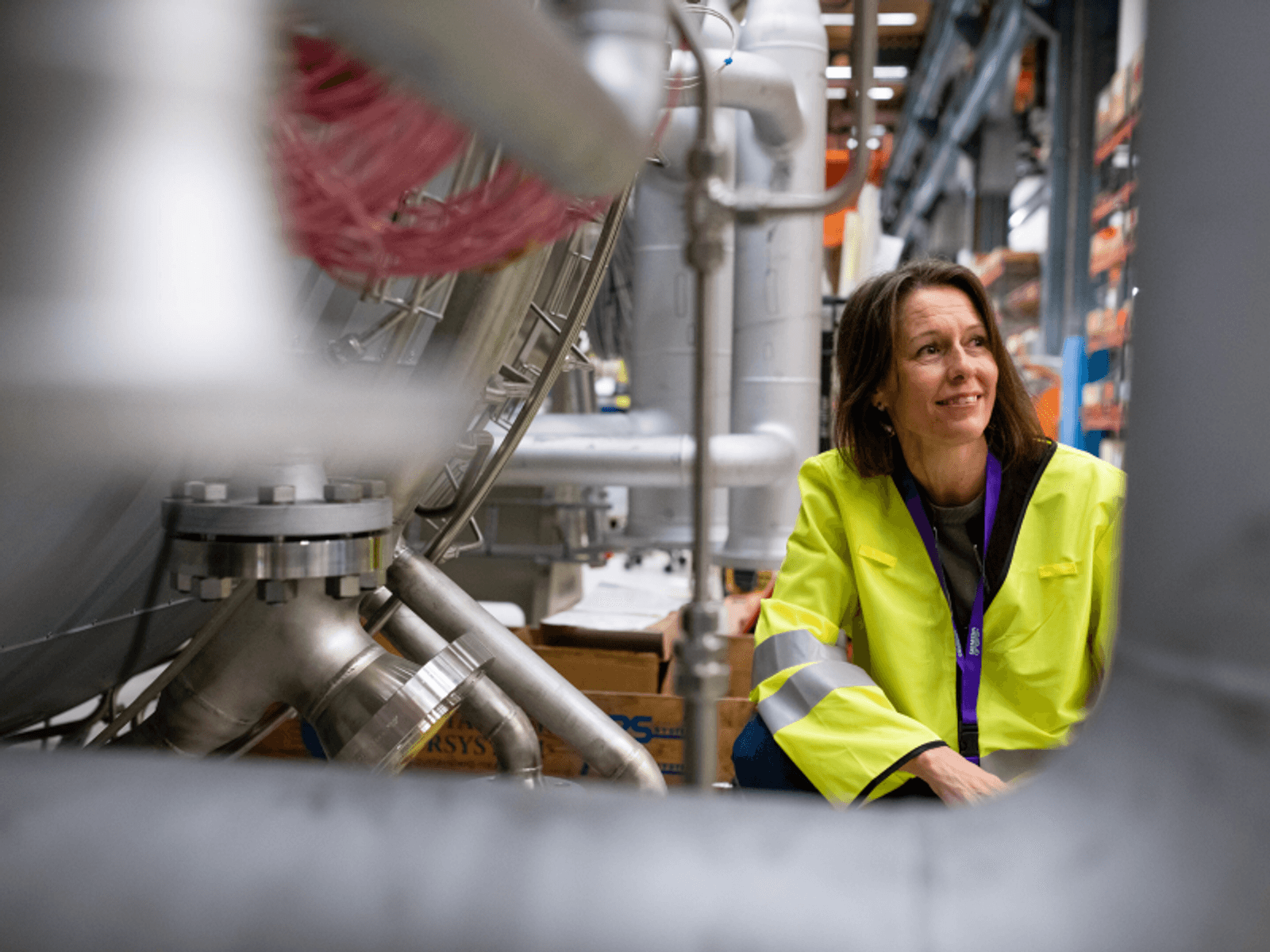
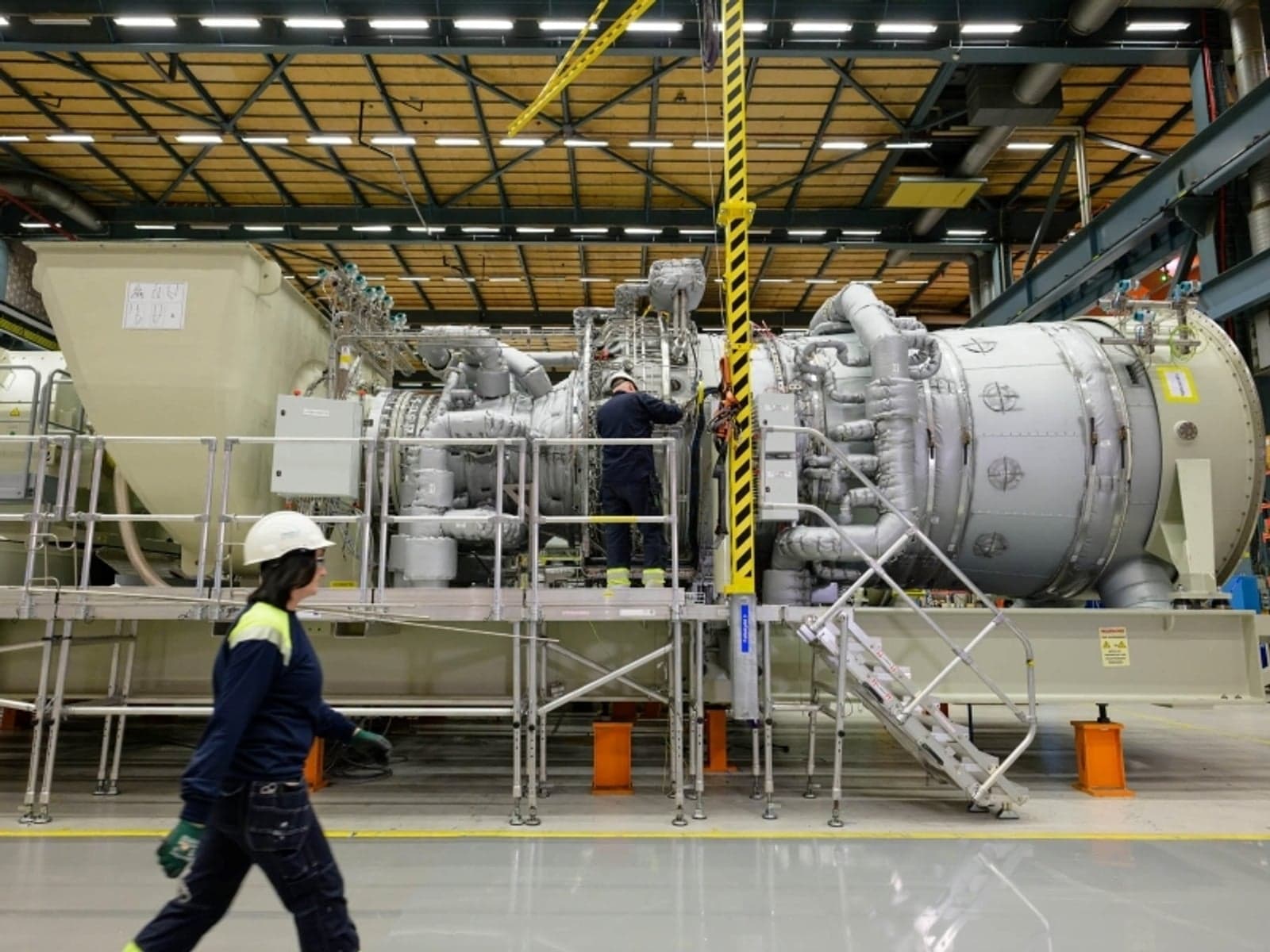
In recent years, clean hydrogen’s role as a source of dispatchable generation has been a catalyst for further innovation in the energy sector. Something Lyckström and her team, who run Siemens Energy’s Zero Emission Hydrogen Turbine Centre (ZEHTC) in Finspång in the southeast of Sweden have built into their future technology demonstrator.
Borne from a collaborative working session in 2018, and commissioned in 2021, the centre acts as a demonstration plant for an array of energy technologies. The site provides ideal testing conditions for a connected, flexible energy system, linking gas turbines, hydrogen production, renewable energy and energy storage solutions.
The concept is straightforward, utilising solar power and excess energy from testing mid-size industrial turbines, to charge batteries and produce hydrogen. The hydrogen generated is compressed and stored and used to power gas turbine tests as and when needed. The batteries are used to support operational flexibility. The rationale behind this closed loop demonstrator is to provide a truly integrated energy system for testing and innovation.
“We wanted to show how renewable energy sources and turbine-based powerplants can work hand in hand seamlessly and how the green hydrogen and e-fuels produced can be used for power generation and storage,” she explains.
Recognised for their short ramp-up times and stabilisation of grid frequency, the fuel flexibility of turbine technology enables the use of green e-fuels for consistent and continuous power. When introduced as part of a diverse energy mix, dispatchable generation like this can provide stability and consistent energy, when needed.
A partially EU-funded demonstrator, and supported by local and regional Swedish government agencies and two universities, the centre has attracted considerable interest worldwide, Lyckström says. The site regularly hosts decarbonisation workshops for customers, who can view the technologies in action and assess how they can be introduced and scaled for anything from site to city-wide implementation.
As an example of a joint initiative with academics from universities, she cites the investigation of the technologies for 100% green electricity for a city. As part of the work, the team tested different scenarios to find the most cost-efficient solutions and found that removing a source of dispatchable generation like gas turbines could potentially double energy costs through needing to over-dimension both the available renewables on the network and the transmission system.
“This was a very interesting finding of the joint work,” she says. “The unique scenario we tested here showed that, while in simple terms, it was technically possible to have an 100% green electricity system without dispatchable generation, it would require to over dimension both the renewables as well as the transmission system, which would also be twice as expensive.
"In this example instead, you could run the turbines on 100% renewable hydrogen for an emissions-free energy network that is also reliable and robust.
“Being able to test scenarios like this helps to consider the unique make up of energy systems and also shows how green hydrogen and other e-fuels can be run through a turbine-based power plant to underpin a network with consistent, clean power.”
Lyckström emphasises that the formation and growth of the centre is a testament to the power of collaboration, where the diverse expertise and resources from across Siemens Energy come together, building a hub for learning and experimentation.
“It was a challenge for us, but the diverse skillset of our team, with colleagues coming from different parts of our business, from R&D, service and manufacturing, with different perspectives and experience, to collaborate on building this energy system meant the process felt inspirational and innovative. I’m very proud of what we have built here.”
Green hydrogen’s role in decarbonising industry
Only around 40% of global carbon dioxide emissions originate from power generation that can be decarbonised via electrification. The remaining 60% originate from industry, mobility, buildings and other sectors. Decarbonisation here relies on sector coupling to make green fuels available for use by these sectors.
Compared to fossil fuels, hydrogen technologies are relatively new. Proton exchange membrane (PEM) electrolysis, a technology that uses a solid polymer electrolyte to efficiently split water into hydrogen and oxygen, enabling the production of green hydrogen with minimal energy loss and significant potential for sustainable energy applications, was first introduced in the 1960s, with initial applications focused on specialised uses, such as NASA’s Gemini project .
These early electrolysers were designed to produce hydrogen at a modest, experimental scale, a far cry from the large industrial use at Ludwigshafen.

Anne-Claire Schubert, Project Manager for PEM Electrolysis at Siemens Energy, has led a pioneering first-of-a-kind project for chemical giant BASF at its Ludwigshafen headquarters, Germany.
Utilising the 54MW PEM electrolyser supplied by Siemens Energy, the water electrolysis plant, now officially Germany’s largest green hydrogen project, can generate 8,000 tons of emission-free hydrogen a year.
The output will be used to produce base chemicals, while also supporting hydrogen mobility initiatives in the Rhine-Neckar metropolitan region.
The technology has been integrated with BASF’s existing production and infrastructure, enabling the green hydrogen generated to be fed directly into BASF’s hydrogen Verbund network, which connects production plants across the BASF site.
Schubert, who brings a decade of experience working in the emerging hydrogen business at Siemens Energy following earlier work on HV substations and in solar, explains that the PEM process in which hydrogen is produced by splitting water molecules is CO2 free if using power from renewable sources rather than the steam reforming hydrogen production approach, also known as grey hydrogen.
“BASF had a clear vision for this project. They were forward-thinking, focused on building the enabling conditions for water electrolysis to be part of their production process with the end result being products with a significantly reduced carbon footprint.”
Outlining the project, she says that a highlight was the arrival onsite of the first module of the electrolyser in March 2024 – a little more than two years after the project initiation with the ensuing engineering studies and the design and manufacturing phases.
“Before that the project was ‘on paper’,” she says, “but seeing the first modules on site, being installed, it takes on a different dimension.”
Recalling the earliest projects she worked on of 100kW scale, Schubert says there has been significant ramping in electrolyser capacity over the past 10 years.
“This increase in scale has brought changes in terms of techniques, logistics and costs and the larger the project, the more complex it is.
"Also, in this case the installation was not greenfield but on an existing site, which also is one of oldest and largest chemical sites in Europe and happens to be within the city.”
The plant can supply the BASF site with up to 1t of hydrogen per hour, significantly contributing to BASF’s sustainability goals by potentially reducing greenhouse gas emissions by up to 72,000t annually.
“Collaboration is the first priority” says Schubert. “We worked with our colleagues at BASF and were agile in our approach. This meant that we delivered something innovative, using our shared knowledge and insight. I hope this project acts as an enabler for other industry players to recognise that PEM electrolysis provides a proven method of on-site green hydrogen generation.”
Building a career in green hydrogen
Both Lyckström and Schubert are engineers by training, but despite describing themselves as ‘working in hydrogen’ both have followed different paths working at opposite ends of the value chain.
Early in Lyckström’s career, her focus was on gas turbine technology. She moved from sales into different positions in analysis and strategy before taking up her current role at the Finspang site.
“The opportunity to study and explore new technologies is one of the perks of working in Siemens Energy. As the Zero Emission Hydrogen Turbine Centre demonstrates, our energy systems are as diverse as they are complex.
"I am privileged to have worked with many different technologies, with academics, with policymakers and with customers from all around the world. This knowledge has absolutely supported what I’m doing now.
"Plus, in a global company you have the opportunity to understand different perspectives, meet different people and see differences within energy systems across the world. That’s a huge amount of insight that you can apply in different scenarios.”
Schubert agrees: “In hydrogen electrolysis you combine the electricity part from the grid, transformer, rectifier, etc. with the gas process part, so for me it’s amazing to have had the opportunity to hone skills in several fields of the energy system with Siemens Energy.”
Working as a process engineer, with a passion for renewables, Schubert trained in environmental studies, eventually becoming a project management lead in hydrogen electrolysis.
“You are always part of a team,” says Schubert. “A project is like a puzzle with large pieces and small pieces and every piece, every person in it, is important. I see it as my role not only leading the project, but also offering support to each member of the team. I aim to structure the project effectively and collaborate as a team player. Communication is key.”
Lyckström highlights the role of multidisciplinary team working on projects, like the Zero Emission Hydrogen Turbine Centre.
“Green hydrogen is a relatively new field. When building a successful team we of course look for the right skills, but also the right attitude, the curiosity, the passion, the desire to collaborate. A team needs a variety of skills, perspectives, experience to be innovative.
Green hydrogen in our future energy system?
The rationale for widespread clean hydrogen adoption is clear, and, as evidenced by the work of Åsa Lyckström and Anne-Claire Schubert, the technology is here, ambitious targets are set and innovation along the hydrogen value chain is already happening.
So, what’s hindering a fast implementation of clean hydrogen? From incentives to certification schemes to building bankable projects, to scale this sector, there are several challenges to solve. But pragmatic policy focused on underpinning a sustainable clean hydrogen industry could unlock the sector’s full potential.
It’s a powerful reminder; people and projects are driving innovation in green hydrogen, a common policy approach could kickstart widespread adoption.
Own your career in energy like Åsa and Anne-Claire. Explore jobs at Siemens Energy