235 cross-border energy projects named in Europe
Jonathan Spencer Jones
Posted on: 20 December 2025
The European Commission has identified 235 cross-border energy projects as projects of common or mutual interest in the new listing.
The second list of projects of common and mutual interest (PCI, PMI) marks a significant increase from the 166 projects of the first list in 2023.
In terms of PCIs, i.e. cross-border projects linking the energy systems of EU countries, the list is comprised as follows:
- 97 electricity, offshore and smart electricity grid projects, including 24 storage projects, six smart grids projects and 19 offshore infrastructure projects, that are regarded as essential for integrating the growing share of renewables.
- 96 hydrogen and electrolyser projects, of which 51 are for pipelines, nine for terminals, 18 for storage and 22 for electrolysers, which should play a major role in integrating and decarbonising the EU's energy system.
- 12 carbon transport infrastructure projects that will advance the development of the market for carbon capture and storage.
- 3 smart gas grids projects to digitalise and modernise the natural gas network.
- 2 long-standing projects linking Malta and Cyprus to the mainland European gas network.
The list of PMIs, i.e. projects promoted with countries outside the EU, is comprised of 25 projects – 16 electricity, four hydrogen and five carbon networks – with countries including Ukraine, the United Kingdom, Switzerland, Norway, Georgia, the Western Balkans and North African countries including Algeria and Tunisia.
Also of interest
Brussels unveils European Grids Package to supercharge cross-border energy infrastructure
Why Europe is at a tipping point on grid resilience
These projects – with the list subject to the final approval of the European parliament and council – will be eligible to apply for the special financing from the Connecting Europe Facility and also will benefit from expedited permitting and regulatory processes.
The Commission also has indicated supporting the implementation of these projects through stepped-up political coordination with the member states concerned, drawing on the Energy Union Task Force and the regional high level groups intended to support key energy infrastructure development.
According to the Commission these projects will strengthen energy connectivity across the continent, bringing nearer the completion of the ‘energy union’.
“By allowing vital interconnections across the EU and with neighbouring countries, they can play a strategic role in increasing EU's competitiveness, decarbonisation and enhancing Europe's energy security and independence.”
The release of the list preceded by mere days the release of the significant grids package and the energy highways initiative, which is expected to accelerate the development of cross-border projects, including the PCIs in general and those of them selected as energy highways in particular.
At the heart of the proposal is a cross-border infrastructure planning approach, with an EU central scenario consistent with energy and climate targets to be developed from which the infrastructure needs can be identified.
Other aspects include proposals to simplify and accelerate permitting and the implementation of measures to ease supply chain pressures and blocks.
Energy highways
The eight energy highways that have been named – most of them with PCI or PMI status – are those cross-border projects considered as the most urgent energy infrastructures and requiring particular additional short-term support and commitment for implementation to address the bottlenecks that hinder progress.
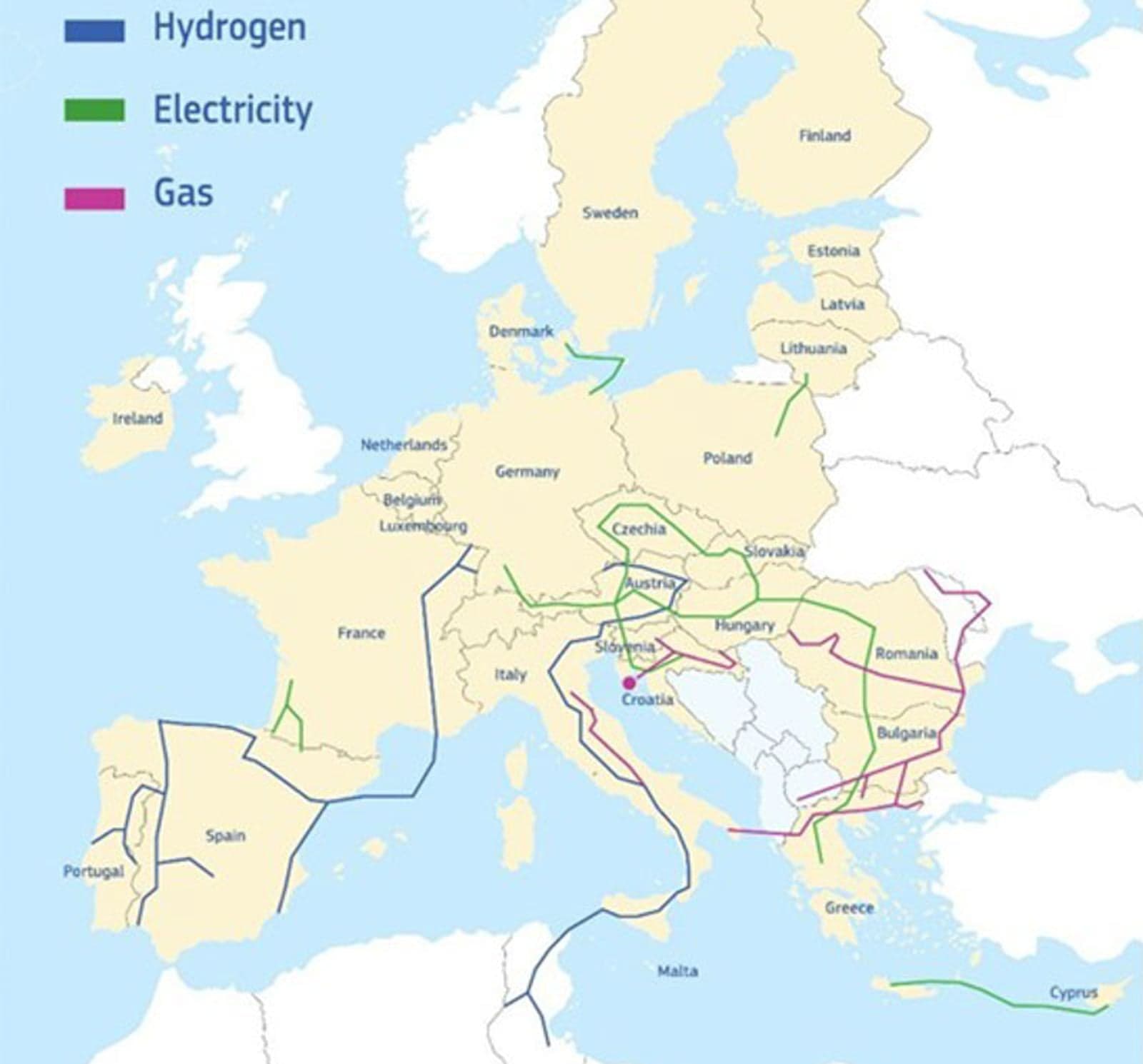
The Pyrenean crossing 1 interconnecting Navarra in Spain and Landes in France and Pyrenean crossing 2 interconnecting Spain’s Aragón region and Marsillon in France are planned to better integrate the Iberian Peninsula to France across the Pyrenees with a raise of the total interconnection capacity to 8GW by 2040, up from the current 2.5GW. Pyrenean crossing 1 has already received €11.1 million for preparatory studies from the CEF.
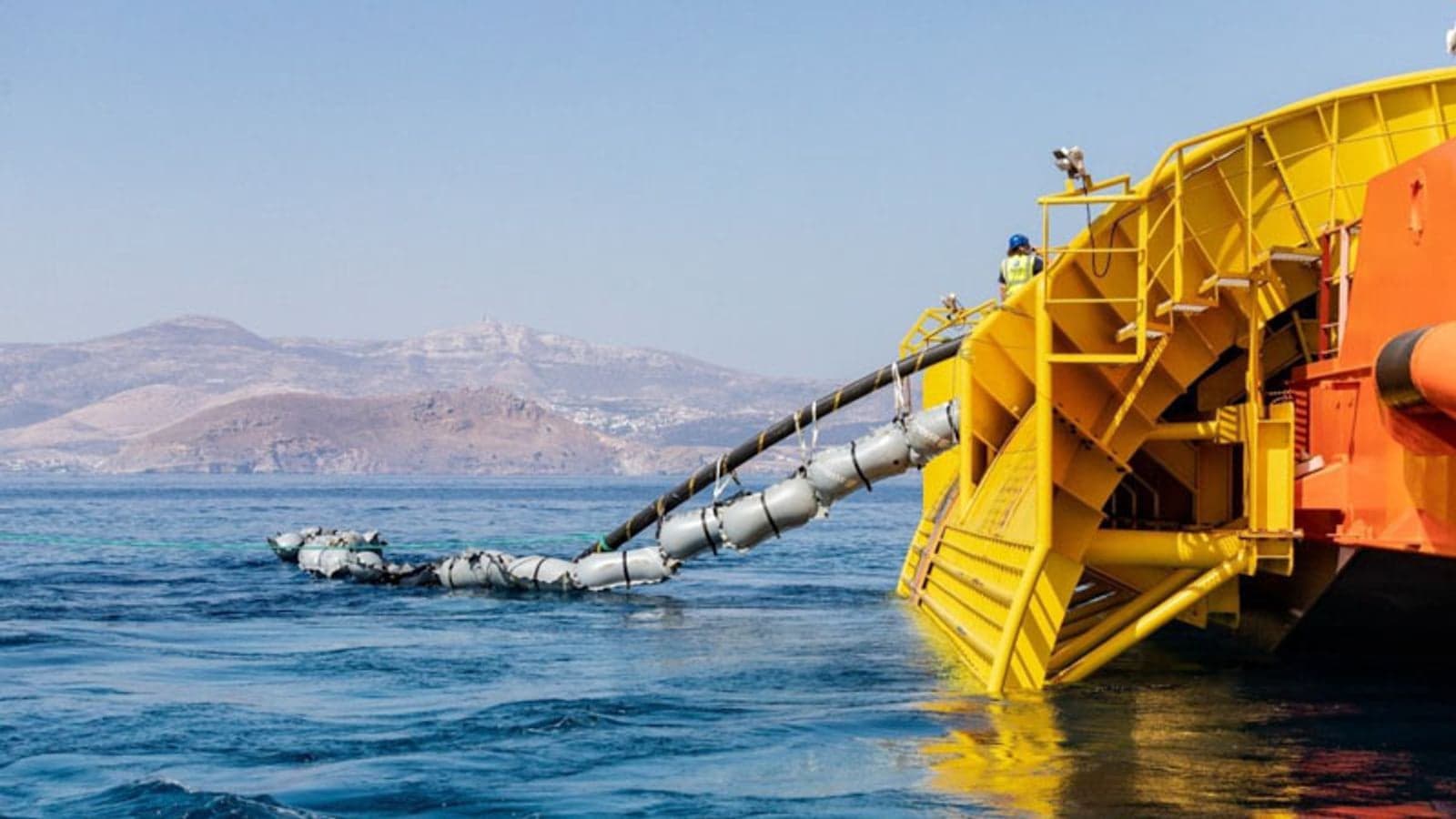
The Great Sea interconnector is to connect Cyprus with continental Europe with interconnections between Kofinou in Cyprus and Korakia in Crete and between Kofinou and Hadera in Israel. In May 2025, work was completed on the undersea cable linking the Greek mainland to Crete, a key step towards the full interconnection.
The Harmony Link interconnects Lithuania and Poland to strengthen the power links with the Baltic states and to complete the full integration of their electricity markets.
The TransBalkan Pipeline (TBP) reverse flow enables gas to flow from the Balkans via Greece/Turkey north towards central Europe and also improve energy supplies in the Balkan region and eastern neighbouring states.
Bornholm Energy Island is planned to turn the Baltic Sea into an offshore interconnector hub with a hybrid offshore interconnection on the island between Denmark and Germany. The main issue to be overcome currently is the cost sharing of offshore facilities in Danish waters. Once complete the approach should serve as a blueprint for future EU offshore initiatives.
The South-eastern Europe electricity interconnections are to address critical infrastructure gaps in the region to improve price stability and energy security, including through storage.
The South hydrogen (SoutH2) corridor is interconnecting Tunisia to Germany via Italy and Austria to scale up renewable hydrogen production, infrastructure and markets and to enable decarbonisation of industrial hubs along its route.
The Southwest hydrogen corridor from Portugal to Germany via Spain and France is to transport decarbonised hydrogen from production sites in southwest Europe to industrial demand centres – up to 2Mt/year by 2030 – accelerating the decarbonisation of hard to-abate sectors and enabling efficient integration of renewable energy.
These projects will be provided with “targeted short-term actions” by the European Commission to ensure concrete progress and deliverables can be achieved within the next 6-9 months.