A first emission-free 245kV live tank circuit breaker
Guest/partner contributor
Posted on: 5 June 2026
The LIFE BLUE 245kV project has launched an innovative F-gas-free 245kV one-break vacuum circuit breaker, writes Mark Kuschel.
Sulphur hexafluoride (SF₆) has long served as the benchmark insulating and arc‑quenching medium in HV gas insulated switchgear (GIS) because of its outstanding technical performance. However, its environmental footprint is significant, with a global warming potential of 24,300 and an atmospheric lifetime exceeding 1,000 years, making its continued use increasingly difficult to justify.
To address this, the EU’s revised F‑gas Regulation (2024/573) introduces stringent limits on gases with a GWP above 1 for new installations above 52kV starting in 2028, thereby driving the adoption of more sustainable technologies.
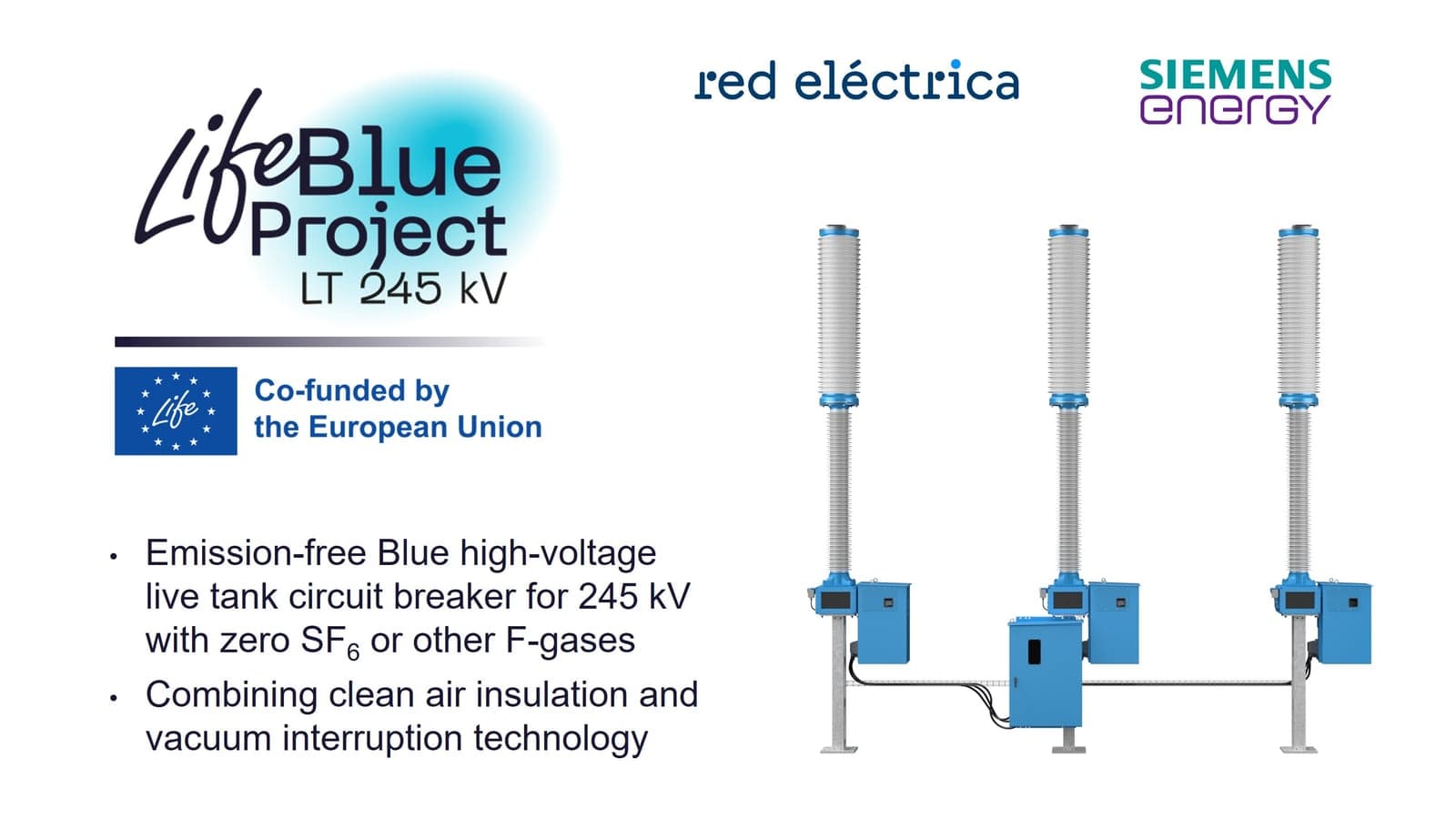
In this context, Siemens Energy is advancing the development of next generation, environmentally friendly solutions through EU co-funded innovation efforts, Figure 1. This article highlights one such development: the F‑gas‑free 245kV live tank vacuum circuit-breaker.
The LIFE BLUE 420kV GIS was first unveiled in the Enlit World update (23 February 2026), followed by the MISSION project in the Enlit World update (23 April 2026) – both providing inspiring insights into the future of sustainable, greenhouse‑gas‑free high‑voltage technology, extending all the way to Europe’s highest transmission voltage levels.
The LIFE BLUE 245kV live tank vacuum circuit breaker (LT VCB) project, funded under the EU LIFE Programme, represents a major step forward in eliminating SF₆ by adopting a clean air insulation concept (80% N₂ / 20% O₂) with zero global warming potential. It directly contributes to Europe’s net zero ambitions and the ongoing decarbonisation of the power sector.
What sets the project apart is its comprehensive approach, integrating design, engineering, advanced modelling and field validation to prove emission‑free vacuum circuit breaker technology under real operating conditions. By successfully demonstrating F‑gas‑free performance in practical grid applications, LIFE BLUE 245kV establishes a new reference for climate neutral, future ready power transmission.
Project structure
The LIFE BLUE 245kV live tank vacuum circuit breaker project is structured into six work packages, covering strategic coordination, technology development, pilot implementation, operation, impact monitoring and sustainability planning.
The consortium comprises one OEM (Germany) and five TSOs from Belgium, France, Spain, Austria, and Germany, with four TSOs forming an expert advisory board.
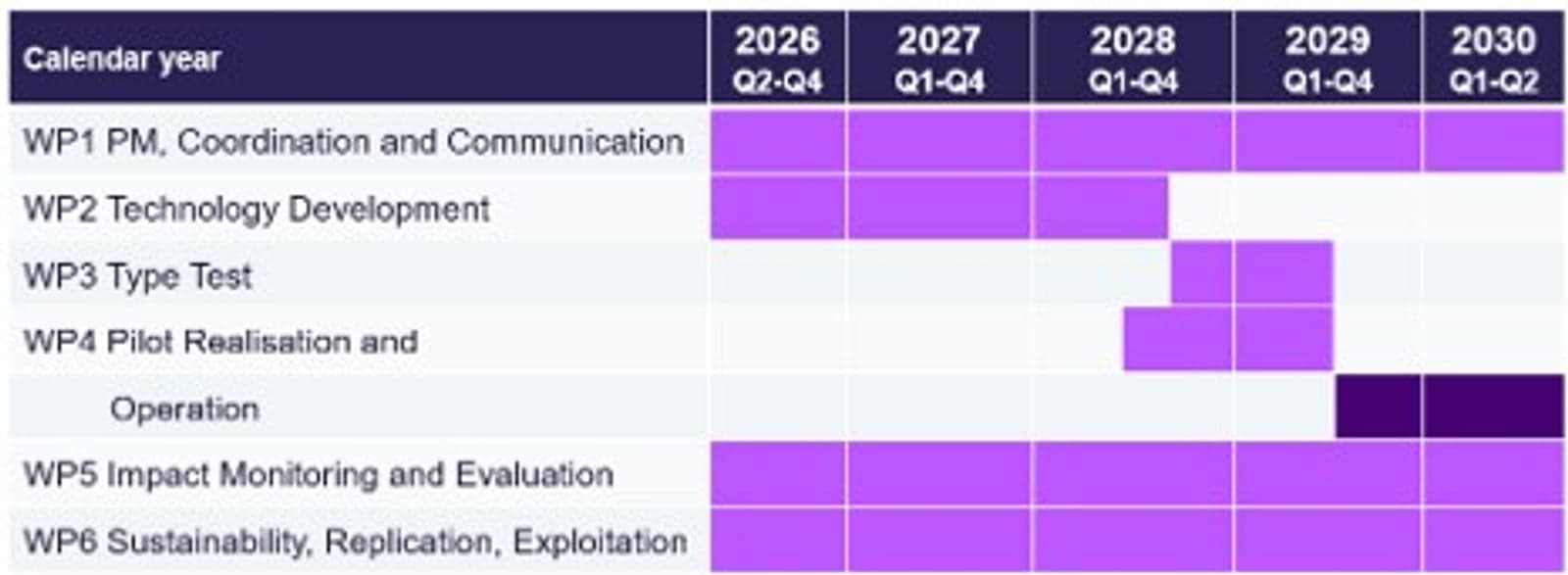
Figure 2 illustrates the co-funded project timeline of the working packages, which are:
- WP1 – Project Management, Coordination and communication.
- WP2 – Technology design and development including development tests.
- WP3 – Design verification by type tests.
- WP4 – Pilot Realisation and real grid operation.
- WP5 - Assessment of technical, economic, and environmental impacts based on product characteristics.
- WP6 - Strategies for scaling, market adoption, and long-term viability.
Technology and design
The core innovation is a 245kV live tank vacuum circuit breaker using N₂/O₂ insulation (GWP = 0). The design meets all grid requirements based on IEC 62271-1 and IEC 62271-100 standards for insulation, switching performance, thermal management, mechanical stability and environmental resistance.
Beyond grid requirements, production requirements are equally important. To reduce manufacturing complexity, the aim is to cover the entire portfolio with as few standardised components as possible. This approach streamlines production, lowers costs, reduces inventory and logistics efforts, shortens delivery times and simplifies quality assurance. This also remains valid for future qualification of new materials or suppliers.
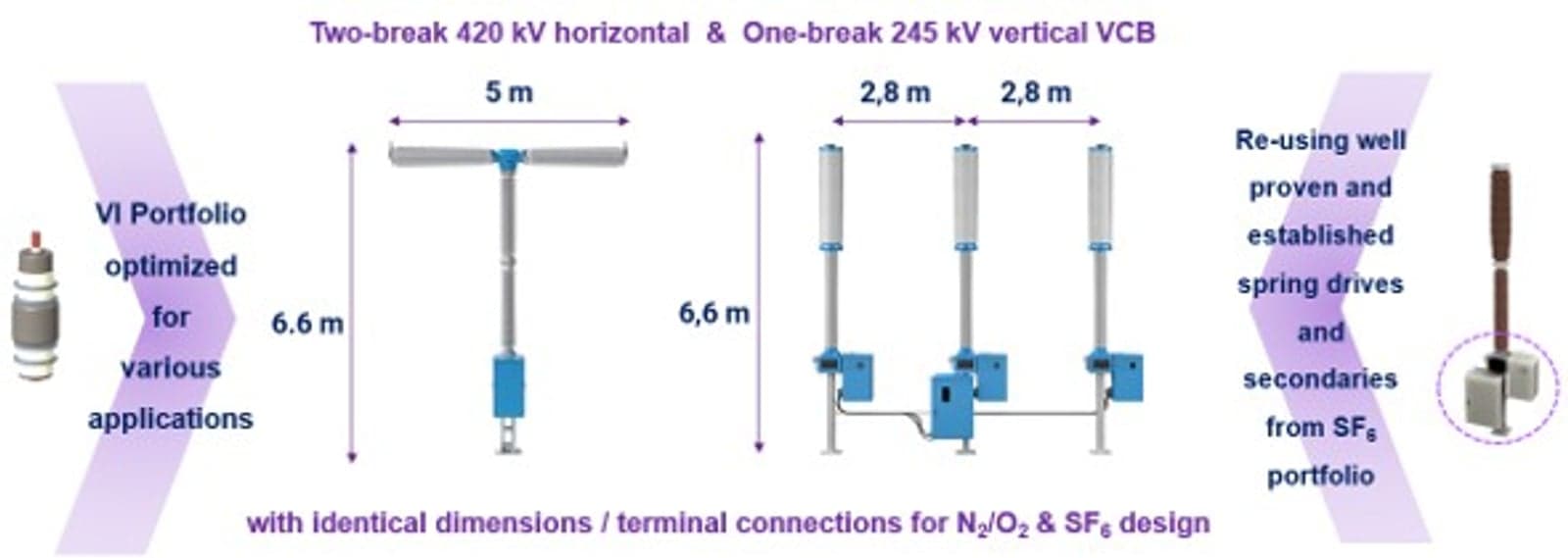
The dimensions and design approach for the 420kV and 245kV vacuum circuit breaker developments are shown in Figure 3. From the optimised vacuum interrupter portfolio, the appropriate interrupter is selected and integrated into a layout that ensures easy on-site replacement of existing SF₆-based installations.
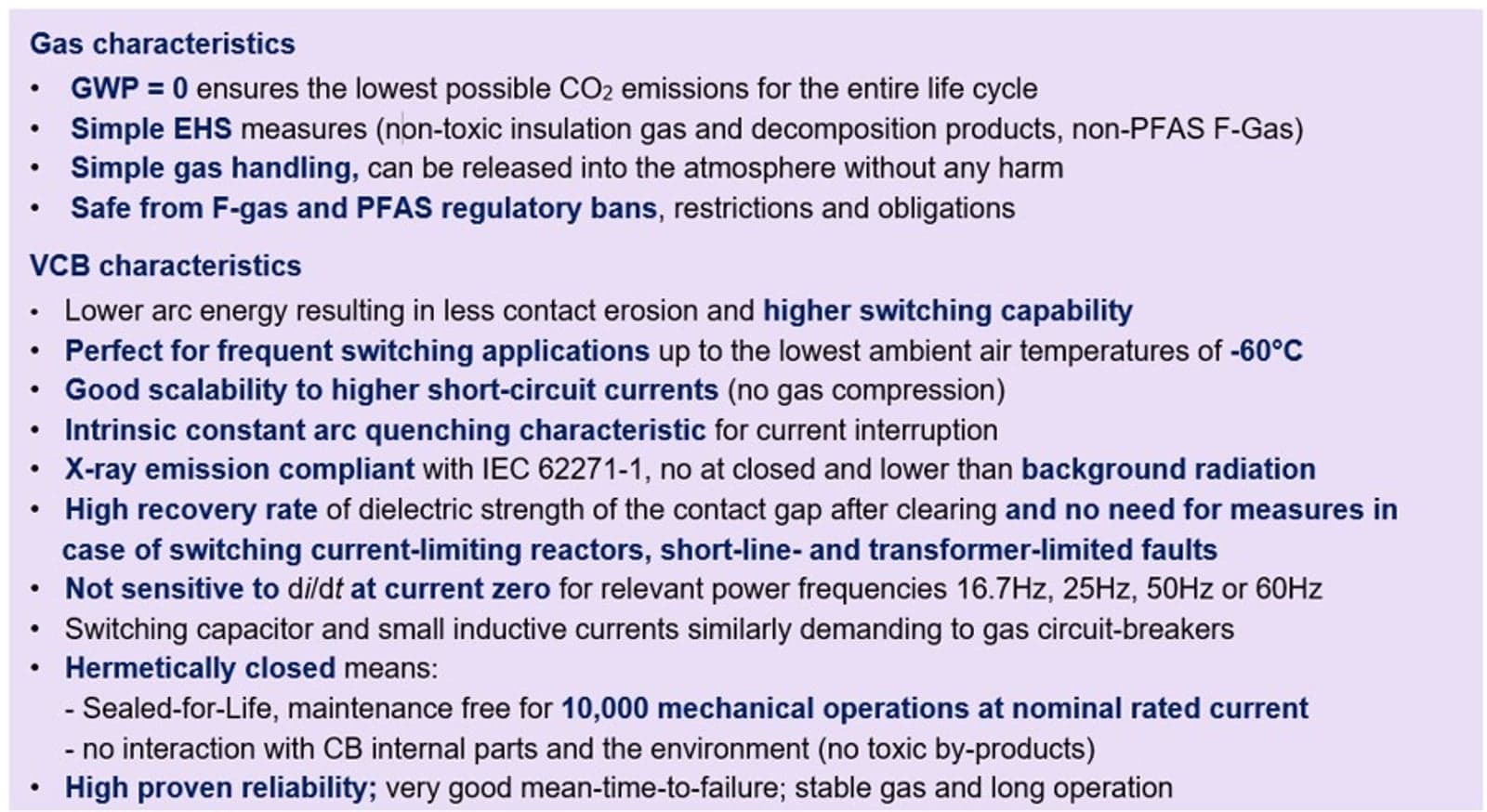
From a technological perspective, the move to N₂/O₂ insulation is a decisive and forward looking step beyond traditional F‑gas solutions. With zero global warming potential, it eliminates direct greenhouse gas emissions and enables the lowest possible CO₂ footprint, while ensuring a completely F‑gas‑free lifecycle from manufacture to disposal.
The technology also stands out for its operational simplicity and safety. The gas mixture is non‑toxic, requires only minimal EHS measures, and can be handled easily, including safe release into the atmosphere without environmental impact.
In addition, it offers exceptional physical and chemical robustness. The N₂/O₂ mixture is thermally stable, shows negligible decomposition, and maintains excellent long term stability. This ensures consistent performance, high reliability and reduced maintenance over decades. It also addresses key concerns of alternative insulation systems - namely degradation and by‑product formation – while removing the need for complex gas handling, monitoring, recycling or reporting, as required for SF₆ and other F‑gases.
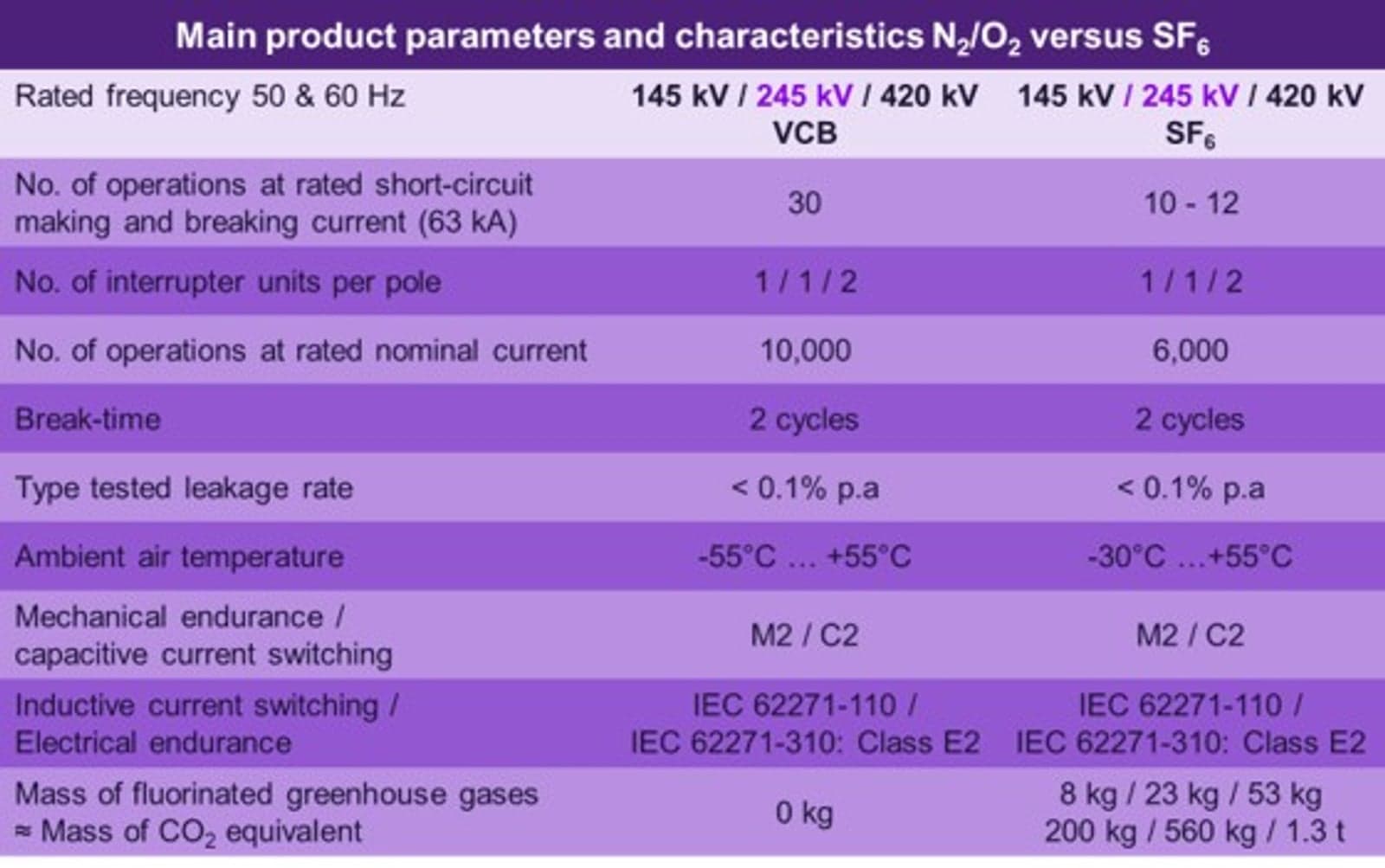
This combination of environmental neutrality, simplicity and stability underpins a new generation of sustainable switchgear. Table 1 compares circuit breakers using N₂/O₂ insulation with vacuum switching to conventional SF₆ designs, highlighting clear multidimensional advantages.
Figure 4 further illustrates these benefits by benchmarking against both current SF₆ technologies and the first designs from 1964, demonstrating the significant technological progress achieved.
The integration of vacuum switching technology enhances performance further. Vacuum circuit breakers offer high dielectric strength, rapid current interruption and minimal contact wear, leading to longer service intervals and greater reliability. Combined with N₂/O₂ insulation, this delivers a truly future‑proof solution – one that not only replaces SF₆, but surpasses it in sustainability, safety and technical performance.
Pilot Implementation
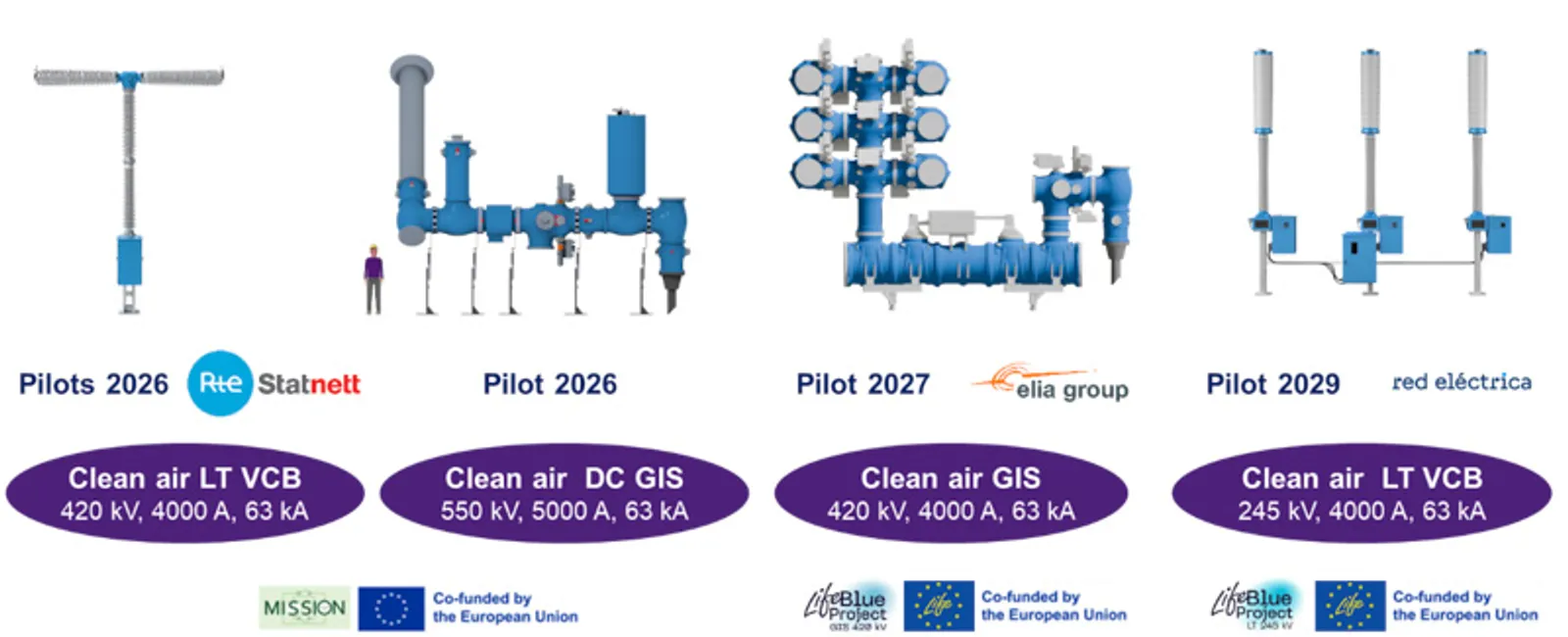
A pilot installation with the transmission system operator Red Eléctrica in Spain marks a key milestone in bringing this technology into practical use. In this project, an existing SF₆‑insulated live tank circuit breaker will be replaced by an N₂/O₂ solution, eliminating greenhouse gas emissions associated with SF₆ and demonstrating a viable pathway towards climate neutral grid infrastructure. Installation is planned for 2029, following successful completion of all type tests and qualification procedures to ensure full regulatory and operational compliance.
Beyond its symbolic importance, the pilot plays a crucial role in validating the technology under real operating conditions. During commissioning and early operation, a comprehensive programme will assess both performance and practicality. This includes evaluation of on‑site handling procedures to confirm the expected simplicity and safety advantages over SF₆ systems, as well as continuous monitoring of gas quality and system tightness to verify long‑term stability and minimal leakage. Switching performance will also be analysed under real grid conditions to confirm the high interruption capability of the vacuum design. Complementary studies, including X‑ray emission measurements, will further confirm compliance with safety standards and improve understanding of operational behaviour.
Overall, the project demonstrates not only the technical feasibility of N₂/O₂ insulation in a demanding grid environment, but also its clear benefits for operators – ranging from simplified handling and reduced regulatory burden to a significant contribution to decarbonisation targets.
Regulatory and market impact
EU co‑funded initiatives such as LIFE BLUE and MISSION are playing a pivotal role in accelerating the industry‑wide transition towards F‑gas‑free technologies. These programmes not only support technical development and validation, but also foster collaboration across manufacturers, utilities and research institutions, thereby reducing barriers to adoption and promoting best practice.
This momentum is clearly reflected in the market: more than 8,000 F‑gas‑free orders have been placed worldwide, with over 3,000 units already in operation. This growing deployment base demonstrates both increasing customer confidence and the technological maturity of these solutions, signalling a decisive shift away from conventional SF₆‑based systems.
A key enabler of this progress is the ongoing effort towards standardisation and the development of shared technology platforms. By harmonising design principles and components, manufacturers can achieve economies of scale, reduce system complexity, and enhance overall product reliability. For grid operators, this translates into tangible operational benefits, including simplified maintenance, improved interoperability, and greater supply chain resilience.
Importantly, these developments also support utilities in meeting increasingly stringent environmental, social, and governance (ESG) targets, as well as evolving regulatory requirements. In this context, F‑gas‑free technologies are no longer niche alternatives, but are rapidly becoming a cornerstone of sustainable and future‑ready power system infrastructure.
Conclusion
The EU co-funded LIFE BLUE 245kV live tank vacuum circuit breaker project represents a strategic milestone in the decarbonisation of Europe’s power grid infrastructure. By validating fully F‑gas‑free, climate‑neutral technology under real operating conditions, the project positions itself as a key enabler of the energy transition – supporting EU and global climate objectives, strengthening regulatory compliance, and advancing the shift towards sustainable, future‑ready grid solutions.
Strategic highlights:
- Proven viability: Confirmation of both technical and economic feasibility of N₂/O₂ insulation combined with vacuum switching at the 245kV AIS level.
- Operational excellence: Demonstrated robustness, safety, and reliability under real grid conditions, reinforcing confidence for large‑scale deployment.
- Decarbonisation impact: Elimination of SF₆ and delivery of measurable lifecycle CO₂ reductions, directly contributing to ESG targets.
- Scalability and standardisation: A future‑ready, standardised solution designed to support accelerated grid expansion and modernisation.
The next key milestones include design and validation in 2027, followed by type testing in 2028, and culminating in a pilot deployment in Spain in 2029. The project consortium remains focused on accelerating market adoption, strengthening industrialisation pathways and establishing F‑gas‑free technologies as the new industry standard for high‑voltage infrastructure.
About the author
Dr Mark Kuschel is Head of International Standardization and Grid Technologies at Siemens Energy. With a PhD in the field of electrical and high voltage engineering he has 20+ years management experience in switchgear and the substation business and is a proven entrepreneurial leader and passionate about technology and sustainability.
Related tags
Latest content
+4
First emission free 420kV GIS based on clean air insulation and vacuum switching
The LIFE Blue project aims to demonstrate the technical and economic viability of an F gas-free 420kV AC GIS using clean air insulation and vacuum switching technology, writes Mark Kuschel.
- Guest/partner contributor
- 23/02/2026
+4
EU Energy Projects Podcast: SF6-free switchgear with LIFE Blue 420kV GIS
In this episode of the EU Energy projects podcast, Siemens Energy’s Mark Kuschel tells Areti Ntaradimou how the LIFE Blue 420KV GIS project is pioneering SF6 free HV switchgear and digital monitoring.
- Jonathan Spencer Jones
- 04/03/2026