Advancing grid decarbonisation with SF6 free switchgear in the MISSION project
Guest/partner contributor
Posted on: 23 April 2026
The MISSION initiative is setting a new benchmark in HV sustainability by proving that SF6 free technology is both technically sound and economically feasible.
For decades, HV switchgear has relied on sulphur hexafluoride (SF₆) for insulation and arc quenching due to its excellent dielectric performance.
However, its environmental impact is severe: SF₆ has a global warming potential of 24,300 and remains in the atmosphere for at least one thousand years, making it one of the most harmful greenhouse gases.
Growing climate concerns have driven regulatory action. Under the EU’s revised F gas Regulation (2024/573), fluorinated gases with a GWP above 1 will be banned in newly installed switchgear >52kV from 2028 and >145kV from 2032.
This marks a decisive shift toward technologies that eliminate climate damaging insulating gases. To meet these requirements, Siemens Energy is participating in several EU co‑funded research and innovation programmes that accelerate the development and validation of SF₆ free technologies.
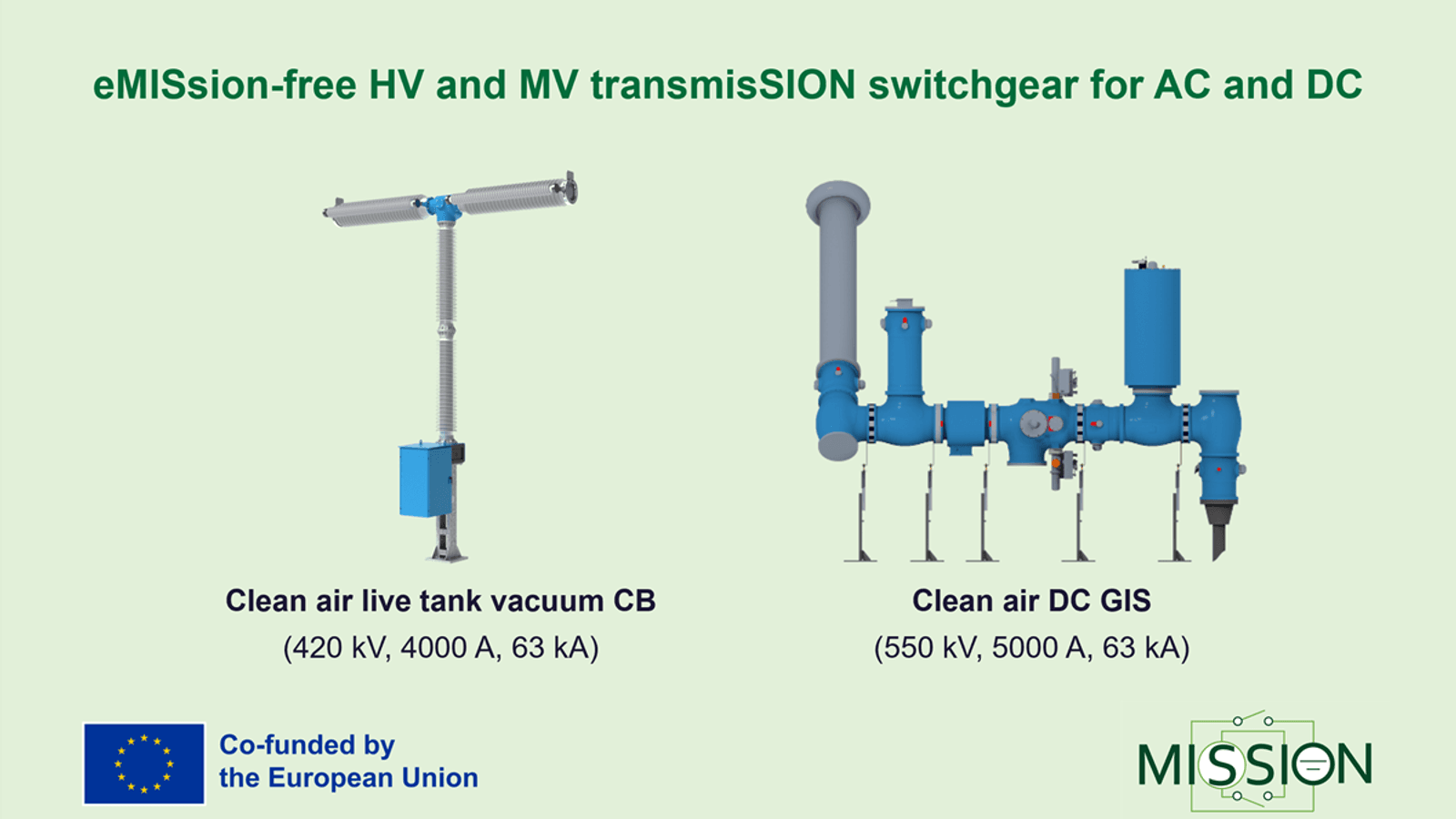
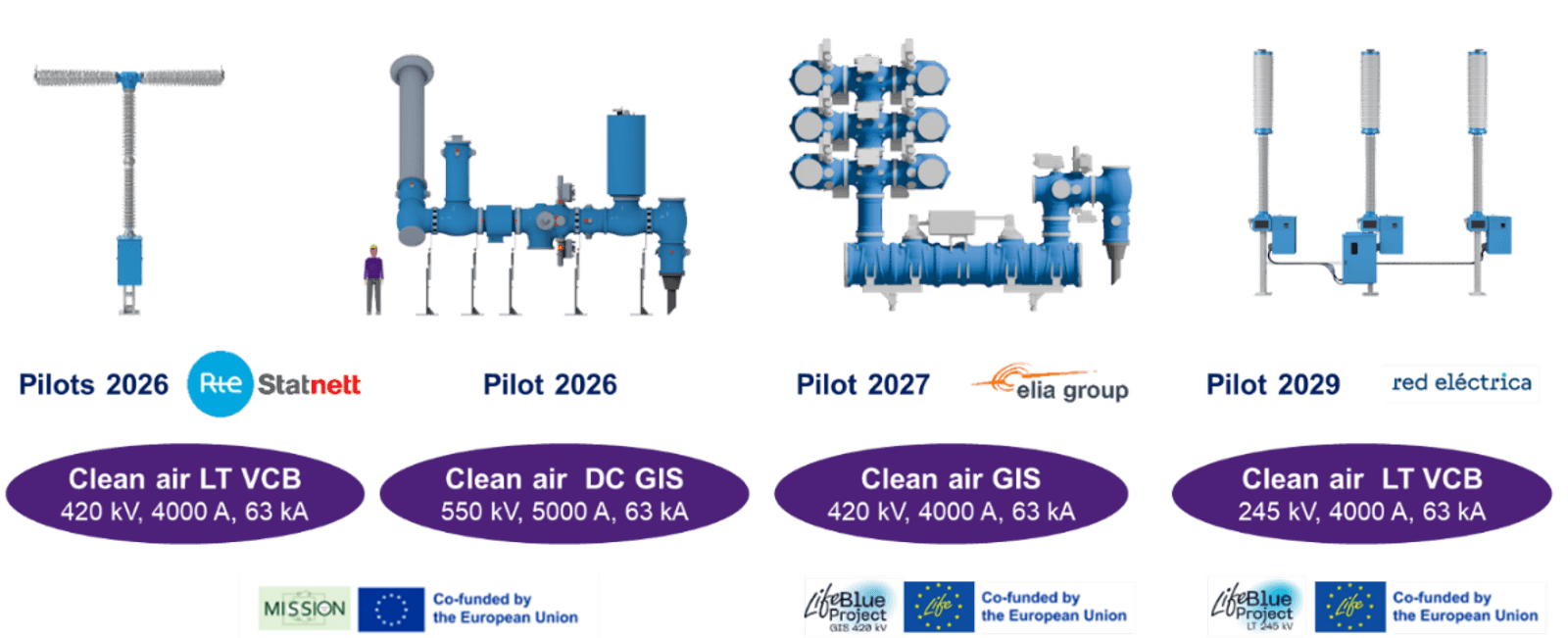
These initiatives are shown in Figure 1. The LIFE BLUE 420kV GIS project was introduced in the previous Enlit World update (23 February 2026). This contribution focuses on the transmission‑related activities of the MISSION project.
The MISSION project, co‑funded by the EU through Horizon Europe, aims to replace SF₆ with an 80% N₂ / 20% O₂ mixture for insulation in MV and HV AC and DC switchgear. It develops, type tests, and pilots greenhouse gas‑free equipment to close key portfolio gaps and enable emission‑free power transmission.
By integrating research, development, simulation and large‑scale pilot validation, MISSION plays a central role in supporting Europe’s net zero goals and the decarbonisation of energy infrastructure.
Project structure and consortium
The MISSION project consortium consists of 12 partners from nine different countries, including five universities and research institutes, two switchgear manufacturers, four grid operators and one superconducting DC system developer (Figure 2).
This diverse group collaborates closely to ensure technical acceptance and successful rollout of SF₆ free technologies. In addition to HV components presented in Figure 1, an ultra-fast 12kV MVDC circuit breaker for future MVDC grids will be developed.
The project also assesses the technical properties of various SF₆ alternatives for MV and HV switchgear, focusing on scientific challenges like discharge mechanisms and electrical properties.
This research aims to accelerate the adoption of N2/O2/CO2-based mixtures in switchgear applications. Furthermore, MISSION explores the strengths and challenges of the future European grid, examining the environmental, economic and regulatory implications of replacing SF₆ switchgears.
This transition presents significant technological challenges but offers substantial practical and economic benefits for TSOs and grid owners. By developing scenarios for Europe’s future grid, MISSION analyses resilience costs, and environmental impacts, providing a roadmap for an SF₆ free European grid and recommendations for EU regulators.
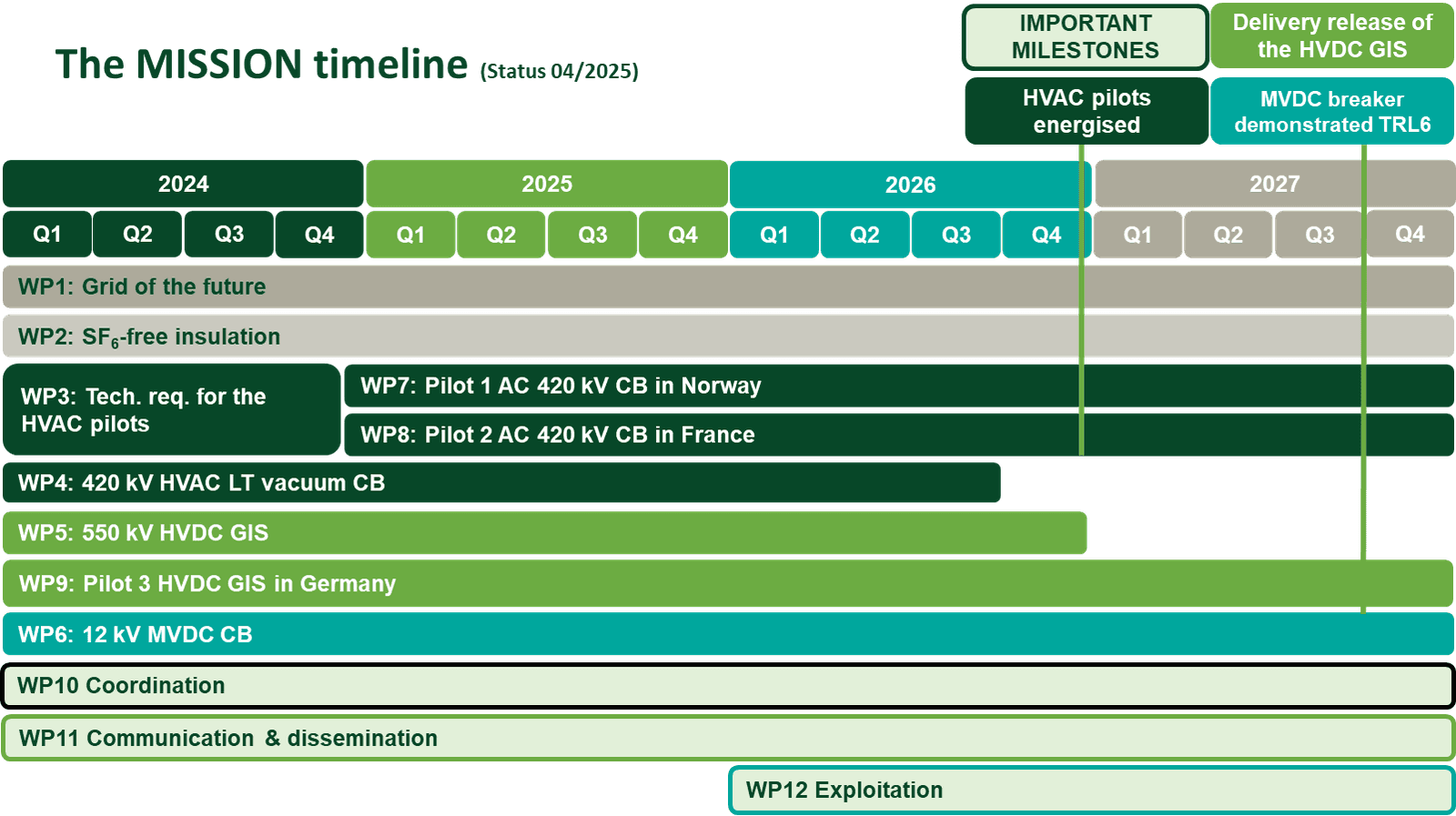
Technology, design and testing
420kV AIS live tank vacuum circuit breaker (LT VCB)
This is a key element for modern AC transmission grids. AIS (air insulated switchgear) accounts for about 80% of the markets compared to GIS (gas insulated switchgear). Development began in early 2024 and remains on schedule. The LT VCB matches the dimensions and interfaces of the SF₆‑filled version, eliminating about 53kg of SF₆ per breaker. Identical dimensions allow seamless retrofitting without major modifications, minimising installation costs, reducing downtime and maximising asset reuse.
Proven components from the SF₆ switchgear portfolio, such as spring drives and secondary systems, are also considered. This interchangeability accelerates the transition to environmentally friendly technologies while reducing investment costs for grid operators.
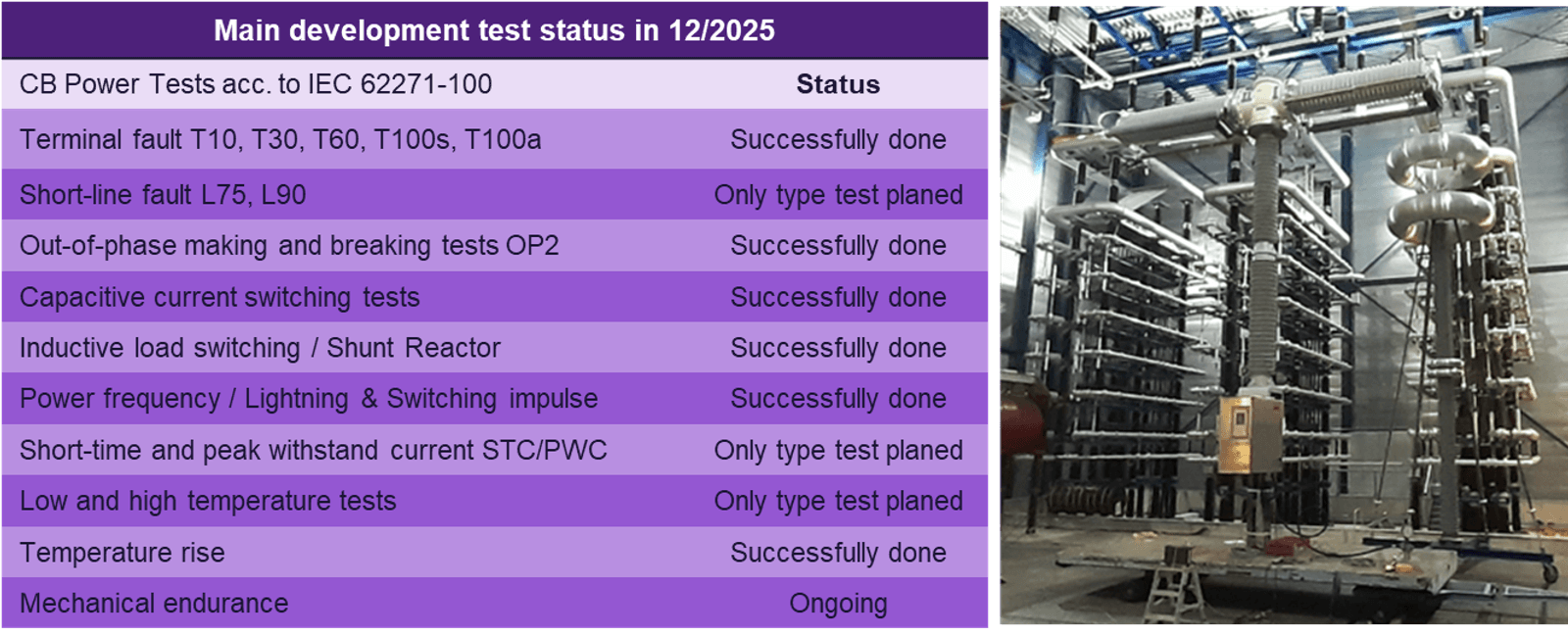
All major validation and development tests have been successfully completed (Figures 3 and 4). Type testing is planned for early 2026, with pilot installations in Norway and France in the second half of 2026.
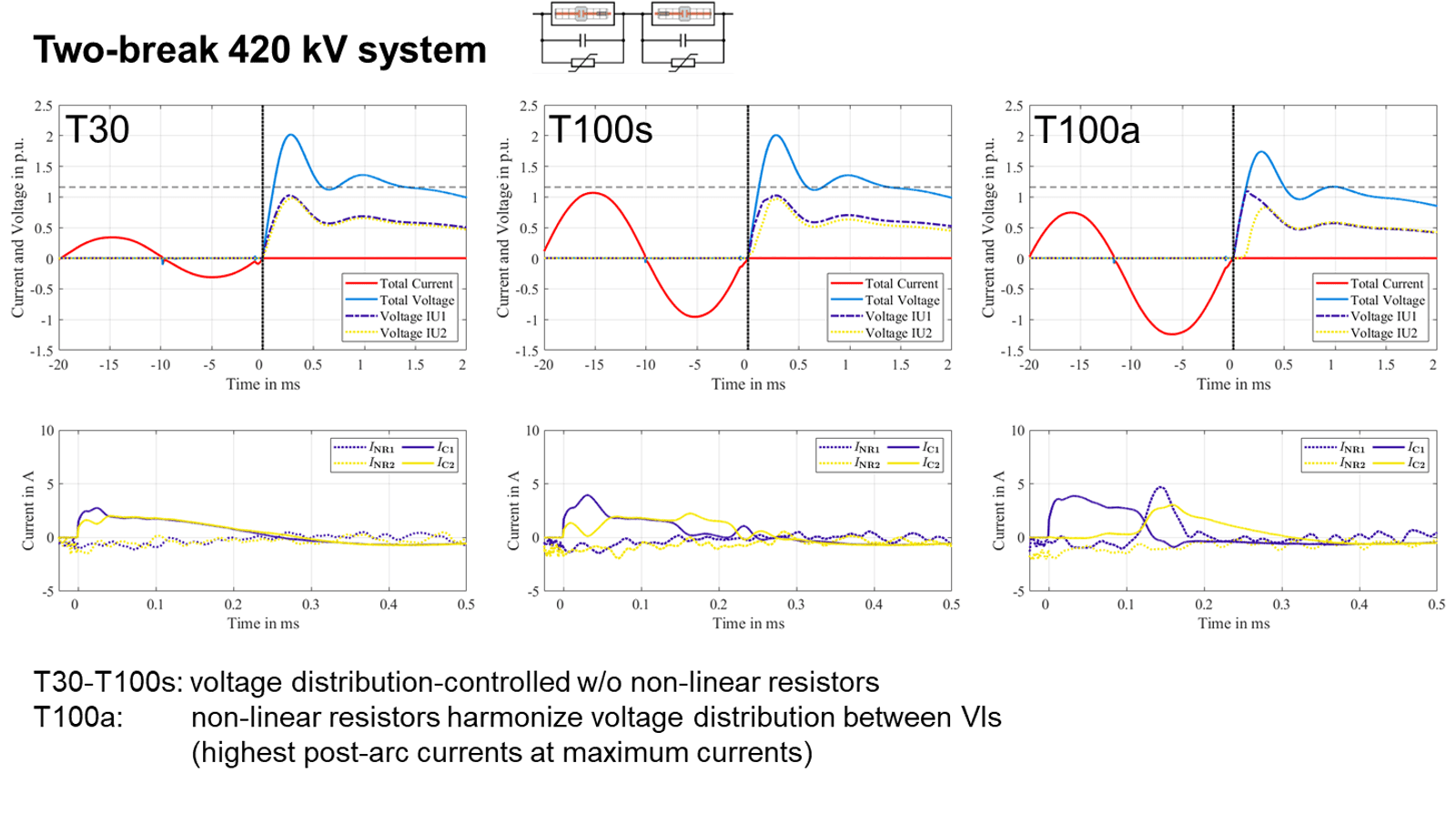
Current evaluations confirm the design’s reliability and compliance with all performance requirements. Detailed studies of post‑arc currents provided important insights for further optimisation. To mitigate post‑arc currents in vacuum interrupters (VIs), several measures are applied:
- Series connected vacuum interrupters to distribute transient recovery voltage and reduce post‑arc stress.
- Grading capacitors for balanced voltage sharing during and after interruption, typically sufficient for most fault scenarios.
- Non‑linear resistors (in two‑break VCBs) that activate only under extreme asymmetric TRV conditions to limit voltage stress and momentarily conduct post‑arc currents, without affecting normal operation.
550kV DC GIS
The global trend toward HVDC transmission is driven by the demand for highly efficient, long distance power transfer with minimal losses. HVDC technology supports significantly higher transmission capacities and plays a crucial role in connecting remote offshore generation facilities to existing AC grids.
Additionally, it enhances overall grid stability and requires far less physical space than conventional AC solutions, making it particularly advantageous in space constrained environments.
Enclosed GIS offers major benefits by drastically reducing space requirements and enabling deployment in both onshore and offshore applications. In onshore installations, for example, the footprint of a DC switchyard can be reduced by up to 95% when using DC GIS instead of traditional AIS. Offshore, DC GIS also enables substantial space savings, typically up to 70% in common applications.
Figure 5 illustrates the DC GIS components developed within the MISSION projects and shows their integration in an offshore application.
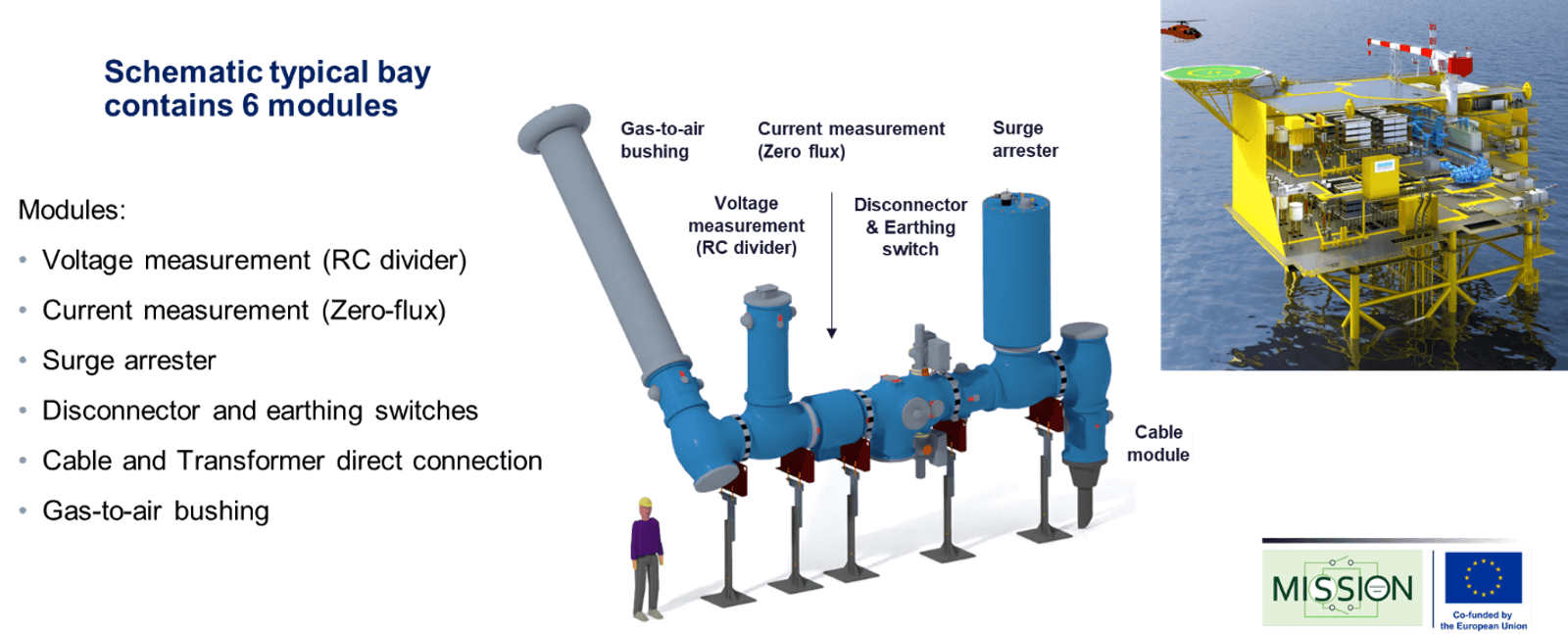
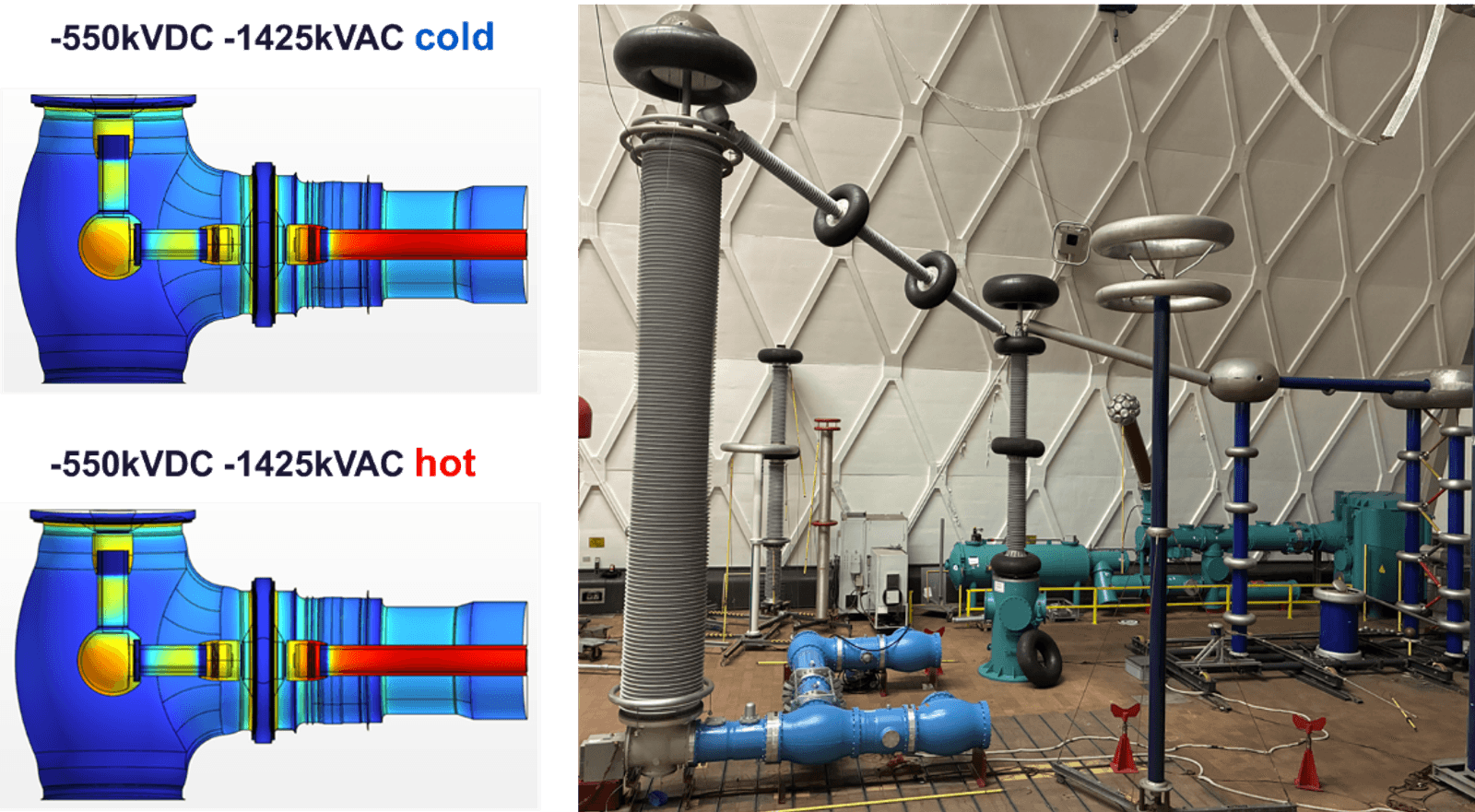
The design of DC GIS requires careful consideration of various electrical and thermal operating conditions. After energisation, the electric field distribution evolves over time, transitioning from an initially capacitive to a predominantly resistive state. Transient overvoltages must also be taken into account. In addition, temperature gradients along solid insulators during operation significantly influence the electric field distribution.
To ensure design integrity, extensive electric field simulations are complemented by dielectric testing under both cold and hot conditions.
The project is progressing according to schedule: the design has been finalised, and a comprehensive series of tests is currently underway, including long duration testing to validate long‑term performance.
Figure 6 presents exemplary simulation results alongside impressions from the HV testing activities.
Pilot implementation
Planned real world pilots for the 420kV VCB will take place in Marsillon (RTE, France) and Dagali (Statnett, Norway). These projects will expose the new breakers to extreme climatic conditions and validate their performance under actual grid environments. Key evaluation aspects include on-site handling, gas quality and tightness, switching behaviour and X-ray emissions.
The DC GIS will be validated finally in a long-term energised test (prototype installation test) at TU Dortmund, as proposed in CIGRE TB 842 and the new IEC TS 62271-318. This test includes 12 test cycles, each lasting 30 days, which sums up to a total test time of one year.
Performance and implications
F gas‑free HV equipment shows that modern transmission systems can operate with no global warming impact while maintaining full performance. These solutions rely on natural origin gases, making their handling straightforward and removing the need for the strict regulatory controls associated with traditional F gases. At the same time, they deliver strong switching behaviour, high reliability and can be adapted for use at higher voltage levels and increasing short circuit demands.
Mixtures based on nitrogen and oxygen are harmless and free of PFAS substances. Their thermal robustness support long operating lifetimes, and worldwide established supply chains make procurement uncomplicated. Although their insulating capability is lower than that of SF₆, careful design adjustments enable the required dielectric performance without compromising equipment safety or reliability.
The regulatory environment in Europe, along with initiatives such as the MISSION project, is accelerating the shift toward these alternative technologies. Thousands of F gas‑free products have already been ordered and several thousand are in daily operation globally, reflecting strong acceptance among utilities. Shared platforms, standardisation efforts and coordinated development help reduce system complexity, lower costs and increase consistency across manufacturers – an advantage for grid operators seeking to meet sustainability targets and comply with tightening environmental rules.
Overall, the MISSION project illustrates that emission free HV transmission is not only technically achievable but economically sensible up to the highest European voltage levels. The move toward natural origin gases combined with vacuum switching technology supports regulatory compliance, improves operational safety and offers potential cost benefits over the lifecycle.
Its international, collaborative setup has enabled rapid innovation and disciplined execution, providing a model for how the future grid modernisation can be approached across borders.
Conclusion
The MISSION project marks a major milestone in the decarbonisation of Europe’s energy infrastructure. By validating F gas-free, climate neutral emission free GIS technology in real world conditions, the project supports the EU climate goals, regulatory compliance and industry best practices.
Key takeaways include:
- Proven technical and economic viability of F gas-free N₂/O₂ and vacuum switching for 420kV LT VCB;
- Robust performance, reliability and safety under diverse operating conditions;
- Significant reductions in greenhouse gas emissions and lifecycle costs;
- Scalable, standardised solutions for future grid expansion.
Type testing is scheduled for 2026, with pilot deployments in France and Norway in the second half of 2026. The consortium remains committed to continuous improvement, market adoption and long term sustainability.
About the author
Dr Mark Kuschel is Head of International Standardization and Grid Technologies at Siemens Energy. With a PhD in the field of electrical and high voltage engineering he has 20+ years management experience in switchgear and the substation business and is a proven entrepreneurial leader and passionate about technology and sustainability.
Related tags
Most popular
Join the community for freeAnd get access to all content
Related companies
Siemens Energy
Related projects
Mission
Latest content
+4
First emission free 420kV GIS based on clean air insulation and vacuum switching
The LIFE Blue project aims to demonstrate the technical and economic viability of an F gas-free 420kV AC GIS using clean air insulation and vacuum switching technology, writes Mark Kuschel.
- Guest/partner contributor
- 23/02/2026
+4
EU Energy Projects Podcast: SF6-free switchgear with LIFE Blue 420kV GIS
In this episode of the EU Energy projects podcast, Siemens Energy’s Mark Kuschel tells Areti Ntaradimou how the LIFE Blue 420KV GIS project is pioneering SF6 free HV switchgear and digital monitoring.
- Jonathan Spencer Jones
- 04/03/2026