First emission free 420kV GIS based on clean air insulation and vacuum switching
Guest/partner contributor
Posted on: 23 February 2026
The LIFE Blue project aims to demonstrate the technical and economic viability of an F gas-free 420kV AC GIS using clean air insulation and vacuum switching technology, writes Mark Kuschel.
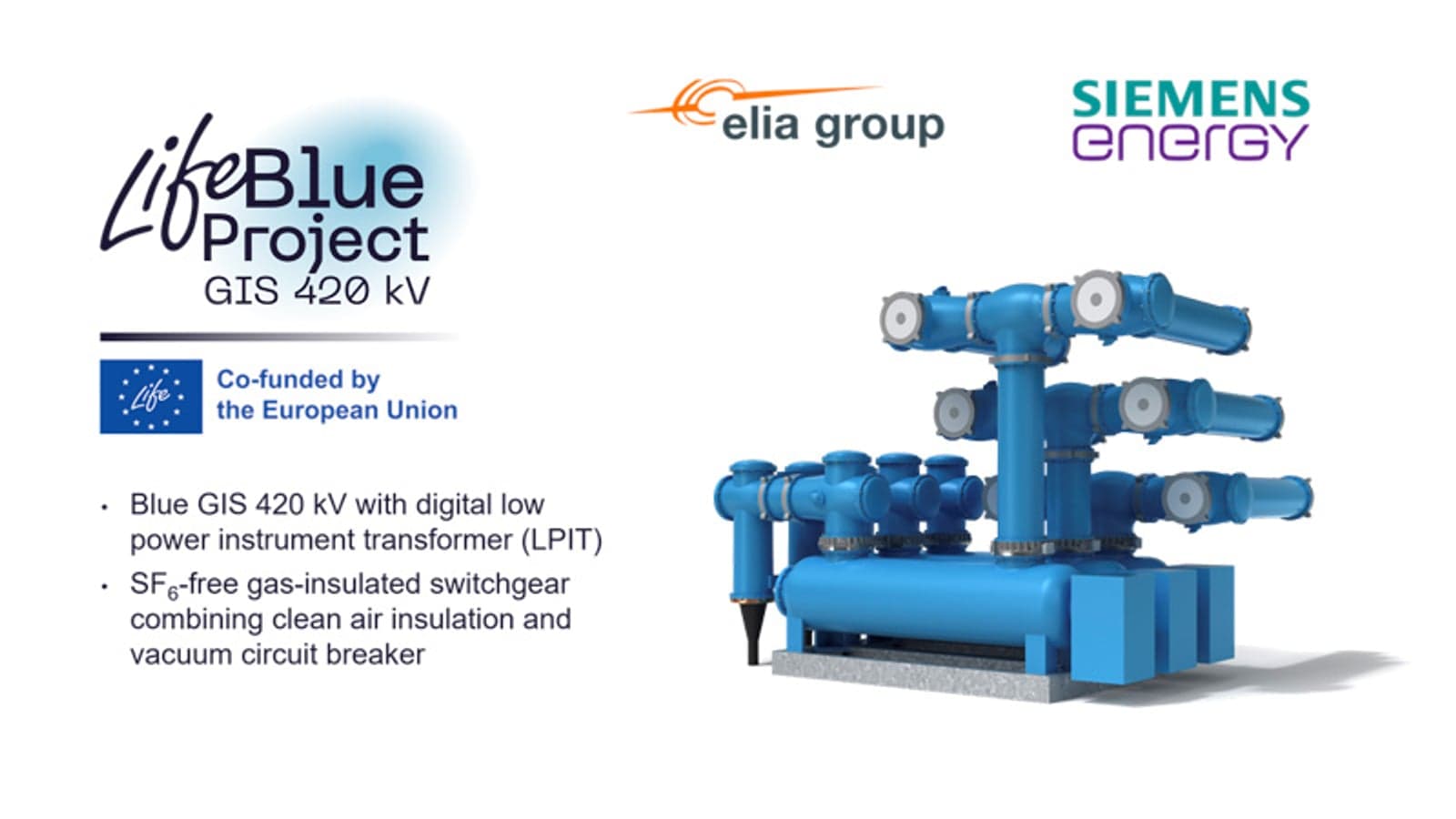
Sulphur hexafluoride (SF6) has long been the industry standard for high voltage gas-insulated switchgear (GIS) due to its superior arc quenching and insulating properties. However, SF6’s extremely high global warming potential (GWP=24,300) and persistence of more than 1,000 years in the atmosphere have prompted urgent regulatory action and innovation.
The EU’s revised F gas Regulation (2024/573) now bans or restricts F gases with GWP>1 starting above 52kV in 2028 for new switchgear installations, accelerating the transition to sustainable alternatives.
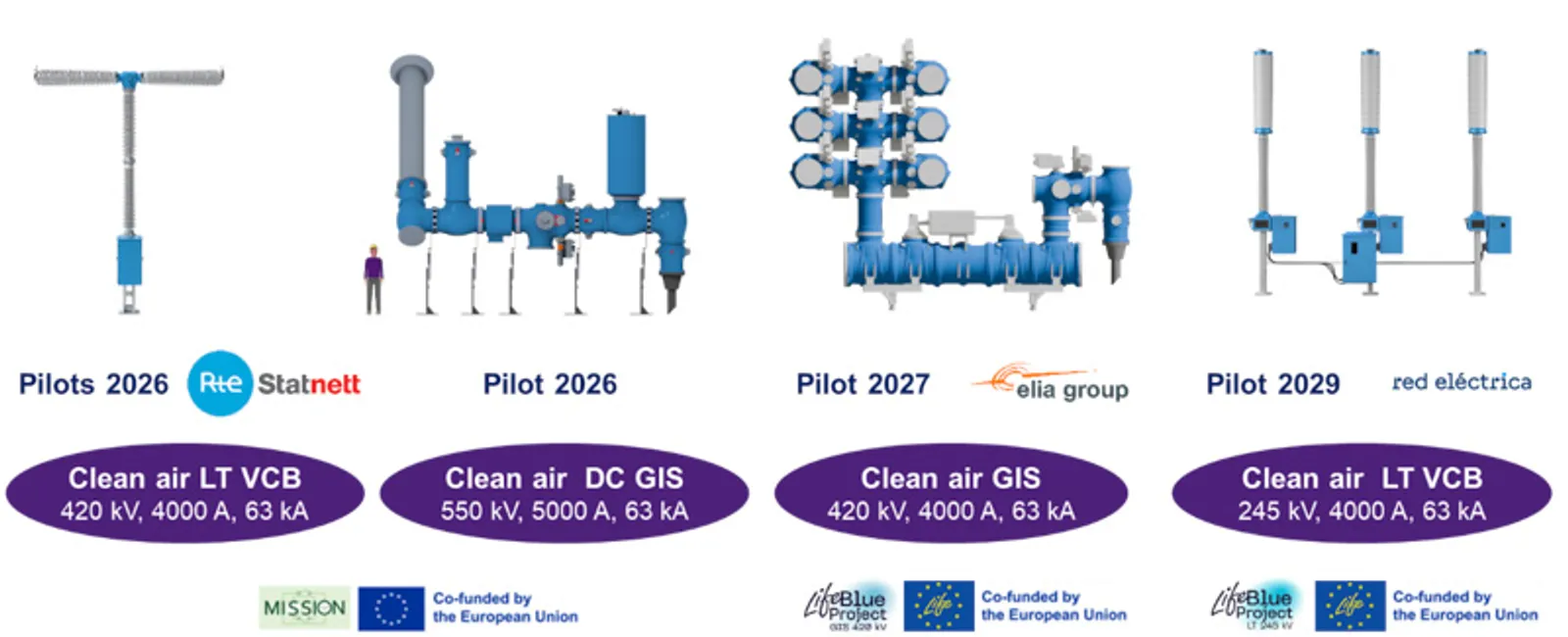
As part of this transition, Siemens Energy is actively involved in several EU research and development projects, as illustrated in Figure 1. In this and the following two Enlit contributions, the Siemens Energy projects parts and results achieved to date will be presented.
This contribution marks the starting point and focuses on the 420kV F gas-free GIS project. LIFE Blue 420kV GIS, under the EU LIFE programme, is a pioneering initiative to replace SF6 with clean air (80% N2/20% O2) GWP=0 technology, supporting net zero targets and the broader decarbonisation of Europe’s energy infrastructure.
The project’s significance lies in its holistic approach: combining research, development, simulation and pilot testing to validate emission-free GIS technology on a scale. The project includes six partners from five countries, leveraging cross-border expertise to ensure robust innovation and market relevance. By demonstrating the feasibility of F gas-free GIS in real grid conditions, LIFE Blue sets a benchmark for future-proof, climate neutral zero emission electrical power transmission systems.
Project structure and consortium
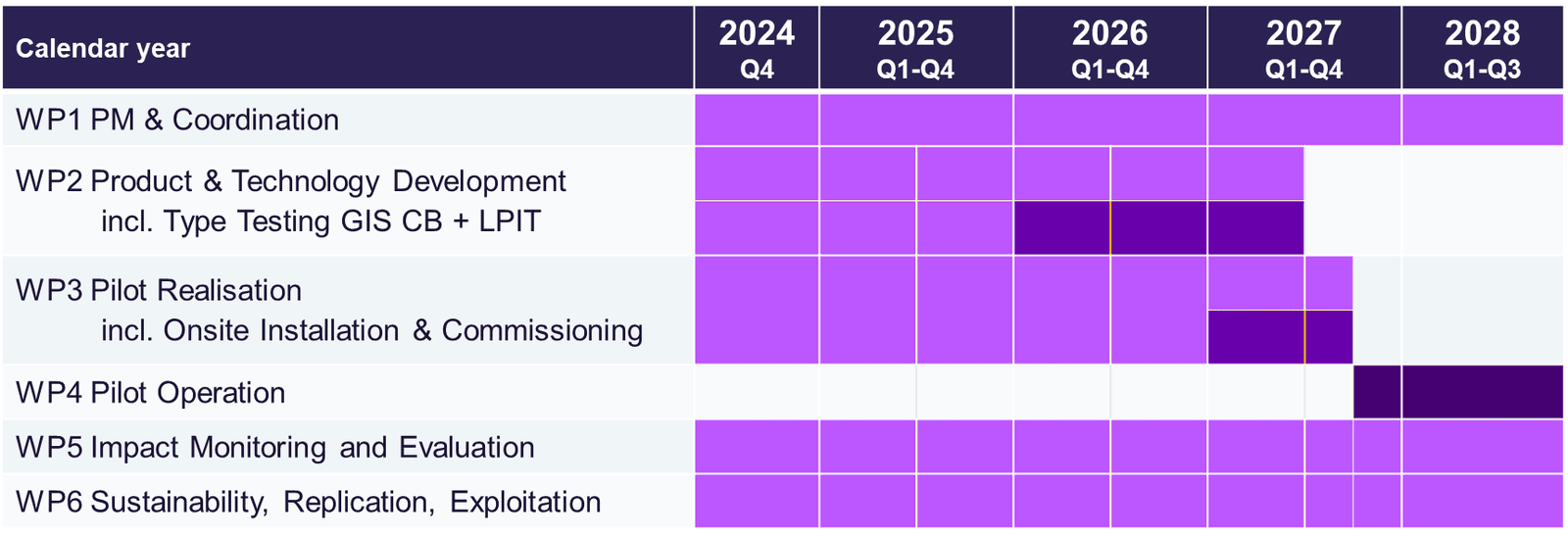
The LIFE Blue 420kV GIS project is structured into six work packages, covering strategic coordination, technology development, pilot implementation, operation, impact monitoring and sustainability planning.
The project team comprises one OEM (Germany) and five transmission system operators (TSOs) from Belgium, France, Spain, Austria and Germany, with four TSOs forming an expert advisory board.
Figure 2 illustrates the co-funded project timeline of the working packages, which are:
- WP1 - Overall planning, scheduling, risk management, and stakeholder communication.
- WP2 - Design and development of GIS circuit breaker and LPIT (low-power instrument transformer), plus IEC type testing. Other GIS components were developed separately from the LIFE Blue project and prior to the GIS development.
- WP3 - Material sourcing, manufacturing, installation, and commissioning.
- WP4 - Monitored operation of the pilot system to validate product performance.
- WP5 - Assessment of technical, economic, and environmental impacts based on product characteristics.
- WP6 - Strategies for scaling, market adoption, and long-term viability.
Technology and design
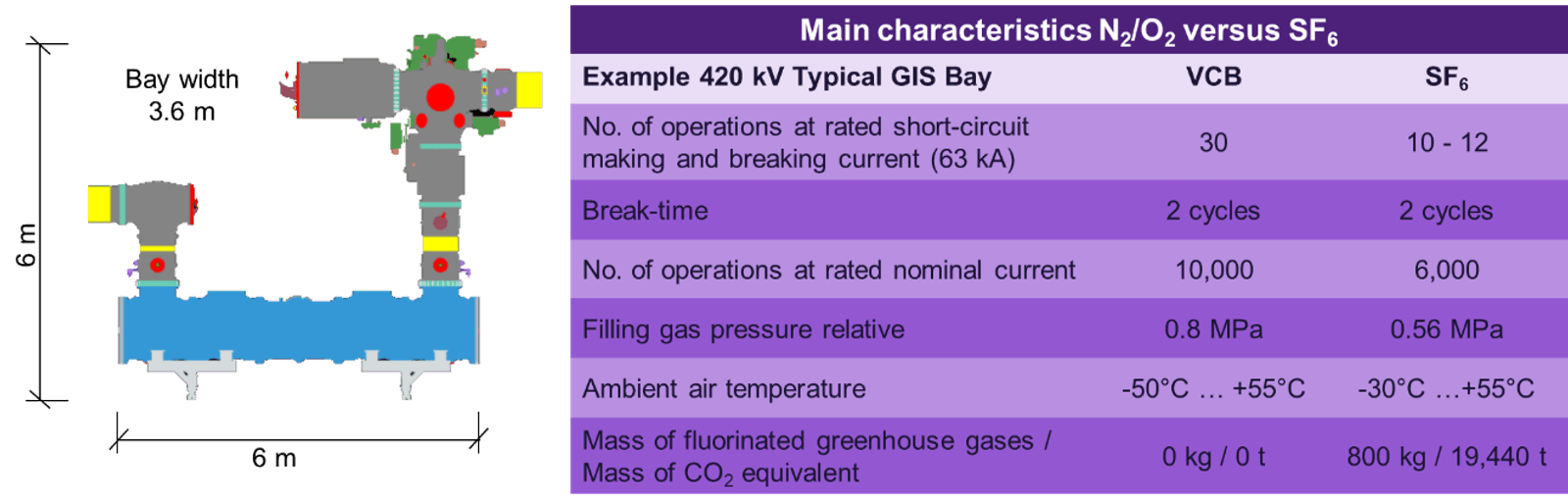
The core innovation is a 420kV GIS using N2/O2 insulation (GWP=0) and vacuum switching technology, integrated with a low power instrument transformer (LPIT). The design meets all grid requirements based on IEC 62271-1, IEC 62271-100 and IEC 62271-203 standards for insulation, switching performance, thermal management, mechanical stability and environmental resistance.
For the low power instrument transformer advanced simulations and rigorous type testing ensure compliance with IEC 61869 accuracy, linearity, and temperature standards.
Pilot implementation
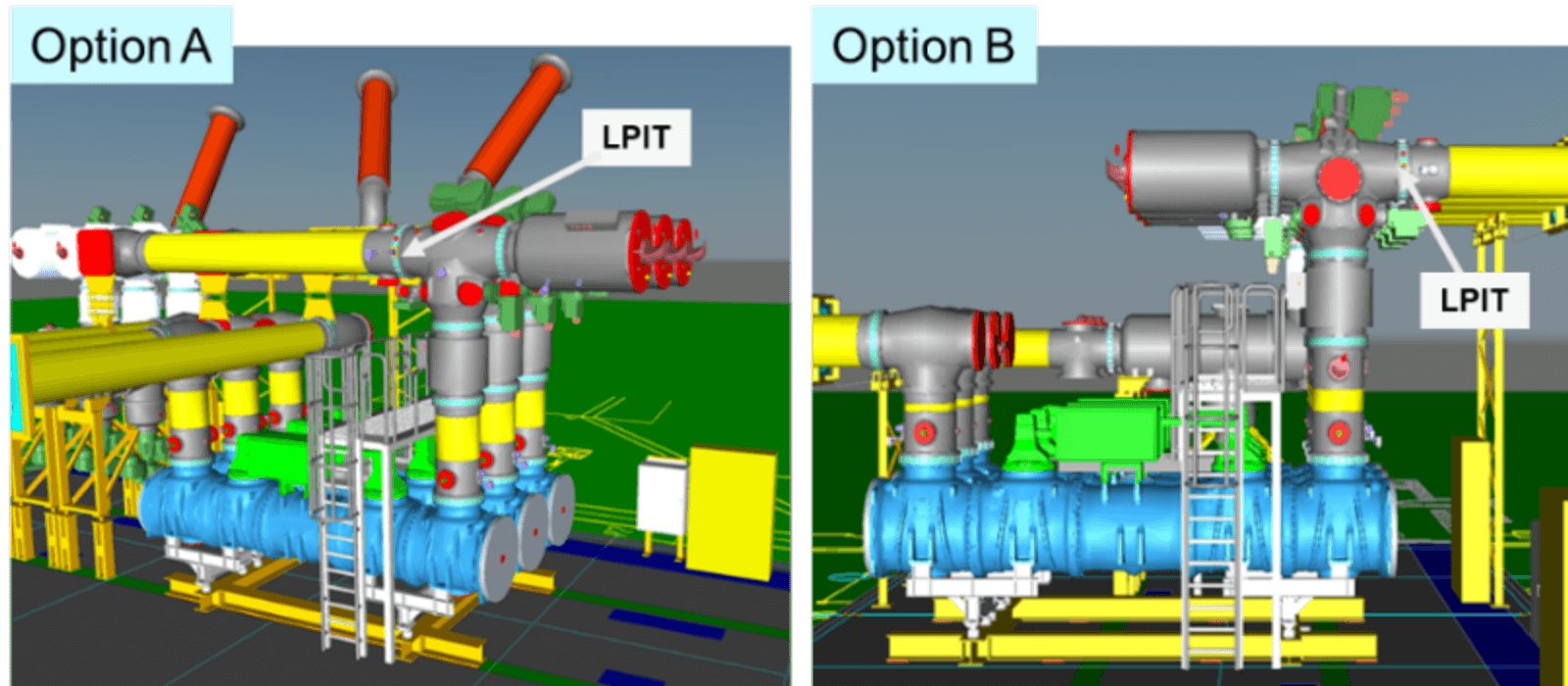
Two pilot design options were evaluated for the Verbrande Brug substation in Belgium, with option A selected for its lower risk and compatibility with existing infrastructure, see Figure 3.
The pilot replaces an SF6 bay from 1989 in the grid of TSO Elia, integrating both inductive and low power instrument transformers. Key aspects under investigation include on-site handling, gas quality and tightness, switching behaviour, X-ray emissions and comparative measurement accuracy.
Testing and validation
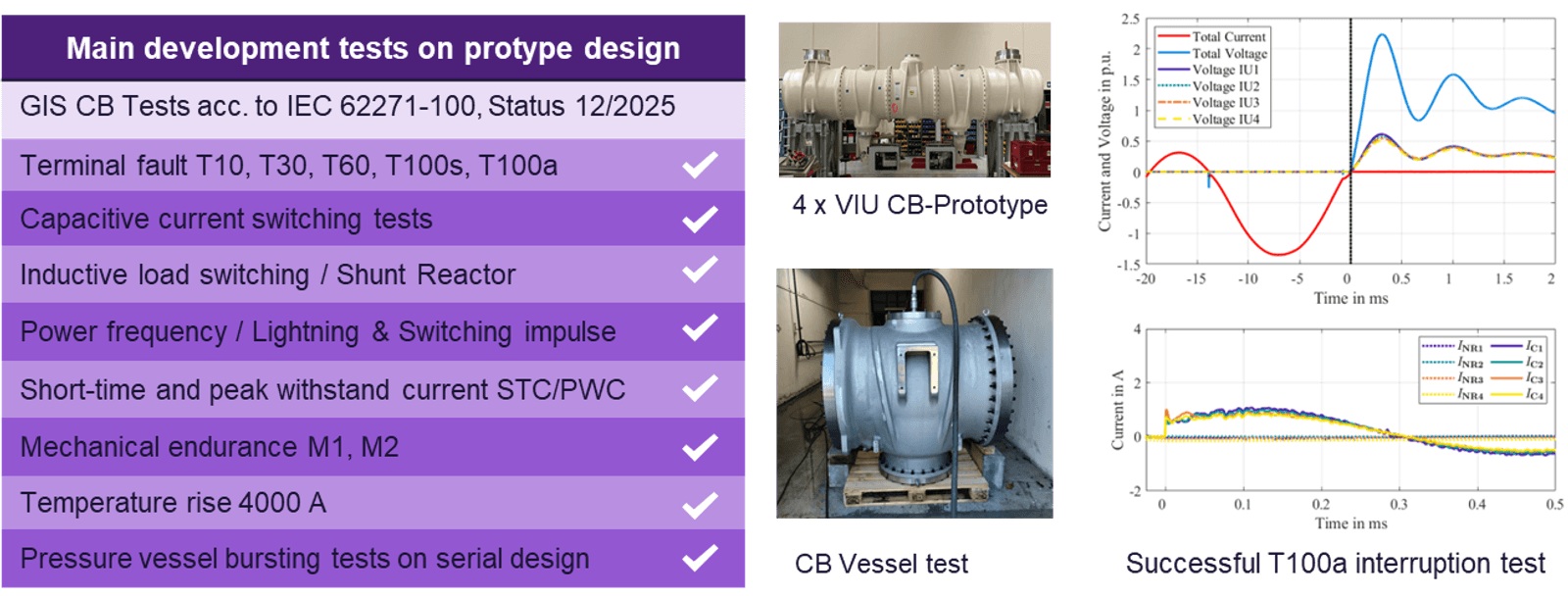
Development has progressed rapidly, with successful type testing of backparts and busduct modules, and validation of breaker and vacuum interrupter designs.
A four-break vacuum circuit breaker (VCB) approach, leveraging proven 145kV VI technology, ensures reliability, standardisation and scalability. Experimental results confirm effective voltage distribution and interruption without the need for nonlinear resistors, using grading capacitors alone.
Results
Performance metrics
The F gas-free 420kV GIS demonstrates:
- Zero GWP and true climate neutrality;
- Simple and easy gas handling;
- Full compliance with current and future regulations w/o any regulatory obligations;
- Superior switching performance and reliability;
- Scalability for higher voltage and short circuit current applications.
The main advantages of N₂/O₂ mixtures are as follows:
- Non-toxic, non-PFAS, and safe for insulation and switching;
- High thermal stability and long-term reliability;
- Established global supply chains;
- Lower dielectric strength than SF6, but manageable with design adaptations.
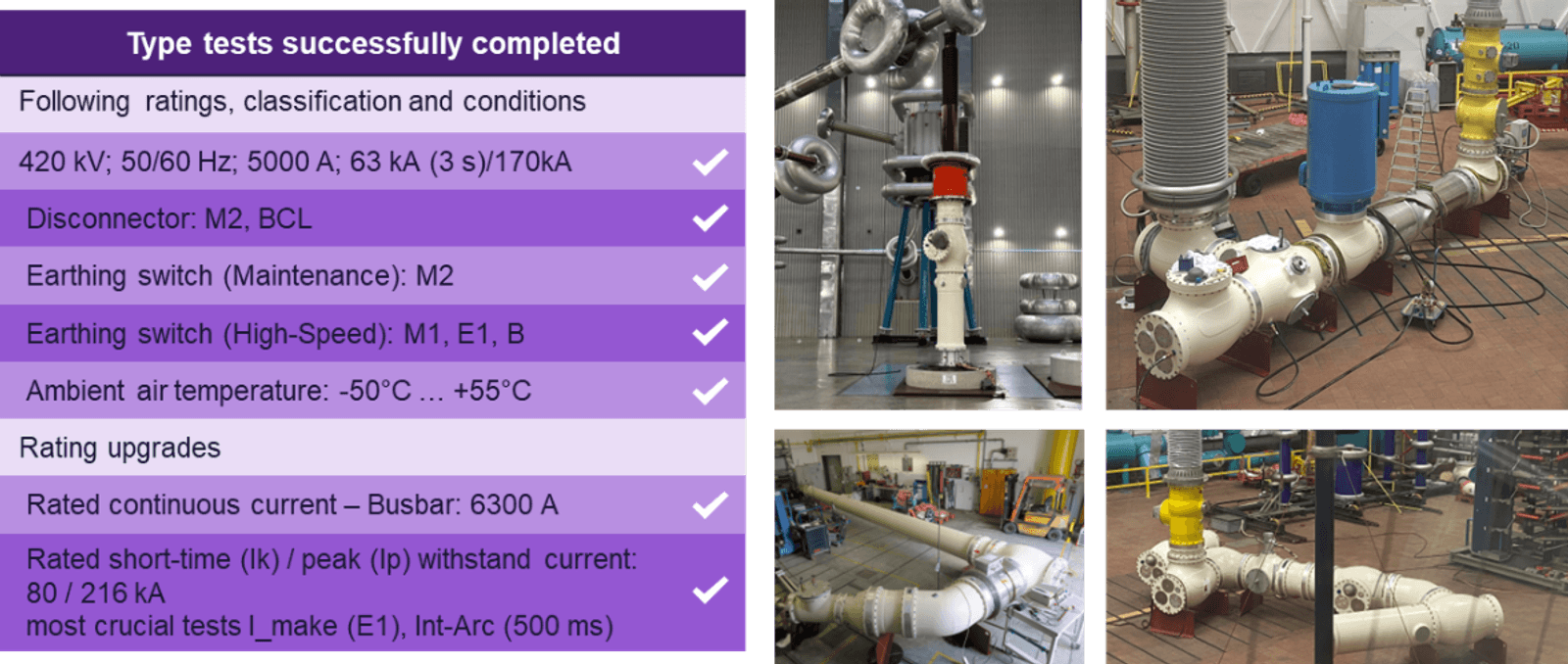
Figures 4 - 6 illustrate the design characteristics, test status and design impressions, confirming robust performance under diverse operating conditions.
The low power instrument transformer integration delivers precise measurements, advanced safety and compatibility with digital substation architectures. It saves over 5t of material per GIS bay and hundreds of metres of cable, reducing lifecycle costs and environmental impact.
Regulatory and market impact
EU co-funded projects like LIFE Blue and MISSION are driving industry-wide adoption of F gas-free technologies.
Over 7,000 F gas-free orders have been placed globally, with 3,000+ units in operation, reflecting strong market momentum. Standardisation and shared technology platforms enable economies of scale, reduced complexity and improved reliability, supporting grid operators in meeting ESG commitments and regulatory requirements.
Implications
The LIFE Blue 420kV GIS project demonstrates that emission free, HV transmission is technically and economically viable. The transition to natural origin gases and vacuum switching not only meets regulatory demands but also delivers operational benefits, cost savings and enhanced safety.
The project’s collaborative, cross-border approach ensures rapid innovation and disciplined execution, setting a template for future grid modernisation.
Conclusion
The LIFE Blue 420kV GIS project marks a major milestone in the decarbonisation of Europe’s energy infrastructure. By validating F gas-free, climate neutral emission free GIS technology in real-world conditions, the project supports EU climate goals, regulatory compliance and industry best practices.
Key takeaways include:
- Proven technical and economic viability of F-gas-free N2/O2 and vacuum switching for 420kV GIS.
- No harmful SF6 or other toxic F gas emissions and easy gas handling.
- Robust performance, reliability and safety under diverse operating conditions.
- Complete elimination of greenhouse gas emissions (GWP=0) and significant reduction of lifecycle costs.
- Scalable, standardised solutions for future grid expansion.
Type testing is scheduled for 2026, with pilot deployment in Belgium in 2027. The consortium remains committed to continuous improvement, market adoption and long-term sustainability.
About the author
Dr Mark Kuschel is Head of International Standardization and Grid Technologies at Siemens Energy. With a PhD in the field of electrical and high voltage engineering he has 20+ years management experience in switchgear and the substation business and is a proven entrepreneurial leader and passionate about technology and sustainability.
Related tags
Latest content
+4
EU Energy Projects Podcast: SF6-free switchgear with LIFE Blue 420kV GIS
In this episode of the EU Energy projects podcast, Siemens Energy’s Mark Kuschel tells Areti Ntaradimou how the LIFE Blue 420KV GIS project is pioneering SF6 free HV switchgear and digital monitoring.
- Jonathan Spencer Jones
- 04/03/2026