A new era for smart meters: shifting intelligence to the Edge
Guest/partner contributor
Posted on: 17 March 2023
Transforming power grids into intelligent and efficient platforms is crucial to connect renewables and gain the benefits of electrification.
Transforming power grids into intelligent, safe and efficient platforms is a crucial mission to connect all the renewable capacity that will enable us to decarbonise power generation and gain the full benefits of electrification.
This is becoming a crucial challenge, as most of the infrastructures we rely on today were engineered around a century ago.
It is for this reason that power grid operators all around the world are expanding investments in smart grids to improve resilience, facilitate new renewable distributed generation, compress reaction times to outages with fast response mechanisms, as well as enable remote control of electricity flows across the network while improving overall operations and service performance for final users.
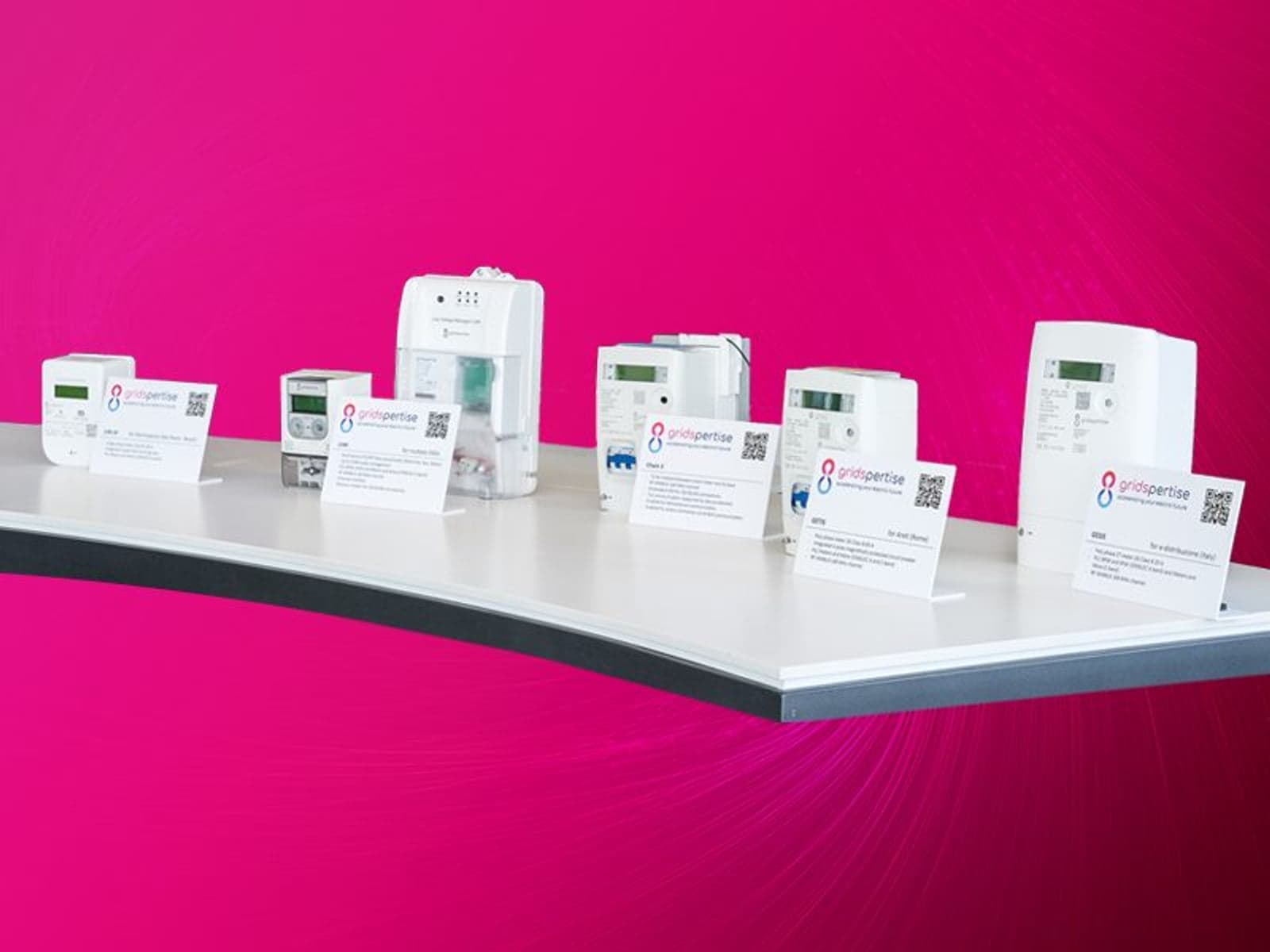
In this scenario, smart meters have helped grid operators and customers tackle many of the challenges mentioned above and now with the new generation of smart meters Gridspertise wants to respond to the current energy model, strengthening grid resilience with new data driven applications, sensors and data privacy.
Building on Enel’s 20-year experience in smart grids, with 75.7 million connection points in eight different countries and more than 2.3 million km of electricity grids, Gridspertise’s portfolio of solutions can contribute significantly to the transformation of networks into sustainable and reliable smart grids.
The new generation of smart meters that is being developed by Gridspertise is the core of this innovation, since data management is performed both in-cloud and at the edge, closer to the source, enabling near-real-time response.
You might be interested in:
Quantum Edge® Device – Unmatched benefits for electric utilities
A smart grid journey with Robert Denda, Gridspertise
Bringing intelligence to the grid edge
The new generation smart meters leverage on edge computing technology to offer more elaborated insights that are useful for both customers and operators.
The use cases are computed on the same smart meters, reducing the information sent to the cloud, which is provided in real-time, meaning that the intervention time is also reduced.
These edge-computing devices also allow the reduction of data leakage, using and sharing only essential information. This way, the new smart meter can be considered a true grid sensor.
The next energy model
Using this new generation of meters with increased computing power lowers costs and enhances grid resilience.
The edge solution, in fact, provides innovative and updated benefits. Distributed intelligence allows low latency and a faster response to grid oscillations, blackouts or limited power supply.
These are all characteristics well known to grid operators in the US as extreme weather conditions represent a challenge and put a strain on the entire system, often tested by events such as hurricanes, wildfires and thunderstorms.
In a scenario in which fast response is crucial, these meters are able to communicate in a more direct way both with end-customers and operators.
The high-end meter also enables new business operations. The data is not only transferred to the utility network but is also available at supply points for a wide range of applications, some realized by third party developers, that are always updated following both market and technology trends.
A future-proof customer engagement
Engaging with customers is pivotal in the US and this forefront technology allows them to increase awareness of consumption and production.
More insights from Grispertise
Thanks to distributed intelligence, use cases can be easily developed and customised over time, improving customer engagement with indirect and direct advantages.
For example, this technology allows utilities and clients to create partnership programmes that include:
• Advanced analysis of consumer consumption, enabling disaggregation in real time;
• Demand response referred to a wide range of applications supporting the reduction of consumption during peak hours;
• Stand-alone or isolated controllable microgrid;
• Energy communities that share access to renewables with other users;
• High privacy standards.
Thanks to the new data structure, end-consumers are more active and experience tangible benefits such as:
• Pricing: tariffs based on real-time use, setting specific thresholds or alerts as to not go beyond power limits, and moving apparatuses towards different and more convenient price shifts;
• Feedback: notification sending, fault and virtuous behavior alerts to allow the consumer to become more engaged and careful;
• DERs and EVs: automated management based on real consumption prices, charge and production status;
• Green button: thanks to validated protocols, utilities could share data with end-customer in a safer way.
Furthermore, in the future of smart grids, the edge approach is more sustainable for both clients and the energy system.
The new generation of meters, in fact, allows customers to easily access their consumption data, thus increasing awareness of energy consumption and incentivising efficient as well as sustainable behaviors, at the same time promoting the management, production and use of energy produced from renewable sources.
This next generation of smart meters, thanks to a sustainable, innovative and cutting-edge approach, empowers final users in the US market to become active and conscious stakeholders in response to the challenges posed today by the energy transition.