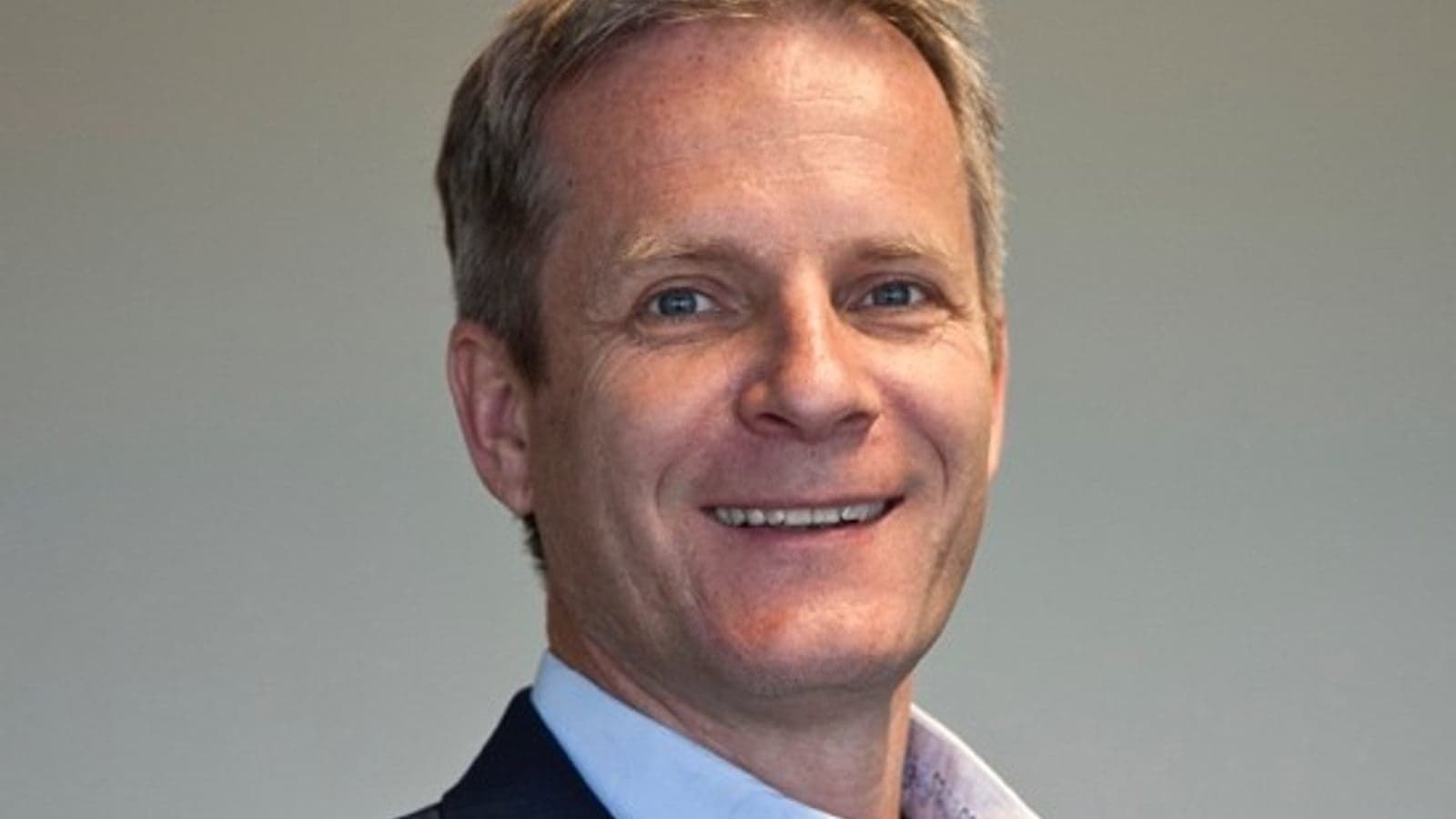
A proactive mindset is vital to accelerate the energy transition, says ABB President
Enlit Editorial Team
Posted on: 21 November 2023
ABB President, Stuart Thompson, encourages the need for a proactive mindset approach to achieving a just energy transition.

In an Enlit exclusive, Stuart Thompson, President of ABB Electrification Service, underlines the need for a proactive asset maintenance approach that supports driving down costs while improving operational efficiency. In turn, this mindset shift will contribute towards reducing our carbon footprint and overall impact on the environment through circularity and support a just energy transition.
What are the top three challenges to delivering the energy transition?
As more distributed and decentralised sources of energy, such as renewables, are integrated into the grid, one of the biggest challenges for utilities is to keep the power flowing 24-7. Battery energy storage systems will be key in maintaining the performance of the grid when energy supply from intermittent sources like wind and solar, while technologies, like virtualised real-time computing, machine learning and AI, will improve the resilience of the grid.
With the energy transition taking place in the context of a volatile geo-political backdrop, there are also cost pressures and energy security risks to be considered.
Economic instability is seeing energy operators and industrial businesses rethink spending and how to secure a reliable and cost-efficient energy supply. This means reducing capex and focusing on operational efficiencies, maximising existing assets and infrastructure and adopting digital technologies with a concrete and rapid ROI, as well as looking closer to home for servicing and data processing.
For example, keeping computing power closer to the data source ‒ or ‘edge’ of the network ‒ using edge computing, reduces cyber security risks and speeds up data processing.
Lastly, we have seen that global organisations are less advanced in their digitalisation transformations than we would have expected, despite the potential of digital technology like IIoT to reduce energy consumption and keep electrical assets in service longer, thereby reducing their overall carbon footprint.
To accelerate the energy transition, we need to see a shift in mindset from a reactive approach to the maintenance of electrical infrastructure to a proactive one that reduces downtime and total cost of ownership as well as optimising operational efficiency and minimising our impact on the environment through circularity.
What single action will accelerate the deployment of clean energy?
One of the most effective ways to accelerate the deployment of clean energy will be the use of battery energy storage systems [BESS], which store excess energy and redeploy it when the sun isn’t shining or the wind isn’t blowing. They are crucial to shoring up the grid when the energy supply is intermittent.
It is unsurprising, therefore, that the energy storage market hit another record year in 2022, adding 16GW, up 68 per cent from 2021. If ambitious targets set by several markets are reached, it could increase to 130GW by 2030, according to energy research organisation BloombergNEF's Energy Storage Market Outlook 2023.
While we would like to see these targets being met to accelerate the deployment of clean energy, we recognise that some operators are not aware of the revenue potential of BESS and are therefore reluctant to invest.
The latest generation of digitally-enabled BESS overcome this challenge, offering a concrete and compelling ROI. Using AI and machine learning, these systems can reduce battery degradation, in turn improving battery lifetime and accelerating payback time on the initial investment.
Plus, when hooked up to a virtual power plant ‒ a network of small and medium energy sources that come together to function as a single, unified plant in the eyes of the market ‒ BESS can provide a new revenue stream for businesses, through energy trading.
Through our partnership with Danish startup Hybrid GreenTech, we are co-developing a new control logic hardware and software architecture for ABB’s BESS, which could create a fully AI-driven virtual power plant. By providing near real-time market access with country-agnostic ancillary services and split-second response times, the solution has the potential to improve the ROI in batteries by 10 years or more. Systems that offer this kind of add-on revenue generation opportunity could provide the motivation operators need to take the first step into investing in BESS.
What most excites you about the European energy transition?
We are excited to see more big corporates ‒ such as ABB ‒ team up with startups across Europe and beyond to accelerate the development and adoption of technologies that will change the way we create, distribute, save and deliver energy, accelerating the energy transition.
At ABB, for example, we have teamed up with OKTO GRID, which is developing transformer monitoring technology that can help utility operators detect anomalies and transmit data to the cloud almost immediately, prolonging component working life by another 40 years.
This next-generation transformer sensor works independently of transformer type, make and age, and is easily mounted without downtime or any tooling required. Along with a seamless switch-up to digitalisation, this innovation optimises the safety and efficiency of aging equipment, reduces asset carbon emissions, and enables higher power performance, stability and availability.
The shift we are seeing from cloud to edge computing also has the potential to bring big benefits in terms of data processing speed, security and resilience. To this end, ABB is collaborating with edge-to-cloud startup Pratexo to help customers manage and monitor electrical systems.
Thanks to the system’s rapid data gathering and analysis capabilities, it can identify what could potentially be causing machine faults in real-time and at the most local level adjust to rapidly changing circumstances such as changes in power availability and consumption.
For us, this is a hugely exciting time to be in the energy game. Driven by collaboration across the sector, we are seeing widespread innovation result in new ideas, technologies and business models that will help to shape the energy system of the future: an energy system that will be stronger, cleaner and more resilient for generations to come.
Listen to the latest Energy Transitions Podcast:
The value of circular asset management
How are your industry experts going to address these challenges at Enlit Europe in Paris?
I’m excited to take part in the Digital Strategies panel discussion on 28 November, where I will explore the inevitable transition from cloud to edge computing, the importance of establishing solid data architecture including real-time, remote condition and performance monitoring systems, and the key role collaboration with startups plays in fostering innovation.
Enlit Europe will also see the launch of ABB’s new digitalisation white paper, ‘See the full potential of digital, faster’, which highlights the competitive advantages of implementing IIoT at scale and how to overcome the barriers to adopting digital technologies that will deliver operational and financial results, as well as accelerate decarbonisation.
One key barrier to IIoT adoption is the lack of a skilled workforce. On 29 November, My colleague Marco Nunes, Global Marketing and sales Manager of ABB’s Digital Substation Products and Systems will explore this in the Skillset Challenges of Transitioning Workforce panel discussion.
On the same day, Mateusz Zajac, Sustainability Leader at ABB Electrification Service, will participate in the New Infrastructure v Repurposing hub presentation, where he will discuss the importance of shifting to a circularity approach that uses the principles of long-lasting design to minimise pollution by keeping products and materials in use for as long as possible to reduce resource dependency.
By focusing on the three Rs ‒ repair, refurbish and retrofit ‒ operators can extend the life of power distribution assets and curtail life cycle emissions for improved availability, reliability, predictability and sustainability of electrical installations.
This will be supported by the launch of a new industry guide, ‘Tackling Throwaway Culture’, which highlights the potential of circularity to improve sustainability and drive new levels of operational efficiency.
You can join Christian Payerl, Area Sales Manager, Synchronous Condensers and Generators, on 30 November where he will present his views at the Decentralisation HUB on the latest technologies that are stabilising the decentralised grid.
Related tags
Latest content
Partner content
+2
Innovations to accelerate the decarbonisation journey
ABB’s Marco Tellarini, Senior Vice-President – EMEA Region, Electrification Service, delves into the innovations that are enabling utility and industrial customers to accelerate their decarbonisation.
- Enlit Editorial Team
- 22/10/2024
+3
Open source: The key to utility digital sovereignty
Open source collaboration is not merely a technological choice for the energy sector but a strategic imperative for navigating the complexities of today and tomorrow, writes Alex Thornton, Executive Director, Linux Foundation Energy.
- Guest/partner contributor
- 29/05/2025