Acquisitions show flexibility is the name of the game in European power trading
Yusuf Latief
Posted on: 17 October 2025
In this week’s Power Playbook: acquisitions in the power trading space show how flexibility will be key for success.
Just three years after launching, Germany’s FlexPower has reached an agreement to be acquired by Miami-based hedge fund Citadel, illustrating flexibility as a key commodity in Europe’s rapidly evolving power market.
In 2022, Hamburg-based FlexPower launched with a small team of 15 veteran energy market specialists who had the initiative to tap into the time’s increasing demand for flexibility, a response to dramatically increasing price volatility.
Fast forward three years, and the company, now a leading power trader in Germany, has been acquired by one of the world’s biggest hedge funds operating out of Miami, Florida – Citadel.
Since its inception, FlexPower has built expertise in trading and risk management for renewable generators, battery operators, and commercial and industrial offtakers.
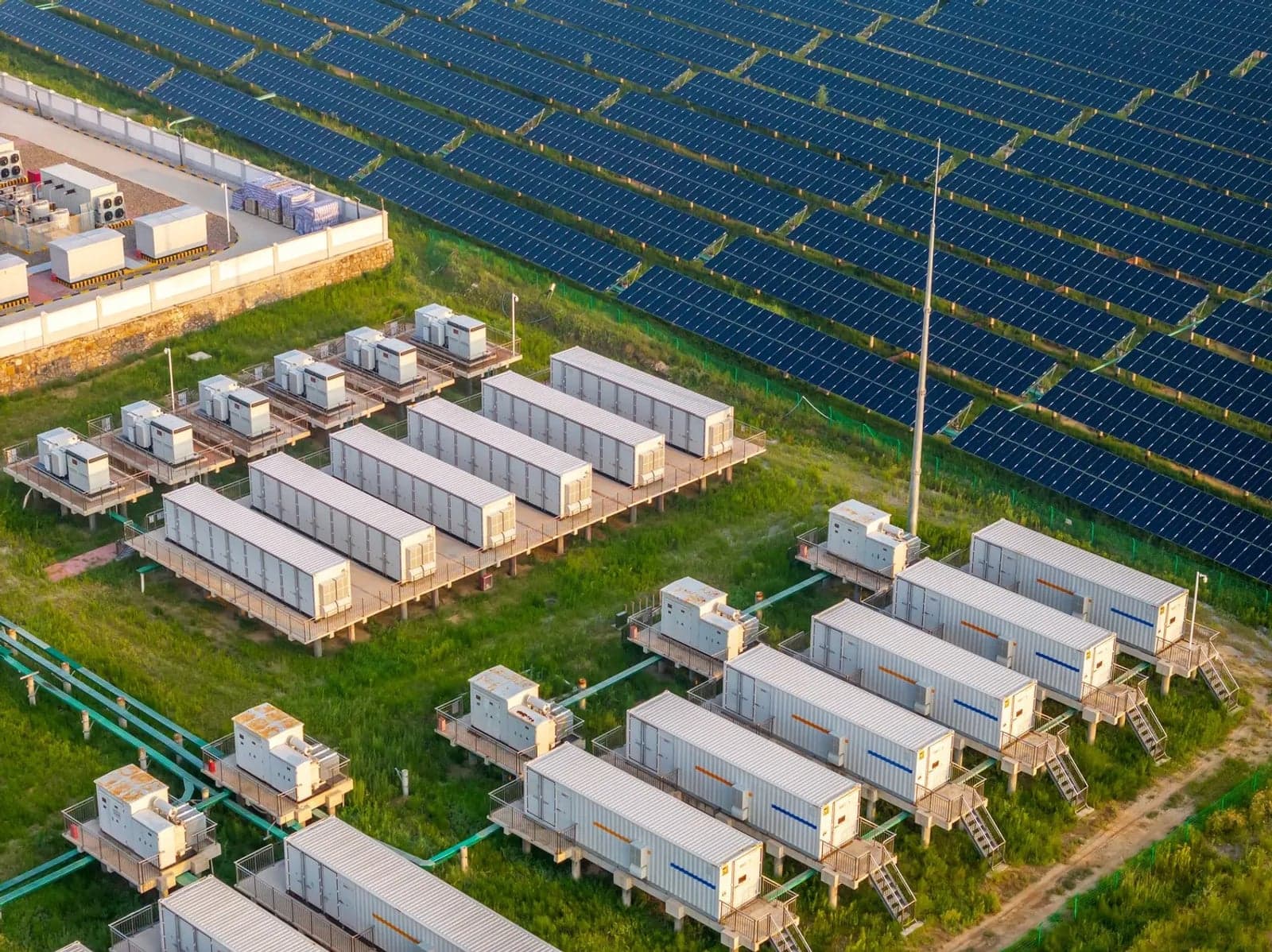
The company focuses on integrating renewable energy into power markets and leveraging battery storage to provide much-needed flexibility. Its services are used not only by renewable operators but also by utilities, industrial consumers, and other electricity traders looking to outsource parts of their portfolio for risk mitigation or staffing reasons.
Germany’s accelerating shift to renewables has created the ideal environment for FlexPower to help clients navigate market volatility. Currently, the firm trades a portfolio of over 1,700 MW across six European countries, placing more than 11 TWh annually on short-term power markets.
That scale caught the eye of Citadel.
“This acquisition strengthens Citadel Commodities’ position as a leading investor and risk manager in power markets, and builds on our success in global energy trading,” said Sebastian Barrack, Head of Citadel Commodities.
Max Amir Dieringer, CEO of FlexPower, believes that renewable trading should be "as efficient and scalable" as any other commodity market.
“Our proprietary PPA platform, PowerMatch, is designed to make this a reality and reduce risks for both generators and offtakers. With Citadel’s unmatched talent, infrastructure, and financial strength, we can achieve this vision and establish ourselves as Europe’s premier renewable trading house.”
More from the Power Playbook:
TenneT’s €9.5bn equity deal amid Germany’s expensive grid expansion
Businesses are eyeing V2G in Germany – is the market shifting?
Volue Acquires SmartPulse
FlexPower isn’t the only company capitalising on flexibility.
SmartPulse, a Turkish software vendor founded in 2018, employs 80 energy market specialists and offers a full-suite, short-term power trading and battery optimisation platform. Their clients include asset owners and aggregators across Europe.
Just last week, SmartPulse was acquired by Volue, a Norwegian tech company focused on energy, grid, water, and infrastructure sectors. The acquisition expands Volue’s presence in Central and Eastern Europe, Southern Europe, and Turkey, while adding advanced capabilities in forecasting, position management, scheduling, intraday trading, battery optimisation, and asset connectivity.
“The move directly enhances our battery storage and optimisation capabilities, deepens our presence across regions, and supports our ambition of becoming the leading global independent energy software player,” said Martin Vieider, Interim CEO & Chief Transformation Officer of Volue.
“It will also strengthen our position as a full-suite provider for renewable asset operators.”
The biggest opportunity would be in flexibility.
Flexibility is king
These recent acquisitions demonstrate a clear trend in power trading: flexibility is the key to growth and competitiveness.
Earlier this year, Stanislav Dudka, Head of Power Trading International for D Trading summed it up well:
“The biggest opportunity would be in flexibility. If you try flexible generation, you will be the king for the next three years. I cannot guarantee that you will be the king for the next 10, but the next three, probably.
“People are continuing to invest into PV, but for me, batteries is the way to go.
“If you don't want to use this modern technology, you can put some old flexibility in place. Whether a gas engine, hydropower plant, or even small hydro, so long as you can establish flexibility, it will help you be successful in the region.”
It appears that insight is playing out in real time. With Citadel and Volue both investing in flexibility-focused companies, the message is clear: the future of power trading in Europe lies in the ability to adapt quickly.
But what do you think? What other technologies will be key for successful power trading portfolios in the European market? Reach out and let me know so I can feature your thoughts in the Power Playbook column.
Cheers,
Yusuf Latief
Content Producer
Enlit World
Follow me on Linkedin