Vegetation management tops climate resilience in Europe
Jonathan Spencer Jones
Posted on: 23 July 2026
Benchmarking by E.DSO indicates a nuanced picture of climate resilience activity by DSOs in Europe.
The benchmarking covering ten metrics structured around the four key features of robustness, redundancy, reliability and response and recovery.
It indicates that while the sector has built strong foundations in conventional network reliability, it is now at varying stages of transition towards a more digitally-enabled, climate adaptive operational model, E.DSO states.
Based on input from DSOs, its aim is to identify the general state of resilience across the sector for the purpose of peer learning and experience sharing, rather than as a direct performance comparison.
Starting with vegetation management coverage, the analysis found this is the most consistently performed resilience activity across the DSOs and indicates strong sector-wide maturity. The large majority reported near complete or full coverage of their overhead network, with many achieving 100% compliance on defined maintenance cycles.
Also of interest
Iberdrola to use space data to manage extreme weather events
How Climate KIC is turning climate ambition into action
Turning to site-level flood protection, the findings indicate gaps across the DSOs. Responses varied widely, from operators reporting near-complete protection of vulnerable sites to those with very limited coverage or where assessment and protection programmes are still in progress.
Significant risk
Several DSOs noted that flash flooding has not been a significant risk in their operational area historically, which may explain the lower investment levels.
The responses for climate adapted assets also show considerable variation, reflecting differences in both exposure profiles and adaptation programme maturity. Some operators reported very high levels of climate-adapted assets, particularly for underground cable networks and for specific hazard types such as flooding or lightning.
Notably underground cabling consistently scored higher on climate-adaptive criteria than overhead infrastructure, owing to its inherent protection from wind and lightning.
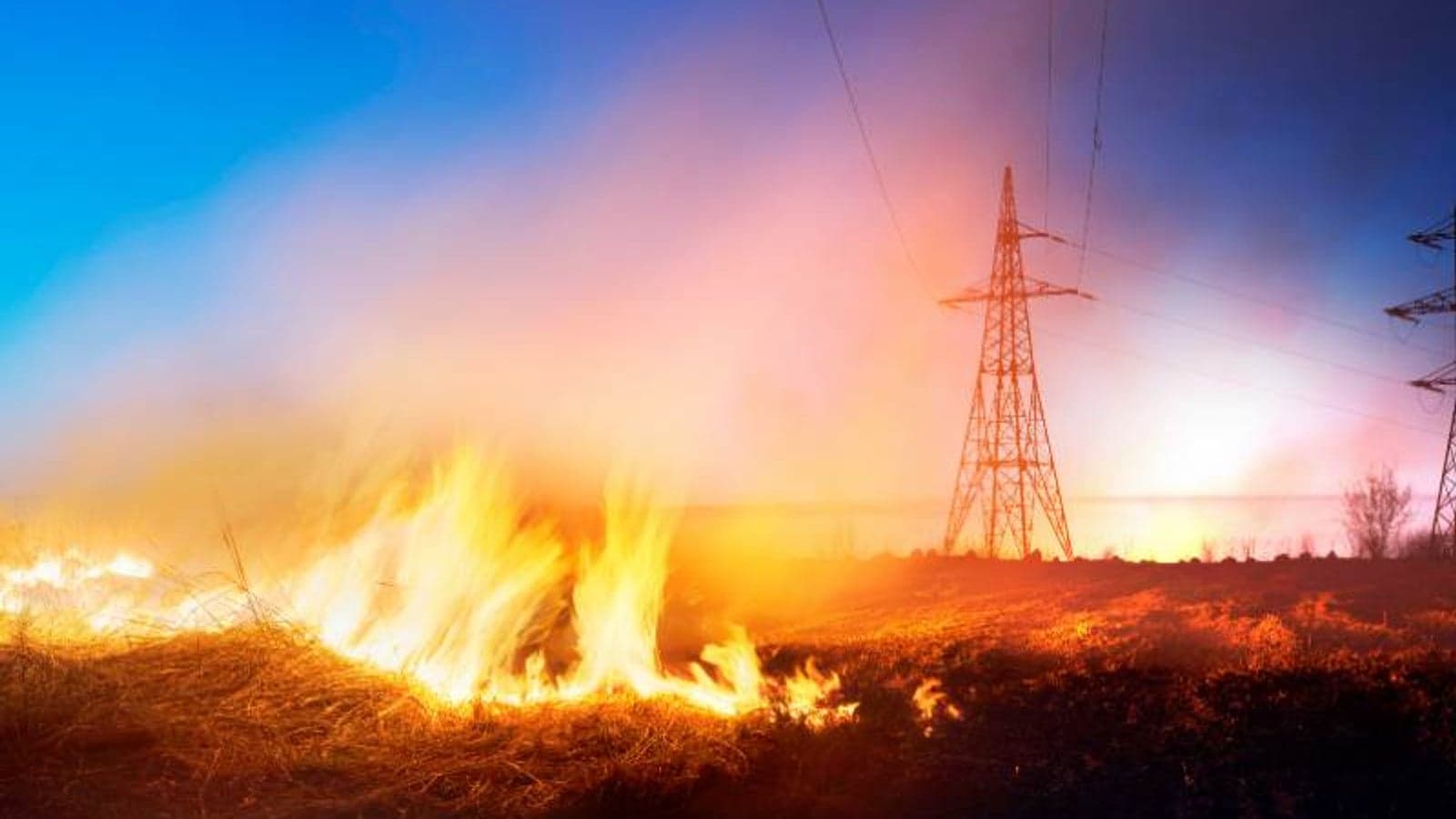
Wildfire exposure varies significantly across the DSOs, reflecting the diverse geographies represented. Several operators reported near zero or very low exposure, consistent with their operational contexts, while others report substantial proportions of their MV and HV overhead networks in high risk zones.
Where undergrounding has been pursued, this was cited as a key mitigation measure, with some operators reporting over 20% of relevant lines already underground.
Widespread challenge
Data for the underground cable infrastructure with modern joints metric was among the most incomplete in the benchmark, with several DSOs unable to provide precise figures or noting that the indicator is not yet systematically tracked.
The general trend suggests that while progress is being made, legacy cable joint infrastructure remains a widespread challenge and that standardised tracking of this indicator is not yet common practice.
Redundancy at the MV circuit level emerges as a strong point across the benchmark. Most operators report high levels of n-1 capability, with the approaches varying, some relying on meshed HV topologies and others on interconnected MV feeders and switching points.
The sector has clearly invested substantially in network redundancy.
Spare capacity at primary substations is another area of notable strength across the DSOs, with the majority reporting that nearly all, if not all, of their HV/MV transformers operate below firm capacity limits, with figures consistently in the range of 85% to 100%.
This reflects both prudent planning standards and, in some cases, the effect of demand evolution relative to installed capacity.
However, remote control and automation at the MV/LV substation level represents significant variability and only a small minority of the DSOs have achieved substantial coverage of their secondary substations.
Self healing
The deployment levels of advanced distribution management (ADMS) and fault location and restoration (FLISR) functionality across the DSOs was indicated to range from near zero to near complete coverage.
The general trend indicates that FLISR and ADMS are widely recognised as priority investments, but deployment timelines and resource availability vary substantially across the sector.
Similarly automated self-healing capabilities show a wide range of deployment levels across the DSOs. Some operators have adopted comprehensive recloser programmes and remote controlled switch networks, while others rely primarily on telecontrolled switches integrated with ADMS rather than standalone reclosers, citing lower cost and simpler protection coordination.
In conclusion, E.DSO states that the variability observed in digitalisation and automation-related metrics highlights these capabilities as key enablers of climate resilience. Higher levels of remote monitoring, automation and self-healing functionalities are associated with increased operational flexibility and faster response and recovery during weather-related events.
These solutions are increasingly viewed by DSOs as no-regret investments under growing climate uncertainty.
“Targeted investment in automation, asset modernisation, and data driven resilience planning will be critical to ensuring that European distribution networks are adequately prepared for the intensifying climate challenges of the coming decades.”
The grid is changing fast. Stay up to date with the latest news and insights on infrastructure, transmission and distribution.