AI delivers tangible progress in decarbonisation in UK report finds
Jonathan Spencer Jones
Posted on: 16 January 2026
How effectively is AI being applied to key societal challenges like decarbonisation in the UK? A new study investigates.

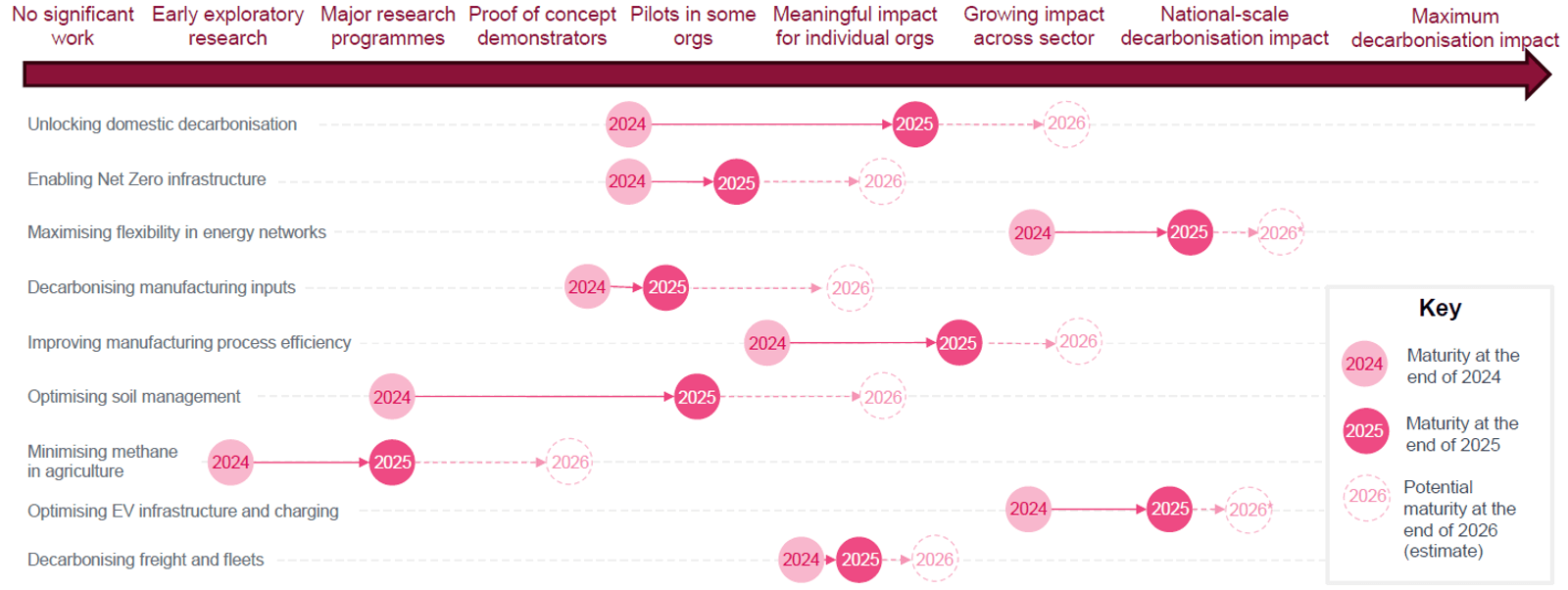
The study from the UK’s AI for Decarbonisation Virtual Centre of Excellence (ADViCE) finds that the most advanced applications of AI, approaching national scale decarbonisation impact, are maximising flexibility in energy networks and optimising EV infrastructure and charging.
There was also tangible progress during 2025, with unlocking domestic decarbonisation and improving manufacturing process efficiency starting to make a meaningful impact for individual organisations with the move from demonstration to deployment.
Soil management optimisation also started to be piloted and methane minimisation in agriculture became the subject of major research programmes.
However, progress was slow in enabling net zero infrastructure, decarbonising manufacturing inputs and decarbonising freight and fleets with pilots under way, but partly due to the high capital costs that need to be overcome to achieve decarbonisation in these areas.
Also of interest
Testing and validating AI solutions in the energy sector
Commenting on the findings, Sam Young, AI Practice Manager at the Energy Systems Catapult and the study’s lead author, said: “Indiscriminate use of AI can increase emissions, but smart, targeted uses are already breaking down some of the hardest barriers to a low carbon economy.”
The study is focused on what have been identified as ‘grand challenges’ where AI is considered to have the most impact, with the two transport-related challenges now being added to the original seven.
Some of the headline numbers highlighted are that AI-powered solar nowcasting reduced emissions by an estimated 300,000t and that smart EV charging lowered peak electricity usage from EVs by 42%.
Others are 79% of EV owners having a smart charger, 1,500 farms using autonomous drone flights to inspect crops, a 50% reduction in heat pump installation time using AI tools and a 2% reduction in CO2 emissions from cement production using AI.
The study also highlights that the startup ecosystem continues its steady growth. Most companies are in the seed and venture stage, which broadly mirrors the overall AI ecosystem in the UK.
It also notes that progress may have been slowed or hindered by the generative AI hype and that lots more work is required to fully realise the benefits of AI for decarbonisation.
Looking ahead to 2026
In that vein, the study foresees advances in all nine challenges with step changes in most of them during 2026.
Unlocking domestic decarbonisation and improving manufacturing process efficiency are expected to show growing impact across the sector, while enabling net zero infrastructure, decarbonising manufacturing inputs and soil management optimisation are expected to start delivering meaningful impact for organisations.
Methane minimisation in agriculture is also expected to move to proof of concept during 2026.
However, minimal progress is anticipated in decarbonising freight and fleets. While there is a broad suite of tools to improve operational efficiency for fleets, including route optimisation, load planning and reducing empty running, they do not always fully leverage the latest advances in AI.
In addition, while AI plays an enabling role in several new business models looking to address the challenge of high upfront investment, e.g. Zenobē’s electric-transport-as-a-service, the decarbonisation impact is heavily influenced by the success of the business models rather than solely the performance of the AI system.
Looking further ahead and in financial terms, the impact of AI on electrification and decarbonisation is likely to be significant. Another new study from the Energy Systems Catapult, the UK National Nuclear Laboratory and E.ON estimates that by 2050 with AI a highly flexible energy system could be achieved with electric solutions providing around 80% of the demand for heating and 95% of that for transport.
Such a mature flexibility market could increase annual electricity demand between 13% and 35% by 2050 whilst reducing the overall system costs by as much as 3%, i.e. around £125 billion.
ADViCE is aimed at accelerating the development of innovative AI technologies for decarbonisation applications and is a partnership between the Digital Catapult, Energy Systems Catapult and Alan Turing Institute.