Airbus selects Siemens in major decarbonisation push
Yusuf Latief
Posted on: 16 October 2025
Smart energy management, low-carbon heating and other such solutions will support the aerospace major in decarbonising its industrial operations in the US and UK
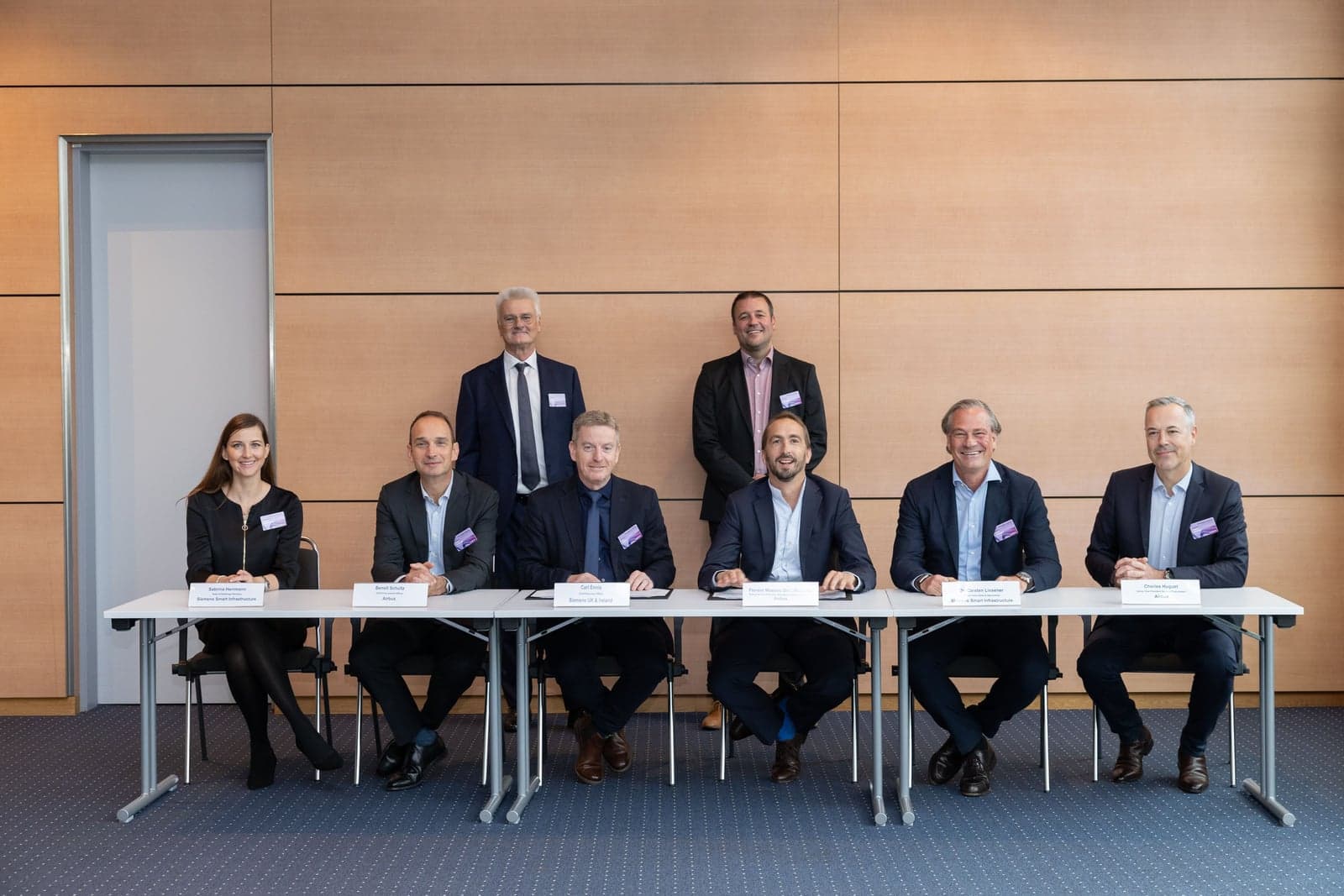
France-headquartered Airbus has selected tech major Siemens to deliver solutions for renewable energy integration, smart energy management and low-carbon heating solutions.
With the agreement, Siemens and Airbus are building on a partnership that dates back more than half a century. The two have already collaborated in such areas as factory automation, industrial software, safety and security and building automation technology.
Now, under their consolidated partnership, Siemens will evaluate four major Airbus industrial sites in the US and UK, using its Energy System Twins to simulate and develop decarbonisation roadmaps for each site. The initial phase for this project began in summer 2025.
Engineering studies will now guide implementation with infrastructure rollout set to start in 2026.
We’re proud to be taking this important step toward making our operations more energy-efficient and future-ready.
The key solutions include decarbonisation of heat production via heat pumps, energy efficiency upgrades, smart metering systems, on-site smart integration of renewable energy, and smart energy management systems to monitor, control and optimise usage across the sites.
Susanne Seitz, Chief Executive Officer of Buildings at Siemens Smart Infrastructure, said: “At Siemens, we’re committed to making the energy transition not only sustainable, but also achievable and scalable, so Airbus and other industrial leaders can confront climate challenges while boosting operational resilience and long-term competitiveness.”
The project, led by Siemens’ Buildings business, will also be supported by Capgemini, appointed by Siemens to complete the first phase consulting activities, governance definition, and support for project management and planning. Capgemini also brings expertise in digitalisation and automation of the energy monitoring and measurement systems.
Have you read?
Rooftop solar project completed at UK's Farnborough Airport
Schiphol Airport taps energy storage to decarbonise ground power
Airbus agenda
The project and its solutions fall under an ambitious programme being implemented by Airbus that aims to cut energy consumption by 20% and Scope 1 and 2 stationary emissions by 85% through 2030, compared to 2015 levels.
In the push to cut consumption, Airbus has been implementing a portfolio of projects to upgrade facilities, improve the energy efficiency of buildings and operations, and capture better data through enhanced metering and monitoring.
The company aims to secure at least a 90% direct supply of renewable or low-carbon electricity to all Airbus sites in Europe before 2030. For example, in 2023 the company signed new PPAs in Spain, with all agreements covering 40% of their purchased electricity in the country.
Florent Massou dit Labaquere, Executive Vice President of Operations at Airbus Commercial Aircraft, said: “We’re proud to be taking this important step toward making our operations more energy-efficient and future-ready.
“The site-specific expertise from our Airbus colleagues in the UK and the US, combined with Siemens’ technical know-how, will keep us on the path toward meeting our energy use and emission reduction targets.”
However, it is not only this type of technology the company has been looking to in its move to reduce consumption and emissions.
Airbus has a target of 80kt CO2e abated annually from 2030 and it has also been looking to achieve this by transitioning to low-emission transportation, such as improving the efficiency of maritime and road transport and increasing the use of sustainable aviation fuel (SAF) in operations.
According to Airbus, all its aircraft are capable of flying on a maximum 50% blend of SAF and conventional fuel. By 2030, it adds, all their aircraft and helicopters will be capable of flying with up to 100% SAF.
Indeed, the company was an early mover in the adoption of SAF, using it in its Beluga fleet since 2019.
Airports looking to decarbonise
Airbus is but one company which has been looking to SAF and smart technologies in its bid to decarbonise operations in aerospace. Airports are key players which need to tackle the challenge.
Under EU regulations through the ReFuelEU Aviation mandate, fuel supplied at EU airports must contain at least 2% SAF as of 2025, with increasing targets over time. These targets include 6% by 2030, 20% by 2035, and 70% by 2050. A separate sub-mandate for synthetic fuels also increases over time, starting at 0.7% in 2030 and reaching 35% by 2050.
Airports like Malpensa and Schiphol, to name but two, are already tackling the task.
Italy’s Malpensa has been tapping into several project opportunities, courtesy of European Commission funding. One of the most vital is the OLGA (hOListic & Green Airports) project, aiming to build a plant for green hydrogen, powering Milan Malpensa’s ground vehicles. Then there is project eMAGO, which plans to implement 84 Aircraft Ground Power Units, providing power to aircrafts during ground operations, after landing and before takeoff.
Schiphol in the Netherlands makes use of biokerosene, which is made from vegetable or animal waste products, such as cooking oil. Between 2022 and 2024, Schiphol encouraged the purchase of SAF by subsidising the additional cost. As a result, more than 40,000 tons of SAF was used by participating airlines.
Additionally, at Schiphol, BAM Infra Netherlands has been running a project to create a central energy hub for the airport, adding more grid capacity for the airport terminals and facilities while contributing to the airport’s carbon neutrality goals.
BAM sought to prioritise 4D buildability, logistics, and safety, and needed advanced construction simulation technology, using Bentley’s SYNCHRO to link the project model to the construction schedule. This project was selected as a finalist in Bentley’s Year in Infrastructure 2025 Going Digital Awards.