Building Milan's net zero airport of the future
Yusuf Latief
Posted on: 17 June 2024
Italy's Milan Malpensa airport has been taking innovative strides towards decarbonisation. Enlit on the Road visits to find out more.
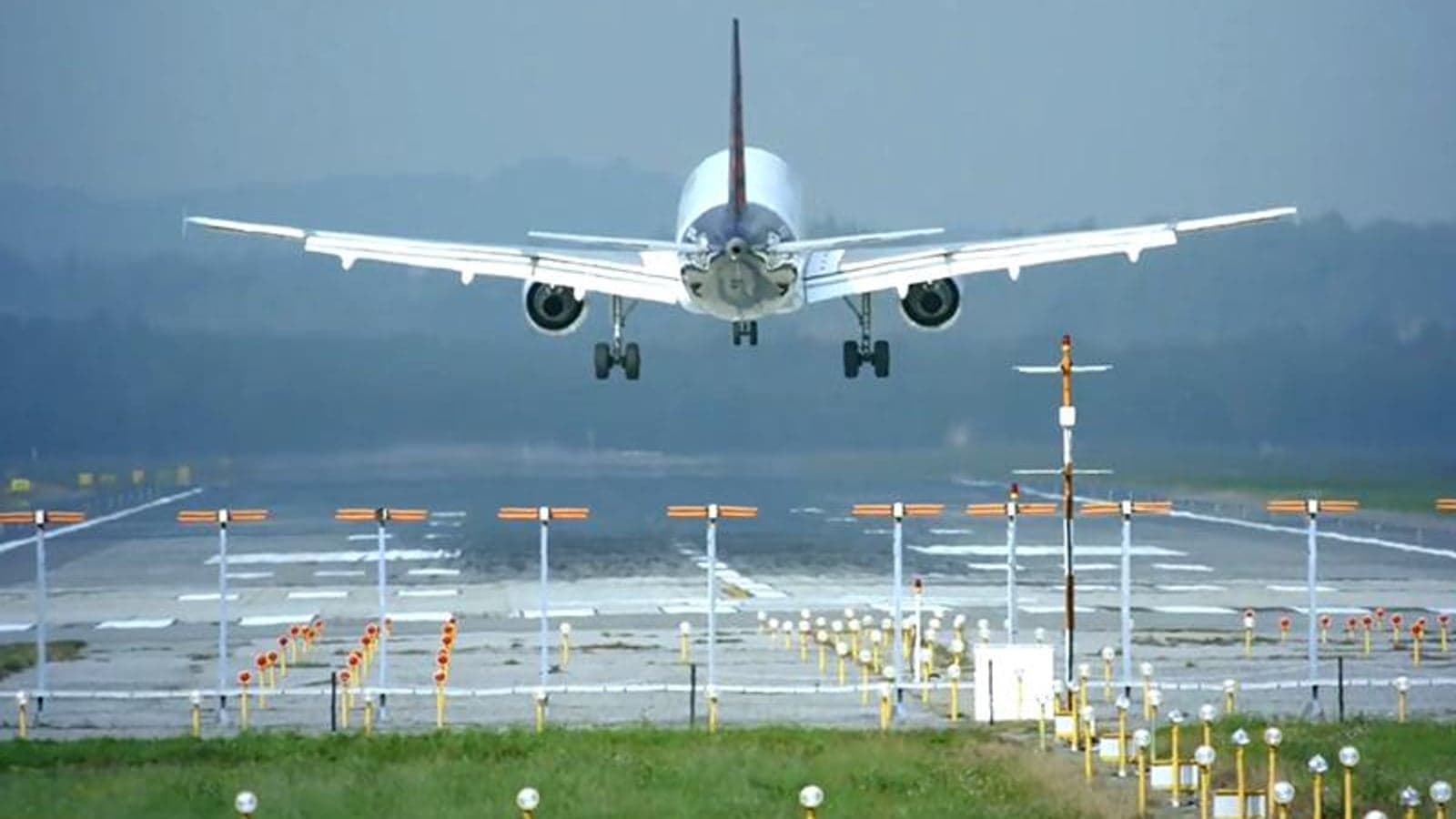
Milan Malpensa Airport has been taking a pioneering role in aviation decarbonisation, aiming to establish a hydrogen hub to reduce the carbon footprint of its operations. Enlit on the Road visited Italy to find out more.
“We often hear about airports of the future as energy hubs, which is correct,” says Giorgio Medici, SEA Milan Airports Director of Environment and Funded Initiatives, on the mindset we all should have about airports.
“Our idea is to make experiences, to make prototypes, to make a demonstrator and to bring our experience into the community and into the industry to build the roadmap for all,” he says in an exclusive interview with Enlit on the Road and with Malpensa’s operations forming the backdrop.
Setting up Malpensa as a hydrogen hub
Malpensa airport's end goal is to become a hydrogen hub.
Says Medici: “Electricity and hydrogen must be found at an airport, but the airport itself cannot stand alone or get the needed energy unless it is included in an ecosystem or, as we call it, ‘the hydrogen valley’.”
What elements of running an airport will be affected by this plan?
"Almost all the activities and all the processes where we need energy. We will start with vehicles, mainly heavy-duty ones. Heavy duty vehicles at an airport can't just be electrified, otherwise you start loading an aircraft and then you have to recharge, which hydrogen is needed for,” adds Medici.
Key to the airport’s planning is to set up an ecosystem where hydrogen is used across operations. This includes having production and storage on site, while also connecting to a hydrogen network.
“We will have a pipeline running close to the airport, not for ourselves of course, but we are coordinating the development so that it will be the way to bring this new energy vector to the airport.”
Looking at it in this way, adds Medici, the airport will become an accelerator, “the enabling subject not only for aviation but also for all the community…”
Have you read:
HDF Energy opens 1MW+ hydrogen fuel cell factory
Africa climate activist tells energy sector to stop ‘waking the dead’ of fossil fuels
Sustainable aviation fuels for decarbonisation
So, how has the airport been decarbonising so far?
A key element of Malpensa’s decarbonisation strategy has been the use of Sustainable Aviation Fuel (SAF). Derived from biofuels, SAF offers a significant reduction in greenhouse gas emissions compared to traditional jet fuel.
As of 2025, fuel uplift at EU airports must contain at least 2% SAF, a percentage that will increase gradually each year, with mandates including 6% by 2030, 20% by 2035, and eventually 70% by 2050.
Although these figures are key for the industry, Medici emphasizes that ‘now’ is the time we need to focus on.
“From 2025, it will be a mandate here in Europe, but we also have to work from now to use hydrogen as a propeller for aircraft.
“We started in 2020 and we are already starting to think about what hydrogen for aviation will mean at an airport. We expect to have aircraft propelled with hydrogen by around 2035/2040.”
More from Enlit on the Road:
Site visit: Injecting hydrogen into Portugal’s gas network
Site visit: Europe’s biggest solar-hydro hybrid plant
Innovation outside of siloes
‘Cooperation’ and partnerships seem to be the name of the game with Malpensa airport and for Medici, who cites the various partnerships the airport has been organising to make everything possible.
These partnerships include Airbus and gas company SNAM to help prepare the airport for the advent of hydrogen technology.
“The airport itself can’t do these things alone.”
Medici cites various co-funded initiatives from the European Commission that have demonstrated strategies towards sustainable practices and the adoption of green technologies.
“We started with the Olga project. Olga stands for holistic green airport and we are doing a great job together with Paris to have hydrogen produced here in Milan from 2025, not for aircraft but for ground transportation…it is a start.
“Together we also have to think about the transition to electric,” he adds, referencing another project run by the airport to bring charging facilities for fixed ground power units for aircrafts, with which they aim to equip all SEA airports by 2027.
Also in 2027, they hope to have the first demonstrator for aircraft refuelling with hydrogen.
Additional projects include MXP-NLINE for the modal shift to sustainable transportation, eMago for electrification and TH2ICINO for hydrogen mobility.
“We are working with 143 stakeholders and we are coordinating with the group of aerodromes to make the roadmap [for] these experiences for our airport, but also for all the other airports.”
Watch the full interview to learn more about the Malpensa's decarbonisation journey.