Boarding net zero: The greening of Malpensa Airport
Yusuf Latief
Posted on: 6 February 2025
Can you tackle the future of clean aviation with a ground-upwards approach? Yusuf Latief visited Malpensa International Airport to find out.
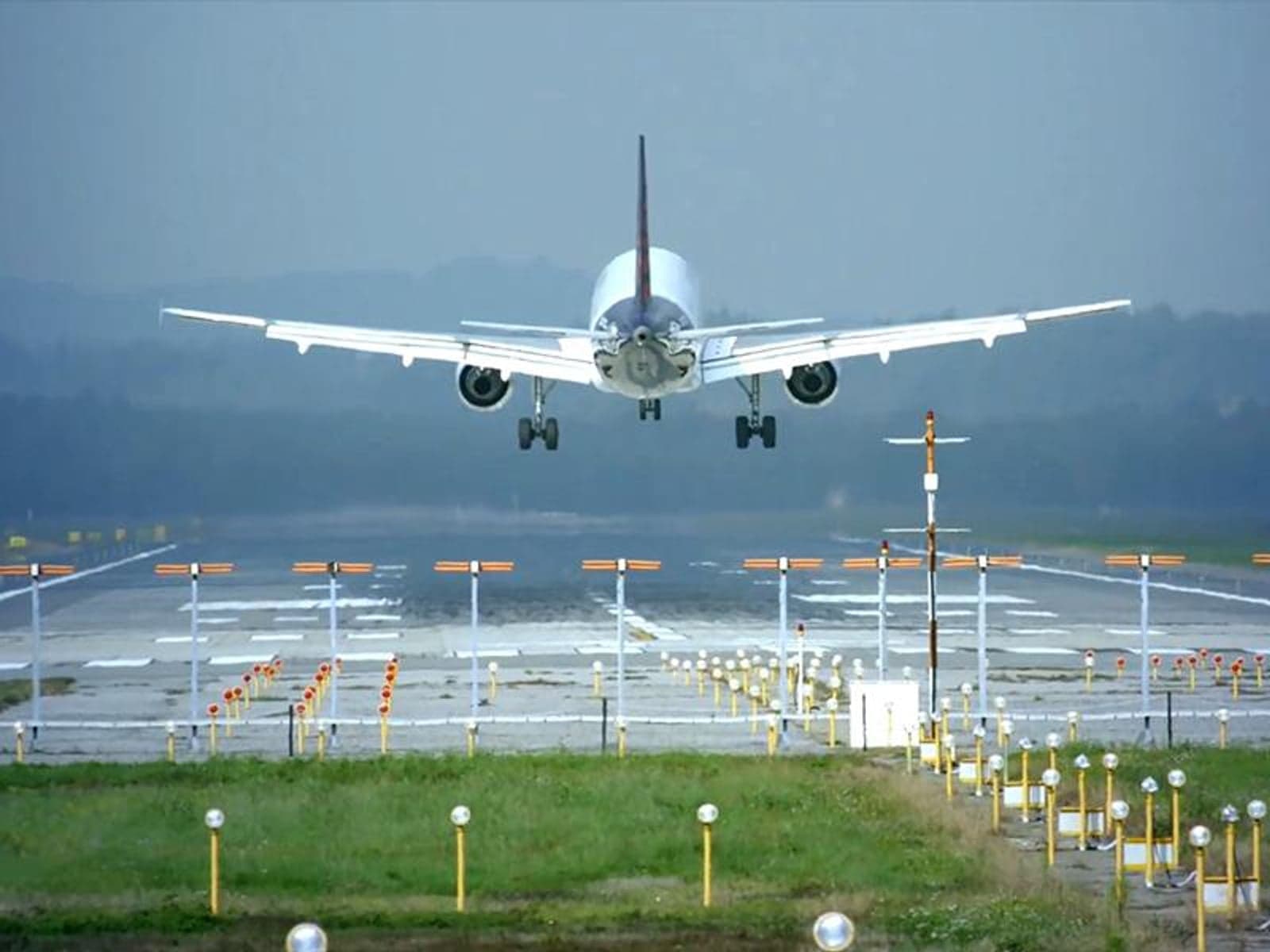
Can you tackle the future of clean aviation with a ground-upwards approach? Yusuf Latief visited Malpensa International Airport in Italy to find out about their net zero journey.
According to Our World in Data, 2.5% of total GHG emissions and 4% of global warming are attributable to the aviation sector – a surprisingly low figure, considering the industry’s non-green reputation.
However, this 4% is still a number in desperate need of mitigation. The sector is one of the hardest to decarbonise and is projected to occupy an increasing share of the greenhouse gas pie as other sectors continue to innovate towards net zero.
Not to mention the fact that airports feel the brunt of climate change quite close to home.
According to Eurocontrol, a pan-European civil-military organisation supporting European aviation, sporadic weather from the changing climate brings strong winds that halt operations. Changes in wind direction can impact operations if there is no crosswind runway, and changes to high-altitude winds can impact flight times and potentially cause issues for airport management.
The most obvious way that aviation contributes to climate change is through jet fuel.
One kilogramme of Jet A-1, the most common fossil fuel in the sector and the most widely used jet fuel worldwide, produces 3.16kg of CO2 through combustion.
And according to researchers Tiphaine Gaillot, Sandra Beauchet, Daphné Lorne and Lahouari Krim, jet fuel combustion is also a climate change forcer via its other emissions, such as nitrogen oxides and contrails-cirrus.
As the researchers state in their report, The impact of fossil jet fuel emissions at altitude on climate change: A life cycle assessment study of a long-haul flight at different time horizons, these non- CO2 emissions account for the largest share of climate impact (86.5%) from jet fuel combustion over a 20-year period.
Have you read:
Techno-economic assessment: Jet fuels production from carbon dioxide and renewable hydrogen
bp and Iberdrola green light 25MW green hydrogen plant in Spain
Replacing jet fuel with SAF
So if jet fuel is clearly the problem, replacing it is the task.
For Malpensa Airport, located in Milan, Italy, the way to do this has been through green hydrogen and sustainable aviation fuel (SAF).
Giorgio Medici, Director of Environment and Funded Initiatives at SEA Milan Airports, says: “We are indeed committed in having a net zero goal for our emissions, [but] that is a very small part.
“The main point is which fuel is used by aircraft. Aviation is committed to 2050 for net zero, but we have to start now. We are working mainly on sustainable aviation fuel.”
Derived from biofuels, SAF offers a significant reduction in greenhouse gas emissions compared to traditional jet fuel.
As of 2025, fuel uplift at EU airports must contain at least 2% SAF, a percentage that will increase gradually each year, with mandates including 6% by 2030, 20% by 2035, and eventually 70% by 2050.
Although these figures are key for the industry, Medici emphasises that ‘now’ is the time we need to focus on.
“From 2025, it will be a mandate here in Europe, but we also have to work from now to use hydrogen as a propeller for aircraft.
“We started in 2020 and we are already starting to think about what hydrogen for aviation will mean at an airport. We expect to have aircraft propelled with hydrogen by around 2035/2040.”
With these mandates in mind, and in their ambition to lead the sector’s green transition, Malpensa’s roadmap to net zero will see the airport using hydrogen to power operations from 2025, power buses to the Milan-hosted winter Olympic games in 2026 and, by 2030, bring hydrogen-powered aircraft into operation.
European projects for Malpensa's decarbonisation
To get these operations off the ground, the airport has been tapping into several project opportunities, courtesy of European Commission funding.
One of the most vital is the OLGA (hOListic & Green Airports) project, whereby a consortium of 57 partners, including SEA Milan Airports, engaged with Italian gas company SNAM to build a plant for green hydrogen, powering Milan Malpensa’s ground vehicles.
Project OLGA, which marks a first for an airport, aims to establish the airport as a hydrogen hub, reduce electricity consumption and accelerate deployment of sustainable aviation fuels.
Paris de Gaulle in France functioned as the lighthouse airport for the OLGA project with Milan’s Malpensa, Croatia’s Zagreb and Romania’s Cluj Napoca as fellow airports.
OLGA is scheduled to end in 2025.
Then there is project eMAGO, which plans to implement 84 Aircraft Ground Power Units (34 at Milan’s Linate airport and 50 at Malpensa).
These units will provide power to aircrafts during ground operations, after landing and before takeoff. Their activation, states SEA Milan, will mark a significant step toward reducing environmental impact by eliminating the use of on-board generators and ground generators powered by fossil fuels.
Furthermore, eMAGO includes the implementation of 94 electric charging stations (31 at Linate and 63 at Malpensa), both airside and landside, to power all the airport vehicles, as well as smart power sockets planned to power ramp and aircraft service vehicles.
eMAGO and OLGA are just two of many projects in the airport’s ambitious toolbox to lead aviation to decarbonise.
They are also important as they represent a key feature of the airport’s approach to net zero: collaboration.
“The airport itself can’t do these things alone,” says Medici, who cited how partnerships, such as those with OLGA and eMAGO and with SNAM, are what will enable the airport to prepare for its carbon-neutral leadership.
“Our idea is to make experiences, to make prototypes, to make a demonstrator, and to bring our experience into the community and into the industry to build the roadmap for all.”