Azerbaijan gas key for Europe
Jonathan Spencer Jones
Posted on: 25 April 2025
The key role of Azerbaijan gas and new cooperation agreements with neighbouring countries were among the outcomes of the Southern Gas Corridor and Green Energy Advisory Council ministerial meetings in Baku last week.
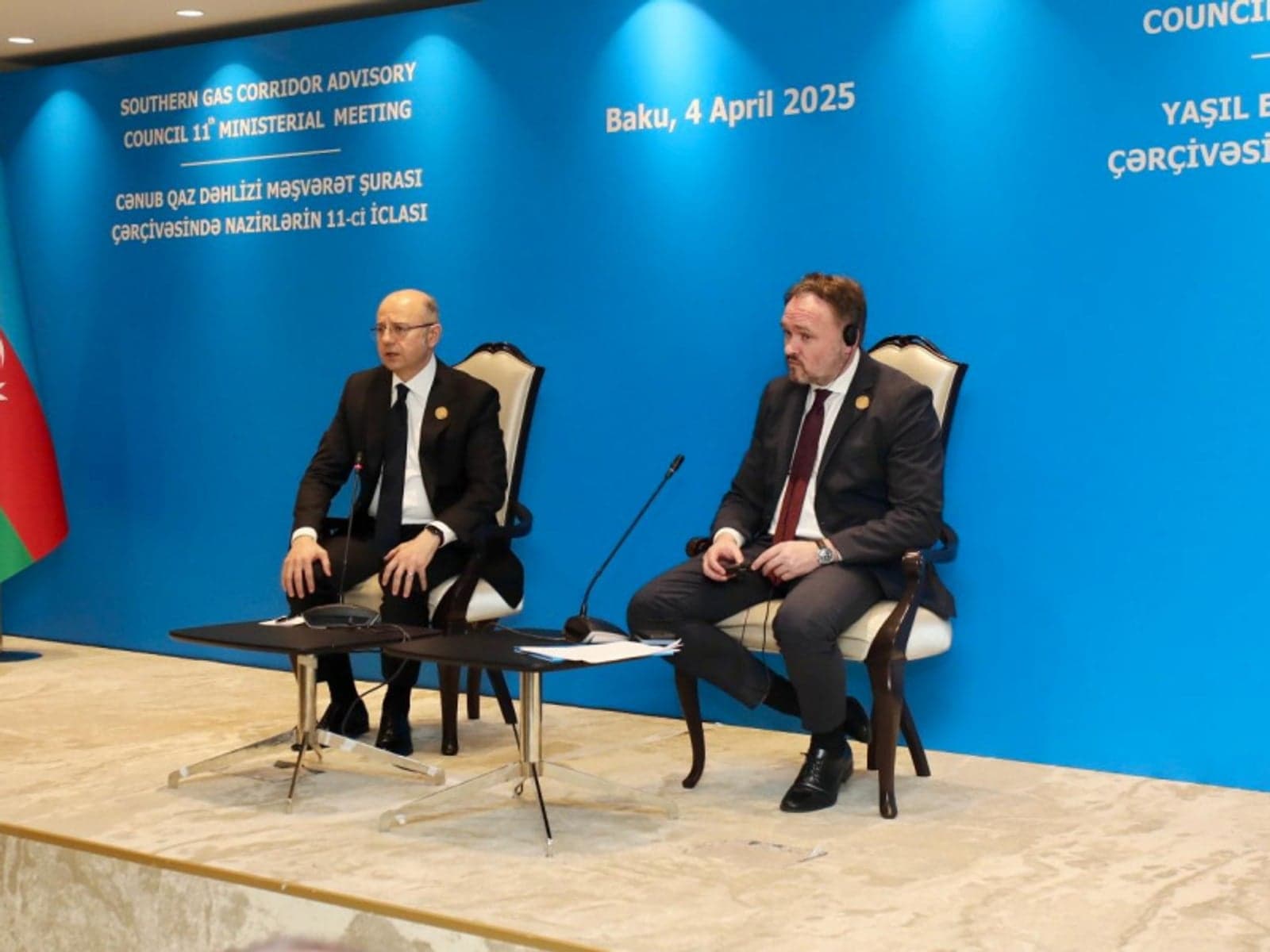
The key role of Azerbaijan gas and new cooperation agreements with neighbouring countries were among the outcomes of the Southern Gas Corridor and Green Energy Advisory Council ministerial meetings in Baku last week.
The meetings, attended by representatives from 24 partner governments, including the European Commission’s energy and housing commissioner Dan Jørgensen, were focussed on ongoing developments and expanding cooperation across the region.
Speaking in the event, Azerbaijan’s Minister of Energy Parviz Shahbazov, said the country now supplies natural gas to 12 countries. Of these 10 are European and eight of them members of the EU.
"Despite the existing restrictions on natural gas, Azerbaijan has not only maintained but also enhanced its position as a reliable energy partner, expanding its supply volumes and extending its geographic reach during these years.”
Also of interest
COP29 delivers $1.3tn Baku Finance Goal yielding mixed reactions
In 2021, 8.2bcm of gas were delivered to Europe and in 2024 the volume reached almost 13bcm, which is just over half of the total export of 25bcm.
Of the remainder of Azerbaijan's gas exports approximately 10% were supplied to Georgia and the rest to Turkey.
The key route for this gas is the Southern Gas Corridor, comprising the South Caucasus pipeline from the Shah Deniz field in Azerbaijan to Georgia, on to the Trans Anatolian pipeline through Turkey to the Trans Adriatic pipeline through Albania to Italy for distribution to markets in Europe.
Long-term gas contracts between Azerbaijan and European buyers, along with guarantees and financial support from the EU, will be key factors in ensuring the successful expansion of the Corridor, said Shahbazov.
Green energy corridors
In his speech, Minister Shahbazov also commented on initiatives to supply Europe with energy from Azerbaijan’s Caspian Sea wind farms.
The Caspian-Black Sea-Europe green energy corridor feasibility study is due to conclude by mid-2025, with the plan to export 4GW during the first phase. It also is proposed to submit the project for inclusion in the ten-year network development plans.
The Azerbaijan-Turkey green energy corridor feasibility study has explored two potential export routes and research is due to begin in Q2 of 2025 on the feasibility study of the Central Asia-Azerbaijan corridor.
Two further corridor projects were launched at the meeting.
In an MoU between Azerbaijan, Kazakhstan and Uzbekistan, the first stage of the feasibility study of the Caspian green energy corridor project linking the three countries is envisaged, with support from the Asian Development Bank and Asian Infrastructure Investment Bank.
An MoU also was signed on the Azerbaijan-Georgia-Turkey-Bulgaria green energy corridor on the development of joint investment projects and electricity infrastructure, as well as the integration process into the ENTSO-E system.
Offshore wind and solar development
In parallel with the ministerial meeting, a round table on offshore wind development was held, in which information was provided about the identification of five areas in the Azerbaijani segment of the Caspian Sea and on projects under way with energy companies.
In addition to Azerbaijani representatives, present were Commissioner Jørgensen and WindEurope CEO, Giles Dixon, with mutual interest in Azerbaijan-EU cooperation on the development of Azerbaijan's offshore wind energy potential being emphasised
Investment agreements on three solar energy projects also were signed – the 50MW Ufuq project with Enerso Jabrayil, the 50MW Shams project with Clean Energy Jabrayil, and a 30MW project in the Nakhchivan Autonomous Republic with Nobel Energy Limited.
These are expected to deliver an annual output of 268GWh, saving 59bcm of gas and reducing carbon emissions by 128,000t.
Last but not least an MoU was signed between Azerbaijan and Slovenia on expanding cooperation in the energy sector, including energy security and diversification of gas supplies, developing cooperation on green energy technologies including hydrogen and expanding the exchange of experience in the use of renewable energy sources.
Strengthening cooperation on energy policies and initiatives adopted within the UNFCC and the Paris Agreement also is envisaged.
Attending the ministerial and other meetings for the first time since his appointment, Commissioner Jørgensen commented: “[The] meetings highlight our joint efforts to improve energy security and support the shift to cleaner energy in southeastern Europe. I’m happy to see many partner’s interest in expanding gas supplies through the Southern Gas Corridor in the coming years and creating new trade routes for renewable energy.”
Related tags
Latest content
+5
EU energy ministers address gas supply cuts in Europe
The meeting of the Transport, Telecommunications and Energy Council was organised in the wake of cuts by Russia’s state owned energy supplier Gazprom to Bulgaria and Poland following their refusal to pay for gas supplies in roubles.
- Jonathan Spencer Jones
- 05/05/2022