Bringing down power prices with innovation and energy storage
Yusuf Latief
Posted on: 14 November 2025
As power prices soar, innovation projects and long duration energy storage solutions might provide a fix, projected to offer billions in financial benefits.
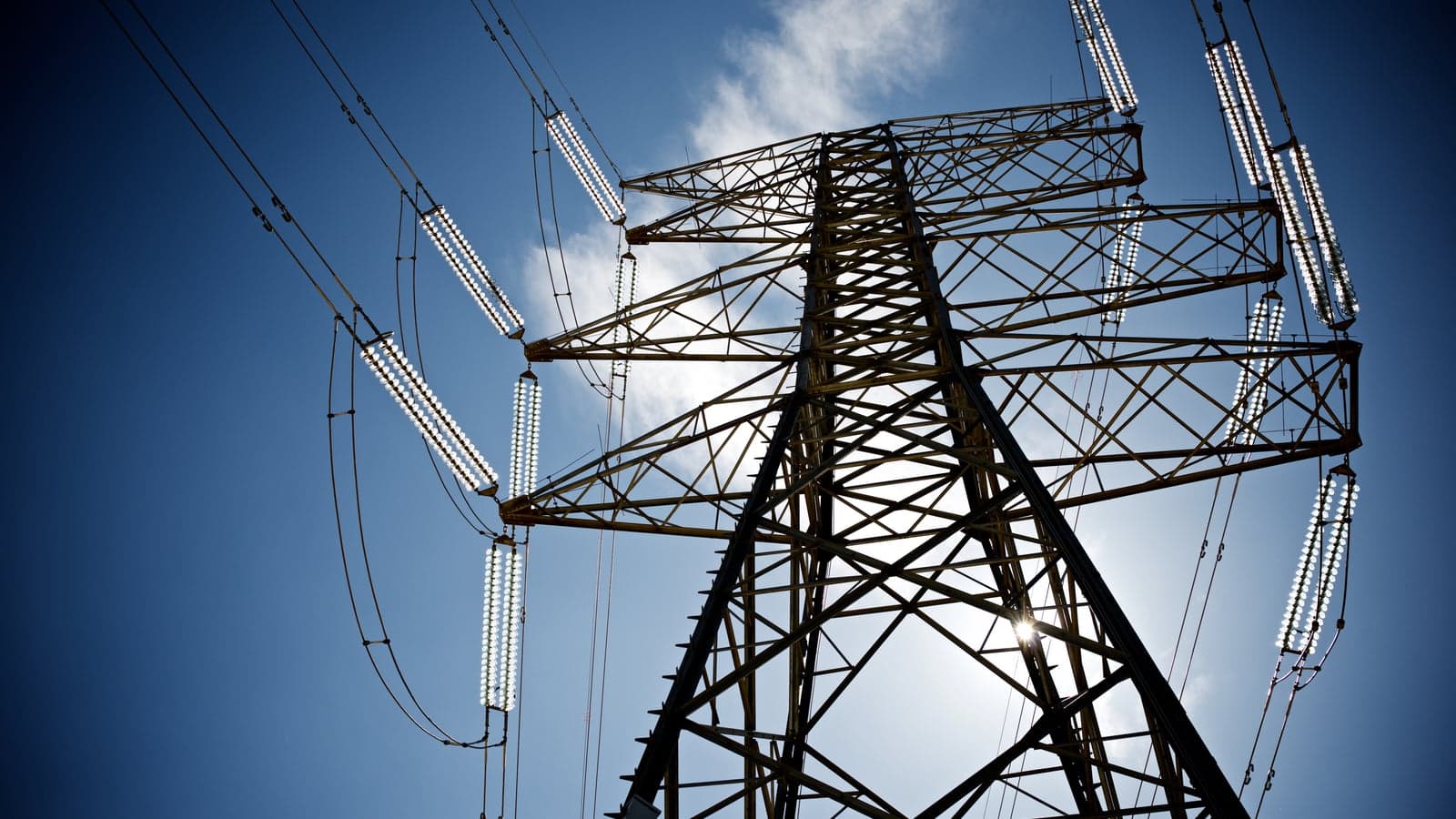
In this week’s Power Playbook: With electricity prices in the UK at record highs, can innovation across the power networks help reduce costs?
Well, according to recent research from the UK’s Energy Networks Association (ENA), electricity network innovation is expected to yield £14.3 billion ($18.8 billion) in financial benefits.
The figure comes from the ENA’s Annual Innovation Summary report, which tracks the impact of innovation across Great Britain’s electricity networks. According to the Association, the figure represents the ‘real-world benefits’, calculated across 119 innovation projects launched from April 2024 to March 2025.
But how do these projects contribute and what do these financial benefits look like?
It depends, of course, on the project specifics, but in many cases, it comes down to innovations aiming to reduce the need to build expensive new infrastructure and the number of network interruptions.
Project innovations
Let’s look at some examples.
ENA first cites AI-driven platforms to detect and respond to cyber threats, such as Scottish Power Energy Networks’ Cyber-RIAST and Cyber-SAFEN projects, which set out to enhance the resilience of digital substations.
Then there’s National Grid Electricity Distribution’s LV Visibility project, where engineers will be able to detect issues with underground cables before they result in a power cut. The project will see 10,000 low-voltage monitors fitted to detect cables that need immediate replacement or repair, saving UK energy consumers an estimated £10.3 million ($13.5 million) by 2040.
The NESO (National Energy System Operator)-led Crowdflex project has been conducting large-scale consumer trials and gathering data to develop models to more accurately forecast consumer flexibility. It’s calculated that the project could help enable domestic flexibility to provide a total direct and indirect net benefit of £472 million ($618.9 million) annually, by reducing balancing costs and the need for additional capacity and network reinforcements.
Have you read?
SSE prioritises grid upgrades in £33bn investment plan
Can COP30 deal with the global energy investment gap?
How utilities are balancing budgets between innovation and AI
Meanwhile, UK Power Networks is looking to redefine how heat and power work together. The network operator’s Heatropolis project is finding smarter ways to heat homes and buildings using clean energy by using real-time data to balance heat and electricity demand. It aims to lower costs, reduce pressure on the grid, and make low-carbon heating easier to roll out.
Of course, such projects do not come without a cost. Every year, millions of pounds are provided for such projects through the UK’s funding mechanisms, the Network Innovation Allowance (NIA) and the Strategic Innovation Fund (SIF).
Across the 119 newly registered projects in FY25, as detailed in ENA’s report, £150 million ($196.7 million) was provided. But when you come back to the £14.3 billion in benefits, this seems worth the cost.
Looking ahead, the UK’s next electricity transmission price control period, RIIO 3, begins in April 2026.
Ofgem, the country’s energy regulator, expects total innovation spending for electricity transmission over RIIO-3 (2026-2031) to be far in advance of anything seen previously – total expenditure could exceed £80 billion ($104.9 billion). The next electricity distribution price control period, ED3, is due to start in 2028, with draft determinations yet to be announced.
LDES for system efficiency
Yet, while grid innovation is key, it cannot stand alone.
A new white paper by Hydrostor, From Ambition to Action: Embedding Long Duration Storage in European Energy Strategy, argues that storage could be one of the biggest enablers of lower system costs.
As global momentum grows behind long-duration energy storage, Europe risks being left behind.
According to research cited in the paper, deploying long-duration energy storage (LDES) technologies across Europe could save €103 billion ($119.3 billion) by 2040, and in the UK alone €35 billion ($40.5 billion) by 2050, by reducing the need for new grid infrastructure, avoiding stranded fossil-fuel assets, and cutting curtailment costs.
Hydrostor’s President, Jon Norman, warned in a release that Europe risks falling behind if policy doesn’t move fast enough to value these assets properly.
“As global momentum grows behind long-duration energy storage, Europe risks being left behind.
“States must act now to deliver projects in time to fulfil their international commitments and ambitions. Failure to do so risks losing the opportunity to save billions, drive economic growth and achieve energy independence, all while lowering electricity prices and tackling climate change.”
The report recommends that governments:
- Undertake system-modelling that factors in the costs and asset lifetimes of all types of energy storage.
- Set procurement targets for each type of energy storage solution and create transparent, multi-year schedules to achieve them.
- Ensure markets value LDES appropriately to guarantee revenue adequacy and adopt contract mechanisms such as a cap-and-floor to ensure revenue certainty for LDES projects.
ENA’s innovation projects and advances in long-duration energy storage show that there are tools we can tap to make the power system more efficient, flexible, and resilient.
The challenge now is ensuring these technologies translate into real-world savings, reducing the need for costly infrastructure and helping to keep electricity costs manageable for consumers.
But what do you think? What other technologies can be used to drive efficiencies and what more is needed to drive their development and implementation? Reach out and let me know so that I can feature your thoughts in the Power Playbook.
Also, next week I will be attending Enlit Europe - will you be there? Feel free to reach out so that we can connect on the ground.
Cheers,
Yusuf Latief
PS: On 19 November, Hydrostor's Oonagh O'Grady, Vice President of International Origination, will be presenting in two sessions.
Join her at Iberian Renewables Innovation and Unlocking Europe’s Clean Energy Future with Long Duration Storage, to learn about the critical role of LDES for the energy transition.