Can direct solar-to-hydrogen technology unlock industrial decarbonisation?
Pamela Largue
Posted on: 27 August 2025
Sparc Technologies is piloting green hydrogen production using photocatalytic water splitting, a technology that promises to give electrolysis a run for its money.
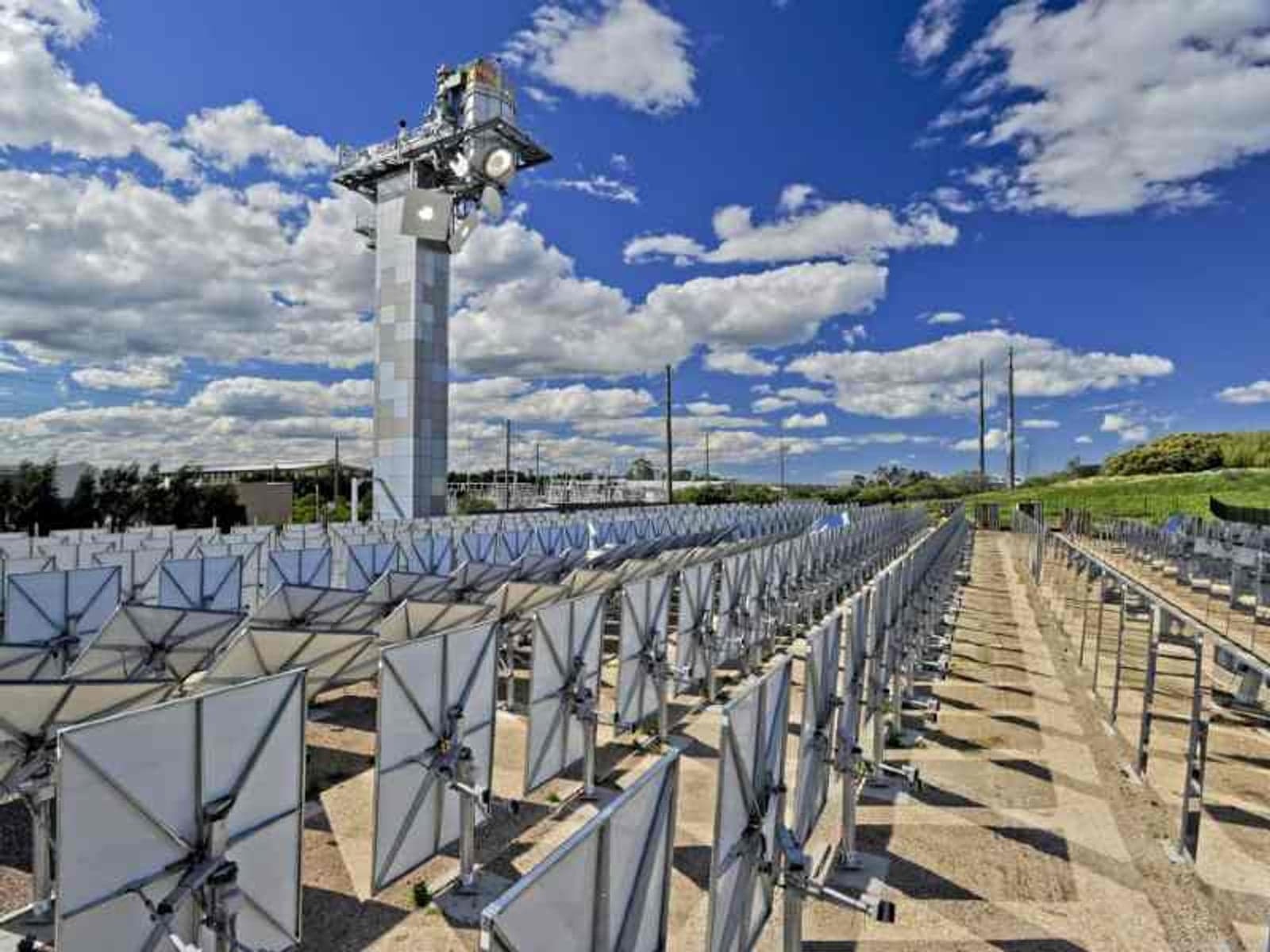
Australian scale-up Sparc Technologies is piloting green hydrogen production using photocatalytic water splitting, a technology that promises to give electrolysis a run for its money and provide an alternative solution to decarbonise hard-to-abate sectors—no electricity required.
When Nick O’Loughlin joined Sparc Technologies in 2022, the former investment banker knew little about hydrogen beyond electrolysis.
“I'd certainly never heard of photocatalytic water splitting,” O’Loughlin admits. “That intrigued me.”
Now managing director of Sparc, O’Loughlin is fully bought in to the technology and the possibilities it holds for decarbonising industry, which is why he is so enthusiastic about the Sparc Hydrogen Advanced Research Pilot (SHARP) project, which launched in June this year together with the University of Adelaide and Fortescue.
The SHARP pilot
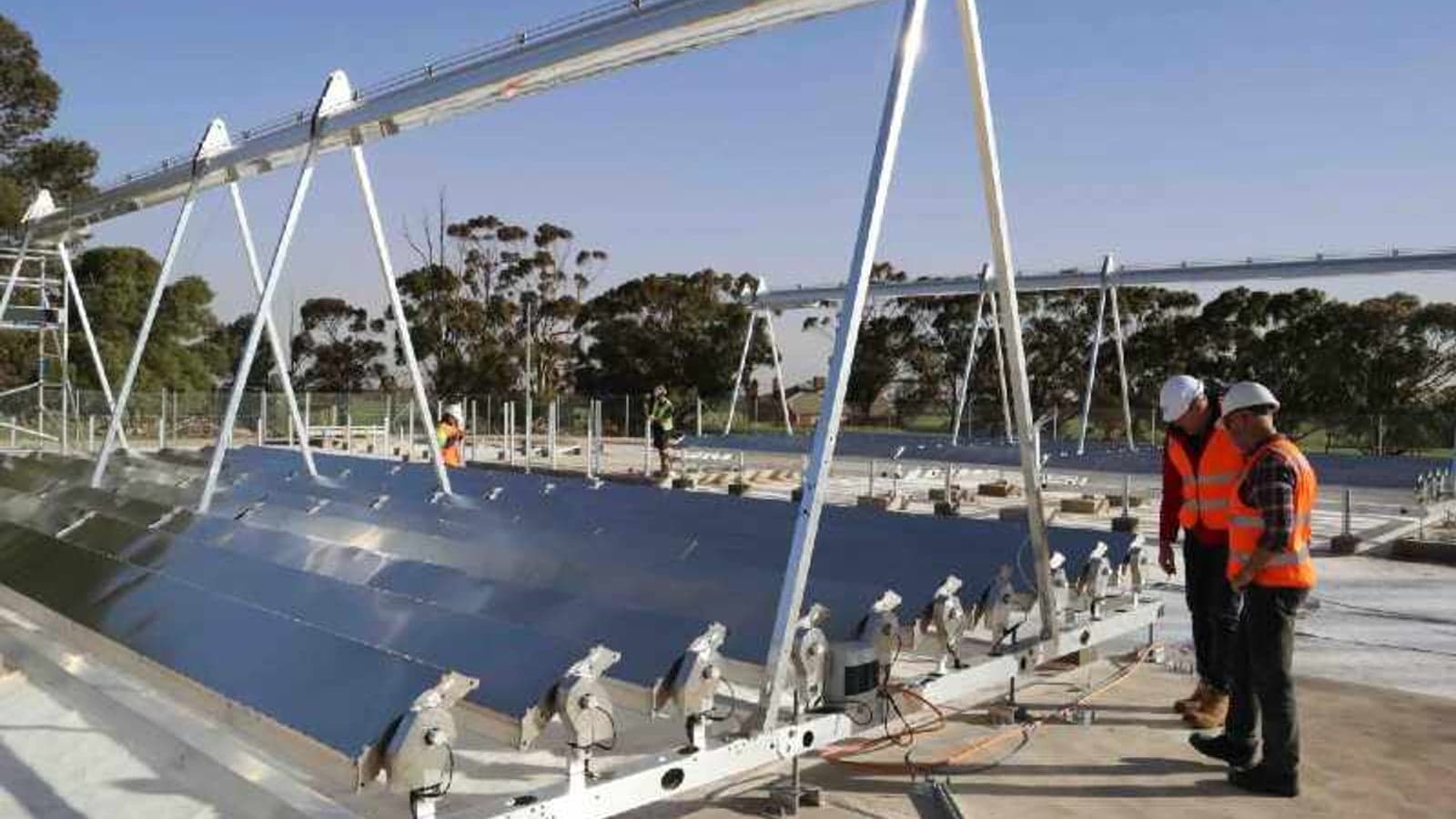
The SHARP pilot is hosted at the University of Adelaide’s Roseworthy campus. It aims to advance development of Sparc Hydrogen’s patented Photocatalytic Water Splitting (PWS) reactor technology in a real-world setting, as well as improve the economics of producing green hydrogen using PWS.

PWS, often referred to as direct solar-to-hydrogen technology, uses the sun’s energy to extract hydrogen from water without the need for electrolysers powered by green electricity.
According to O'Loughlin, they are planning to run the pilot as an extension of the laboratory, an R&D facility designed to test the patented reactor and how the concentrated sunlight performs on different photocatalyst materials.
“That’s the differentiator that Sparc Hydrogen has within the photocatalysis industry - it's the use of concentrated solar and integrating that with photocatalytic water splitting.”
O'Loughlin explains that, as part of the pilot, they are integrating an off-the-shelf linear Fresnel concentrated solar system, which uses mirrors to focus sunlight.
This will be coupled with their photocatalytic water splitting receiver, which is where the concentrated solar energy, water and photocatalyst material are combined.
“What we're doing is called a direct solar-to-hydrogen process. Effectively, the solar energy is directed onto the photocatalyst material in contact with water and that will automatically split the water into hydrogen and oxygen.
“There's no external input of electricity into the reactor. There is no fossil feedstocks or feedstocks that are consumed in the process other than the water being converted into hydrogen and oxygen.”
This means, states O'Loughlin, that the power use of their facility when scaled is far less than in the case of an electrolyser set up.
The pilot will run for at least one year while Sparc begins to focus on scaling up the reactor technology to produce commercial volumes of both hydrogen and heat in the form of steam, a by-product of the process.
Have you read?
National Grid Ventures to test pioneering hydrogen-fueled linear generator
Australian startup launches ambient hydrogen storage demonstration
Electrolysis versus photocatalysis
Sparc’s belief is that photocatalysis can be a significant competitor to electrolysis, although not a replacement, O'Loughlin admits.
The green hydrogen product is the same for both processes, although the technology and infrastructure requirements have their differences.
The question is whether photocatalysis can follow a similar efficiency knowledge curve as solar PV and become commercially viable.
“We believe that if you can get the efficiencies of photocatalytic water splitting to anywhere above 5%, then you've got something that looks attractive from a commercial perspective.
“And if you can breach 10% efficiency and beyond, heading towards where Solar PV has gotten to, then you have a really low-cost way of producing green hydrogen.”
While there are a number of players operating in both the electrolysis and photocatalysis spaces, the ultimate vision of Sparc is to produce low-cost hydrogen and provide a commercially viable, competitive alternative to decarbonise heavy industry.
Industry use cases
The solution is inherently scalable, and the setup is modular, making it attractive for more remote or off-grid sites where hydrogen could have an impact.
More specifically, O'Loughlin predicts this technology will have the biggest impact in decarbonising the operations of mine sites, for trucking fleets, processing plants, as well as for industrial use cases.
Also of interest:
Hydrogen at the heart of Trelleborg’s system of energy solutions
How hydrogen and electricity are driving green steel innovation
Heat for hops: How Heineken is using solar thermal to decarbonise Valencia brewery
“In Australia, we have a lot of remote sites. So remote power could be a potential use as well. And then all the other use cases for hydrogen and heat which are being targeted by the electrolysis industry including, cement, manufacturing or aluminium apply to this technology as well.
“That's where the initial uptake of Sparc Hydrogen’s technology is likely to be. It's in those heavily emitting industries where the modularity and the relatively limited use of power can be a real advantage.”
Fortescue – shareholder and potential customer
Green steel is another sector where this solution holds promise. This is why Fortescue, a key player in iron ore mining, is a major shareholder and why its director of R&D, Michael Dolan, sits on the Sparc Hydrogen Board.
“Fortescue brings a huge depth of experience to the table. They have a lot of experience both in how we should go about scaling up the technology from where it is today, as well as technical experience.
Continues O'Loughlin: “This includes working with hydrogen safety and how it could ultimately be used in some of these processes like green steel. So that is expertise that we inherently get access to being part of their portfolio, which is excellent and not easy to find from the market.”
Weathering the hydrogen sector’s downturn
O'Loughlin acknowledges that Australia is experiencing similar challenges to those experienced in Europe, seeing many of the larger electrolysis projects being put on hold.
“There has been a big reckoning in terms of the first generation of large-scale electrolysis projects that were conceived and developed…to the point where we're seeing a lot of project cancellations or projects being put on hold because of some of the issues that are persisting across the globe.”
The main issue is cost, says O'Loughlin, with high power prices around the globe rendering most projects uneconomic.
For the layperson, the sentiment towards hydrogen is less than enthusiastic. “People say it’s all hot air because the bubble has been burst in a lot of people's eyes.
“Under the surface, though, there is a lot of good work ongoing down here,” adds O'Loughlin.
He explains that there is a lot of work being done by the Australian Hydrogen Council and still a great deal of buy in from committed corporates, industries and governments.
“I think we're probably a couple of years away from seeing that come to fruition…I'm confident it will happen and I'm certainly supportive of that. Despite not having a play in electrolysis, I think everyone will benefit if that industry develops - it's a case of a rising tide lifts all boats within this emerging space, which we broadly characterise as green hydrogen.”
And in terms of the initial burst of the hydrogen bubble, according to O'Loughlin, that will ultimately have a positive effect.
“I think the effective shake out of some of the hype and some of those very large-scale projects, which probably ran ahead of where the reality was, will ultimately build a stronger, more robust industry going forward.”