Can Europe recapture the solar PV market from China?
Pamela Largue
Posted on: 28 November 2024
Javier Sanz Rodriguez of InnoEnergy weighs in on whether Europe can compete with China's solar PV market and if so| how.
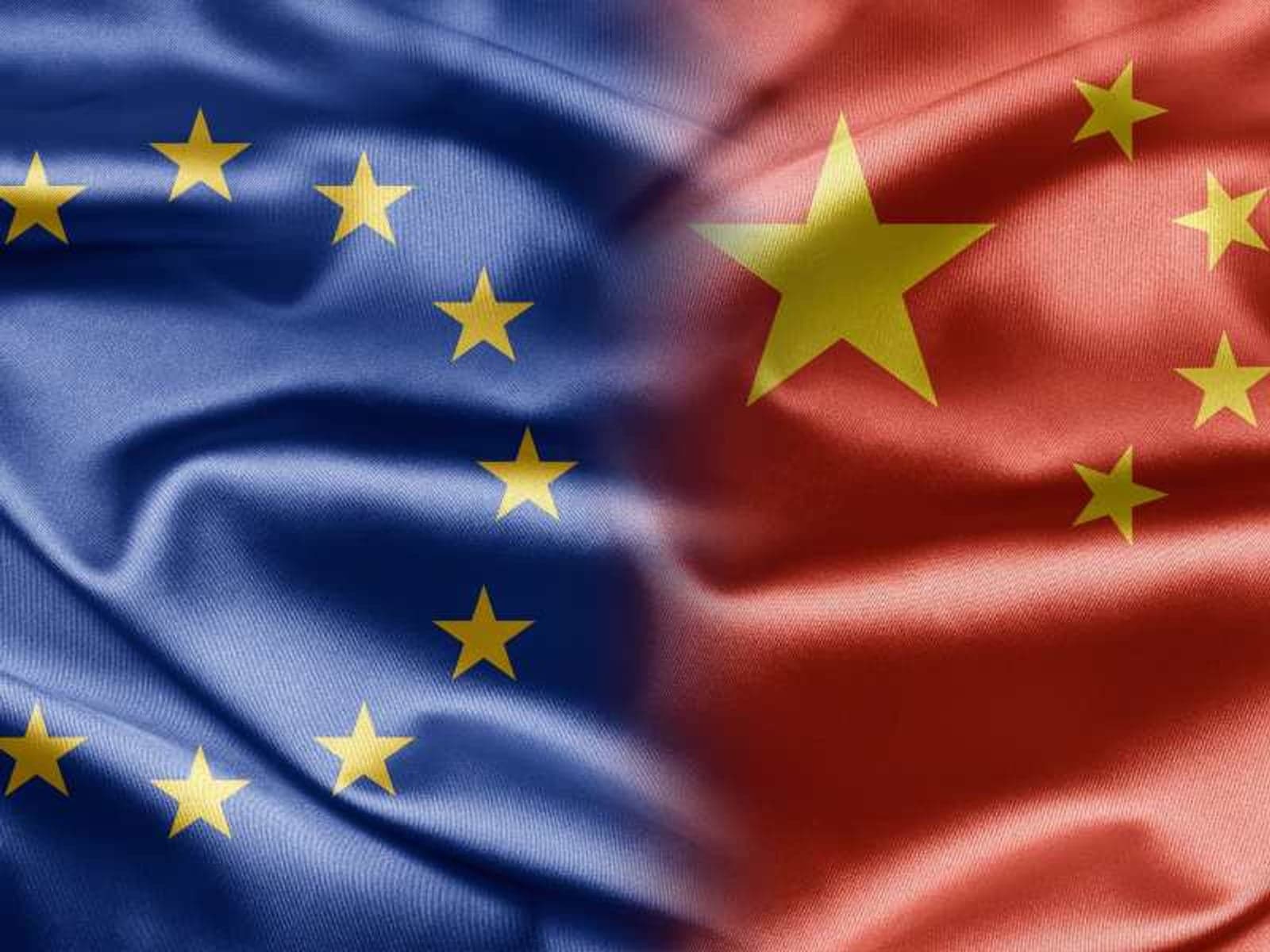
Pamela Largue spoke to Javier Sanz Rodriguez, Thematic Leader Renewable Energies at InnoEnergy, about whether Europe can compete with China's solar PV market and if so, what strategies would be the most advantageous.
As China continues to dominate the solar PV manufacturing space, Europe is under increasing pressure to maintain a competitive edge.
China's success and industrial prowess are the result of several factors, explains Sanz, one of the most critical being the timing of its ambitous expansion of manufacturing capabilities, which happened to coincide with the collapse of Europe's market.
“A contributing factor is that Europe’s solar PV market has simultaneously collapsed, after the initial golden age between 2008 and 2012. However, the market is now falling because of different policies, different changes on the demand side.
“And this happened as China wisely decided to master the production side.”
In Europe, the market only started to surge after 2020, with the updated national energy and climate plans and the EU Green Deal, which according to Sanz, provided a new vision for Europe.
“Europe realised it needed the energy transition and needed to reshape the economy to achieve the energy transition. That was the moment when we started to see the race in the market again.”
COVID-19 highlighted countries’ reliance on China, among others in terms of energy dependence.
“People started to think about where else we are depending on other countries, like energy.
“This was again confirmed during the Ukraine war, highlighting dependence on Russian gas. We also realised the dependency on China for PV, batteries, and many critical raw materials.”
According to Sanz, another factor which reignited Europe’s solar PV market was what he refers to as “the evolution of the mainstream technology”. This meant that new investors and incumbents invested and levelled the competition.
Ultimately, this market growth led to the launch of the European Solar Industry Alliance in 2021, which aimed to enable European industry growth and reshore some capacity. The alliance aims to accelerate solar PV deployment in the EU by scaling up to 30GW of annual solar PV manufacturing capacity in Europe by 2025, facilitating investment, de-risking the sector, and supporting Europe’s decarbonisation.
Have you read?
Up to 48GW of solar PV potential along Germany’s highways – study
APAC: A fertile ground for renewables growth says JERA Nex
Recapturing the solar market
Thanks to RePowerEU, the solar PV target for Europe has doubled from 20GW to 40GW and, according to Sanz, the industry is visualising up to 60GW.
“This tells you that the market is huge and there is an opportunity,” said Sanz.
Currently, he said, Europe is importing billions of euros in PV goods from China, which is “an incredible amount of wealth that we are not capturing”.
Sanz suggested that achieving 100% European supply is not realistic. Europe will always rely on imports.
However, it is feasible to recapture about 30GW and this will provide the required industry growth and provide highly qualified jobs.
Sanz stressed that in order for Europe to successfully compete with the Chinese solar market, the focus needs to be on recovering and developing the entire value chain.
Recovering the value chain is no small undertaking, especially as China is dominating more than 80% of the market.
“The most important thing to remember is that it's not just about producing modules, it's about bringing the complete value chain back to Europe, and addressing the weakest part of your value chain..."
The weakest part of Europe’s value chain, suggested Sanz, is ingots and wafers.
He explained that there were only two remaining companies in Europe, both in Norway. One has filed for bankruptcy and the other ceased operation and moved to the US.
Bridging the workforce gap
When asked if the lack of home made ingots and wafers was Europe’s only weak link in the value chain, Sanz answered no, referring to the lack of skilled people in the region.
“If you consider that almost the entire industry was destroyed around 2010, most people moved into different jobs.”
Many workers found a home in the semiconductor industry, said Sanz, where some technologies are shared with the upper parts of the solar PV value chain.
“But in PV, we lack people [although] I think we have the knowledge,” added Sanz.
Sanz explained that to address this, InnoEnergy launched the European Solar Academy, mandated by the European Commission, as one of its Net-Zero Academies. The Academy will develop tailored training services to reskill and upskill 65,000 workers across the entire European solar photovoltaic (PV) value chain within its first two years.
Balancing politics and growth
Sanz emphasised the fine balance countries need to achieve when dealing with a dominant market like China.
He referenced the Inflation Reduction Act (IRA) in the United States. “The IRA was not just about subsidies in the form of taxes and rebates, it was also about blocking the Chinese from selling more in the US.”
“The difference between Europe and other regions is that we do not have our own sovereignty in terms of energy,” and this, stated Sanz, is Europe’s main mission at the moment.
Europe’s need for energy sovereignty makes dealing with China tricky to navigate, explained Sanz.
“In Europe, even if we are successful in reshoring 30GB, the market is much bigger. So for good or bad, Europe is always going to be an open market.”
“We have to find a way to have a fair, competitive market but also learn how to cooperate with others. We have to be honest in that in the last 10 years, China has evolved and they are leading technology, they are leading manufacturing processes and we need them.”
Sanz believes that this situation presents an opportunity for Europe.
“I don't see this as a bad situation. I think we have an opportunity here because potentially we are one of the biggest markets that will remain open.”
Also of interest:
Enlit Europe told that ‘competitiveness and sustainability go hand in hand’
Enel Grids boss says energy transition must kickstart a competitive value chain
Europe’s need for innovation
According to Sanz, innovation will play a vital role in Europe regaining its competitive edge.
“When I'm talking about innovation, it's not technology leapfrogging. Efficiency improvements are happening all over the world.
“What I'm referring to is recycling and improving the quality of the materials. Europe is leading in reducing material waste and trying to find solutions on how to recover materials.”
Another area where innovation will be critical, said Sanz, is finding elements to replace materials such as silver.
“Silver is not a critical raw material. But when you have an industry that is consuming 15% of the of the global production, you need innovation to replace silver and reduce consumption.”
This is the kind of innovation that could help Europe compete with China, he said, innovation connected to technology production.
Sanz explained further that China’s strength lies in the innovative production processes, rather than the technology itself.
“They have been very wise and innovative in the production processes. So, we have to catch up there to be as efficient as they are. Innovation will be important to reduce consumption of energy, reduce the consumption of materials and recover materials - this is going to be the centre of innovation.”
Don't miss: How AI is ‘bending the curve’ on energy transition innovation
Europe’s big pain point
Sanz candidly stated that Europe has one key bottleneck which is slowing progress and needs to be addressed - the length of time it takes to make decisions.
“I don't like the IRA as it is, but I have to recognise that when the US says they are going to do something, they do it very fast. They do it very simple.”
“Our weakest part in Europe is that making decisions takes a long time. Defining rules takes time and then implementation takes even more time.
“This is the area that makes me nervous sometimes, because I would love to have faster implementation of new policies that can help the industry."
Sanz recommended policy clarity. “Looking at this from the outside, I believe industry needs clear regulation that provides direction. Market rules make it clear for investors to understand the mechanisms and then the money will come.”
According to Sanz, Europe has an opportunity to regain its position in solar PV manufacturing, however, it can't be an all-or-nothing approach. Besides the policy adjustments, skills and innovation needed to get Europe's value chain back on track, perhaps the most important ingredient is learning to work with, rather than against China.