How the AI boom is rewriting wind power's O&M rules
Guest/partner contributor
Posted on: 17 June 2026
The AI boom is not a problem for wind to solve. It is an opportunity for wind to lead, writes Ole-Erik Endrerud of Shoreline Wind.
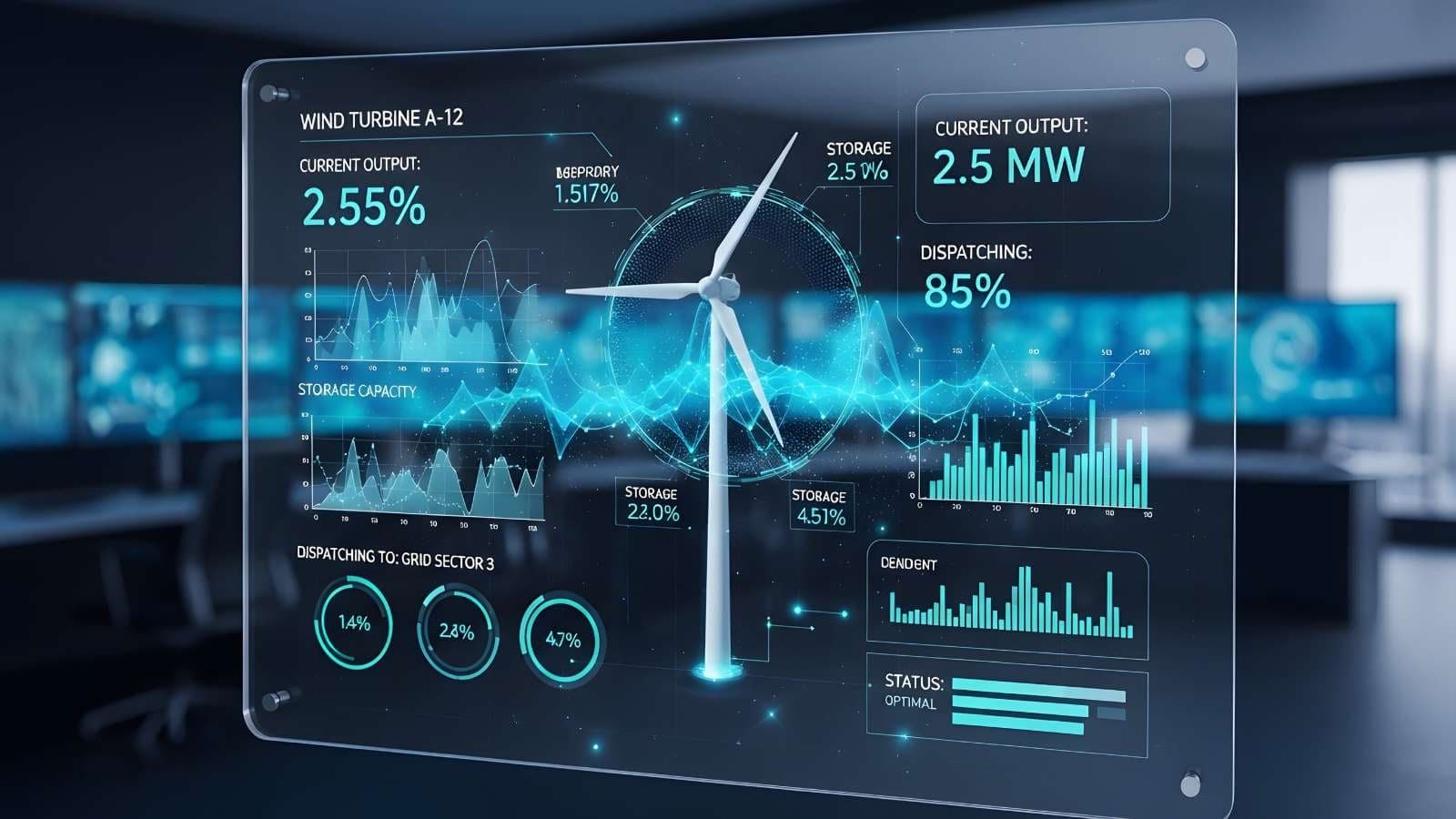
There is a certain irony to the relationship between artificial intelligence and wind energy right now. AI is the single biggest driver of new electricity demand in the United States, and it is also the most powerful tool available to help wind farm operators meet that demand. The technology creating the pressure is the same technology offering a way through it.
That dynamic sits at the heart of Shoreline Wind's new report, Data Drive: Opportunities for Wind in AI Boom, which examines how wind farm owners across North America can adapt their operations and end-of-life strategies to serve the surging appetite for power from data centres. The findings are striking, and the window of opportunity is real.
A structural shift in electricity demand
For fifteen years, from 2005 to 2020, US electricity demand was essentially flat. Then it moved. The US Energy Information Administration forecast in May 2026 that power demand will increase 1.3% in 2026 and 3.1% in 2027, following annual average growth of 1.7% between 2020 and 2026. The primary driver is data centres. They currently consume around 5% of US electricity; the Electric Power Research Institute projects that figure could reach between 9% and 17% by 2030.
This is not a temporary spike. The hyperscalers building AI infrastructure are committing to multi-decade facilities. They need power at scale, continuously, and on contractual terms that provide the long-term revenue visibility their infrastructure investment requires.
For wind farm owners, that is a fundamentally different buyer, and a significantly better one, than the fragmented merchant markets many have historically sold into.
Jon Clark, associate director at Gleeds, who advises on AI data centre infrastructure, puts it plainly: data centre developers building for AI workloads are increasingly seeking power that is reliable and contractable, not merely available. Long-term AI-related offtake agreements, he argues, can offer wind operators greater revenue stability and superior contract terms compared with merchant market exposure, a meaningful shift for project financing and asset valuation.
O&M in the always-on era
That commercial opportunity comes with a corresponding operational challenge. Wind farm operators have traditionally used predictive maintenance tools to schedule downtime during periods of low demand and cheap power prices. In high-curtailment environments, a turbine sitting down for planned maintenance was a manageable cost. In the always-on world of AI data centres, it is not.
Danny Ellis, a consultant and the former CEO and founder of SkySpecs, describes the shift well. Reduced curtailment in high-demand regions has changed the calculus entirely: operators who previously scheduled some downtime because they expected to be curtailed anyway are now finding that the grid and data centres will absorb every megawatt-hour they can produce. The tolerance for downtime has collapsed.
The response cannot simply be to work harder within existing frameworks. It requires smarter planning, and that means simulation. The ability to predict likely component failures weeks or months in advance, to model the optimal scheduling of scarce technicians across a fleet, and to anticipate weather windows before committing crews to site: these are no longer nice-to-have capabilities. They are operationally necessary.
Have you read?
Repowering rollout could triple global wind capacity says report
Adani Group invests $100bn in renewable-powered AI data centres
Technician availability is the sharpest constraint. The Global Wind Energy Council and Global Wind Organization's 2025 workforce outlook projects that demand for wind sector technicians will jump from 46,000 in 2026 to 69,000 in 2027 alone, with O&M-focused roles growing from 21,000 to 23,000 over the same period, and construction-focused roles more than doubling.
A wind fleet that reached 161GW in the US in 2025 needs those technicians deployed intelligently, not reactively. As Ellis notes, knowing everything is broken does not change output if you cannot get someone to fix it. Getting the right skills to the right turbine at the right time is where simulation has the most to offer.
The repowering opportunity
Beyond optimising existing assets, the report identifies a second, larger wave of opportunity: repowering. Research from Stanford University estimates that repowering ageing US onshore wind farms could add 161GW of capacity to the existing fleet of 153GW, potentially doubling total onshore wind capacity to 314GW and enabling the sector to supply 21% of US electricity demand, compared to 10.5% in 2024.
The timing is compelling. At the end of 2025, only 9GW of the US wind fleet had reached the traditional 20-year operational milestone at which owners typically begin evaluating end-of-life options. By 2030, that figure will quadruple to 40GW, meaning one quarter of currently operational US onshore capacity will reach that decision point within five years.
Alongside the 20-year cohort, there is a second wave. Wind development boomed in 2016 as developers raced to secure production tax credits ahead of phase-out. Those projects are now hitting their ten-year mark, the point at which PTC expiry also prompts owners to consider repowering economics.
Angela DeLuca, vice president of business development at Panorama Demolition, which works on wind farm repowering projects, notes that demand for electricity in the US makes repowering these older assets increasingly attractive where permitting allows.
She also highlights a secondary value: turbines and components removed from first-generation US sites can be redirected to emerging markets where developers cannot yet afford new machines.
Repowering is not universally straightforward, fresh permitting is required and not always achievable, but the combination of a large and rapidly maturing asset base, a favourable demand environment, and the grid queue advantage of repowering existing grid-connected sites makes this a strategic priority.
As I have put it to our own customers: repowering is bigger than ever in the US right now, and a lot of developers are focusing on it. But you need the right software tools to plan, execute, and manage those projects effectively.
AI solving the problems AI creates
The third thread running through the report is the role of digital tools in helping operators navigate both the O&M and end-of-life challenges described above. The same category of technology driving electricity demand, AI, is also the most effective means of meeting it.
AI-powered simulation can help wind farm owners across the full project lifecycle: from development and construction scheduling, through O&M strategy and technician deployment, to end-of-life decision-making.
For repowering projects, which carry additional logistical complexity, including the safe removal of legacy machines under variable weather conditions, the ability to model weather windows, construction sequences, and resource constraints before crews arrive on site has real safety and commercial value.
Also of interest: Data centre boom sees dealmakers bet big on European nuclear
Peter Perri III, managing partner at Jupiter Island Capital, makes the broader point: no single energy asset, renewable or otherwise, can deliver the 99.999% reliability that AI data centres require. Wind will be part of a diversified solution, not the whole answer.
But that is precisely why operational excellence matters. Wind farm owners who can demonstrate high availability, predictable output, and credible long-term asset management are far better positioned to access the premium offtake agreements that AI data centre demand is making available.
Seizing the moment
The convergence of surging electricity demand, a maturing US wind fleet, and increasingly capable digital tools represents a genuine strategic inflection point for the wind industry. The operators best placed to benefit are those who treat this moment as a prompt to invest in the planning and operational capabilities that higher reliability requirements demand, not those who simply wait for the demand signal to arrive.
The AI boom is not a problem for wind to solve. It is an opportunity for wind to lead.
ABOUT THE AUTHOR:
Ole-Erik Endrerud is Founder and Chief Product Officer at Shoreline Wind, an AI-native simulation and optimisation software company serving the global wind industry.