Landmark carbon capture facility at UK cement plant advances
Pamela Largue
Posted on: 11 December 2025
Said to be a UK first, the CCS facility will capture around 800,000 tonnes of CO2 annually and eliminate nearly all of the plant’s emissions.
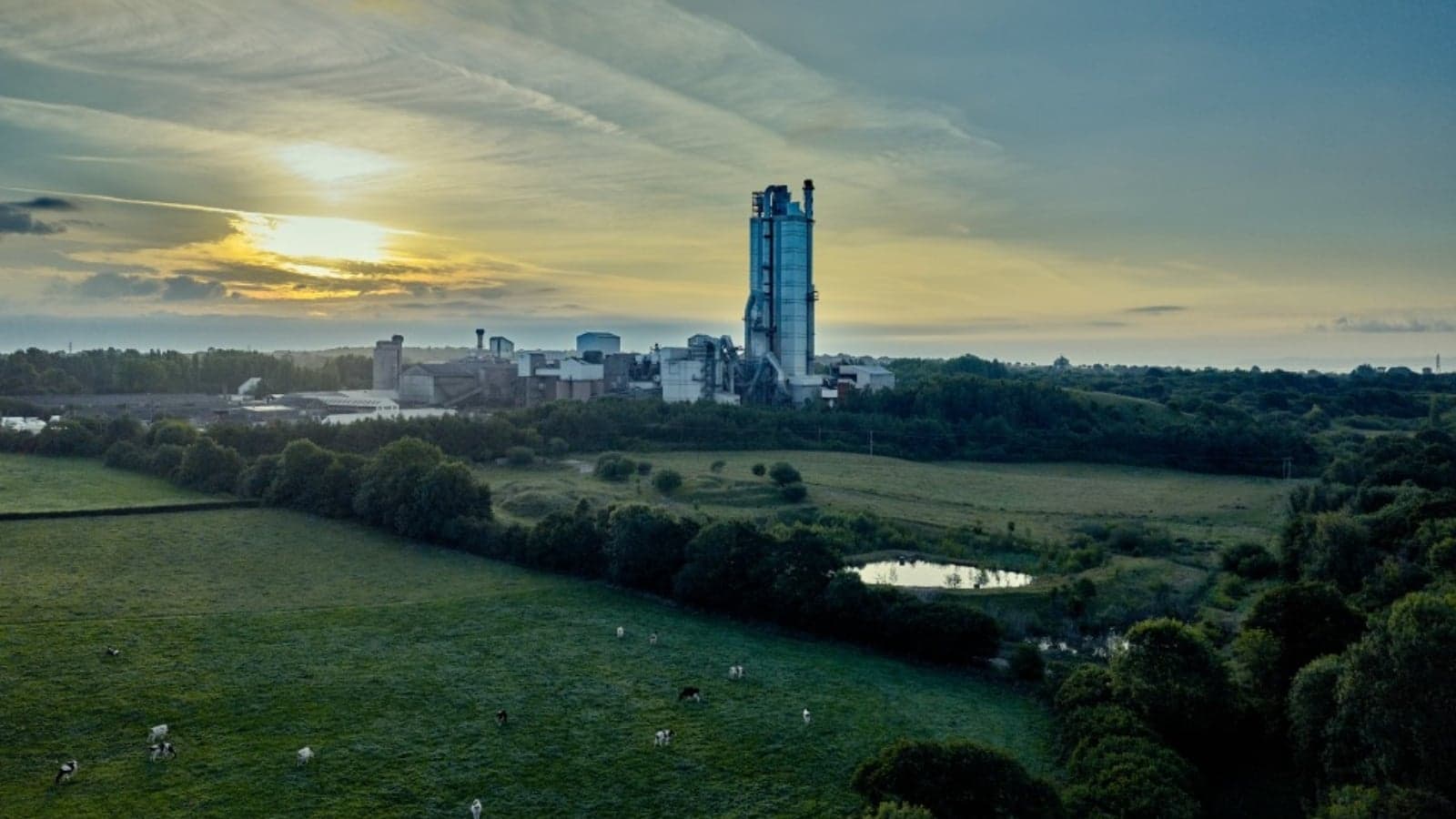
Engineering services firm Worley has announced that the Padeswood Carbon Capture and Storage (CCS) project in Flintshire, UK, has officially entered the execution phase.
The project forms part of the UK's HyNet North West cluster, and will enable Heidelberg Materials to produce evoZero – a pioneering carbon captured near zero cement – at commercial scale.
The CCS facility will be delivered together with Mitsubishi Heavy Industries. It’s designed to capture around 800,000 tonnes of CO2 annually and will eliminate nearly all of the plant’s emissions.
Construction is set to begin this year, with the carbon capture facility set to be operational in 2029.
The project, says MHI, will be the first in Europe to deploy its proprietary Advanced KM CDR Process to capture the CO2.
MHI developed the KM CDR Process together with Kansai Electric Power Co, using a unique amine solvent KS-1. According to MHI, this process can be applied to various types of flue gas sources and is highly energy efficient.
Captured CO2 will be transported via pipeline for permanent storage in depleted gas fields under Liverpool Bay.
Chris Ashton, Chief Executive Officer of Worley, commented: “This project is a landmark for industrial decarbonisation in the UK and Europe and part of the HyNet carbon capture cluster. We’re proud to be working alongside Heidelberg Materials and MHI to deliver a facility that will help transform cement production and support the UK’s net zero ambitions.”
Have you read?
Why the UK needs to rethink its carbon capture policy
Carbon capture pilot starts operating at KEPCO's Himeji 2 power plant
MHI and Worley were awarded the front-end engineering design (FEED) study in 2024, with Heidelberg Materials taking final investment decision (FID) in September 2025 in collaboration with the UK government under Track-1 of its CCUS cluster sequencing programme.
Simon Willis, CEO at Heidelberg Materials UK, said: “This is the next major milestone in our plans to build the UK’s first carbon capture facility at a cement works. We have established an excellent working relationship with Worley and MHI during the completion of the front-end engineering design (FEED) for our Padeswood project.”
In October 2024, the UK government announced a commercial agreement to fund two major carbon capture sites in the North West and North East of England.
The sites include the East Coast Cluster and HyNet North Cluster projects, which according to the Department of Energy Security and Net Zero, will help remove over 8.5 million tonnes of carbon emissions each year – the equivalent of taking around 4 million cars off the road.
The announcement confirmed that up to £21.7 billion ($29 billion) will be made available over 25 years to develop CCUS and hydrogen in these industrial clusters.
Related tags
Latest content
+1
The Iberian green industrial opportunity: Unlocking CCS potential
With its industrial backbone reliant on sectors like cement, steel and chemicals, the Iberian Peninsula must balance economic competitiveness with climate goals. CCS offers a compelling solution, write Javier Ferrer and Álvaro Bau of McKinsey & Company
- Guest/partner contributor
- 10/10/2025