The Iberian green industrial opportunity: Unlocking CCS potential
Guest/partner contributor
Posted on: 10 October 2025
With its industrial backbone reliant on sectors like cement, steel and chemicals, the Iberian Peninsula must balance economic competitiveness with climate goals. CCS offers a compelling solution, write Javier Ferrer and Álvaro Bau of McKinsey & Company

Hard-to-abate (HtA) industries are critical to Iberia’s economy, contributing over 8% of the industrial sector’s gross value added (GVA) and providing 300,000 direct jobs. However, these sectors are also responsible for more than 50% of the region’s industrial carbon dioxide (CO₂) emissions.
With the European Union’s Emissions Trading System (ETS) driving up the cost of carbon—could reach €110–€150 ($128 – $175) per tonne by 2030—these industries face significant financial pressure. For example, production costs could rise by 15–17% in chemicals, 35–40% in steel, and nearly 95% in cement if emissions remain unchanged.
Spain’s National Integrated Energy and Climate Plan (PNIEC) aims to reduce industrial emissions from 67.9 million tonnes per annum (Mtpa) in 2020 to 50.7 Mtpa by 2030, a 25% reduction. Yet, even with electrification, energy efficiency, green hydrogen, and new feedstocks, the country is projected to fall short by 4–7 Mtpa of its target.
This gap could cost the industrial sector €560–€980 million ($758 million – 1.1 billion) annually in carbon penalties. CCS, therefore, emerges as a critical lever to bridge this gap and maintain industrial competitiveness.
Have you read?
Delivering durable carbon removals with BECCS
CCS: A proven but underutilised technology
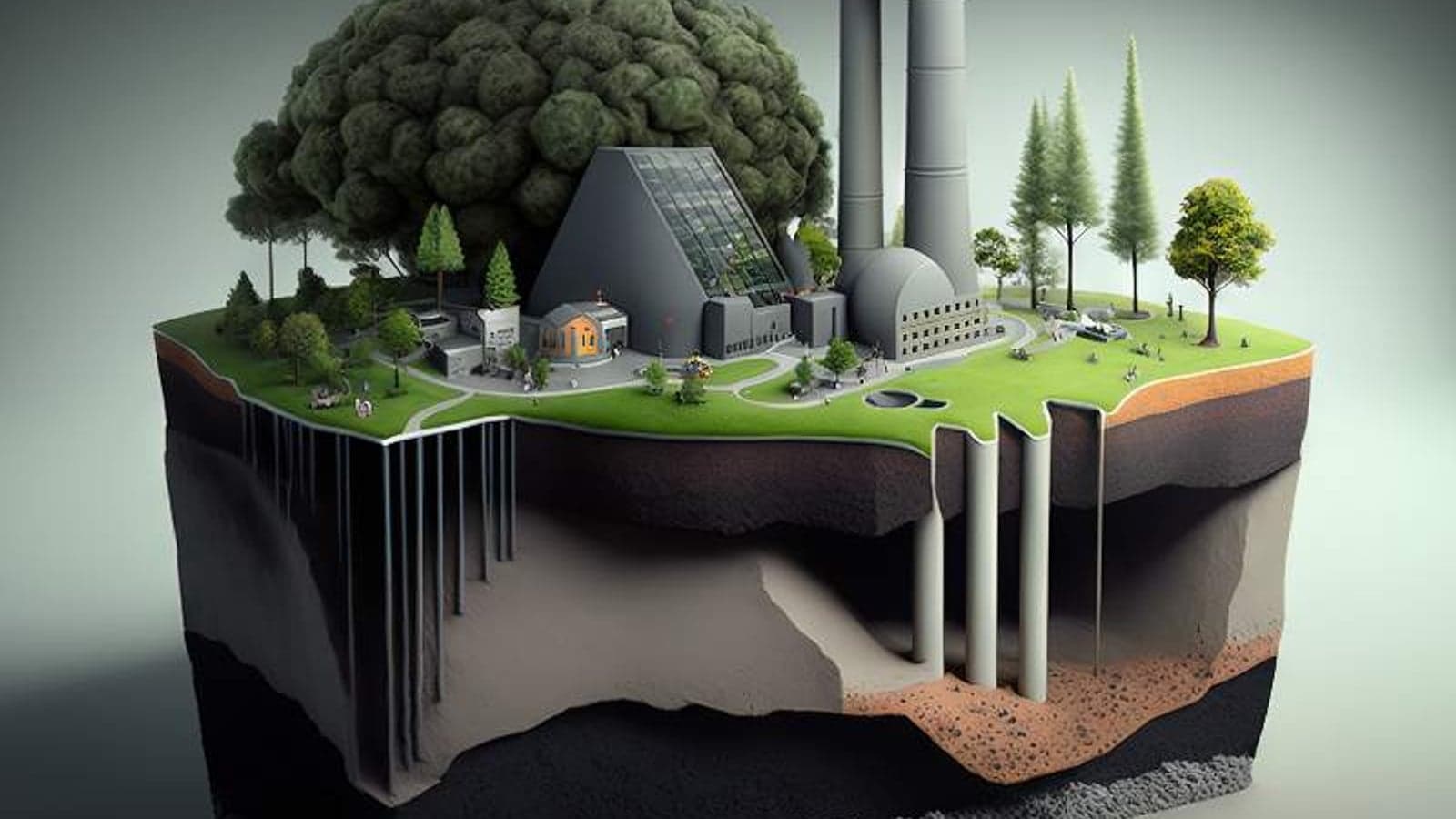
CCS involves capturing CO₂ from industrial processes, transporting it via pipelines or ships, and storing it in geological formations such as saline aquifers or depleted oil and gas fields. While technology is well-established, with over 40 projects in development across Europe, Iberia lags behind its peers.
The Netherlands, Norway or the UK, for instance, have launched comprehensive CCS strategies, including different mechanisms such as contract-for-difference (CfD) schemes to support decarbonisation projects. In contrast, Spain and Portugal have yet to set clear CCS targets or develop a robust regulatory framework.
Despite this, Iberia has significant potential. The region is home to over 900 emission plants, emitting more than 80 Mtpa of CO₂, and boasts substantial storage capacity. Spain alone has identified 103 potential onshore storage sites with an estimated capacity of 20 gigatonnes (Gt), while Portugal has at least 7 Gt of storage potential, primarily offshore.
However, without local storage solutions, Iberia may need to rely on international options like the North Sea, which could increase CCS costs by 35–40% when compared to a local onshore storage scenario.
Strategic opportunities for CCS
Hubs in IberiaIberia’s large potential storage capacity and concentration of industrial clusters make it a suitable region for CCS for HtA decarbonisation. Three industrial clusters—Asturias, Barcelona–Tarragona, and Cantabria–Basque Country—stand out as prime candidates for CCS hubs.
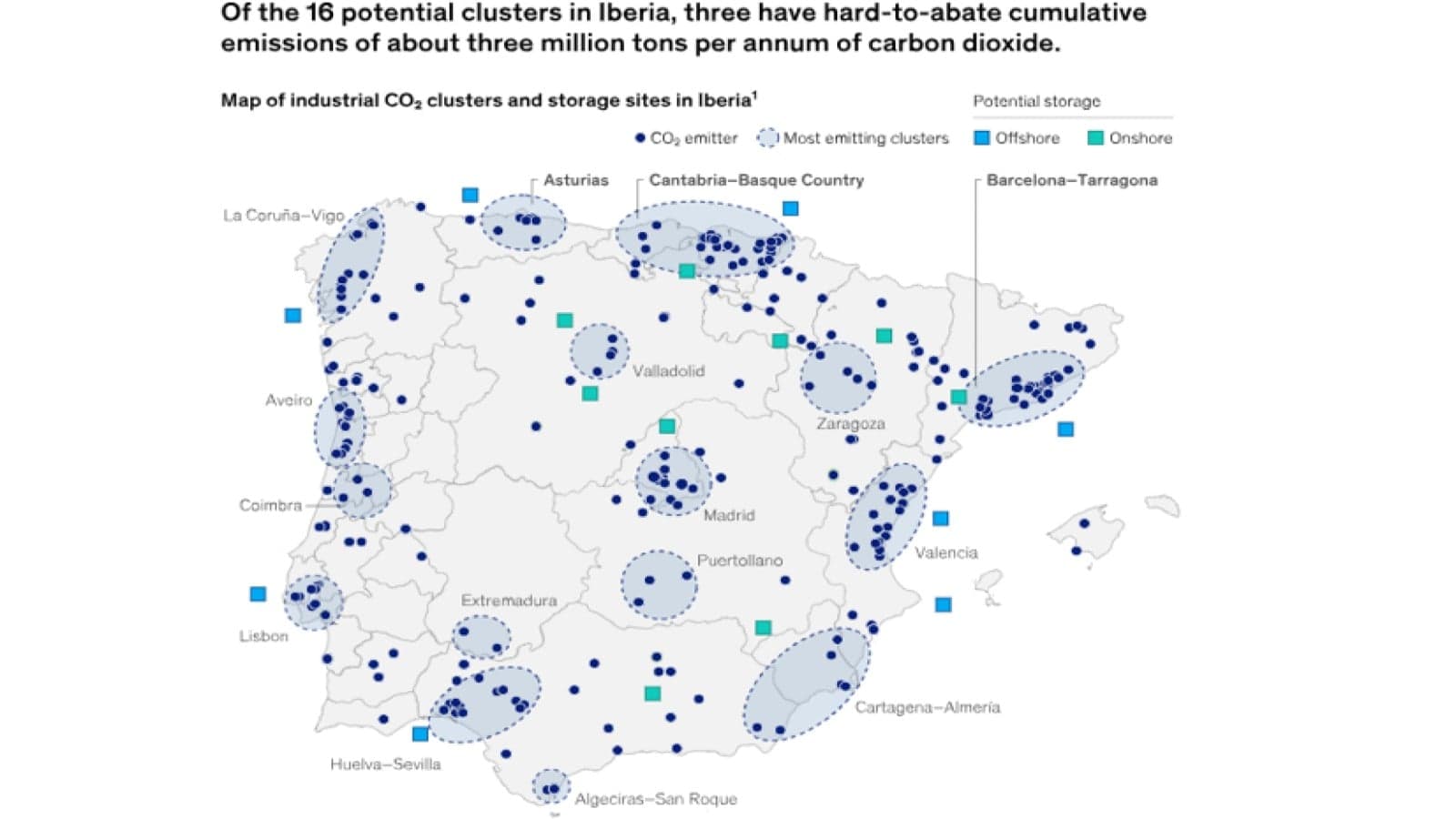
Each presents unique opportunities and challenges:
Asturias:
- Emissions: Over 14 Mtpa of CO₂, with 5 Mtpa from hard-to-abate industries.
- Key Emitters: ArcelorMittal’s steel plant (3.2 Mtpa) and two cement plants (0.5 Mtpa each).
- Storage: Offshore near Gijón, with transport costs of €15–€20/ ($18-$23) tonne and storage costs of €20–€40 ($23-$47)/tonne.
- Total CCS Costs: €120-€160/ ($140-$187) tonne, requiring €13–€17 billion ($15 – $20 billion) over 25 years.
- Challenges: Uncertainty about ArcelorMittal’s preferred decarbonisation route and lack of nearby onshore storage.
Barcelona–Tarragona:
- Emissions: 11 Mtpa of CO₂, including 4.7 Mtpa from hard-to-abate industries.
- Key Emitters: Five cement and chemical plants near Tarragona.
- Storage: Offshore near Tarragona, with transport and storage costs of €40–€65 ($47-$76)/tonne.
- Total CCS Costs: €130–€170 ($152-$198)/tonne, with a 25-year project cost of €10–€13 billion ($12-$15 billion).
- Challenges: ~100 km of pipeline needed to connect emitters distributed between Barcelona and Tarragona.
Cantabria–Basque Country:
- Emissions: 11 Mtpa of CO₂, with 3.5 Mtpa from hard-to-abate industries.
- Storage: Onshore near Vitoria, with transport and storage costs of €35–€45 ($41-$53)/tonne.
- Total CCS Costs: €150–€170 ($175-$198)/tonne, requiring €10–€12 billion ($12-$14 billion) over 25 years.
- Challenges: Highly dispersed emitters and limited local storage options.
Overcoming barriers to CCS adoption
Despite its potential, CCS faces two primary challenges in Iberia: regulatory uncertainty and economic viability.
Regulatory Framework:
Spain and Portugal lack tailored CCS regulations, relying instead on generic laws like Spain’s Mining Law 22/1973. This has led to lengthy permitting processes, as seen with the Hontomín Pilot Project, which took eight years to complete. A clear, streamlined regulatory framework—modeled on the UK’s transparent permitting process—could accelerate CCS development.
Economic Viability:
While CCS costs are competitive with projected carbon prices, uncertainties around cost overruns and carbon market volatility pose risks. Incentive schemes like CfDs, which stabilise revenues by compensating for the price difference between low-carbon and traditional technologies, could mitigate these risks.
The Netherlands’ CfD program, for example, has successfully supported CCS projects by allocating over €42 billion ($49 billion) in funding.
A successful CCS ecosystem hinges on coordinated efforts between public and private stakeholders. Governments play a pivotal role by providing financial support, streamlining regulations, and fostering public acceptance. Examples such as Norway’s Gassnova and the Netherlands’ Porthos project demonstrate how public entities can effectively drive CCS development.
At the same time, private companies must align their efforts to optimise hub networks, capitalise on economies of scale, and explore green financing opportunities. Collaboration across the entire value chain—from emitters to transport operators and storage providers—is essential to ensure the successful implementation of CCS initiatives.
Read McKinsey’s full report:
The Iberian green industrial opportunity: Carbon capture and storage
Charting the path forward
To unlock the full potential of CCS, Iberia must address key bottlenecks and create an enabling environment:
- Regulatory certainty: Develop a robust legal framework tailored to CCS, including clear permitting processes and storage site approvals.
- Economic incentives: Consider CfDs and other support mechanisms to de-risk investments and ensure project viability.
- Public engagement: Appoint a public body technically capable of coordinating a potential CCS hub and signaling government support to the private sector investments in this space.
- Private sector orchestration: Encourage collaboration across industries to optimise costs and drive innovation.
Carbon capture and storage represents a transformative opportunity for Iberia to decarbonise its industrial sector while maintaining economic competitiveness. By leveraging its natural endowments, industrial clusters, and strategic location, the region can position itself as a leader in CCS.
However, realising this potential will require bold action, coordinated efforts, and a shared commitment to a sustainable future. The time to act is now.
ABOUT THE AUTHORS
Álvaro Bau is a partner in McKinsey’s Madrid office specialising in energy transition and commercial optimization topics. Álvaro leads key projects within the energy sector, especially in petroleum marketing and retail, and he has extensive experience in digital and advanced analytics, as well as downstream operations.
Javier Ferrer is a leader of McKinsey’s global energy and materials practice in Europe, working with oil and gas companies and energy-focused investors, developers, and engineering companies on topics entailing strategy, green business building, and operational improvement.
This article is a part of knowledge articles of McKinsey’s think tank, The Iberian Industry and Energy Transition Initiative.