Citizens' band wavelength
Enlit Editorial Team
Posted on: 29 June 2021
Collective energy actions will pave the way for a clean energy transition, argues Lorena Skiljan.

Collective energy actions will pave the way for a clean energy transition, argues Lorena Skiljan.
It means moving towards a decentralised, bottom-up system where individuals and communities can connect and become stakeholders.
The emerging electrification of the consumer sector, resulting from rapidly-growing markets such as e-mobility and IoT, further accelerates the demand for energy and the demand for more flexible, distributed power solutions.
These growth trends can be used to develop demand-orientated, decentralised energy systems and to integrate them into existing ones.
This article was originally published in The Guide
The integration of heat supply and storage technologies provide additional levers and accelerate the development of renewable local energy supplies, bringing new dynamics into the whole system.
Local hubs can be created, contributing to the optimisation of the overall system and to the expansion of renewable energies.
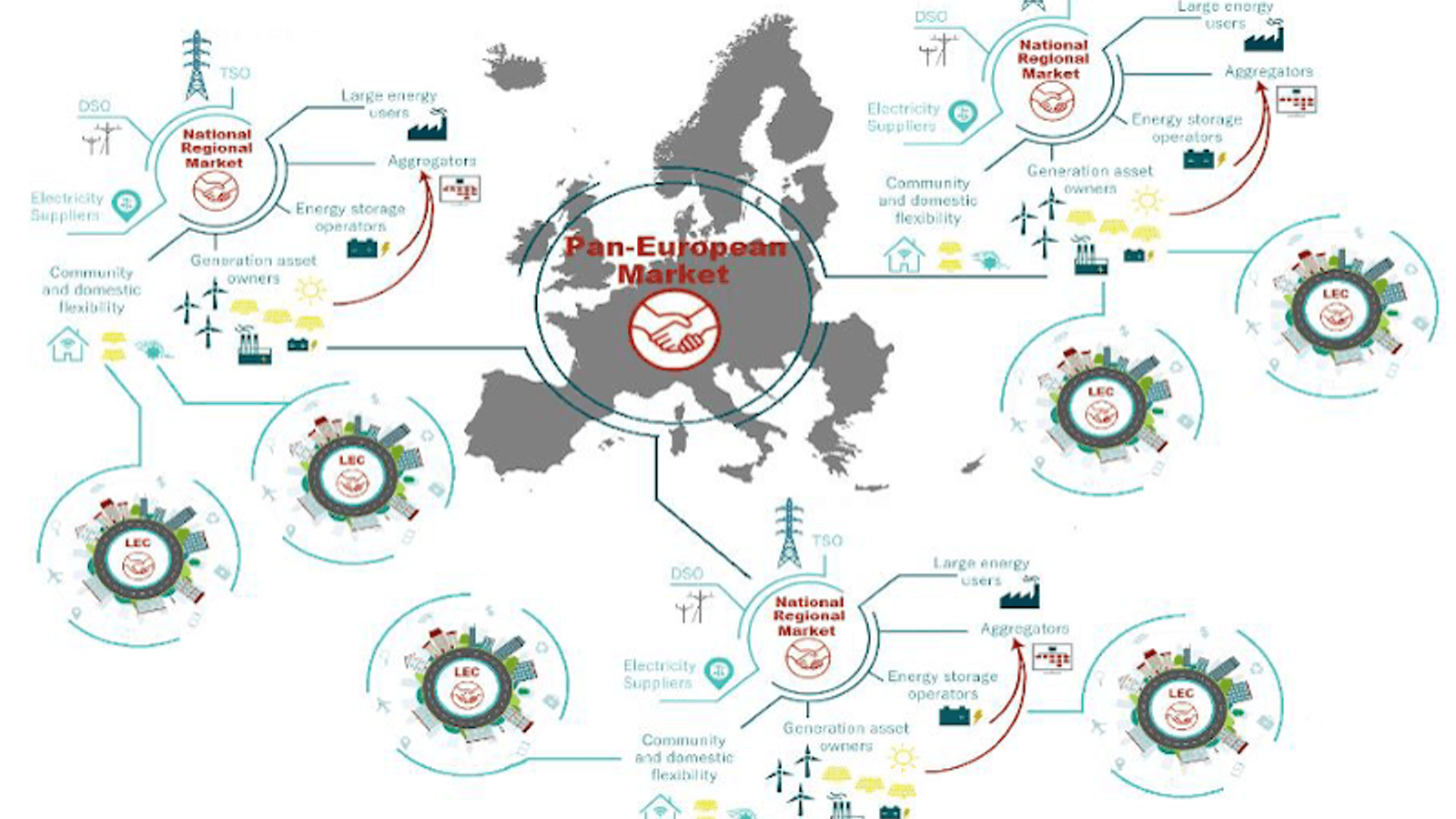
Renewable energy communities are intended to make a significant contribution to promoting decentralised supply and allowing consumers to participate in the energy transition.
A renewable energy community is an association of private individuals, companies and communities who jointly generate, consume, store and trade electricity from renewable sources.
They contribute to increase public acceptance of renewable energy projects and make it easier to attract private investments in the clean energy transition.
At the same time, a renewable energy community has the potential to provide direct benefits to its members by advancing energy efficiency and lowering their electricity bills via the optimisation of the regional energy system in line with its specific energy demand and supply curve, depending on its geographic location and economic orientation.
The key accelerator to success is public participation driven by the growing awareness that change can come through bottom-up initiatives.
Further benefits include a renewable, local, and decentralised production as well as the independence from the electricity market, price stability and reduced fees and charges (reduced network usage fees, exemption of renewable subsidy contributions, exemption of electricity taxes).
To have a chance to reach our environmental goals, there is no alternative other than to rapidly expand the share of renewable energies in global electricity generation.
Governments and local authorities can initiate processes through legislation and funding, but the key accelerator to success is public participation driven by the growing awareness that change can come through bottom-up initiatives.
The individual's interest as a stakeholder of an energy system is to maintain price stability and act in the best interest of its community and its environment. Collective and citizen-driven energy actions will help pave the way for a clean energy transition.
The momentum is growing towards a distributed energy system in the best interests of our environment and communities.
The necessary integration of new models and systems into the present infrastructure will be the first goal to reach on this path.
Lorena Skiljan tackles data, privacy and biased algorithms in our Datatopia podcast.
This article was originally published in The Guide
Related tags
Latest content
+1
Project TradeRES – New market designs for green European power system: preliminary findings
TradeRES is an EU-finded project with the objective of developing and testing an innovative electricity market design that can meet society’s needs in a near 100% renewable power system.
- Guest/partner contributor
- 15/05/2024
+3
Delivering the clean energy grid of the future
The new Government has bold ambitions to position the UK as a clean energy superpower. By working with the private sector, the Government aims to; double onshore wind, triple solar power and quadruple offshore wind by 2030s.
- Guest/partner contributor
- 17/09/2024