Co-creating tools and services for Smart Readiness Indicator uptake
Guest/partner contributor
Posted on: 14 April 2025
The SRI-ENACT project aims to facilitate Smart Readiness Indicator uptake with co-creation of national SRI implementations and development of an SRI-ENACT toolkit.
The SRI-ENACT project aims to facilitate Smart Readiness Indicator uptake with co-creation of national SRI implementations and development of an SRI-ENACT toolkit.
Long-term strategies for upgrading smartness in building construction and renovation require reliable measures to assess buildings' smart readiness.
The Smart Readiness Indicator (SRI) was introduced in the revised Energy Performance of Buildings Directive (EPBD) as a standardised methodology for evaluating a building’s smart readiness. To support this, the SRI assessment package was developed to help facility managers and energy auditors calculate the SRI based on climatic conditions and building complexity.
The SRI-ENACT project, funded by the EU, is engaging stakeholders in co-creating the national SRI implementations and developing the SRI-ENACT toolkit, which includes SRI assessment and decision-support tools.
The project also delivers a training and certification package for SRI auditors, supporting large-scale adoption in eight EU countries – Austria, Bulgaria, Croatia, Czech Republic, Greece, Latvia, Romania and Spain.
Currently, 120 auditors are assessing 1,200 buildings, providing insights to establish best practices for wider adoption.
Description of the common methodological framework of the SRI scheme in the EU
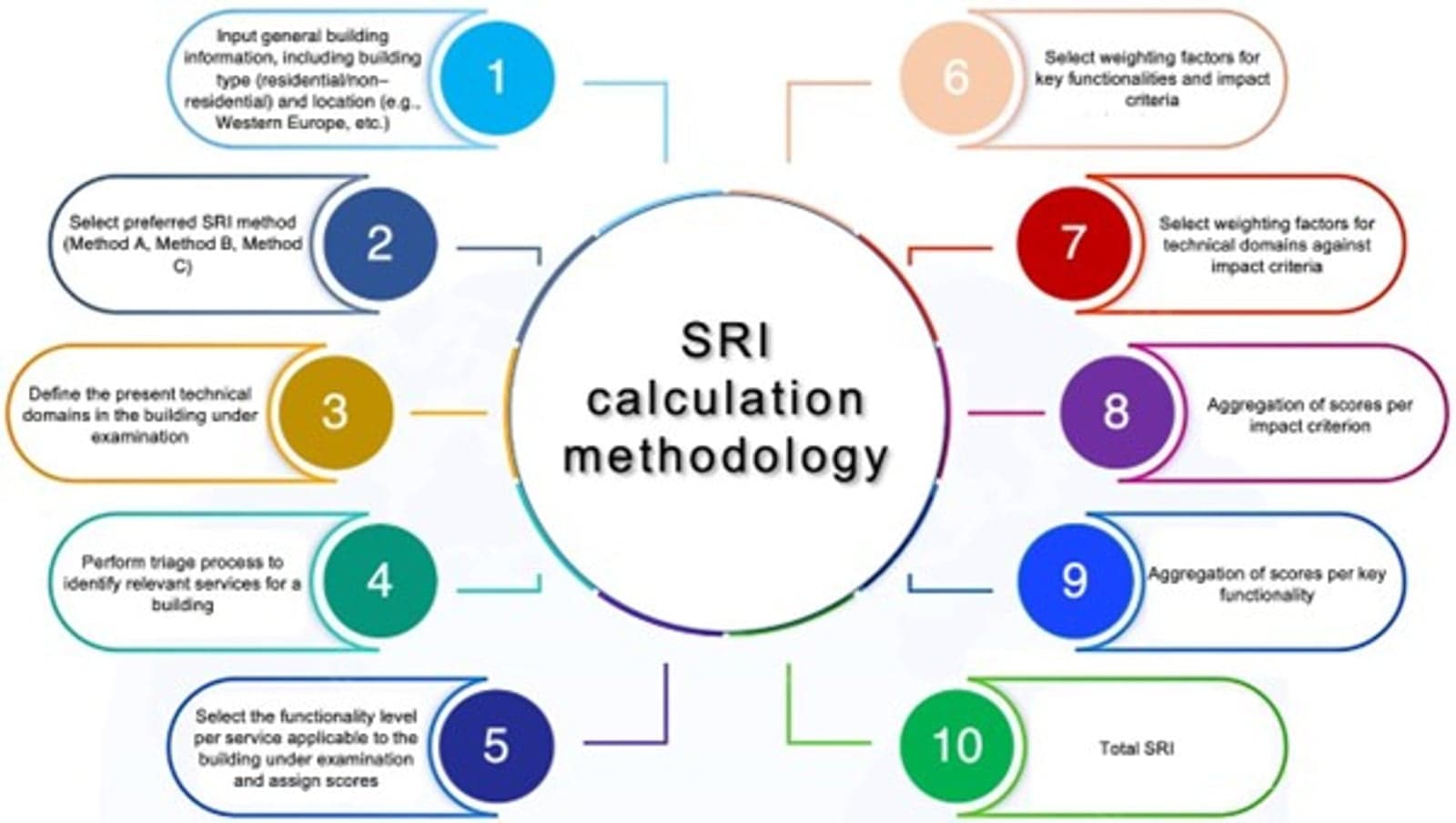
The SRI calculation methodology is based on an inventory of 54 smart-ready services that impact a building’s smartness. These services, such as heat emission control and window shading, have different functionality levels ranging from basic (no automatic control) to advanced (individual room control with communication and presence detection).
These smart-ready services are categorised into nine technical domains and assessed based on seven impact criteria, grouped into three key functionalities reflecting SRI's primary goals.
To unify these factors, a multi-criteria analysis method was developed as the officially recognised approach for SRI calculation, typically performed by certified assessors. This methodology, which is summarised in figure 1, is typically applied by a certified assessor.
Co-design of SRI implementation pathways in pilot countries
The SRI-ENACT project analysed the SRI landscape in Austria, Bulgaria, Croatia, Czech Republic, Greece, Latvia, Romania, and Spain, reviewing regulations, practices, funding schemes and methodologies.
A co-creation process engaged key stakeholders, including government officials, facility managers, service providers, energy agencies, investors and policymakers.
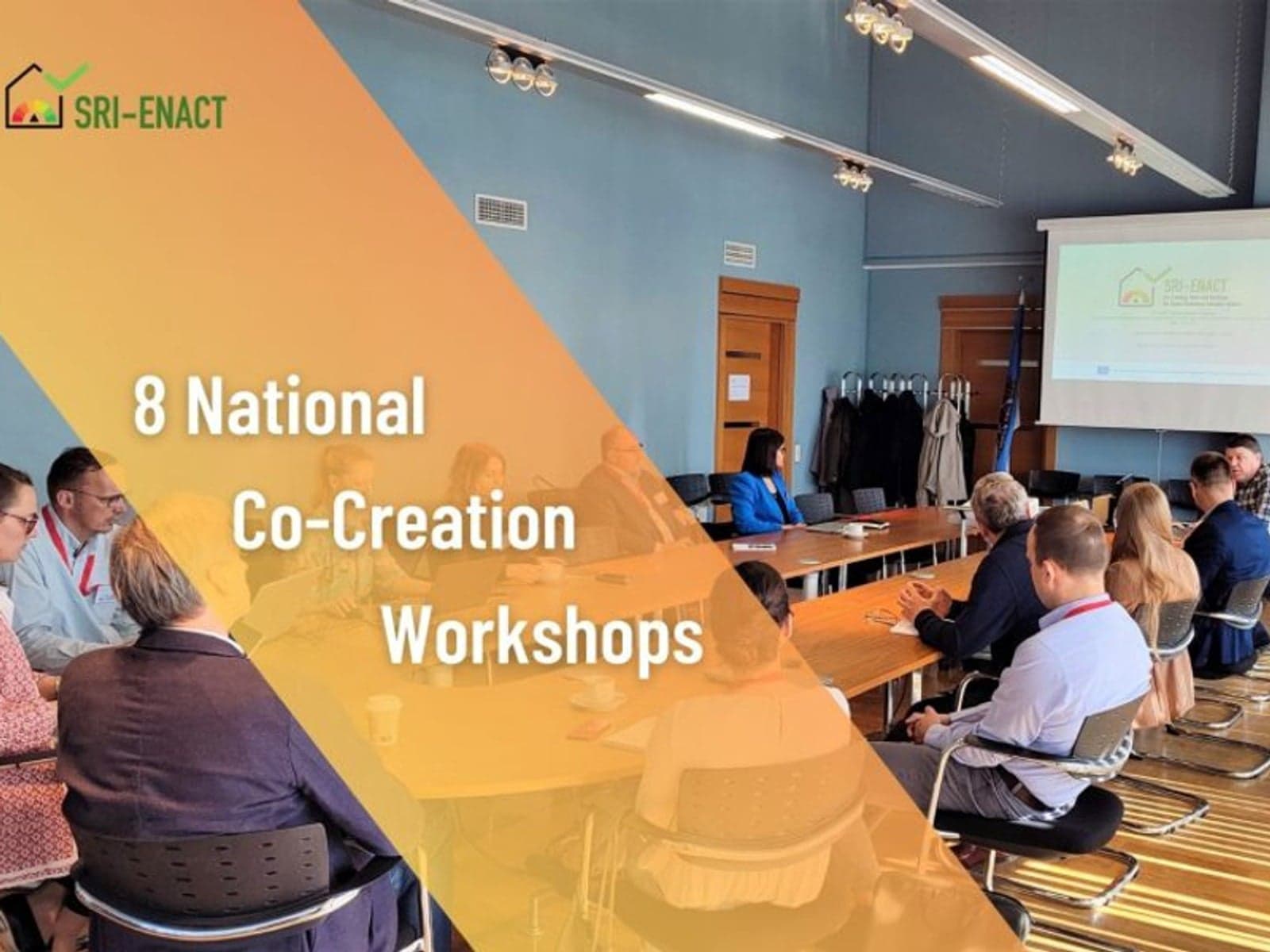
National co-creation workshops were held in May and June 2023, facilitating discussions on SRI tailoring and implementation. These workshops established stakeholder liaison groups in each pilot country, forming an ongoing national SRI platform. The outcomes highlighted key stakeholders' perspectives and created strong collaborative networks.
Most countries agreed on linking SRI to EPCs and favoured both Methods A and B for building assessments, considering energy auditors as the most suitable professionals. All countries supported establishing a certification process and national registry for SRI experts. Residential, educational and office buildings were identified as key targets, with some countries emphasising the need for national-level tailoring and consideration of climate zones.
Additionally, new policies and financial support, combining national, European and private funding, were deemed necessary.
The SRI-ENACT toolkit
The SRI-ENACT project worked on a tool to digitalise the SRI assessment process to provide a reliable, user-friendly digital tool assisting SRI assessments while providing assessment data access to multiple stakeholders.
A user-friendly web-based application was implemented to enable the SRI assessment of buildings.
Following the SRI methodology, the application allows two modes of SRI assessment, the self-assessment by residents or the formal assessments by SRI auditors.
The application is open for residents’ self-registration. At the same time, it needs pre-registration for auditors through the pilot lead to ensure that only auditors who have followed appropriate training can be registered under this role in the application.
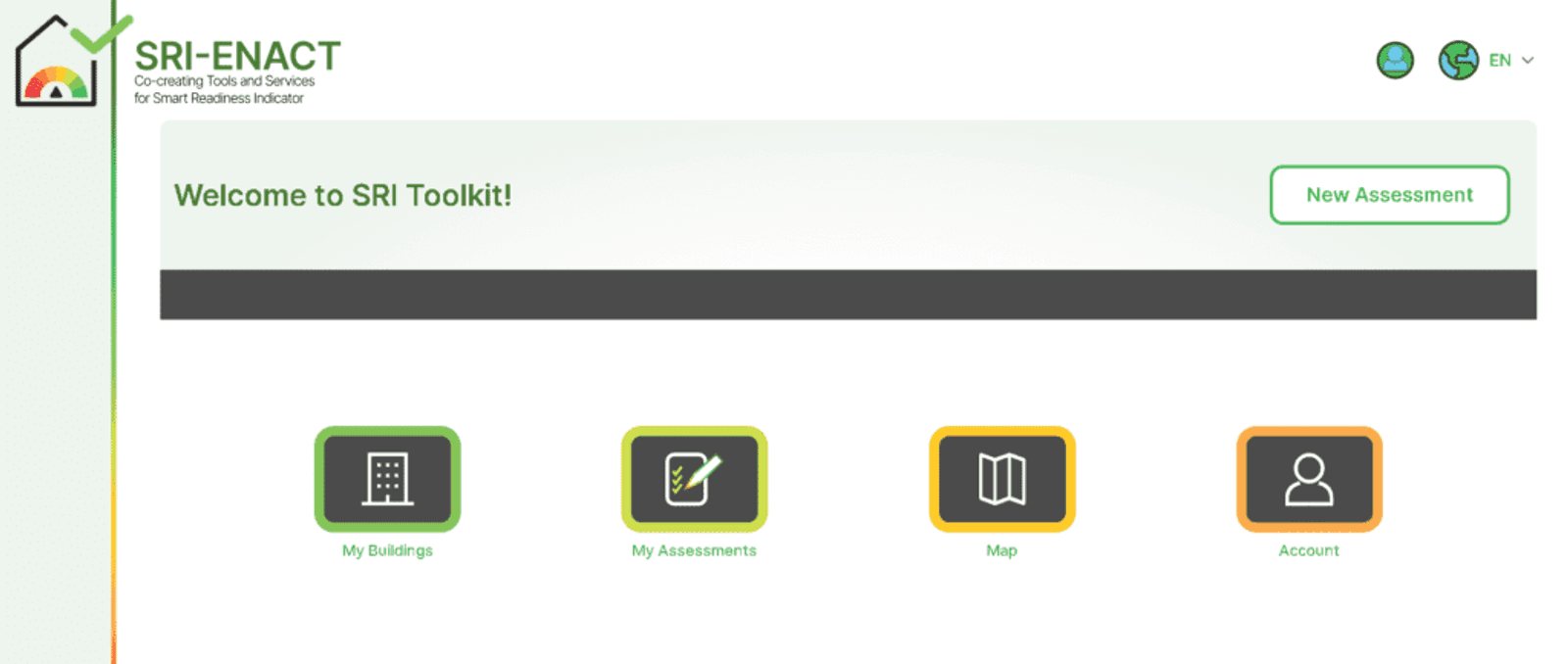
In addition to the SRI assessment tool, the project worked on a decision support tool (DST), which is based on a scenario-driven framework.
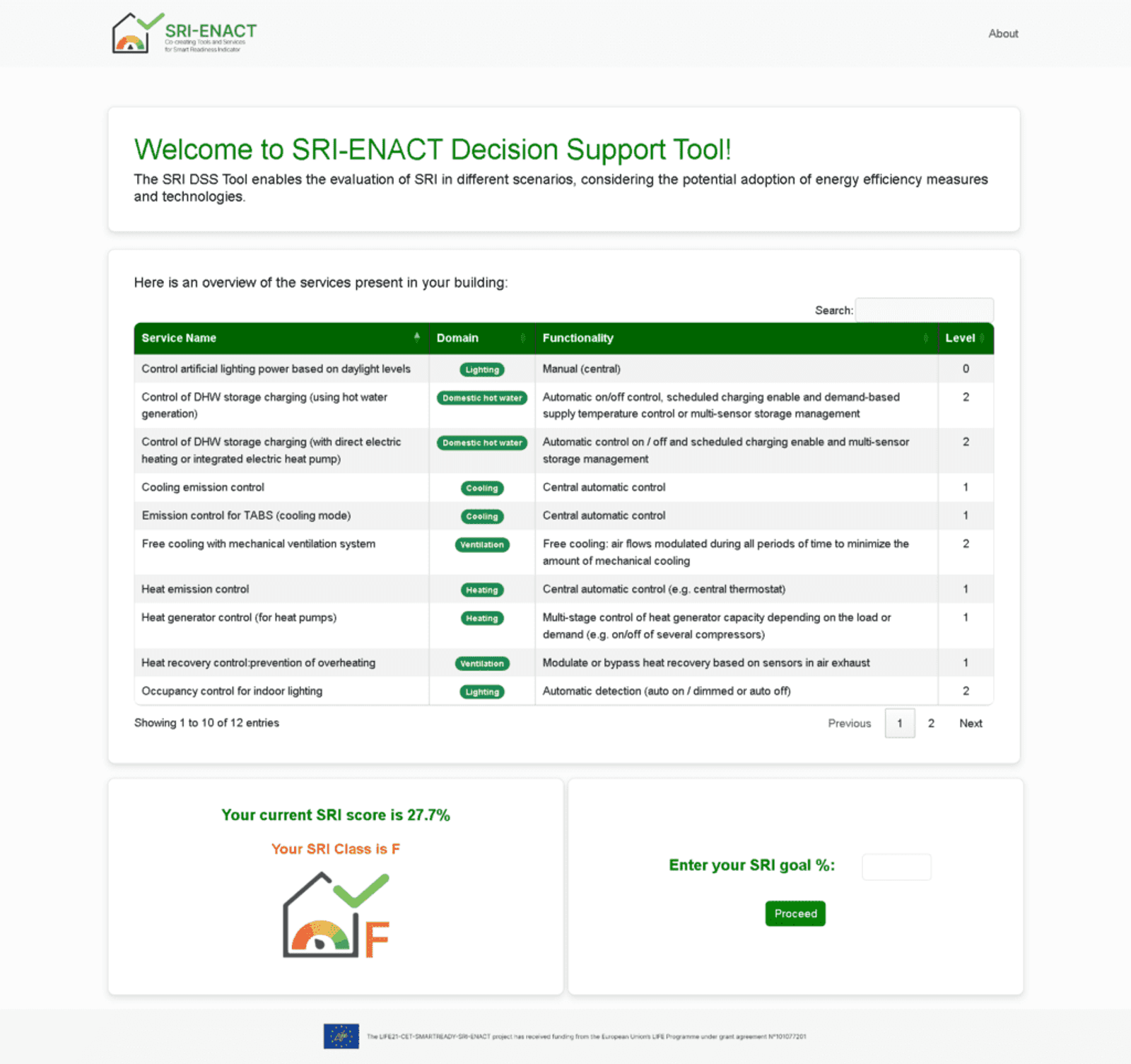
The DST builds on the results of the involved buildings’ SRI evaluations drawn from the SRI assessment tool, and provides key insights and targeted solutions to the users regarding the smart-ready upgrades, or combinations of smart-ready upgrades presented as scenarios, that should be implemented.
In other words, the DST is interconnected to the SRI assessment tool, and by leveraging on the latter’s output, is able to roll out potential solutions focused on the overall SRI improvement. This also implies that accessing the SRI assessment tool is a prerequisite before utilising the DST, otherwise the latter will not be functional.
From a methodological point of view, the tool is designed to explore whether several configured scenarios, comprising different combinations of smartness upgrades in the implicated services that are present or applicable in the buildings under examination (following up on the results of the SRI assessment tool), are able to meet the SRI target set for the building by the user.
In case the examined scenario is found to lack such capability, then the tool is designed to exclude this specific scenario from the analysis and move on to setting in the spotlight the next scenario(s), until one of them can satisfy the initial requirement.
The digital toolkit is accompanied by a comprehensive guidebook that provides instructions on the use of the application. This is part of the SRI training programme that was created in the context of the project to support the training of the SRI auditors.
The training programme consists of three modules covering fundamental concepts on the SRI, its tailoring to national contexts, and the SRI-ENACT toolkit. The training material is available in the project website.
In addition, to the training process, SRI-ENACT has defined also a process to certify trainers, by providing an online multiple choice-based questionnaire as a test to validate the understanding of the trainees of the basic principles for each module.
Pilot activities
The SRI assessment programme is in its initial phase, with the first cycle completed. Twenty buildings across the pilot countries were evaluated using the SRI-ENACT methodology.
The project consortium prioritised diverse building typologies, including educational buildings, hotels and hospitals.
The first cycle concluded with 28 buildings assessed, followed by a second pilot cycle evaluating over 300 buildings.
Initial results indicate higher smart readiness in newer or recently upgraded buildings. However, challenges remain in areas such as energy flexibility, demand services, indoor air quality reporting, maintenance planning, and energy storage.
The SRI pilot phase continues, with hundreds more buildings scheduled for assessment in the coming months.
About the authors

Stamatia Rizou, R&D Manager, SingularLogic, Athens, Greece.

Apostolos Arsenopoulos, Research Associate, National Technical University of Athens, Athens, Greece.

Nenad Miletić, Senior Project Manager, REGEA, Croatia.
Most popular
Join the community for freeAnd get access to all content
Related projects
SRI-ENACT
+1
2 December 2022 - 31 May 2025
View project