COP29 delivers $1.3tn Baku Finance Goal yielding mixed reactions
Pamela Largue
Posted on: 27 November 2024
COP29 concluded with the Presidency of Azerbaijan announcing the Baku Finance Goal (BFG) – a new commitment to channel climate finance to the developing world. Is this a satisfying outcome?
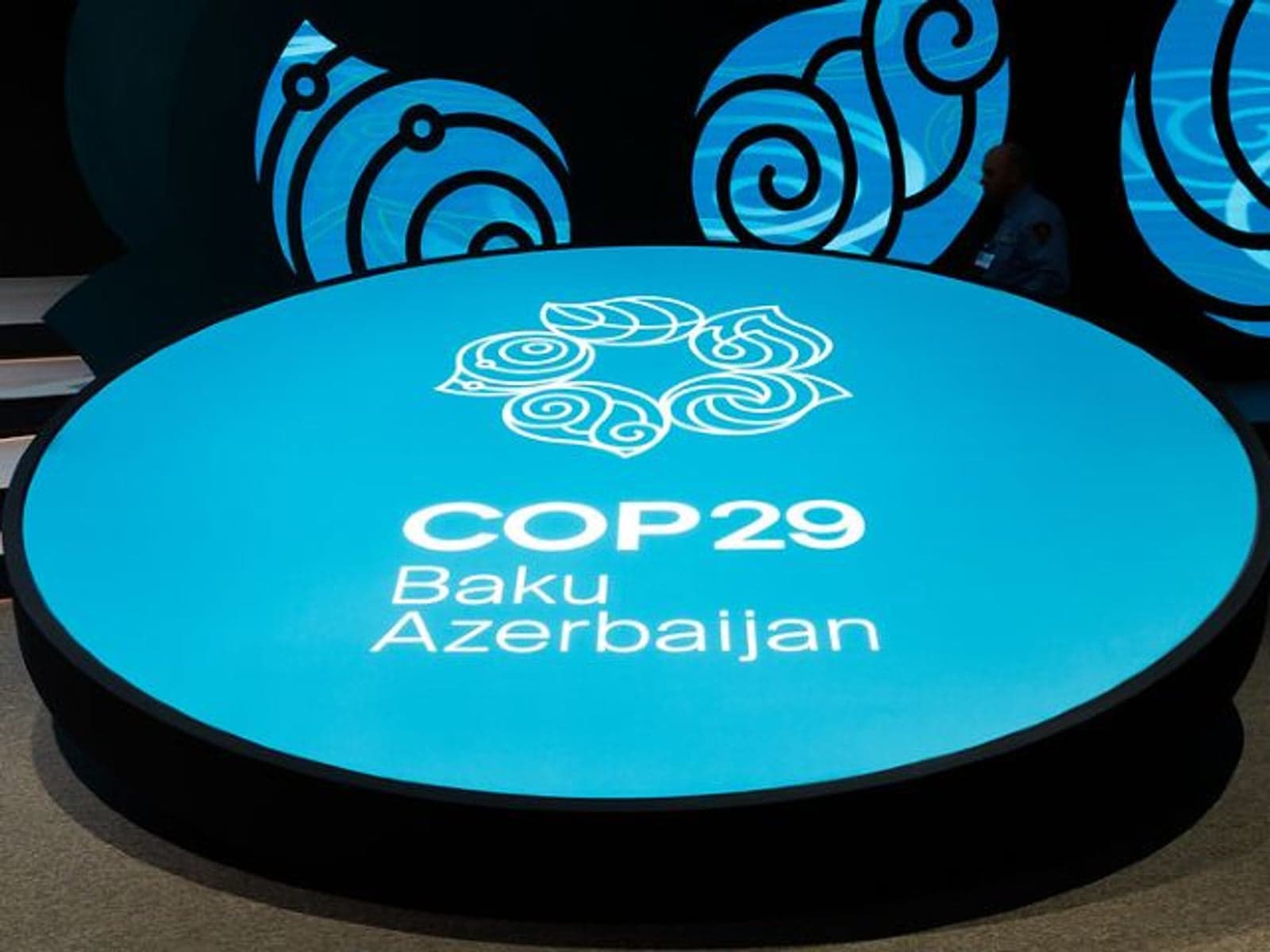
COP29 concluded with the Presidency of Azerbaijan announcing the Baku Finance Goal (BFG) - a new commitment to channel climate finance to the developing world. Is this a satisfying outcome?
The BFG requires developed countries to take the lead on mobilising at least $300 billion per year for developing countries by 2035, an agreement which saw a $50 billion increase on the original draft text.
It secures efforts to scale up finance from public and private sources to the tune of $1.3 trillion per year by 2035.
COP29 President Mukhtar Babayev was positive about the outcome, stating: “The Baku Finance Goal represents the best possible deal we could reach, and we have pushed the donor countries as far as possible. We have forever changed the global financial architecture and taken a significant step towards delivering the means to deliver a pathway to 1.5C..."
The BFG aims to support the least developed countries and small island developing states. Simon Stiell, Executive Secretary of UN Climate Change, aptly commented on the announcement stating: "This new finance goal is an insurance policy for humanity, amid worsening climate impacts hitting every country. But like any insurance policy – it only works – if premiums are paid in full, and on time. Promises must be kept, to protect billions of lives.”
Other notable wins included the commitment to an ambitious target of deploying 1,500 GW of energy storage and building 25 million kilometres of grid infrastructure by 2030.
Also, the conclusion of Article 6 negotiations on high-integrity carbon markets was hailed as a win, making country-to-country trading and a carbon crediting mechanism fully operational.
According to the COP29 Presidency, financial flows from compliant carbon markets could reach $1 trillion per year by 2050. They also have the potential to reduce the cost of implementing national climate plans by $250 billion per year.
The COP29 Presidency also succeeded in getting the Fund for Loss and Damage up and running and ready to distribute money in 2025.
Have you read?
We need an energy transition that works for everyone says Anna Bazley
EU companies want to shift from fossil fuels but many lack resources shows report
Reaction to COP29 outcomes
The reaction to what was achieved, or not achieved, at COP29 has been varied, with some comments highlighting a loss of faith in the process and outcomes.
A statement issued by UNOPS-hosted entity Sustainable Energy for All, said: "While some progress was made at COP29, this year’s COP is viewed as a reversal in ambition, as there was no agreement on phasing out of fossil fuels, and the new climate finance goal of $300 billion annually by 2035, is viewed as largely inadequate."
“While we believe that the progress of the clean energy transition is unstoppable, the progress is uneven across the globe, and the more ambitious NDCs, as well as subnational commitments, are needed to send additional market signals for investment. This will open the doors to greater partnership with the private sector to create new investment and economic development opportunities that can unlock clean, affordable, and reliable energy access for all.”
Al Gore commented on X suggesting that the COP process is no longer fit for purpose. He said: "This experience in Baku illuminates deeper flaws in the COP process, including the outsized influence of fossil fuel interests that has hobbled this process since its inception. The Kingdom of Saudi Arabia has been particularly obstructive. Putting the future of humanity at severe risk in order to make more money is truly disgraceful behavior. Reforming this process so that the polluters are not in effective control must be a priority.
In an exclusive comment to Enlit, public policy expert Giorgia Epicoco stated that while expectations were high, delivery hasn't matched ambition: "The frameworks are in place, but we’re still waiting for clear, actionable financial mechanisms and firm disbursement timelines. The pledges are there, but the gap remains in turning words into real investments. More is needed to ensure that finance isn’t just promised but delivered—on time and in the quantities required to hit global climate targets. The real question, though, is: who should be the biggest investor? That remains unresolved."
In a LinkedIn post, World Energy Council Secretary General Angela Wilkinson suggested we maintain a broader perspective on what needs to be achieved and she called for market overhaul as a means to an end. "Negotiations still seem to be a long way from the level of flows needed to create a new financial staircase to climate neutral heaven, even with multiple steps: domestic; multilateral; wealthy countries; private capital.
"But even if all of the money materialised overnight it will need to continue to flow every year and will take decades to implement - think capabilties and infrastructures for all!
"The deeper challenge is to redesign markets to enable new revenue streams for climate adaptation, resilience and regerative development. Bring everyone along!"
Legal, climate, and human rights experts from the Center for International Environmental Law (CIEL) suggest however that COP29 ended with the adoption of rules that lacked any checks on carbon offsets that don’t deliver emissions impacts or violate rights.
“Paying to pollute will never be a climate solution, and carbon markets will never be climate finance. Creating a Paris-sanctioned carbon market that could be more dangerous than the scandal-ridden voluntary carbon markets, is not a win for people or the planet. It’s a win for big polluters and carbon cowboys. And it does not make up for failing to provide public finance. Agreeing to weak rules that lack transparency, accountability, or meaningful oversight is not a cooperative approach for achieving more ambitious climate action, but a recipe for disaster,” said Erika Lennon, CIEL Senior Attorney.
“With the gavelling of standards on methodologies and removals, the Paris Agreement Crediting Mechanism has flung open its doors to removal activities that are nothing more than a dangerous distraction. Going forward it is essential to ensure this mechanism enforces its standards and properly ensures that other relevant international environmental agreements – including those that place a moratorium on geoengineering – apply to activities.”
A statement issued by Lisa Jacobson, president of the Business Council for Sustainable Energy, recommended more ambitious NDCs as a mechanism to spur investment. Said Jacobson: “While we believe that the progress of the clean energy transition is unstoppable, the progress is uneven across the globe, and the more ambitious NDCs, as well as subnational commitments, are needed to send additional market signals for investment. This will open the doors to greater partnership with the private sector to create new investment and economic development opportunities that can unlock clean, affordable, and reliable energy access for all.”