Cubic thermal runaway sensor solutions for automotive industry
Guest/partner contributor
Posted on: 12 December 2024
Nowadays, the widespread adoption of electric vehicles (EVs) has brought about an increased focus on automotive safety, particularly concerning thermal runaway, a potential risk leading to fires or even explosions.
Nowadays, the widespread adoption of electric vehicles (EVs) has brought about an increased focus on automotive safety, particularly concerning thermal runaway, a potential risk leading to fires or even explosions.
Thermal runaway events not only pose a significant threat to passenger safety but also result in substantial property damage. In recent years, several severe accidents have been attributed to thermal runaway.
According to the latest data from EV FireSafe, an Australian company funded by the National Department of Defence to research electric vehicle battery fires & emergency response, it has verified 511 incidents of thermal runaway globally in electric passenger vehicles (BEV and PHEV) from 2010 to June 2024.
As a crucial component of future transportation, the safety of electric vehicles is paramount. To address the thermal runaway issues, several countries and regions have enacted regulations to mandate thermal runaway monitoring in electric vehicles. For example:
- China: National Standard GB 38031:2020 stipulates that an electric vehicle's battery management system must issue an alarm at least five minutes before a thermal runaway event occurs.
- Europe: The European Union's electric vehicle safety standards (UNECE R100) require vehicles to be equipped with systems capable of real-time battery status monitoring and timely warnings upon detecting anomalies.
- United States: The National Highway Traffic Safety Administration (NHTSA) mandates that EV manufacturers install thermal runaway monitoring systems in vehicles, ensuring immediate alerts when signs of thermal runaway are detected.
- Japan: The Japan Automobile Manufacturers Association (JAMA) has issued safety guidelines emphasizing the need for high-sensitivity monitoring systems in EVs to prevent safety hazards posed by thermal runaway.
To achieve timely warning of the hazardous events in response to regulatory requirements, gas sensors can be indispensable tools for detecting thermal runaway and have shown significant advantages in monitoring thermal runaway.
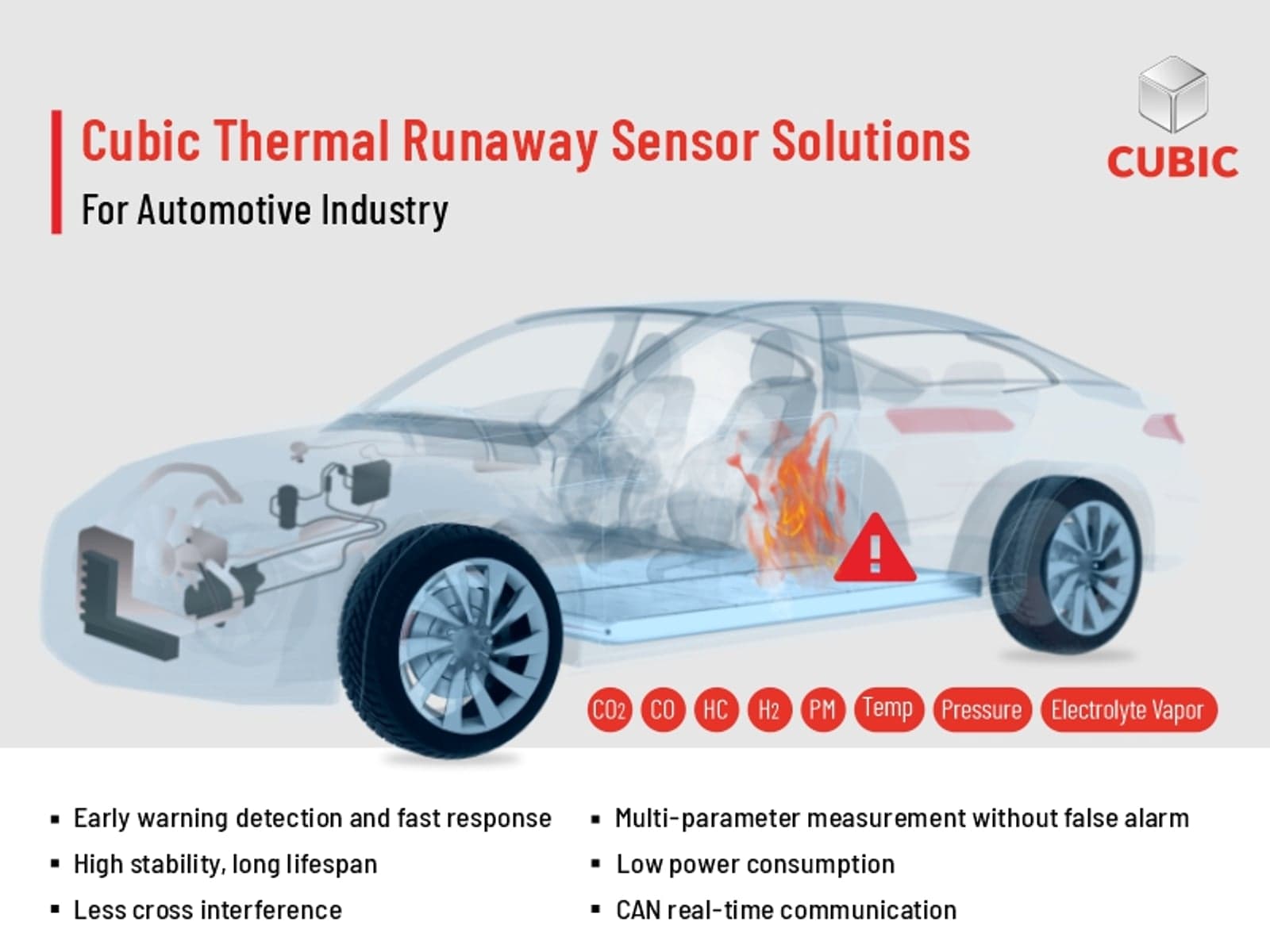
During a thermal runaway event, the battery releases various gases, such as CO2, H2, CO, and electrolyte vapor. Gas sensors can monitor the concentration changes of these gases in real-time and issue early warnings during the early stages of thermal runaway events, providing ample response time for vehicle owners and management systems to prevent accidents. Choosing high-quality gas sensors is not only a responsibility for driving safety but also a contribution to safer social transportation.
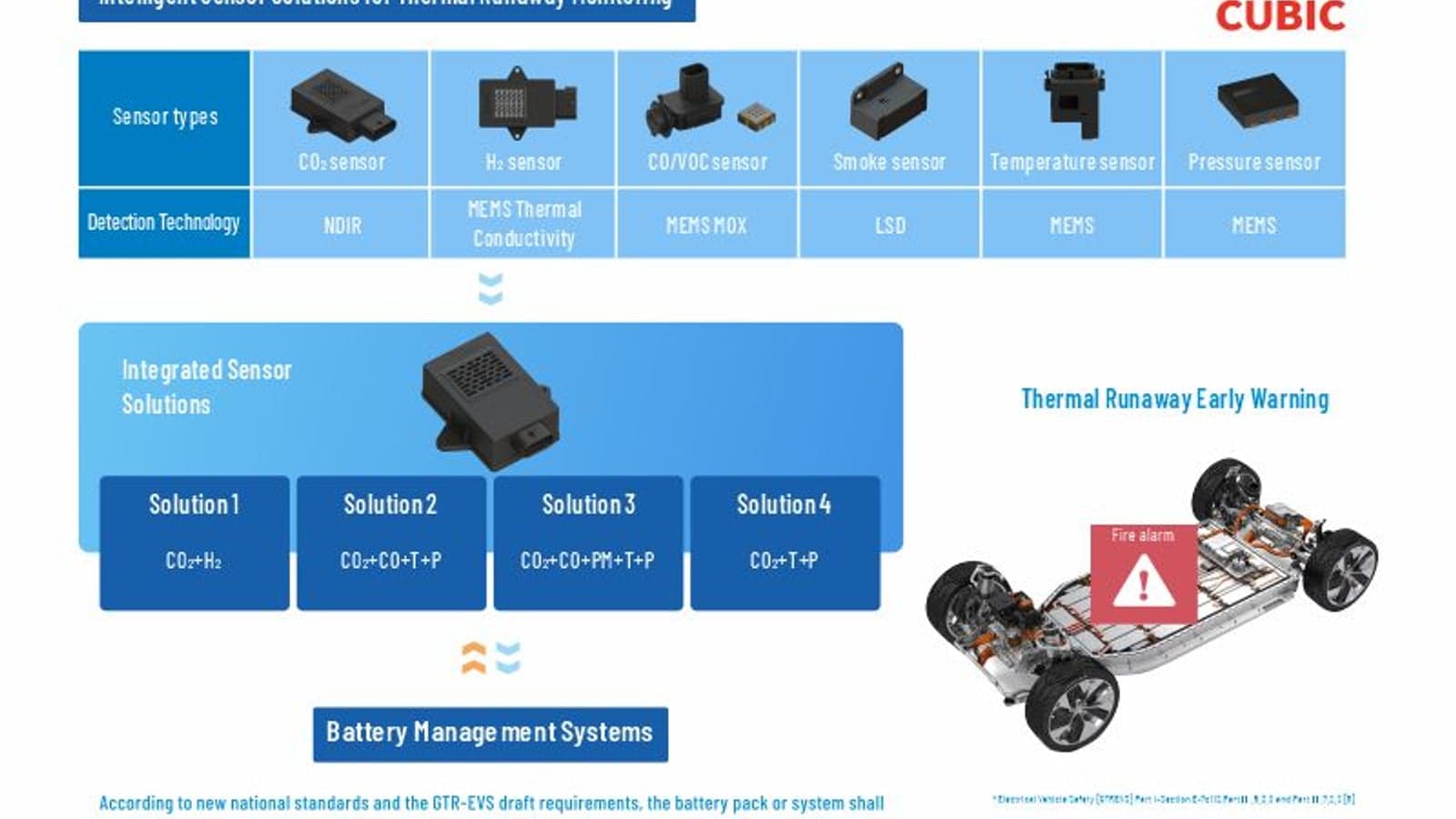
As a leading manufacturer of smart gas sensors and high-end scientific instruments, Cubic has realized the importance of thermal runaway in the automotive industry. With over 20-year accumulation on R&D, Cubic has leveraged its mature gas sensing technology platforms based on NDIR technology, light scattering technology, MEMS thermal conductivity technology and MEMS MOX technology etc., and developed diverse thermal runaway sensor solutions for the automotive industry.
In addition to the aforementioned product features, Cubic is an automotive Tier 1 Supplier with automotive-grade quality management system. By implementing large-scale production and melding self-developed components for integration, Cubic offers meticulous cost control to provide highly cost-effective products to customers.
With long-term dedication in R&D, Cubic will continuously improve the accuracy, efficiency, and reliability of gas sensors to meet the dynamic demands of the automotive industry, fostering safer driving environments and empowering the automotive industry.
Find out more detailed product information and service, or contact [email protected].
Related tags
Latest content
+1
Cubic thermal runaway detection solution for lithium battery energy storage stations
Lithium-ion batteries are currently widely used in the field of energy storage. The high risk of fires and explosions of lithium-ion batteries at energy storage stations has raised significant concerns about the safety of electrochemical energy storage facilities.
- Guest/partner contributor
- 12/12/2024
+1
Cubic Smart Sensor Solution for vehicle in-cabin particulate matter monitoring
In recent years, the issue of in-cabin air quality has gained widespread attention. Following the EU Air Quality Directive (2008/50/EC), member states are striving to reduce particulate matter (PM10 and PM2.5) in the air.
- Guest/partner contributor
- 11/12/2024