Degrees of separation: Patricia Espinosa on 1.5 climate gap
Kelvin Ross
Posted on: 11 February 2026
Former United Nations climate executive secretary still believes in Paris Agreement 1.5 degrees target... with an added dose of pragmatism
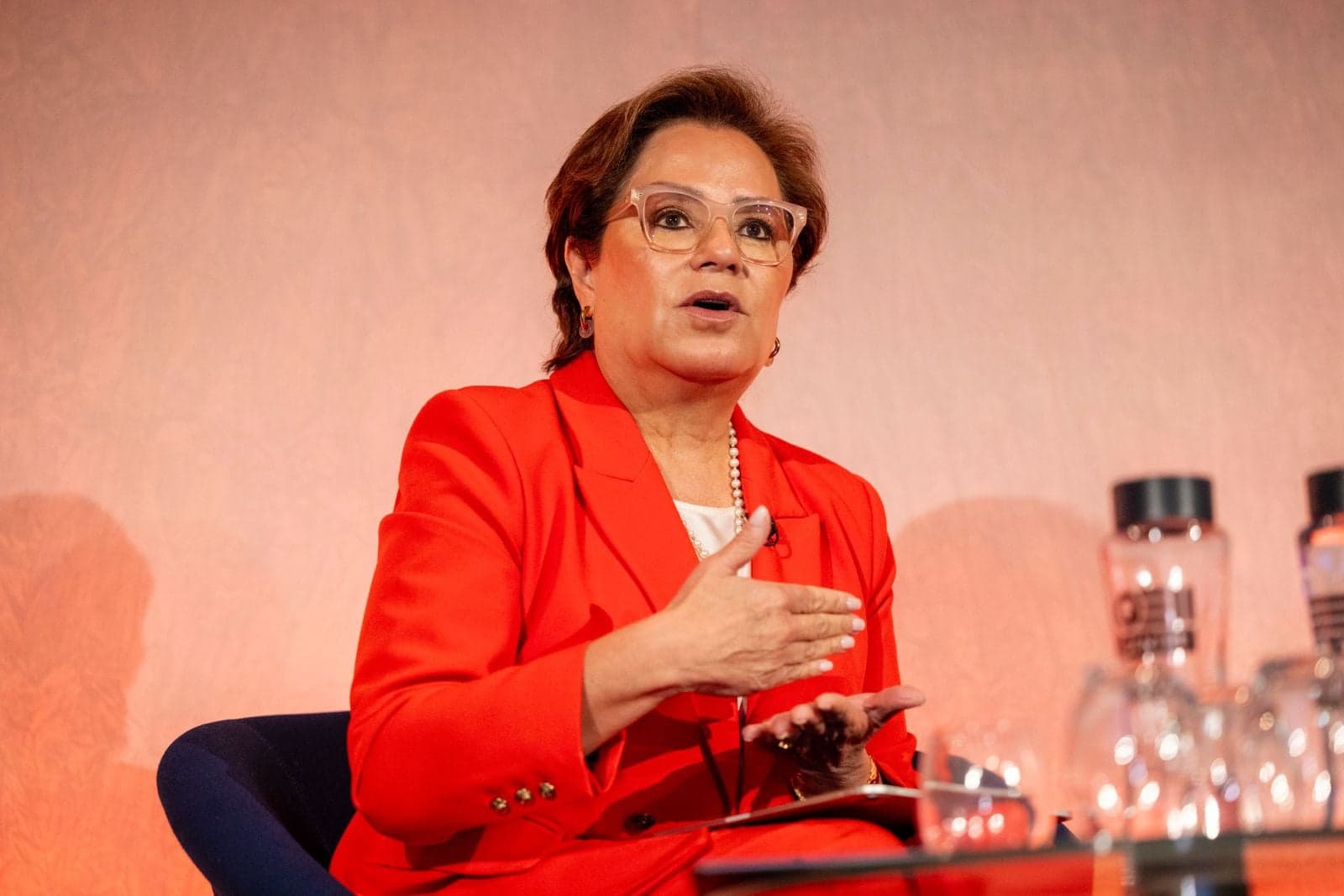
Patricia Espinosa still believes in the Paris Agreement climate target of limiting emissions to 1.5 degrees… so much so that she named her new consultancy onepoint5.
Espinosa was executive secretary of the United Nations Framework Convention on Climate Change from 2016 to 2022 and spent those years taking steps to implement the agreements made at COP21 in Paris in 2015.
The subsequent COP gatherings since 2022 have – against a background of turbulent geopolitics – been criticised for an emphasis on keeping fossil fuels in the energy mix, although the last iteration in Brazil went some way to restoring faith.
And Espinosa firmly believes that 1.5 degrees is still the target to aim for – albeit with some pragmatic adaptation from the thinking that set the goal 10 years ago.
“The 1.5 doesn't mean that every year we have to stay below 1.5,” she said at International Energy Week in London. “Of course we need to strive to do that. We need to keep our goals high.”
More from International Energy Week:
Shell chief urges European rethink of energy strategy
Engie boss MacGregor reveals gender diversity backlash fears
“If we want to lead the world to a situation where everybody thrives, companies have the possibility to prosper and create wealth, and people can have all the opportunities they deserve, we need to have our goals high.
“Yes, the science is telling us that we are in a race against time, but we can still manage to get to the 1.5. And even if we go over the 1.5 degree in warming for some years, it doesn't mean that we won't be able to get it back down by the end of the century.”
Technology needs policies
There are some – most notably Bill Gates – who argue that a global temperature rise to even 3 degrees will not be a catastrophe for humanity, because technology can be relied on to deliver mitigation solutions.
But Espinosa warns of putting all climate action eggs in one basket: “Technology is really very important – the energy sector has driven the well-being of humanity for a very, very long time. But the solutions alone are not helpful if they are not applied in the correct way. Technology has to be accompanied by public policies, by corporate policies, by education to the general public. It is a very, very complex scenario.”
And she believes politicians in COP30 in Brazil in 2025 understood this balance. “At COP30 we saw everybody, except one country [the US] coming together to negotiate, to look for ways of making progress in the agenda.”
The action space
That was the in the negotiation arena: she says progress in “the action space” was even more productive. “We had the participation of private sectors, civil society, indigenous peoples, academia, and it was probably more lively than ever. And in a way, I think COP30 was the moment where the conference became a vehicle for implementation, rather than negotiation.”
However, Espinosa conceded that the current geopolitical climate meant that the energy transition would be more disorderly than she would want it to be. And she stressed that the energy transition was now plural, not singular.
“It's not one transition or one style of transition. There is no one recipe on how to do the transition. It has to be adjusted to the realities of the countries, the companies and the people.”
WEC chief Wilkinson redefines and reclaims the phrase ‘energy transition’