Engie boss MacGregor reveals gender diversity backlash fears
Kelvin Ross
Posted on: 10 February 2026
Chief executive of French energy company admits her concerns arose following male-dominated event at World Economic Forum
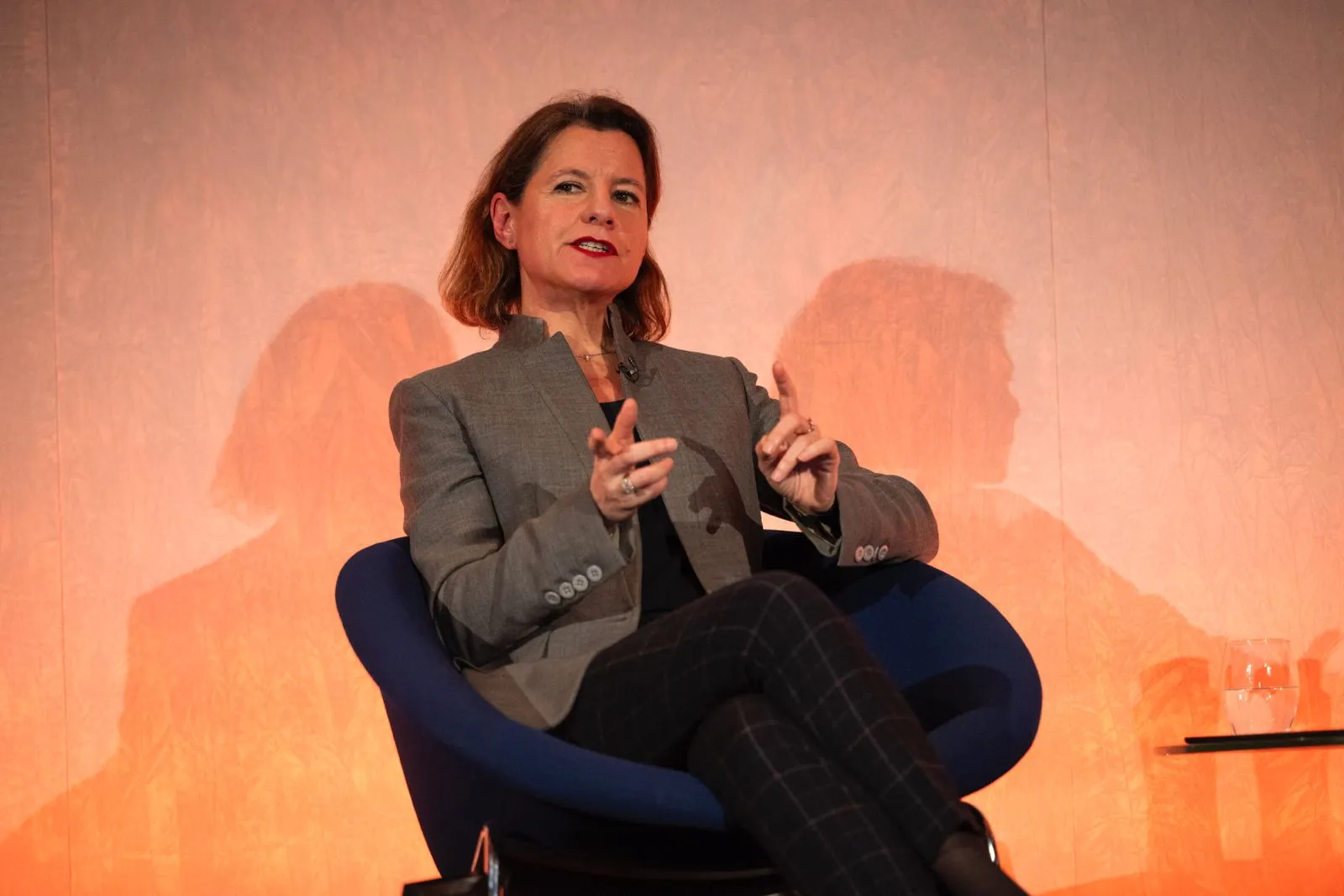
Catherine MacGregor, the chief executive of French energy company Engie, has revealed that she is concerned about a backlash against diversity in the energy sector.
She voiced her concerns today at International Energy Week in London and explained that they crystallised for her during the World Economic Forum last month.
During the Davos talks, MacGregor was invited to a CEO-only event – and found herself to be the only woman in a room of 25 people.
“In 2026 – that’s odd, right?” she asked the audience. “It’s odd that it still happens. I felt going out of that room that we cannot let go of this issue.”
She admitted that “there is maybe something in the air. I'm worried about it.”
She said she had championed gender diversity “for a long time… and there is no going backwards”.
In the front row of the audience at International Energy Week was Miya Paolucci, Engie’s chief executive in the UK, and MacGregor said she was “very proud of all the great ladies we have and I will do everything I can to continue to support them”.
She added that she was “very happy” to see the announcement last month from BP revealing that its new chief executive would be a woman: Meg O’Neill, previously CEO of Woodside Energy, will take up the role in April.
In 2026 – that’s odd, right? I felt going out of that room that we cannot let go of this issue.
MacGregor worked in the oil and gas sector for 23 years with Schlumberger and moved to become president of Paris-headquartered Technip bEnergies before becoming chief executive of Engie in 2021, succeeding Isabelle Kocher – who herself had, for some time, been the only female chief executive of a company listed on the French stock index.
Turning the to another type of diversity – that of technologies – MacGregor talked about the potential of both renewables and gas… and stressed the need for both in the energy mix.
On renewables, she highlighted the financial close agreement Engie announced in January for the Khazna Solar project, a massive 1.5 GW PV plant that is the biggest yet for Engie anywhere in the world.
'No world without molecules'
After praising the UAE for what she said was a clear and long-term energy policy – “the beauty of having a country that sets goals and stick to it” – she said while the project size was enormous, “the nice thing about renewables is that the complexity of the project is not huge”.
“Once you start construction, the delivery is quite short and in general is on time… at least at Engie,” she added with a smile.
And on gas, she affirmed: “Honestly, we don't see a low carbon world without molecules remaining very important in the mix.
“You can do a lot on electrification, but there will continue to be gas in the system. That's a strong conviction of ours, and I think it's well shared. And so the key becomes to over time have a decarbonised molecule.”
Exclusive women in energy content:
A mission to place women at the heart of Ukraine's solar future
'No meaningful progress' for women in renewables this decade says IRENA
And for this she hailed biomethane as “beautiful, because unlike hydrogen, which needs much more investment in infrastructure, biomethane can be used directly.
“We believe that biomethane is a fantastic molecule to be developed to its full potential, and that potential depends from one country to another. In France, it could be up to 15 to 20 per cent by 2030.
“When you think about security of supply and all the imports that you need on natural gas, it's just a no-brainer for any country to make sure that you have a portion of the gas that you consume that is produced locally. For us, frankly, it just shows that there will be molecules for a long, long time.”
Women declare engineering is the way to go
Monica Collings on why diversity matters for energy sector resilience