E-mobility deployment and its impact on European transmission and distribution grids
Guest/partner contributor
Posted on: 24 February 2023
ETIP SNET's white paper 'E-mobility deployment and impact on European Transmission and Distribution grids' presents an analysis of the impact on energy systems.

The energy and transport sectors will face important challenges in the next years as decarbonisation and pollution reductions are no longer optional, writes Santiago Gallego.
New technologies and solutions must be deployed to reach the ambitious targets set by national and European policies, especially the European Green Deal.
In this context, electric mobility constitutes a crucial building block in future energy systems. The electric vehicle charging process represents the tangible interface between the transport and energy sectors.
Leaving the charging process uncontrolled can result in significant challenges for the power system, such as peak power demand due to cumulative effects in specific periods. In contrast, managing the charging process in terms of time scheduling and power profile will not only limit the potential challenges but also open new opportunities. This can be achieved by time scheduling and power profile management or through market-based mechanisms.
The uptake of electro-mobility, if efficiently managed, will be the crucial element for providing a new flexibility resource for System Operators (SOs) and, thus, guaranteeing the successful development of a more sustainable transport. Additionally, several opportunities exist to profitably exploit EV charging, each having different aims and beneficiaries, and stacking them is possible to maximise the benefits.
The recently published ETIP SNET’s White Paper, E-mobility deployment and impact on European Transmission and Distribution grids, presents an integrated analysis to identify the most relevant impacts on current energy systems. The publication analyses the different elements and their interactions: perspectives of Distribution System Operators (DSOs), Transmission System Operators (TSOs) and users, technological and regulatory state of the art, and the relevant enablers, such as technological advancements and interoperability.
It also describes the main findings and conclusions of the ETIP SNET regarding technical challenges, as well as innovation and regulatory barriers for the deployment of electromobility from a system operator perspective.
E-mobility deployment impact on European grids: Key premises of the paper
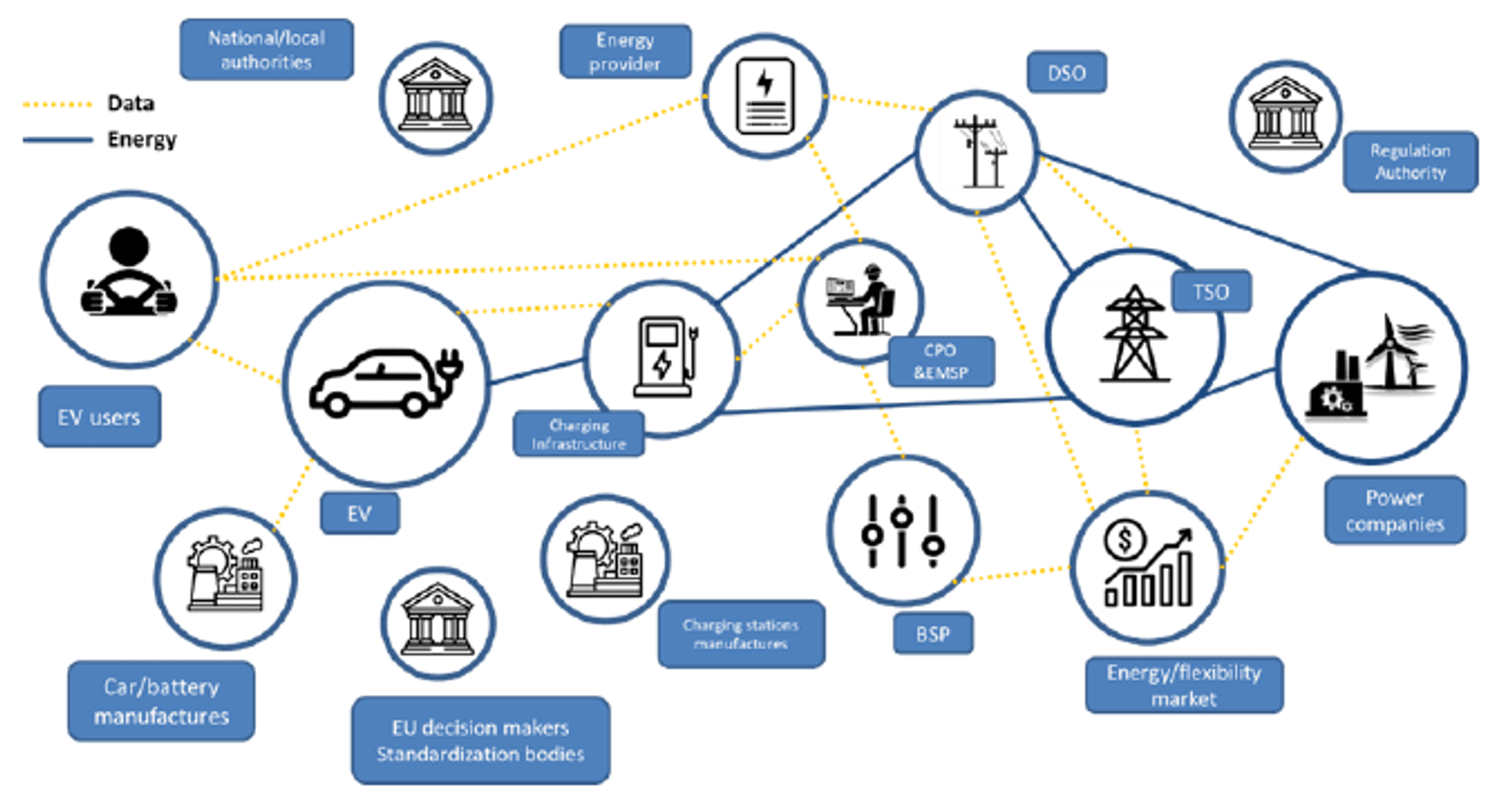
The use of electricity for mobility is particularly relevant for the future energy system and its integration with the transport sector. This new ecosystem (Figure 1) is composed of several relevant actors, such as the users, manufacturers, charging operators, system operators, decision-makers and research bodies. All of them are involved and interrelated in different ways but still keep their own priorities and needs.
To avoid the risk of missing multiple opportunities, the paper presents an integrated analysis to identify the most relevant challenges based on the following premises:
- Promote coordinated planning for charging - All the relevant actors should be included in the planning and development process for the deployment of EV charging infrastructure, especially system operators preparing the networks ahead of need.
- Enable a new interactive system focused on consumer needs by further enhancing the participation of all agents, facilitating competition and maximising benefits by unlocking the potential of EV charging. Also, improving cooperation through the defined roles and developing the proper modelling tools.
- Manage the charging process by promoting additional and valuable flexible resources necessary for secure and efficient grid operation, facilitating a smart charging approach, thus smoothing peaks in the load curve.
- Explore new market structures, rules and regulatory frameworks for power grids and for the whole energy ecosystem to implement grid tariffs and power price schemes, launching ambitious deployments for EV charging.
- Deploy electromobility enablers like smart metering, efficient communication capabilities and the adoption of common standards to guarantee the interoperability of charging networks and data, as well as effective data management and the setting up of a value proposition for the users.
- Describe a holistic view and architecture for effective integration of EV charging infrastructure into the power grid, enabling flexible operation and coordinated planning of charging stations.
- Enhance comparability of the different realities without neglecting commonalities - Additionally, and taking into account the diverse regulatory starting points across EU member states and customers’ experience with different tariff schemes, a higher degree of comparability of the different experiences would be extremely useful, but it should not too straightforwardly neglect commonalities as well.
How to put the pieces together?
Based on the key concepts above, the result of the discussion provided some important findings that can be summarised in very concrete messages:
Firstly, the interactions between the transport and energy sectors and the consideration of them as a part of a whole ecosystem can help improve the future developments of electric mobility regarding its impact on electricity grids through the definition of planning scenarios. Charging infrastructure planning should consider transport, urban planning, private household buildings and energy system needs.
The charging behaviour of EV users and configuration/characteristics of the charging infrastructure will have an impact both on transmission and distribution grids, as well as on the power system as a whole. Hence, a synergic and coordinated approach should be adopted. Moreover, by coupling the user’s parking need with the charging need, the charging process can become a new, cost-effective resource of flexibility.
For this reason, improved modelling should be adopted to perform robust simulations of grids’ impact and cross-sector optimisations by means of new models and algorithms as well as what-if and sensitivities analysis.
Quantitative parametric and probabilistic models should assess the impact of progressive massive EV penetration on the electricity system, including modifications of hourly/weekly/seasonal load profiles, conditions for energy adequacy (primary energy supply) and power adequacy (grid congestions/reinforcements).
Secondly, smart management of the charging process should also be pursued as a crucial solution to limit the need for additional peak capacity when renewable production is scarce and prevent grid overloads (especially at the local level). It also may avoid, limit or postpone grid reinforcement costs and enable new opportunities for providing services to the power system. Smart charging and V2G can solve peak power issues, increase renewables penetration and provide flexibility services. For grid operators, they will be a valuable source of flexibility, complementing others such as traditional demand response.
Thirdly, the roles and responsibilities of the different actors involved in electric mobility should be clarified. A uniform and homogeneous framework should be settled at the European level, able to include all the relevant actors with a cross-sectoral approach to deliver consumer-oriented services. Electricity grid operators will play an enabling role in fostering competition and unlocking the potential of flexibility from EVs.
Describe a holistic view and architecture for effective integration of EV charging infrastructure into the power grid, enabling flexible operation and coordinated planning of charging stations. Enhance comparability of the different realities without neglecting commonalities Additionally, and taking into account the diverse regulatory starting points across EU member states and customers’ experience with different tariff schemes, a higher degree of comparability of the different experiences would be extremely useful, but it should not too straightforwardly neglect commonalities as well.
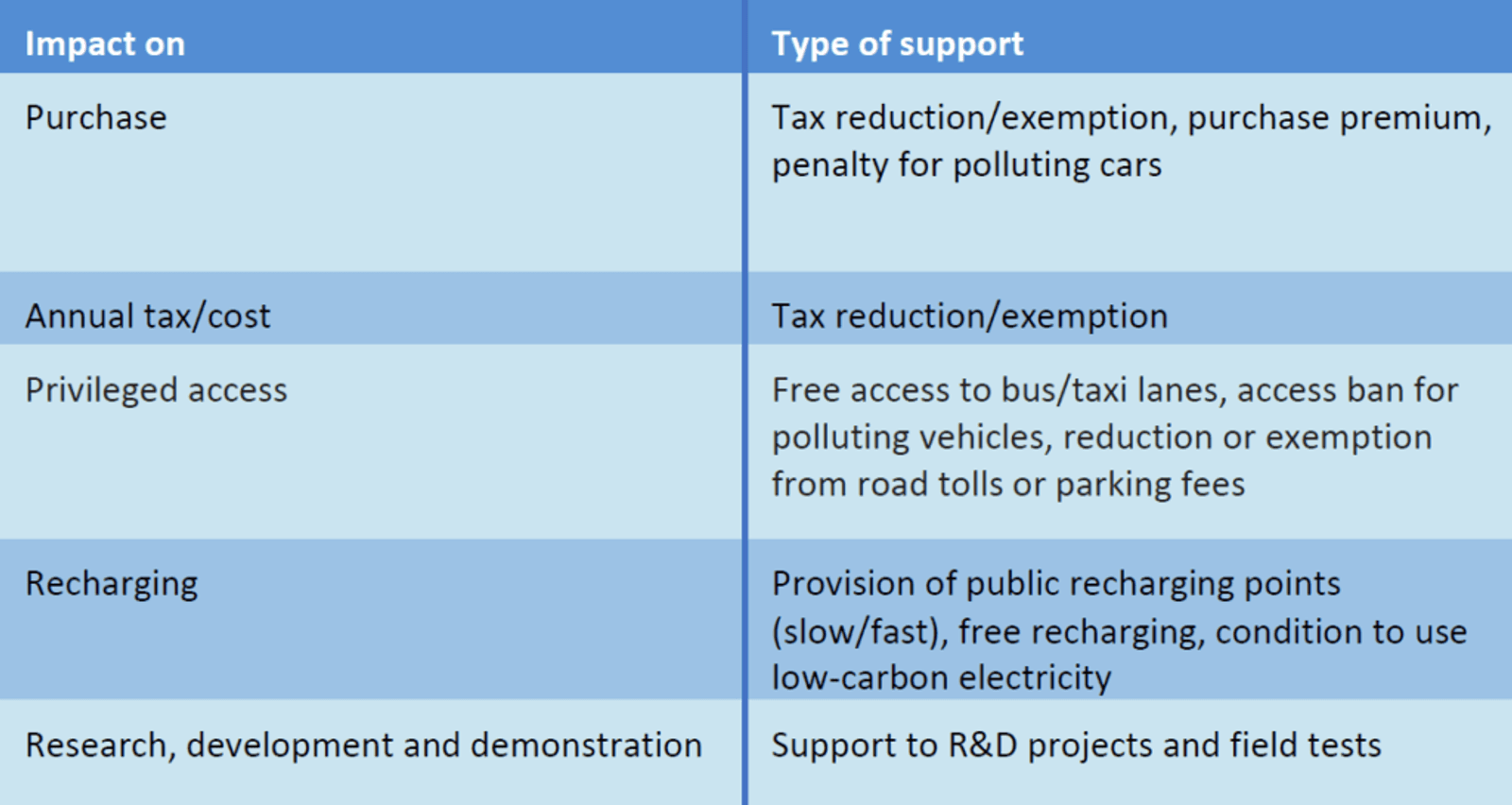
Finally, a proper regulatory framework should enable new forms of participation in energy and flexibility markets. Current regulations allow only the partial adoption of smart charging schemes and represent an obstacle to introducing new flexibility schemes with new actors(Table 1). Technical and dimensional requirements for market access are, indeed, too demanding to allow EV fleet participation.
Conclusions
The main conclusion of this paper is that a proper ecosystem is needed to allow the optimal exploitation of electric vehicles and the opportunities they can offer to electricity networks. The current situation still limits the possibilities offered by smart charging and V2G technologies, which have to be fostered through coordinated planning and updated regulation.
Therefore, system operators have an important role to play, both directly as grid operators and as facilitators (through market services). In this sense, the most relevant challenges that the electrification of transport poses to SOs are related to the development of innovative methodologies for network planning that can take into account the uncertainties related to the forecast of future load capacity and the location of charging points.
The analysis of uses cases in this paper shows that the implementation of smart grids and the use of data analytics can help identify necessary reinforcements in areas where the electric mobility load is expected to grow faster and, hence, needs to be adequately addressed in the investment plans to avoid overloading the network. In this regard, smart management of the charging process can also significantly reduce network investments in mass adoption scenarios.
Another relevant insight is that the user’s perspective is definitely crucial to understand the whole picture of the integration of electromobility and their direct involvement is the basis upon which to make the charging process a success and their behaviour drives the subsequent impact on the electricity grids and thus the way that system operators have to manage them.
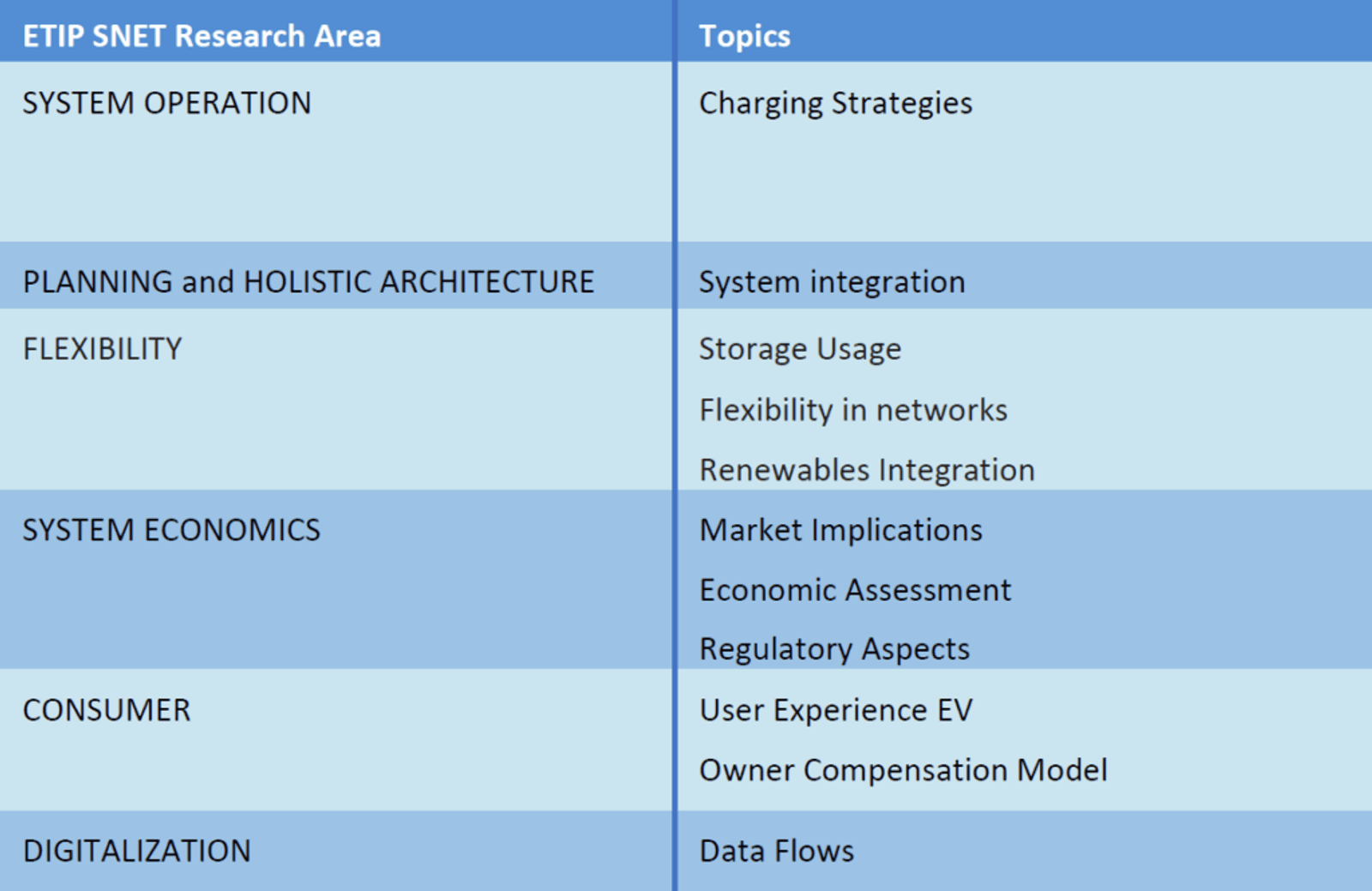
Last but not least, the transformation of road transport to zero-emission mobility must be achieved through world-class European research and innovation and industrial system, ensuring that Europe remains a world leader in innovation, production and services in connection with road transport (see Table 2).
ABOUT THE AUTHOR

Santiago Gallego joined Iberdrola in 1998 as Manager for new supplies in Alicante. Since then, he has accumulated experience as Senior Manager in different areas of the distribution business at Iberdrola. Since 2019 he currently holds the position of Regulation Manager for Europe in the Department of Networks Global Regulation.
Santiago graduated from the Polytechnic University of Valencia in 1997 with a degree in Electrical Engineering and also holds a MSc. in Environmental Sciences. In 2012 he obtained an MBA in Energy Management from the Antonio Nebrija University in Madrid. In the past years, he was also an associate professor at the Miguel Hernandez University in Alicante, where he taught Power Electrical Systems and Electrical Technology.
Related tags
Latest content
+2
Building block of an advanced metering infrastructure - Part 2: The meter data management system
Power utilities are rapidly becoming data-driven organisations. A decentralised energy model, powered by intermittent renewables depends on two-way communication between utilities and all other participants in the energy landscape.
- Guest/partner contributor
- 01/06/2023