Home
/
Energy sovereignty at Europe’s Atlantic arc: The Port of Bilbao’s integrated energy model
Energy sovereignty at Europe’s Atlantic arc: The Port of Bilbao’s integrated energy model
Guest/partner contributor
Posted on: 2 April 2026
The Port of Bilbao is deploying an integrated energy model combining large-scale onshore power supply, renewable generation, storage and energy sharing, writes CEO Ivan Jimenez Aira.
Europe’s energy transition is unfolding under unprecedented geopolitical pressure. The war in Ukraine, global supply chain disruption and structural volatility in energy markets have repositioned energy as a matter of strategic autonomy as much as climate ambition.
Within this context, core network ports are no longer peripheral infrastructure assets — they are system-critical nodes.
The Port of Bilbao, located on the Atlantic Corridor and recognised as a key node in the European TEN-T core network, sits at the intersection of maritime trade, rail freight corridors and industrial value chains. Its transformation under the EU-funded BilbOPS initiative (CEF) therefore carries implications that extend far beyond port boundaries.
The objective is twofold: comply with regulatory drivers such as AFIR and Fit for 55, while structurally reinforcing Europe’s energy sovereignty and industrial resilience. Electrification at a TEN-T core node not only reduces emissions locally; it enhances the stability and competitiveness of the European transport system as a whole.
BilbOPS methodology
The Bilbao energy model is built on a system-integration logic rather than isolated infrastructure deployment. It rests on four mutually reinforcing pillars.
Onshore power supply as structural electrification backbone
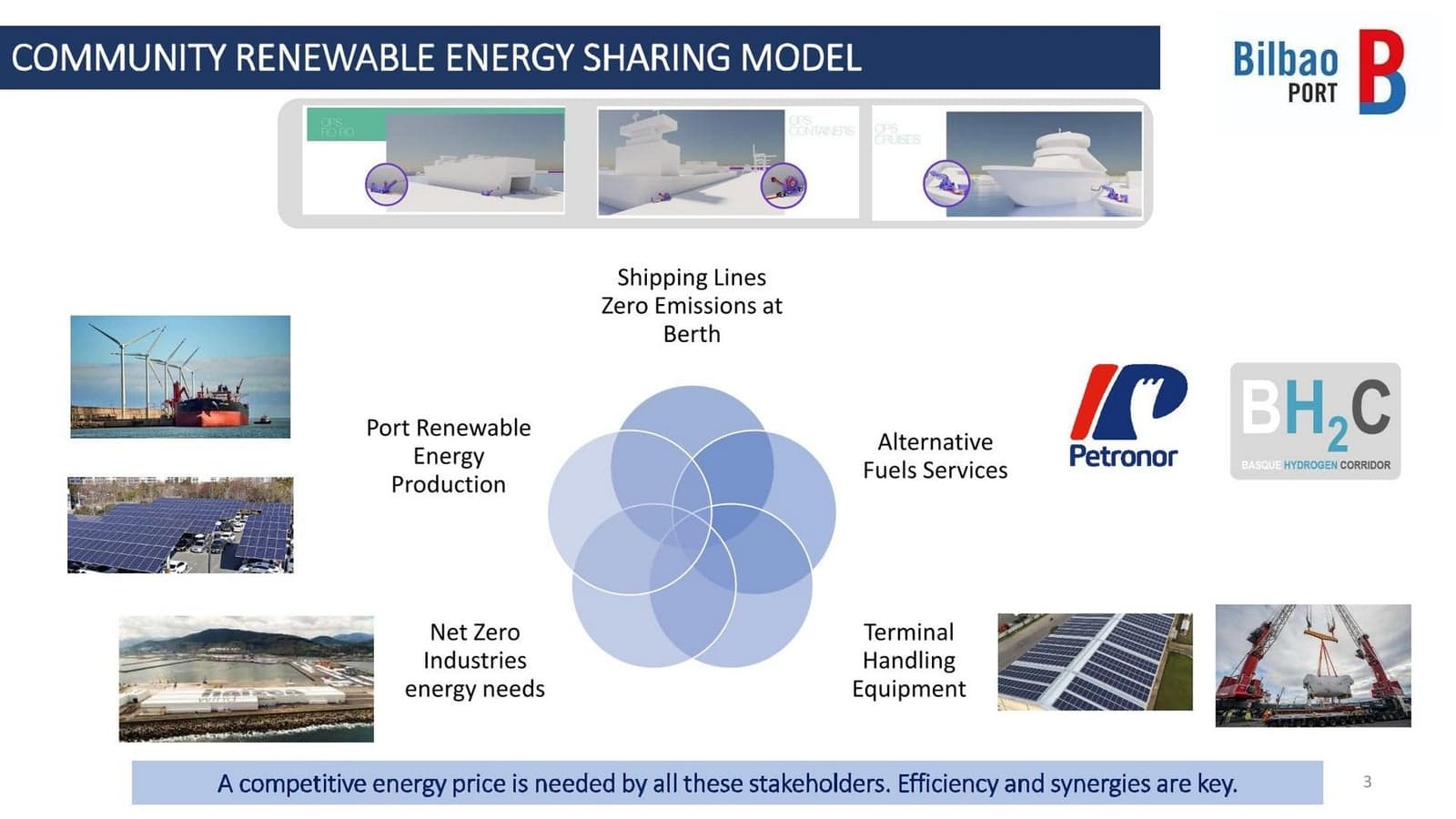
The port is deploying 11 onshore power supply connection points across container, Ro-Ro, Ro-Pax and cruise terminals. Installed electrical capacity will rise from 30MW to 60MW by 2026, with a roadmap towards 175MW by 2030.
Onshore power supply functions as a demand anchor. By creating predictable, large-scale electricity consumption at berth, it enables the scaling of renewable generation and flexibility assets within a controlled perimeter.
Embedded renewable generation
To prevent simple upstream emission transfer and reduce exposure to wholesale volatility, the port is integrating renewable assets within its own footprint:
- Photovoltaic installations on port buildings and terminals;
- Wind generation within port territory;
- Preparatory integration with future hydrogen and e-fuels ecosystems.
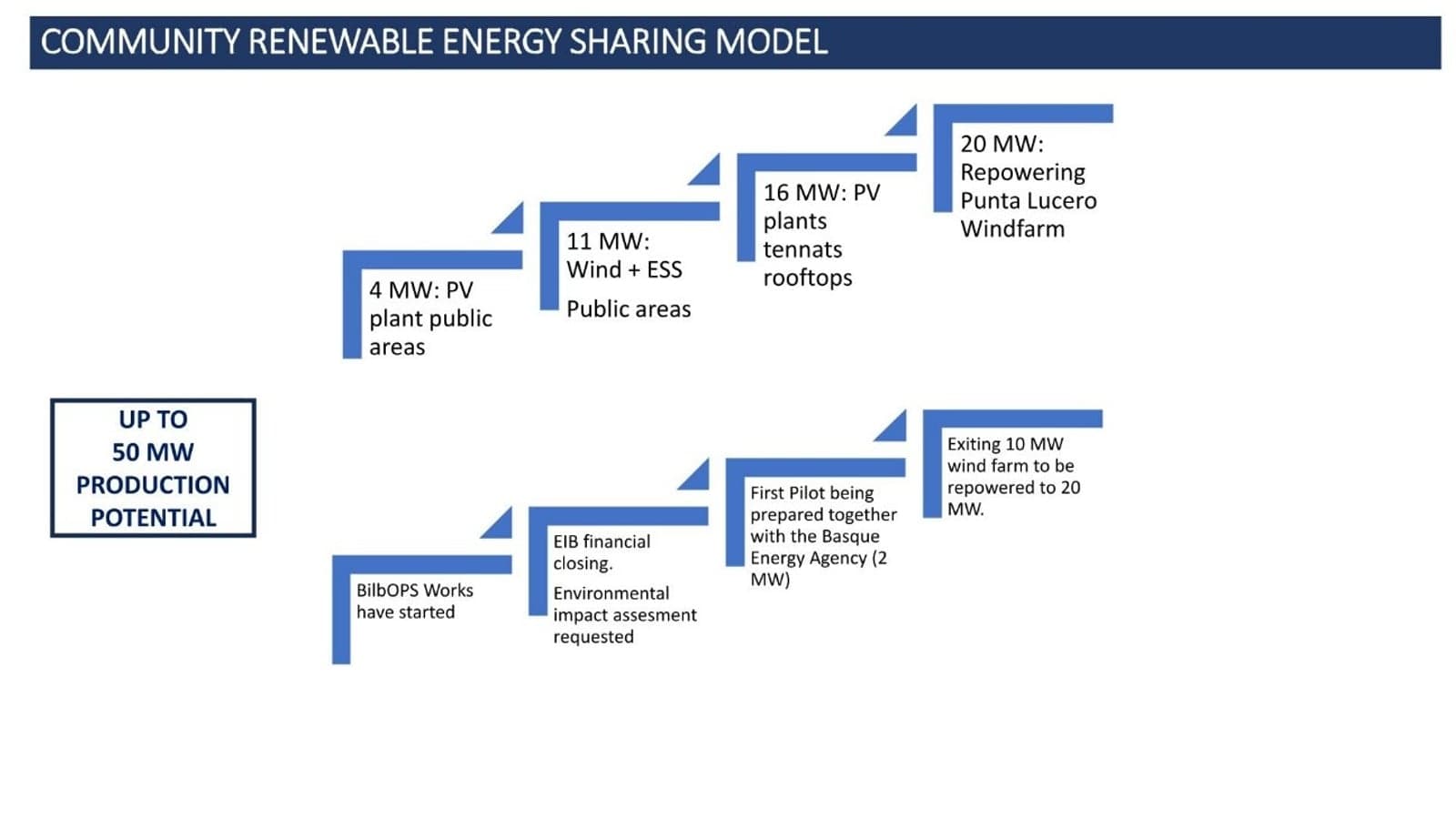
The ambition is to mobilise up to 50MW of renewable capacity, creating a semi-autonomous energy ecosystem within the port perimeter. This contributes directly to the EU’s REPowerEU objectives by reducing dependence on imported fossil fuels and congested transmission corridors.
Storage and flexibility management
Battery energy storage systems are incorporated to smooth peak loads caused by simultaneous vessel connections and industrial demand. Storage provides grid stability services, enables temporal optimisation between renewable production and onshore power supply consumption and mitigates infrastructure bottlenecks.
Flexibility is particularly critical in Core Network ports, where electrification, rail expansion and industrial decarbonisation converge simultaneously.
Community energy and governance frameworks
The model explores closed distribution systems, shared self-consumption and energy sharing schemes among port stakeholders. Transparent tariff mechanisms and digital monitoring ensure regulatory compliance while delivering cost predictability for shipping lines and terminal operators.
This governance innovation transforms the port from a passive energy consumer into a coordinated energy community aligned with EU market reform principles.
Results and discussion
The staged expansion anticipates a sixfold increase in port electricity demand by 2030. Planning at this scale reduces the risk of stranded assets and positions Bilbao ahead of AFIR compliance deadlines.
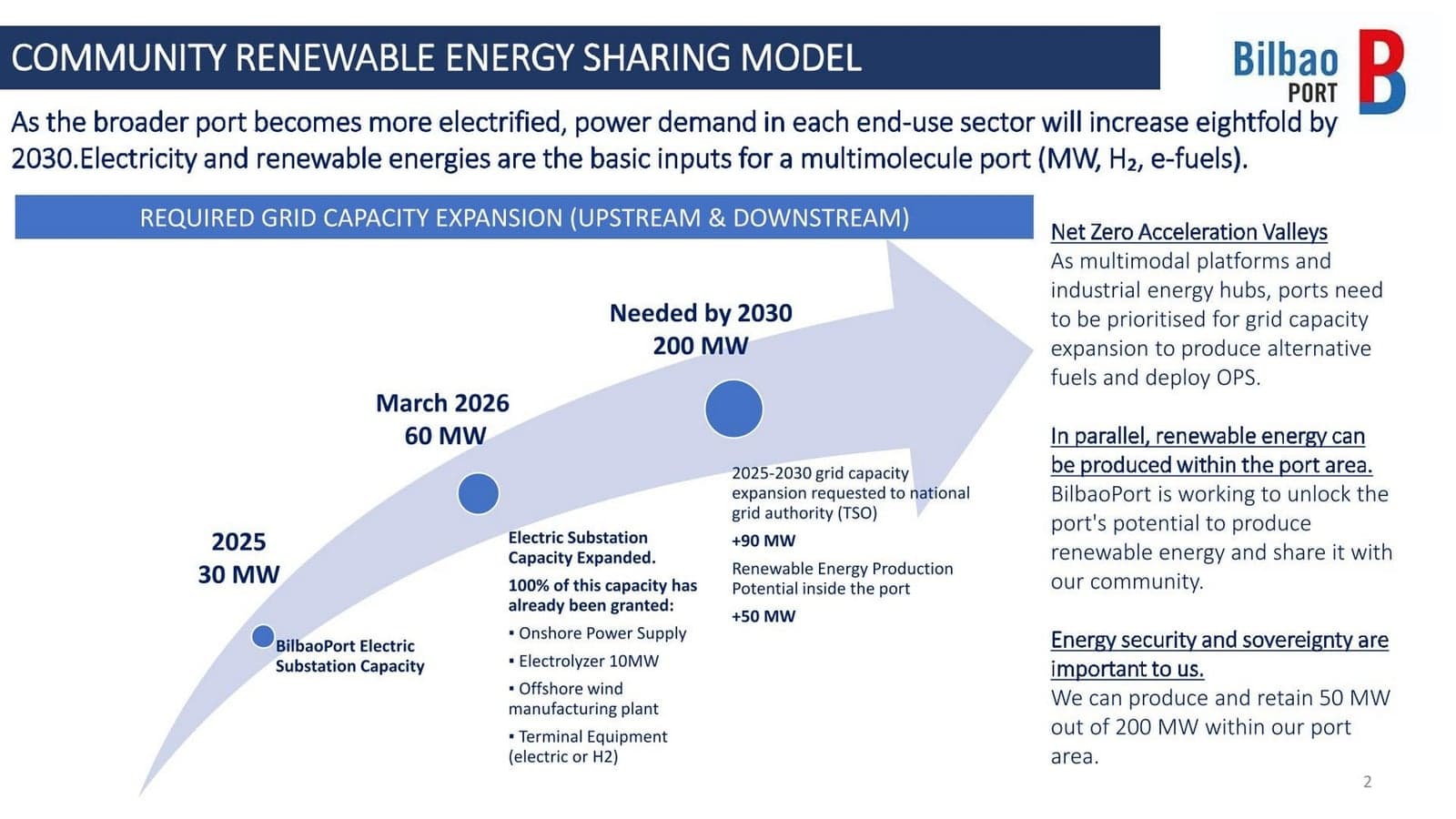
The integration of demand, generation and flexibility creates a resilient micro-ecosystem embedded within the broader European grid.
Strategic implications
Decarbonisation with competitiveness
Onshore power supply significantly reduces CO₂ emissions and eliminates local pollutants at berth. However, the strategic value lies in price stability and predictability for maritime operators facing EU ETS and FuelEU maritime obligations. Decarbonisation becomes economically structured rather than purely regulatory.
Energy sovereignty at a TEN-T core node
As a core network port, Bilbao aggregates Atlantic trade flows, industrial consumption and multimodal connectivity. Electrifying such a node multiplies systemic impact. The capacity to generate and retain renewable energy within the port perimeter enhances resilience against geopolitical shocks and energy market volatility.
Alignment with European strategic frameworks
The model operationalises:
- AFIR shore power requirements;
- Fit for 55 decarbonisation targets;
- REPowerEU energy independence goals;
- TEN-T corridor resilience objectives;
- The EU Industrial Deal’s competitiveness agenda.
In doing so, Bilbao demonstrates how EU policy frameworks translate into tangible infrastructure at strategic nodes.
Geopolitical relevance of the Atlantic arc
The Atlantic corridor is regaining importance amid transatlantic trade shifts, offshore wind expansion and emerging hydrogen routes. Strengthening energy infrastructure at Bilbao reinforces Europe’s western maritime gateway, enhancing diversification capacity and industrial continuity.
Conclusion
The Port of Bilbao’s energy transformation illustrates a broader structural evolution: TEN-T core ports are becoming integrated energy hubs central to Europe’s climate neutrality and geopolitical resilience.
By coupling onshore power supply deployment with embedded renewables, storage systems and community-based energy governance, Bilbao strengthens sovereignty while accelerating decarbonisation. Electrifying a core network node in the Atlantic corridor amplifies impact across trade, industry and transport.
As Europe advances towards 2030 and 2050 targets under conditions of strategic uncertainty, integrated port energy models such as Bilbao’s provide a replicable blueprint for systemic resilience.
References
European Commission, 2021. Regulation (EU) 2021/241 establishing the Recovery and Resilience Facility.
European Commission, 2023. Alternative Fuels Infrastructure Regulation (AFIR).
European Commission, 2022. REPowerEU Plan.
CINEA. Connecting Europe Facility – BilbOPS Project 101079550.
Port of Bilbao. BilbOPS and Energy Model documentation.
About the author
Ivan Jimenez Aira, President and CEO of the Port of Bilbao, contributes to the strategic planning, development and delivery of key and innovative port initiatives. Through his work, he helps reinforce the Port of Bilbao’s position as a resilient, efficient and competitive logistics and energy hub within the European maritime network.
Related tags
Latest content
Partner content
+3
A common language for data centre flexibility
Global demand for digital infrastructure is accelerating rapidly, driven by AI, cloud computing, advanced manufacturing and electrification, with Eamonn Lannoye examining the impact of large-scale loads on power systems.
- Guest/partner contributor
- 18/05/2026