Home
/
EU Energy Projects Podcast: The €100 billion question: Is the Clean Industrial Deal enough?
EU Energy Projects Podcast: The €100 billion question: Is the Clean Industrial Deal enough?
Areti Ntaradimou
Posted on: 13 March 2025
When the European Commission announced its Clean Industrial Deal, accompanied by a hefty €100 billion investment in clean manufacturing, it sounded like a step in the right direction.
When the European Commission announced its Clean Industrial Deal, accompanied by a hefty €100 billion investment in clean manufacturing, it sounded like a step in the right direction.
A major shift in policy, a renewed commitment to research and innovation (R&I), and a move toward energy independence. What’s not to like?
But here’s the catch: is it enough? Can Europe’s industries truly benefit from this deal, or will bureaucracy and slow implementation stifle its potential before it even gets off the ground?
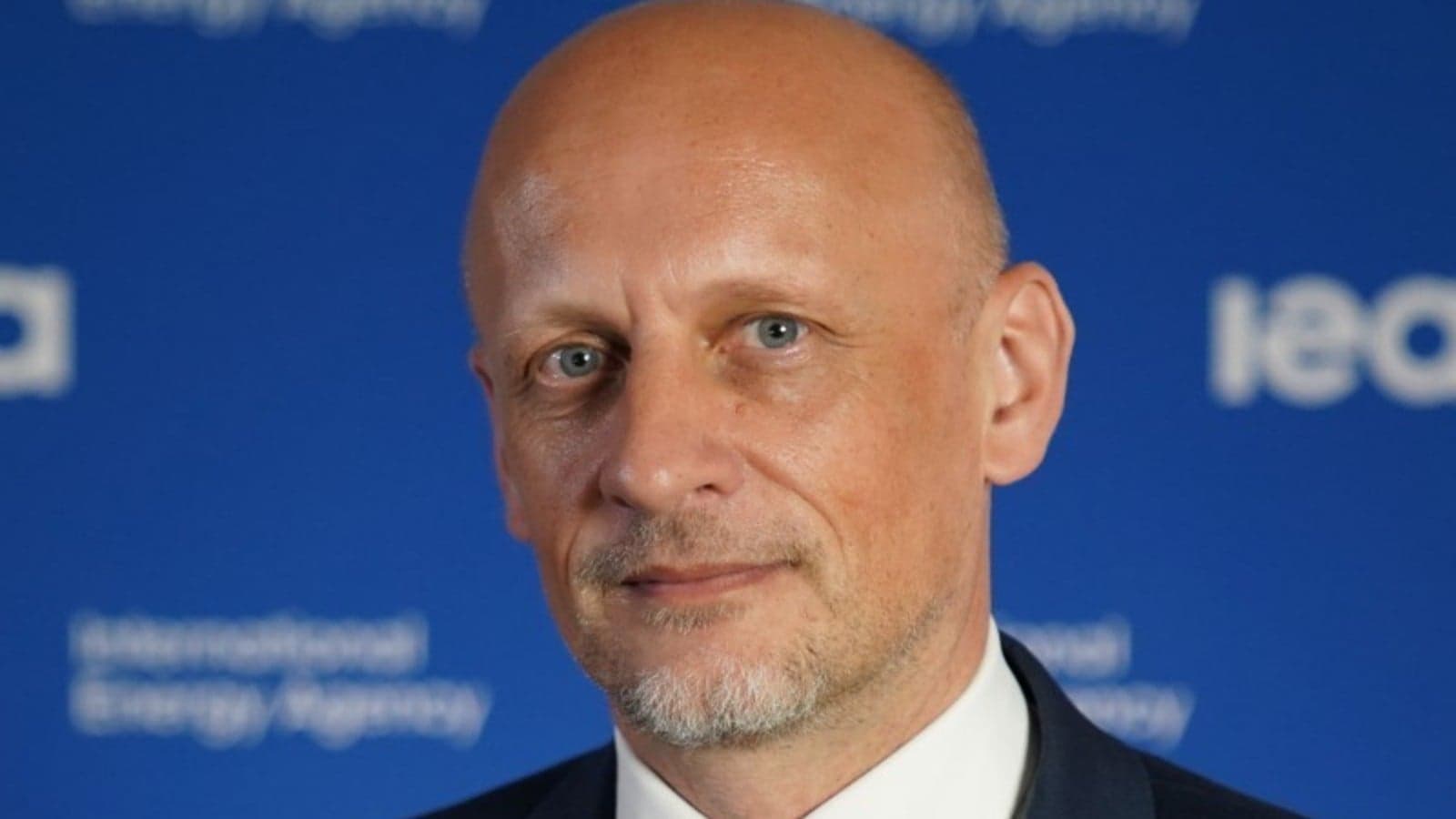
To dive into this complex issue, I sat down with Ivan Matejak, Director for the SET PLAN and Strategic programming at the European Energy Research Alliance (EERA).
Is Europe’s Clean Industrial Deal a game changer or just a drop in the ocean?
It’s no secret that Europe is facing a perfect storm, climate challenges, energy crises and geopolitical tensions, all of which demand bold action. But as Ivan pointed out right away, the proposed funding might be more symbolic than transformational.
"Let’s be realistic," he says. "This €100 billion won’t be enough. And when you factor in other financial commitments, like Europe's rearmament strategy, which also demands another €100 billion, you have to ask: where is all this money going to come from?"
This brings us to a fundamental issue: European energy policy remains largely under national control. While Brussels can push for large-scale initiatives, the real power lies with the member states. And that means countries with stronger economies, like Germany, will find it much easier to leverage state aid than, say, Italy or Belgium, which are restricted by the Maastricht criteria.
So, is the EU setting itself up for a two-speed industrial transition, where wealthier nations benefit while others struggle to keep up?
Bureaucracy vs speed: Will the Clean Industrial Deal deliver?
For industries to see any real impact, the Clean Industrial Deal must cut through the notorious EU red tape. The Commission promises a streamlined permitting process, simplified legislative frameworks, and easier access to funding. But will it really happen?
"We need to stay somewhat optimistic," Ivan says, "but execution will depend entirely on how willing stakeholders are to commit. If member states don’t buy in, it doesn’t matter how ambitious the plan is. It will stall."
And let’s not forget Europe’s historical struggle to attract private investment in R&I. The EU set a target of investing 3% of its GDP in research and innovation, yet it currently lags at 2.2%, far below the 3.5% in the US and even China’s 2.4%. Without private sector engagement, even the best-laid plans risk going nowhere.
Can Europe afford to focus only on low-carbon innovation?
A major sticking point in Europe’s industrial strategy is its unwavering focus on low-carbon technologies. But is this wise when competitors like the United States are still pouring resources into fossil fuels?
"We don’t really have a choice," Ivan asserts. "The 1.5-degree climate target isn’t just a goal – it’s a necessity. Europe is geographically vulnerable, and investing in outdated fossil fuels would only make us weaker in the long run."
Still, Europe needs to play catch-up. China has a 45% cost advantage in energy technology manufacturing, and if 35% of the necessary CO₂ reductions rely on technologies that don’t yet exist, the EU must massively scale up its R&I investments.
But again, where will the money come from?
Defragmenting Europe’s innovation ecosystem
If the EU wants to be a global leader in clean tech, it needs to rethink how it funds and supports innovation. The Draghi Report already pointed out that Europe needs to invest €800 billion annually to remain competitive, a figure that dwarfs the Clean Industrial Deal’s funding.
"Scaling up funding mechanisms and cutting bureaucracy is critical," Ivan says. "We can’t spread our resources too thin. Instead, we need to selectively invest in key technologies where we have a competitive edge."
And that leads to a key question: which technologies should Europe focus on?
Choosing the right battles: Wind, nuclear and hydrogen
Let’s be honest: Europe has already lost the race in solar panel manufacturing. China dominates that market, and trying to catch up now would be a losing game. But there are areas where the EU still holds a strong position.
Wind energy is one of them. Europe has a solid foundation in this sector, and by investing in wind clusters and innovation hubs, it can further strengthen its lead.
Then there’s nuclear energy, which has long been controversial. Germany opted out and now seems to regret it, while France has doubled down on nuclear and is thriving. With new developments in small modular nuclear reactors (SMRs), nuclear could play a crucial role in decarbonising energy-intensive industries.
Listen to the podcast below
The EU Project Podcast is a fortnightly podcast presenting Europe’s key energy projects.
Subscribe and listen to all our episodes.