Home
/
EU taxonomy confirms gas and nuclear are 'sustainable' sparking heated industry reaction
EU taxonomy confirms gas and nuclear are 'sustainable' sparking heated industry reaction
Pamela Largue
Posted on: 4 February 2022
The European Commission has published and adopted its Taxonomy Complementary Climate Delegated Act, labeling gas and nuclear as sustainable.
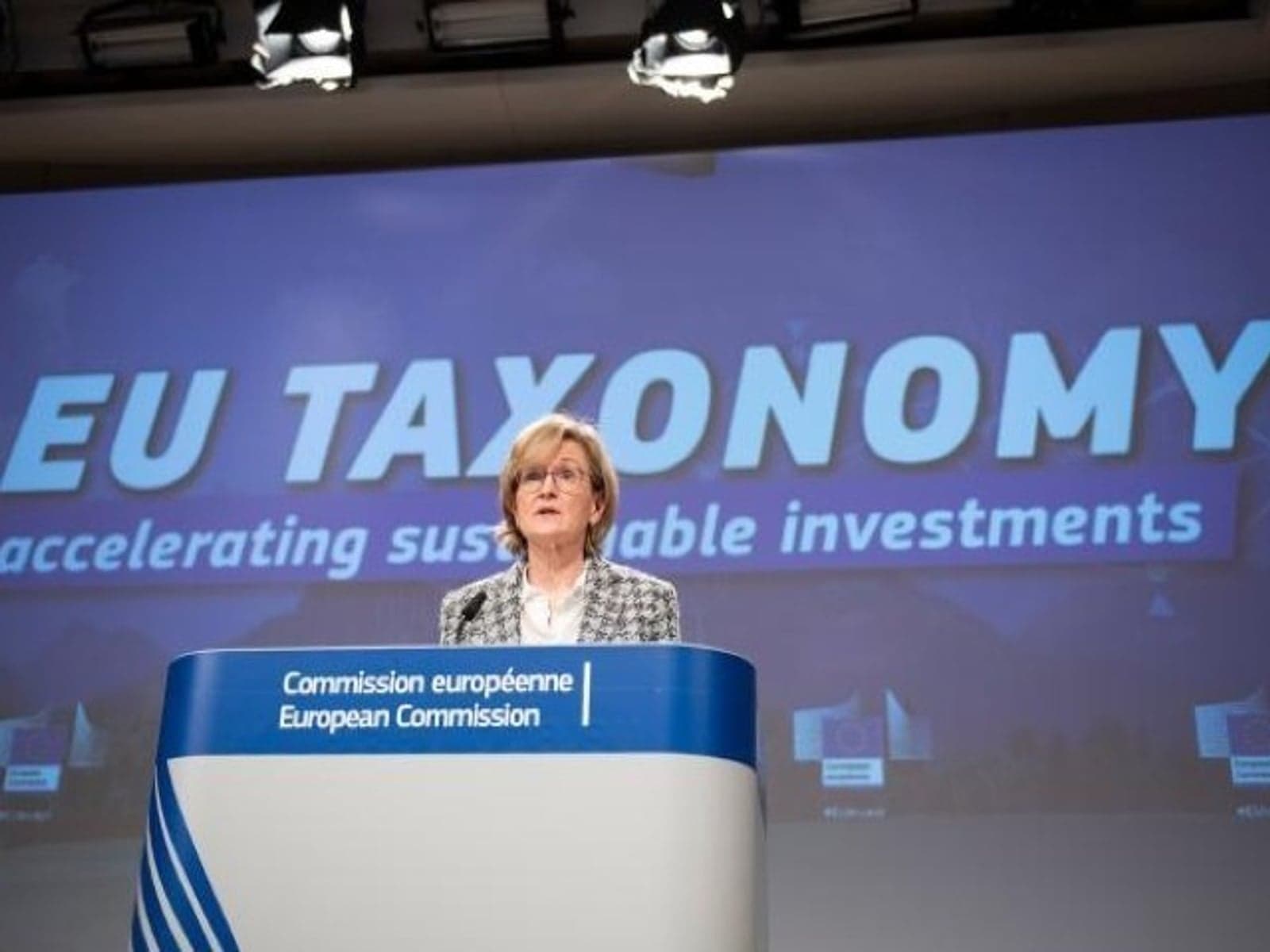
The European Commission has published and adopted its Taxonomy Complementary Climate Delegated Act on climate change mitigation and adaptation, labelling certain gas and nuclear activities as sustainable.
The College of Commissioners reached an agreement on the contents of the Act that were based on draft proposals sent out for consultation just after New Year's Day.
The process and outcome have proved to be controversial in nature. According to the Commission, the new Act should prevent greenwashing and ensure all sustainable energy options are exploited to achieve climate goals, but some state the Commission has achieved the opposite.
According to the EU Commission, the taxonomy is not meant to dictate the energy mix of Member States but rather support the EU in its aspirations to be climate neutral by 2050, by increasing and incentivizing investment in sustainable activities.
Based on that goal, gas and nuclear are no longer excluded and have been officially classified as transitional in nature, which means these activities have emissions below industry average and do not lock in polluting assets or exclude greener alternatives.
The Commission emphasises that the taxonomy aims to draw on all possible avenues to ensure climate objectives are met: "The objective is to step up the transition, by drawing on all possible solutions to help us reach our climate goals.
"Taking account of scientific advice and current technological progress, the Commission considers that there is a role for private investment in gas and nuclear activities in the transition. The gas and nuclear activities selected are in line with the EU's climate and environmental objectives and will allow us to accelerate the shift from more polluting activities, such as coal generation, towards a climate-neutral future, mostly based on renewable energy sources," states the official press release.
Nuclear sector welcomes outcome
Responding to the news and explaining why nuclear power should be included in the EU Taxonomy on Sustainable Finance, John Ahlberg of Karnfull Energi, said: "...because it’s proven to be a key decarbonisation tool, providing 24/7 carbon-free energy. If lobbyists had just stayed out of the picture, and the Commission listened to their own experts as well as the IEA and UNECE it’s pretty obvious it should be included – and not just as a transition tool.
"The Joint Research Center did a great job in analyzing the concerns raised by the TEG around risks and waste management, and their report clearly showed that the do-no-significant-harm (DNSH) issues were no larger for nuclear than for any other included energy sources."
Sama Bilbao y Leon, Director General of World Nuclear Association, responded by saying that access to affordable financing is crucial to minimizing the costs of nuclear projects and the new sustainability label from the European Commission will help with this.
"Given the urgency and the sheer magnitude of the climate challenge, the EU should commit to a technology-neutral financing framework and put in place scientifically rigorous and consistent criteria to optimise the deployment of all proven sustainable and low-carbon technologies, including - of course - nuclear energy," she said on Twitter.
Restrictive criteria for cogeneration operators
Hans Korteweg, Managing Director of COGEN Europe, issued the following response: "We welcome the fact that the European Commission is proposing to include high-efficiency cogeneration using natural gas – and, increasingly, renewable and low carbon gases – in the EU Taxonomy of activities contributing to climate change mitigation and adaptation."
"This sends a positive signal to investors and to policy-makers that they should see cogeneration as an enabling technology for the cost-effective and efficient decarbonisation of our energy system.
"However, we are disappointed to see that the proposed regulation sets restrictive criteria for cogeneration operators in terms of sizing, location and operation, which go beyond ambitious emissions limits, energy efficiency objectives and targets for renewable energy uptake. Moreover, certain criteria are more stringent for cogeneration compared to power-only generation, which is unjustified and inconsistent with putting energy efficiency first."
Related content
Ed’s note: It’s official, nuclear is green
Policy tipping point for green hydrogen predicted in 2022
The importance of a just energy transition explained
Key takeaways from the COP26 summit – Climate Council
"Attempted robbery"
The European unit of climate action group Greenpeace is not convinced that the taxonomy sends a sustainable and climate-friendly message at all and suggests the new taxonomy allows for funds to be funnelled away from more renewable energy options.
Greenpeace EU sustainable finance campaigner Ariadna Rodrigo said: “I’d like to report an attempted robbery, please. Someone is trying to take billions of euro away from renewables and sink them into technologies that either do nothing to fight the climate crisis, like nuclear, or which actively make the problem worse, like fossil gas..."
Valdis Dombrovskis, Executive Vice-President of the European Commission for an Economy that Works for People, emphasised that the taxonomy is not trying to minimise the role of renewables, but rather intends to meet climate targets with all possible tools in the decarbonisation toolkit. “Our mission and obligation is climate neutrality. We need to act now if we are to meet our 2030 and 2050 targets. Today's Delegated Act is about accompanying the EU economy in the energy transition, a just transition, as a bridge towards a green energy system based on renewable energy sources. It will accelerate the private investment we need, especially in this decade. With today's new rules, we are also strengthening transparency and disclosures of information, so that investors make informed decisions, thereby avoiding any greenwashing.”
The European Parliament and Council will have four months to review the document and object if deemed necessary.