Europe Energy Briefs: A push for stronger action on the region's grids
Jonathan Spencer Jones
Posted on: 23 May 2025
The European Commission’s Industry, Research and Energy Committee has put forward proposals for the modernisation of the region’s electricity grids.
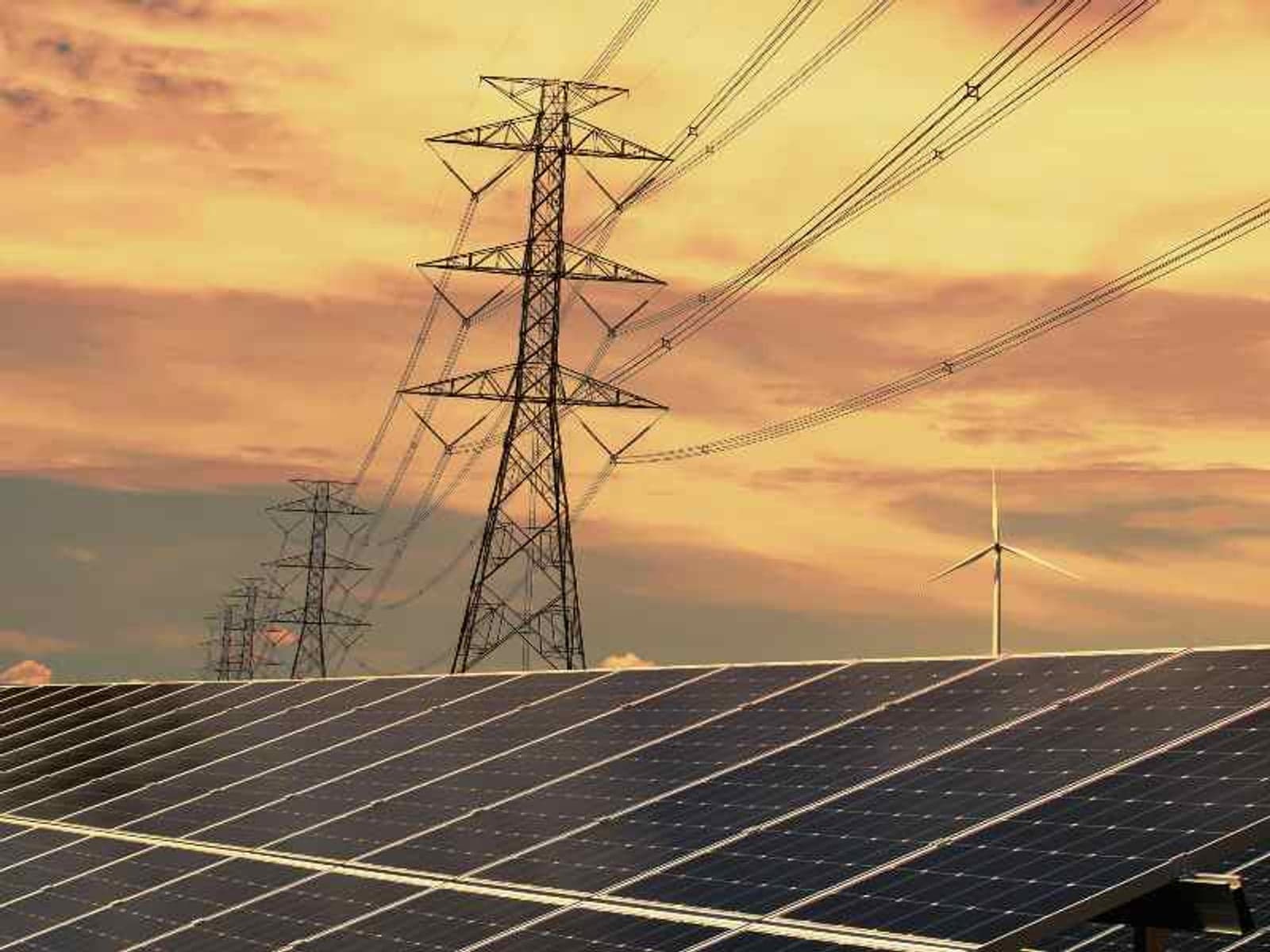
The European Commission’s Industry, Research and Energy Committee has put forward proposals for the modernisation of the region’s electricity grids.
Highlighting the relevance of the grids for the energy transition and the needs for significant investments and infrastructure upgrades, the proposals call for the implementation without delay of the EU grid action plan and other legislation such as the action plan for affordable energy and the market design reform.
In an ‘own initiative report’ INI on Electricity Grids, the committee points to key concerns including ageing infrastructure, investment shortfalls and regulatory complexities that hinder rapid modernisation of grids and the efficient integration of decentralised energy production.
The report calls for clearer and more effective rules and procedures to attract private investment in addition to public funding mechanisms, and to ensure that network tariffs reflect real costs.
Also of interest
AI and GenAI in smart grids – a guide for action
Interconnectivity between EU member states also is important to ensure energy security and reliability, with the completion of European electricity market integration able to deliver savings up to €40 billion ($45 billion) per year.
Thus, there is the need for more cross-border interconnections, with 32GW of cross-border capacity needed by 2030 to meet the 15% interconnection target remaining unaddressed currently.
In this connection the projects of common and mutual interest are noted as powerful tools in the development of the cross-border infrastructure.
To meet the challenge posed by electricity infrastructure modernisation, various innovative solutions, including the adoption of smart grids, digitalisation and grid enhancement technologies, should be considered.
In addition, methodologies and scenarios for anticipating future needs constitute an essential element in ensuring a cost-effective approach to the development of grids.
The report also highlights the importance of public acceptance and public engagement when developing new grid projects and calls on the Commission to develop a set of best practices to be shared among member states.
Commenting on the proposals, lead MEP Austrian Anna Stürgkh from the Renew Europe Group said the Iberian blackout was a painful demonstration of how vulnerable the grids remain.
“It was a reminder that Europe’s energy transition will fail unless we invest just as strategically in infrastructure as in renewables. The blackout did not prove the failure of the energy union – quite the opposite. Thanks to cross-border interconnectors, France was able to step in immediately. Now the Commission must act decisively to prioritise planning and coordination on grids and storage – or we will keep lurching from one crisis to the next."
She added that the committee is sending a clear and strong signal to the Commission to keep a well-financed Connecting Europe Facility for Energy (CEF-E) within the upcoming multi-annual budget proposal and that EU funds managed by member states must also be more available for grid updates.
The report is now subject to a vote by the full House during the 16-19 June 2025 plenary session in Strasbourg.
European grids package
With acceptance, the proposals should feed through to the European grids package promised by the Commission in its Clean Industrial Deal, due to be published in Q1 of 2026, although possibly to be brought forward to Q4 of 2025.
It will consist of both legislative and non legislative actions to simplify the TEN-E Regulation, ensure cross-border integrated planning and delivery of projects, especially on interconnectors, streamline permitting, enhance distribution grid planning, boost digitalisation and innovation and increase visibility of manufacturing supply needs.
Furthermore, the Commission intends to provide guidance on innovative forms of renewables deployment and on grid and storage acceleration areas.
Alongside this the European Investment Bank is due to introduce a 'grids manufacturing package' for the European supply chain, modelled on the wind package, to provide counter-guarantees to manufacturers of grid components, with an indicative amount of €1.5 billion.