Europe’s energy security will only be achieved through energy shifting – EASE
Enlit Editorial Team
Posted on: 16 March 2022
The Russian Invasion of Ukraine has brought the case for clean energy and security of supply to the forefront of the political discussion.
The Russian Invasion of Ukraine has brought the case for clean energy and security of supply to the forefront of the political discussion, according to the European Association for Storage of Energy (EASE).
With the EU importing 90% of its gas consumption, 40% of which originating from Russia, the European Commission is seeking diversification of gas supply as a mean to secure energy independence.
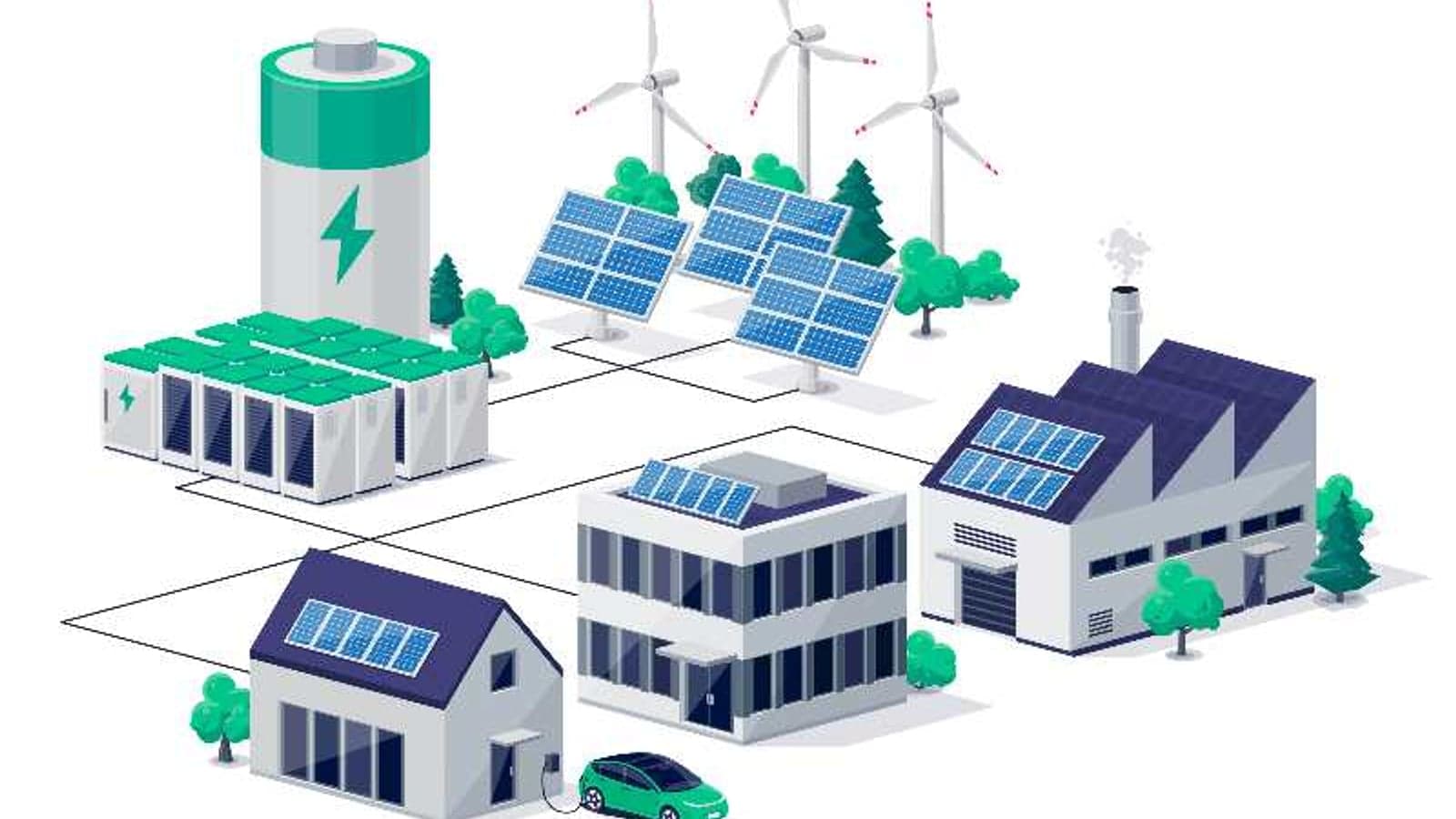
However, it is essential that the diversification does not come with the risk of an extended “lock-in” to fossil fuels. The focus should be on the roll out of renewable energy coupled with energy storage, to provide the necessary energy shifting capabilities and prevent renewable energy curtailment.
The Commission’s tool box on energy prices of October 2021 was correct to list developing Europe’s energy storage capacity as a means to support the evolving renewables share. As the renewable penetration in Europe grows, alongside the decommissioning of coal plants, flexible backup generation becomes ever more critical. Gas plants have stepped in to provide this flexibility today, maintaining Europe’s reliance on Russian gas imports and fossil fuels.
Related content
Kadri Simson backs geothermal to bolster EU energy security
IEA – Cut EU reliance on Russian gas with renewables, nuclear and energy efficiency
Therefore, merely increasing the renewable energy targets does not directly translate into independence from gas imports. On the contrary, gas dependence will still remain in the form of flexibility-providing gas peakers. To counter this, energy shifting through energy storage must be a pillar of an energy secure, decarbonised Europe.
Electricity prices will continue to increase as the need for dispatchable backup generation grows to cover intermittent renewable energy shortfalls. On top of this, renewable energy is being wasted via curtailment, where energy is being produced during periods of excess wind and solar energy, but demand is too low to absorb this production.
Without any means to shift this energy to be used at a later time, Europe is throwing away homegrown green energy, only to pay Gazprom to fill the gap.
Excess energy produced during periods of high winds and sun needs to be stored for days, weeks, and even months – until later required. The diversity that Europe must focus on is the diversification of energy storage technologies, to cover a range of durations, applications and local contexts.
Recent years have seen a more rapid roll-out of energy storage technologies aimed at shorter-duration. But to make certain energy security, long-duration energy storage must also be supported, as they provide back-up generation during periods of low-renewables production without Russian fossil fuels.
But these energy storage technologies are still not properly supported through sound legislation. Market products for energy shifting do not exist; and therefore, funding and investments are often limited. Across Europe, gas peakers still win capacity auctions: even though energy storage solutions are greener and competitive, the rules of the game are not in line with the EU’s energy security and decarbonisation targets.
The parallel crises, humanitarian and climate, must be a wake-up call to policymakers: Europe can become truly energy independent only through the energy transition, harnessing the capabilities of energy shifting through energy storage.
Courtesy of European Association for Storage of Energy