Partner content
FORTESIE Project: Architecture for renovation packages with guarantees
Guest/partner contributor
Posted on: 12 November 2024
The EU-funded FORTESIE Project supports a holistic approach to meeting the EU goals of doubling EU building renovations by 2030.
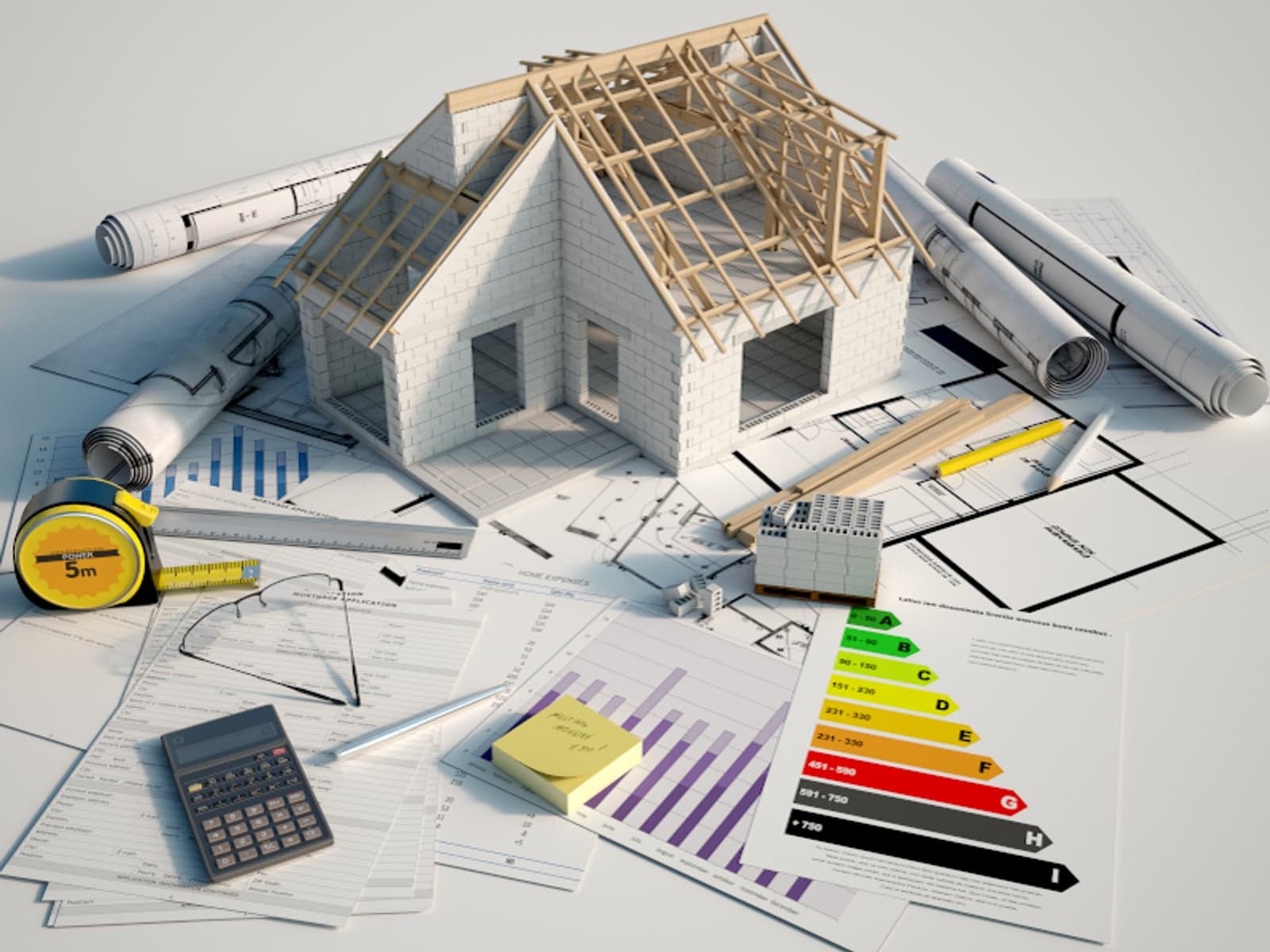
The Renovation Wave aims to double EU building renovations by 2030. The FORTESIE project supports a holistic approach to meet these goals, focusing on the entire building lifecycle and integrating sustainability factors like materials, climate, and social impact.
The built environment significantly impacts energy and resource consumption, accounting for 50% of extracted materials, 30% of water use, 40% of energy use, and 36% of CO2 emissions. Thus, renovations are essential for decarbonisation, economic growth and benefits like lower energy costs and job creation.
The FORTESIE project aims to create innovative renovation packages. FORTESIE aims to create innovative renovation packages with smart guarantees and financing to speed up Europe's building renovation. These packages combine modern materials, technologies and digital tools to improve energy efficiency, reduce CO2 emissions and enhance comfort. They're optimised and tested in real world situations.
An interoperable and extensible architecture incorporating numerous innovative digital technologies serves as a reference framework for integrating various potential technologies in energy services. It addresses challenges related to transparency and trustworthiness by integrating blockchain services to manage energy smart contracts.
Standardisation is achieved by calculating actual and verified building performance improvements using a standardised Measurement and Verification service, compliant with the IPMVP protocol, stored on the blockchain, eliminating any ambiguity in calculations among EPC contractors and tenants.
Find out more about:
EU-Funded energy projects
Empowering homeowners for energy efficiency
Smart buildings
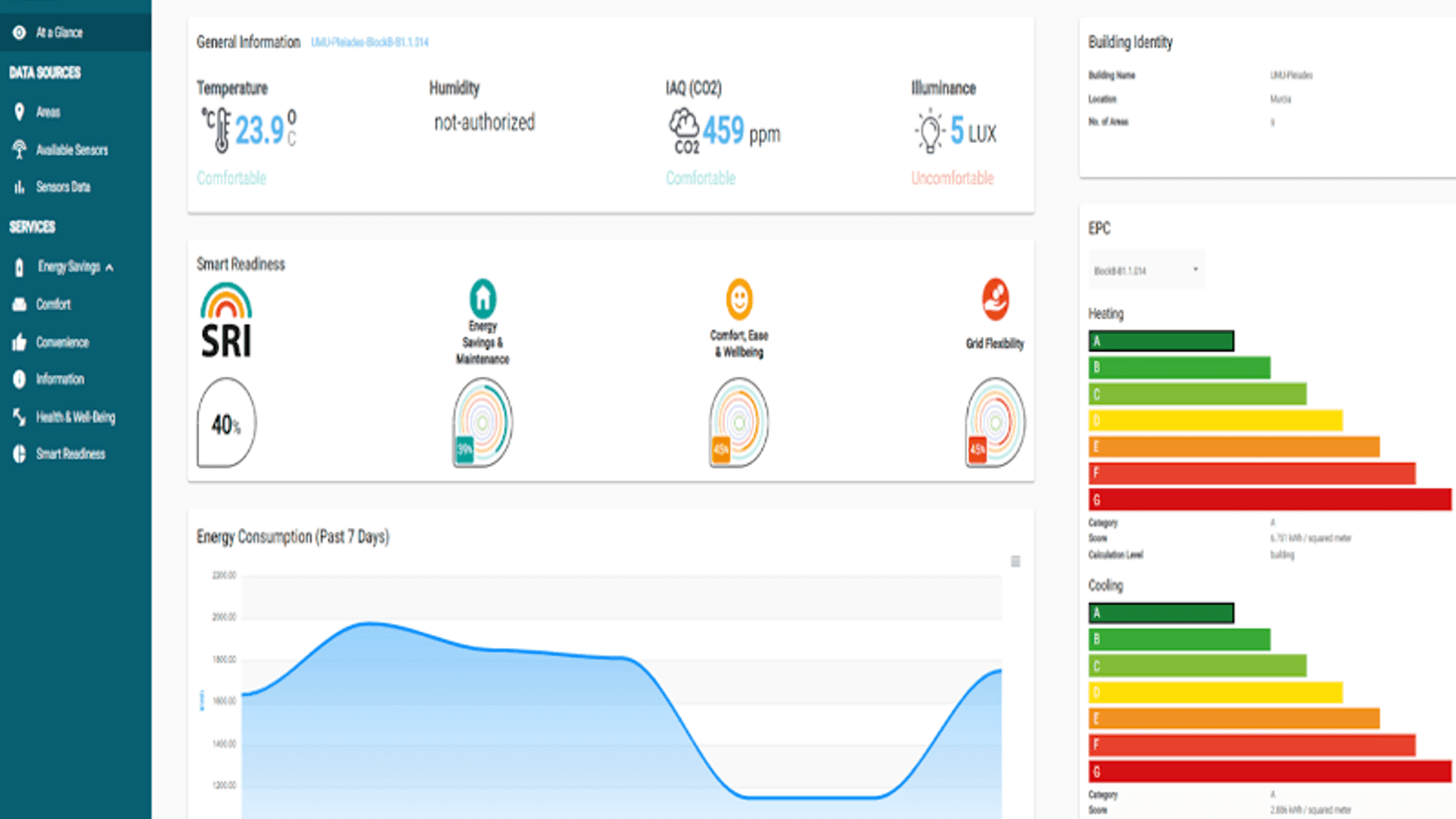
An app compares current building performance to pre-renovation metrics, motivating users to take everyday actions, such as adjusting heating, by highlighting the associated costs and visualizes the terms of EPC and monthly payments, factoring in agreed guarantees and any bonuses or penalties based on energy savings or losses.
The data sovereignty module systematises data capture and homogenises its storage in a common data model, published as an agent to enable further reuse, interoperability, and potential new applications.
The architecture supports a data flow for green loan based rewards, transparently using calculated building performance improvements to reward achieved CO2 savings (i.e., rewards for reducing energy consumption). These rewards can be used to repay a more affordable green Euro loan.
The measurements of the building before and after the renovation work are gathered in the ways that are explained below and shown in the figure and stored in the FORTESIE Data Sovereignty module.
Data consuming Applications (the Behavioural model, the Recommendation Engine and the Data Analytics component) Analytics, Recommendations and Notifications, will process the data and provide input/actions to the relevant components of the Architecture, for example calculate the reward of the CO2, or the payment needed from the EPC component.
In a high level architecture the FORTESIE platform consist of the following main components:
- The FORTESIE mobile application is the main interface for users, by visualising data from data consuming applications , demonstrating financing balance of the green euro reward scheme and presenting monthly balances for Energy Performance Contracts (Smart Contracts) in order to foster transparency.
- Data Sovereignty module handles data of sensing components, data management platforms (BMS/ EMS/ IoT solutions) and external systems, stores them in standardised format through relevant integration with Orion Context broker and provides it to the data consuming applications.
- Data Consuming Applications include the M&V (Measurement & Verification) component, the Energy Performance Contract (EPC, Smart Contract) Data Analytics module, the Behavioural Model(BM) and the Recommendation Engine (BMRE).
- The M&V constitutes a trusted data layer used to infeed customizable smart contracts. It is standardised to common data. It takes by Analytics component as input calculations.
- The EPC, through in blockchain , lets ESCOs and Stakeholders see transparently the terms and status of investments for energy consumption optimisation.
- Analytics component is tailored to analyse real energy consumption data, base on user behaviour and capture accurately the impact of renovations.
- The BMRE extends to an intelligent rule based system that captures the user behaviour and current performance progress.
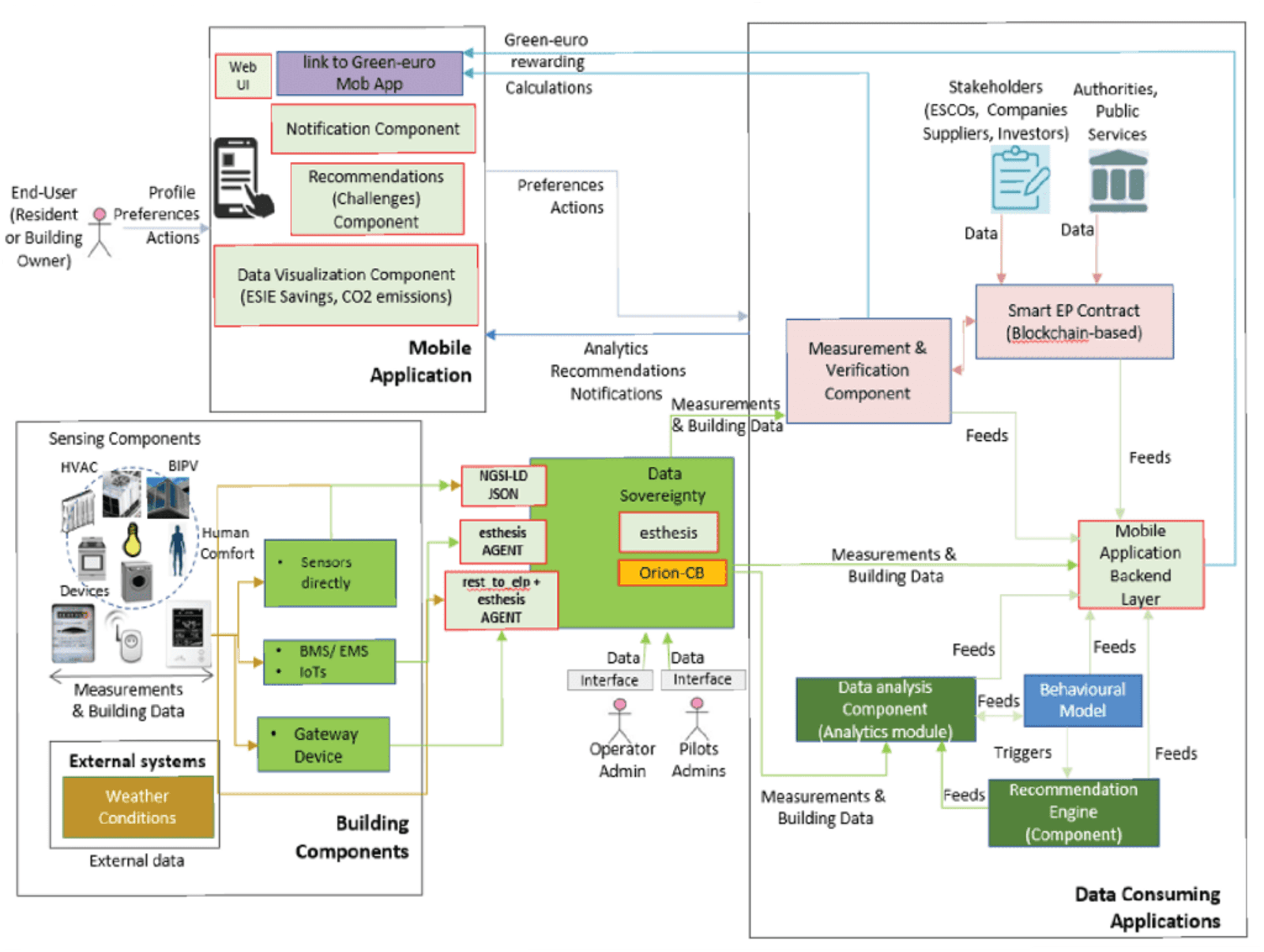
FORTESIE platform architecture
FORTESIE facilitates the collection of a wide range of building data such as buildings' indoor and outdoor environmental conditions, temperature, relative humidity, and power and energy consumption through different implementation methods in the data sovereignty layer.
The challenge of data homogenisation is addressed by defining FORTESIE (common) Data Model, which is based on Smart Data Models. This data model is consistently applied across all sensors, devices, and communication interfaces between digital components and it is shared and standardised by adopting the NGSI-LD standard for data exchange across the entire architecture. The data sovereignty module has been implemented in FORTESIE by deploying the so-called esthesis platform.
The data collection process within the Data Sovereignty integrates multiple sources and systems deployed across buildings. This process includes: a) Direct communication with sensing devices, b) Integration of locally gathered data from gateways, and c) Interfacing with backend systems, such as Building Monitoring Applications or proprietary IoT solutions.
The mechanisms employed by FORTESIE include:
- Data Translation and Transmission: Using the FORTESIE Data Model, measurements are converted into NGSI-LD JSON format. The data is then transmitted to Orion LDLD1, adhering to FORTESIE's stringent security protocols.
- Esthesis Agent Integration: An Esthesis Agent, provided by European Dynamics, is installed on a local gateway. This agent collects sensor data using the Esthesis Line Protocol (eLP) and transmits it securely (via mTLS) to the Data Sovereignty module (Esthesis CORE). Here, the data is transformed into NGSI-LD format and forwarded to Orion-LD.
- Custom IoT Agent for Proprietary Systems: For backend or proprietary IoT solutions, a custom IoT Agent (rest_to_ELP) is employed. It trans forms the data, based on the FORTESIE Data Model, into eLP format. The Esthesis Agent is then used, following the same data flow as described earlier.
Temporal Representation of Entities via NGSI-LD store historical measurements, enabling comprehensive tracking and analysis of data over time.
Through FORTESIE's collaborative efforts, building performance improvements are accurately measured, documented, and shared between ESCOs and tenants, tailored to specific renovation technologies. By linking Tailored energy packages for various target groups with precise building performance and comfort improvements, stakeholders can better understand the tangible benefits of energy efficiency measures.
FORTESIE received funding from Horizon Europe programme , bringing together 26 partners from 11 European countries, and coordinated by European Dynamics.
Related tags
Most popular
Join the community for freeAnd get access to all content
Related companies
European Dynamics S.A.
Related projects
FORTESIE
1 September 2022 - 31 August 2025
View projectLatest content
Partner content
+4
Project WeForming: Revolutionising intelligent grid-forming buildings
WeForming is an EU-funded project that envisions a revolutionary approach to energy management, where buildings play a strategic and active role in supporting and shaping the energy networks of the future.
- Guest/partner contributor
- 19/11/2024