Four ways Europe’s utility giants turned profits in 2025
Yusuf Latief
Posted on: 5 December 2025
Iberdrola, National Grid, E.ON, RWE and Enel all posted billions of profit in the year that was – what made them successful?
In this week’s Power Playbook: four strategies that enabled Europe’s top utilities to generate profits in 2025.
Europe’s biggest utilities entered 2025 under pressure: rising power demand from AI and data centres, tougher grid requirements, volatile wholesale markets and the ongoing need to finance the energy transition.
Yet the largest players still posted multi-billion-euro profits — not through luck, but through targeted bets on regulated networks, and aggressive portfolio expansion. Here are four strategies that delivered.
1. Doubling down on regulated networks
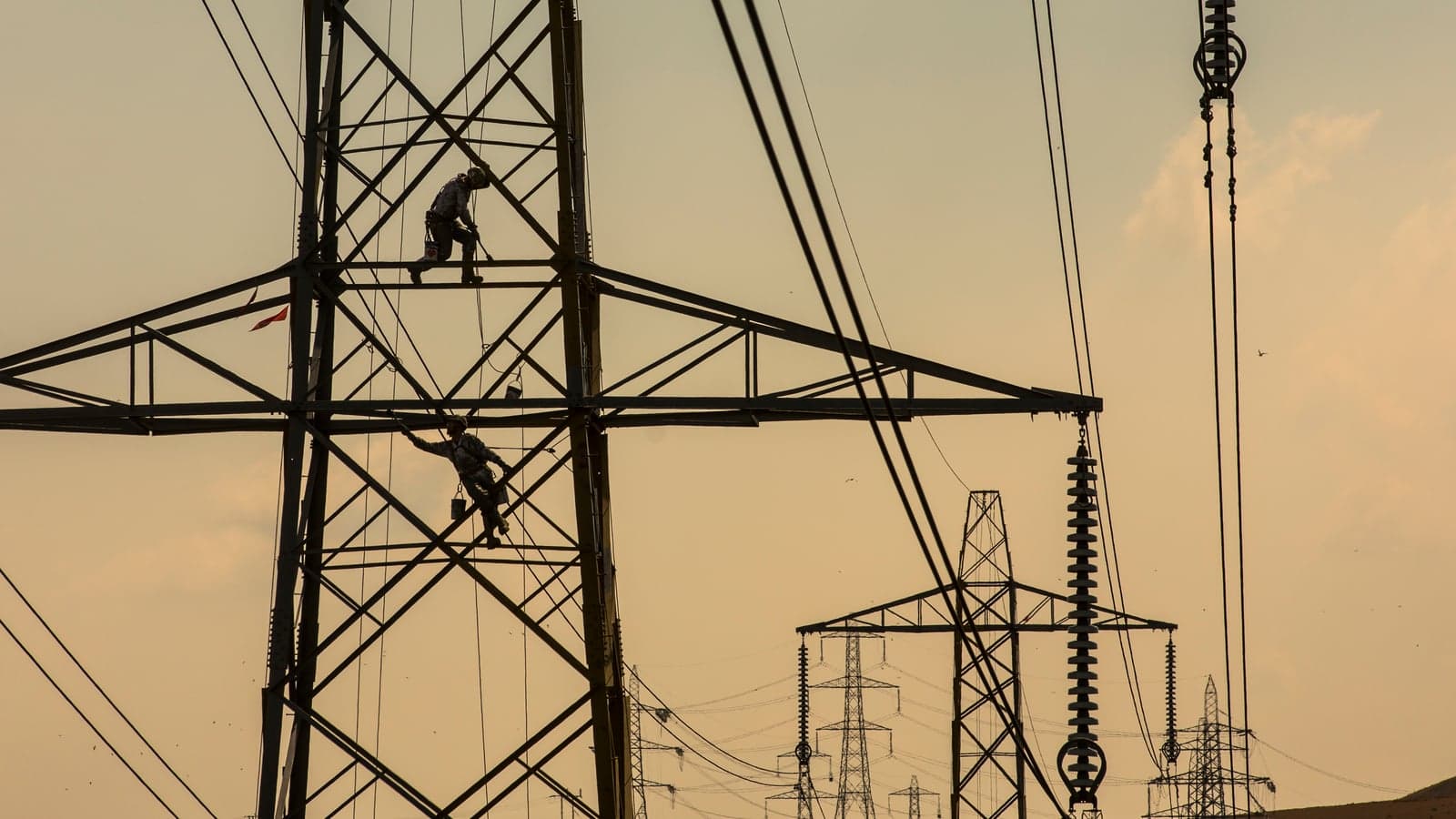
The clearest money-maker of 2025 was the same as in previous years: regulated grid infrastructure. Companies leaned into stable earnings while expanding networks to absorb soaring electrification and data centre load.
E.ON increased adjusted Group EBITDA to €7.4 billion ($8.6 billion) in the first nine months of 2025, up 10% year-on-year, driven primarily by an 18% jump in its Energy Networks division. The company poured €4.1 billion ($4.8 billion) into grid expansion in just nine months, commissioning its 10,000th digital secondary substation in Germany and pushing deeper into digital grid operations.
Iberdrola followed a similar playbook. The utility giant said that 53% of its €17.3 billion ($20.2 billion) in annual investments went to power networks, supporting a net profit surge to €2.004 billion ($2.4 billion), up 26%. Said the company’s Ignacio Galán, Executive Chairman: “Our focus on regulated networks and selective investment in renewables in A-rated markets has continued to contribute to sustained growth in results and dividends".
National Grid also delivered strong returns from regulated operations, posting £2.3 billion ($3.1 billion) in underlying operating profit for the first half of the year — a 13% jump — driven by strong performance across regulated businesses and backed by £5 billion ($6.7) of network investment in just six months.
2. Scaling renewables
While wind conditions in Europe were weak, utilities with strong pipelines still cashed in by bringing new capacity online.
RWE commissioned around 2.5GW of new generation capacity since September 2024, pushing its operating portfolio to 38.7GW across renewable energy assets, battery storage systems and flexible generation.
Specifically, its onshore wind/solar segment achieved adjusted EBITDA of €1.2 billion ($1.5 billion) compared to €990 million ($1.2 billion) in the first three quarters of 2024. The commissioning of new generation assets led to earnings growth despite the weak wind conditions at European sites. In addition, higher power prices were achieved on some of the electricity sales in the US compared to last year.
On the part of Iberdrola, although networks were its biggest focus, the utility also plans to allocate €21 billion ($25 billion) for its generation and customers portfolio, with the majority (75%) of that tied to projects already under construction. This portfolio will include investment allocations of 38% to offshore wind, 24% to onshore wind, 10% to solar PV, and 10% to storage.
3. Riding the data centre boom
The explosion in AI and cloud demand this year was a pain point for utilities to grapple with.
In the UK specifically, National Grid highlighted the scale: the utility's former CEO John Pettigrew said earlier this year that data centres already account for 2.6% of UK demand, potentially rising to 9% by 2035, with connection requests surging.
To help resolve the issue, the utility is “working with government through the AI Council” to steer where new facilities should locate to minimise grid constraints — a strategic positioning that directly supports network investment.
However, with the right partnerships and business models, there is also possibility to profit from and monetise the boom sooner rather than later, and some utilities have seen the promise.
The artificial intelligence boom is driving worldwide demand for electricity and, thus, the demand for renewable energy. These are good prospects for our business.
Take for example RWE, whose Flexible Generation segment benefited from a €225 million ($262.5 million) book gain after selling a data centre project on a former coal plant site in the UK to a hyperscaler, reinforcing how utilities can capitalise on data-centre-driven land value and grid access.
Said Michael Müller, Chief Financial Officer of RWE AG: “We are satisfied with the results for the first nine months.
"Our portfolio is robust and growing in a value-accretive way. The artificial intelligence boom is driving worldwide demand for electricity and, thus, the demand for renewable energy. These are good prospects for our business.”
Iberdrola too, tapped the potential, creating a new joint venture, Echelon Iberdrola Digital Infra, alongside Echelon Data Centres, which will invest more than €2 billion ($2.3 billion) in large-scale data centre developments across Spain.
With the joint venture, Iberdrola will be responsible for identifying and securing land with good grid connectivity and ensuring a round-the-clock supply of renewable power.
4. Streamlined cost structures and selective divestments
Several utilities boosted margins simply by getting leaner and reallocating capital more efficiently.
Enel posted €17.3 billion ($20.1 billion) in ordinary EBITDA, up from €17.1 billion ($20 billion), citing a positive operating performance in Latin America, offsetting a negative exchange rate. Additionally, the company reported €5.7 billion ($6.7 billion) in net ordinary income over the first nine months of 2025, due to lower financial expenses thanks to reduced gross debt and lower average debt cost. Additionally, says Enel, hybrid bond issuances and FX movements helped stabilise financials despite rising CapEx.
RWE also strengthened its finances by selling stakes in its Thor and Nordseecluster offshore wind projects to Norges Bank Investment Management, helping the company keep its debt levels within its own limits while continuing to invest heavily.
These moves underscore a strategic shift: major utilities are cutting non-core costs and using selective divestments to stay liquid while continuing to fund multibillion-euro build-outs.
More from the Power Playbook:
Enlit Europe offers snapshot of financing trends
Bringing down power prices with innovation and energy storage
Can COP30 deal with the global energy investment gap?
The question for 2026
The year that was showed that Europe’s utilities can still deliver strong earnings when network investments, new capacity, and rising demand line up in their favour.
But 2025 also revealed clear pressure points.
RWE’s Offshore Wind earnings dropped from €1.1 billion ($1.3 billion) to €915 million ($1.1 billion) because of significantly weaker wind conditions compared to 2024 and lower proceeds from forward electricity sales. Enel’s performance in Italy was hit by lower margins in retail and generation due to lower average prices applied to end customers, as well as reduced hydro availability. E.ON’s retail business saw an 18% decline in adjusted EBITDA, driven by customer portfolio changes in the UK and temporary negative effects in Germany.
These signals underline that the outlook is far from guaranteed. Weather volatility, price shifts, and uneven market conditions across Europe remain real risks – and the surge in demand from data centres and electrification may not be enough to offset underperformance in more exposed segments.
So, I wonder, for 2026, will the same formula of network investment, new capacity, and demand growth continue to deliver, or will the weaknesses that surfaced this year start to dominate?
And as Europe enters another year of rapid system change and resilience challenges, which utilities are best positioned to adapt — and which might find their margins tightening?
What do you think? Reach out and let me know so that I can feature your thoughts in the Power Playbook.
Cheers,
Yusuf Latief