Enlit Europe offers snapshot of financing trends
Yusuf Latief
Posted on: 29 November 2025
Energy industry leaders gathered in Bilbao to discuss the energy transition: here’s what they said on financing, costs and business trends.

In this week’s Power Playbook: Enlit Europe in Bilbao was another rare opportunity for energy industry execs to gather and discuss the key priorities for the energy transition. So what did they say on financing, costs and business trends? Yusuf Latief reports.
“A lot of the strategics continue to evaluate how to strengthen their product portfolios, and they find out that there is so much good technology and product and innovation out there, as you will see at conferences like this.”
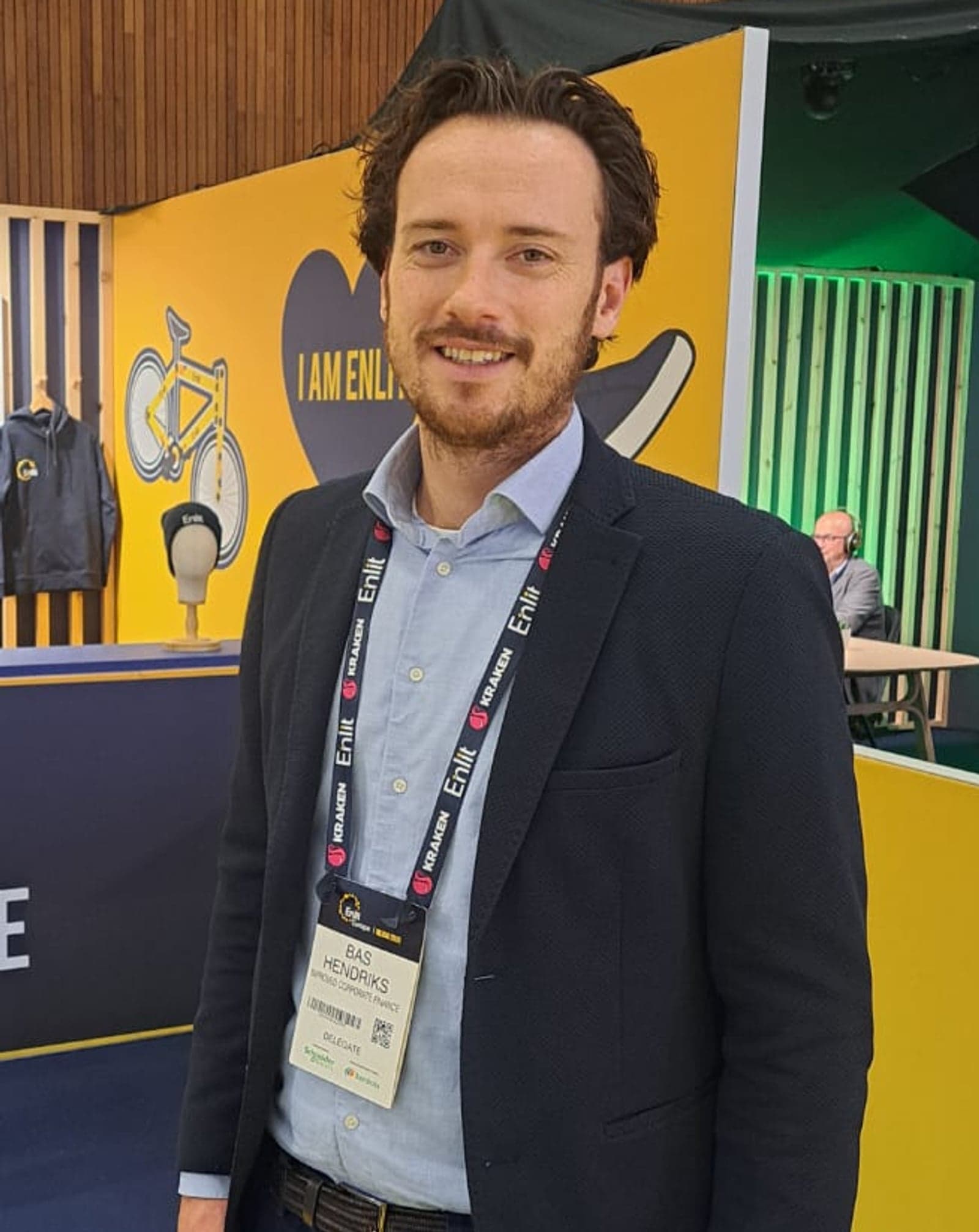
So said Bas Hendricks, Managing Partner at IMPROVED Corporate Finance, after I sat down with him in a quiet corner on the busy exhibition floor at Enlit Europe.
I took the opportunity to pick his brain on what consolidation deals in the energy sector tell us about financial flows... and his answers were telling.
“There are so many good companies, and that drives this acquisition trend. Sometimes it's better to find a shortcut instead of trying to figure it out yourself in a market that is moving very fast.”
During his time with IMPROVED, Hendricks has overseen and advised on some very interesting deals in the sector. This year, this has included the sale of Energyworx to Gridspertise, the sale of eco movement to DOW JONES and a private placement of MobilityPlus to Suma Capital.
And it is this in-housing that’s moving deals forward, says Hendricks. “Especially around the grid, around EV charging – the market is changing faster, therefore companies are also placing their bets in terms of in-housing technology. On the other hand, you'll find out that some companies that are a bit subscale at some point will get acquired.”
His assessment of where momentum is building was equally telling. He pointed to companies like Plexigrid, which has shown an international expansion that he finds impressive, and noted Corinex’s significant raise earlier this year as another sign that grid-focused innovation is entering a new phase. The regulatory push on distribution system operators is emerging as a real accelerator, and Hendricks believes this will give specialised technology firms an edge over incumbents that have taken longer to adapt.
“There's a general belief that the market has, especially in the grid domain, been moving very slowly, but we're close to the point in time where it will hit more growth.
“For this, a regulatory push will be important, as grid operators tend to be monopolists, and that's not a great foundation for innovation, as we all know.”
If there is urgency starting to arise for those operators to start working with more innovation and to adopt new technologies, that will help move the market forward.
When we talked about investor’s evaluating risk, Hendricks says it comes down to mix of technical readiness, regulatory clarity and proven recurring revenues.
Additionally, he says, “sales cycles have been long in this grid operators domain, and that always has been a bit scary for investors, but we recognize that they're the first signs that things are improving, especially if there is a regulatory push.
“And if there is urgency starting to arise for those operators to start working with more innovation and to adopt new technologies, that will help move the market forward. But it’s obviously a mix.”
Hendricks adds that, given all these dynamics and the conversations IMPROVED was having with technology companies at Enlit, “I think it certainly will help investors in getting familiar on how to price that risk into their investment thesis.”
An inflection point
While Hendricks was speaking specifically from the vantage point of dealmaking and capital flows, that same sense of accelerating change was unmistakable across the rest of the event.
Whether in hub sessions, on the summit stage, or during conversations on the floor, everywhere you turned in Bilbao, it hinted at an energy system under pressure to evolve faster than its structures were designed for.
Discussions on curtailment highlighted how power-to-heat can shift from a niche concept to a serious tool for reducing system costs, as seen in Germany’s ‘use instead of curtail’ regulation, which empowers TSOs to finance power-to-heat units that activate electrical load during grid congestion.
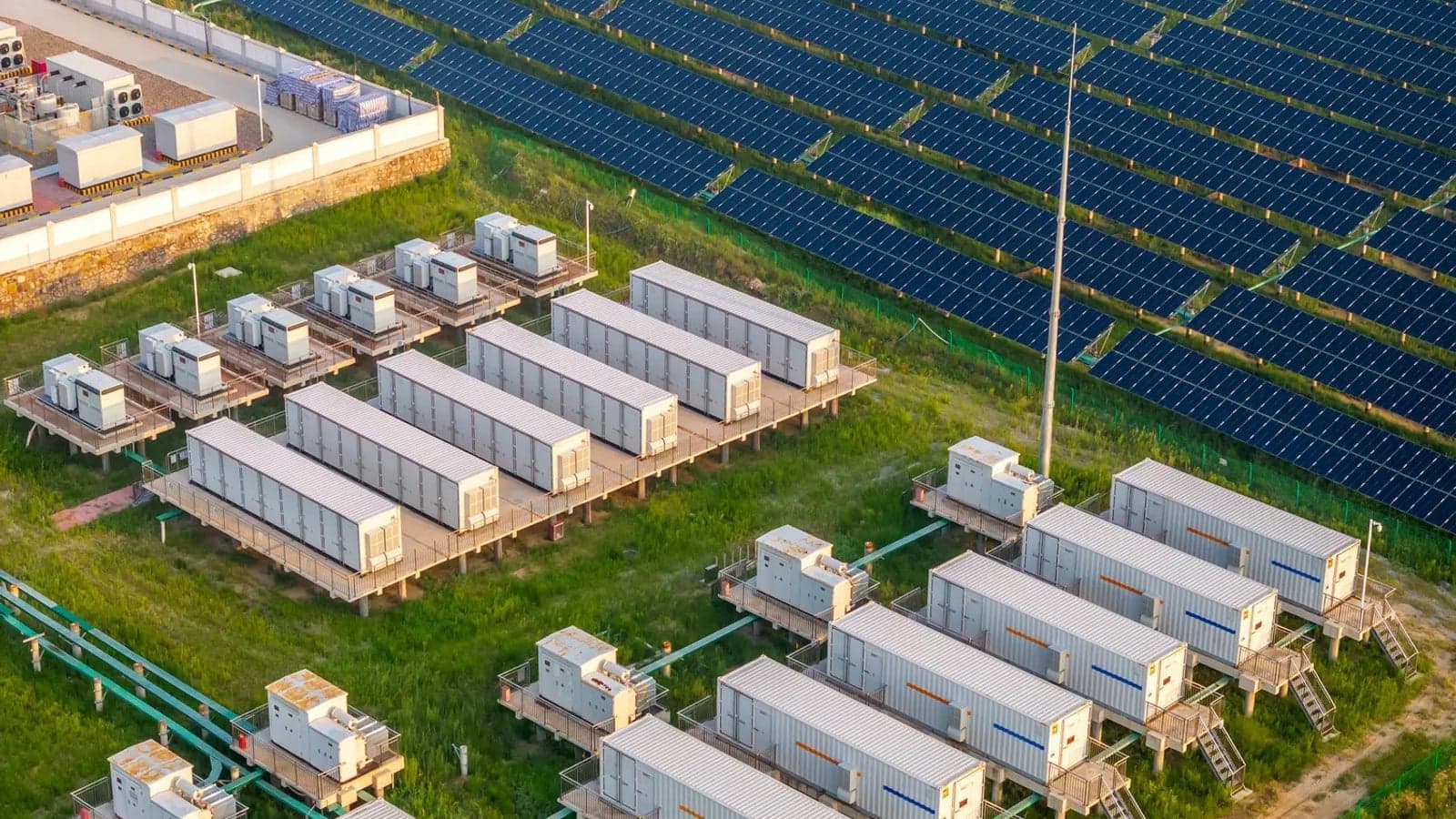
Conversations around European energy storage reinforced how co-location with renewables is increasingly regarded as a competitive edge, but only when paired with policy certainty and designs that actually reflect grid realities. For this, harmonised policies, innovative market designs, and targeted investments in storage will be crucial to ensure the viability and profitability of renewable energy projects across diverse national contexts.
On grid investment, the emphasis on a systems-level view stood out—one where modelling interdependencies, asset behaviour and load variability over time is becoming essential for reliable investment planning. The results being achieved, including near-accurate outage prediction – up to 99% – are beginning to redefine how operators justify capital expenditure.
More from the Power Playbook:
How utilities are balancing budgets between innovation and AI
Can COP30 deal with the global energy investment gap?
Bringing down power prices with innovation and energy storage
The EV transition, meanwhile, continues to sit at the mercy of regulatory clarity. Uncertain or inconsistent signals—particularly around the 2035 zero-emission target—are still dampening investor confidence. Add to that Europe’s persistent market fragmentation, and it becomes clear why many believe competitiveness hinges on reducing internal barriers and creating a more unified landscape.
Additionally, the conversations around smarter energy systems underscored that Europe’s industrial competitiveness now depends on grid capacity, regulatory alignment and the ability to deploy innovation at scale. European initiatives, including the forthcoming EU grid package, electrification strategies, and increased funding through programmes like Horizon Europe and the Innovation Fund, aim to accelerate this transformation.
However, challenges remain in scaling innovation, securing investment and harmonising regulatory frameworks to foster a competitive and resilient industrial ecosystem.
My overall impression from Bilbao was of a sector that knows exactly where it needs to go but is still wrestling with how to get there at the speed required.
Now, as we head into 2026 and look toward the next investment cycle, I’d love to hear what you will be watching closely in the energy sector’s investment landscape.
Reach out and let me know your thoughts so that I can feature you in the Power Playbook.
Cheers,
Yusuf Latief