Future of offshore wind lies in maximising existing assets
Guest/partner contributor
Posted on: 27 April 2023
With all eyes on new offshore wind farm developments| Feras Elagha of Atkins asks: are we racing into the future without first maximising the value of existing assets?
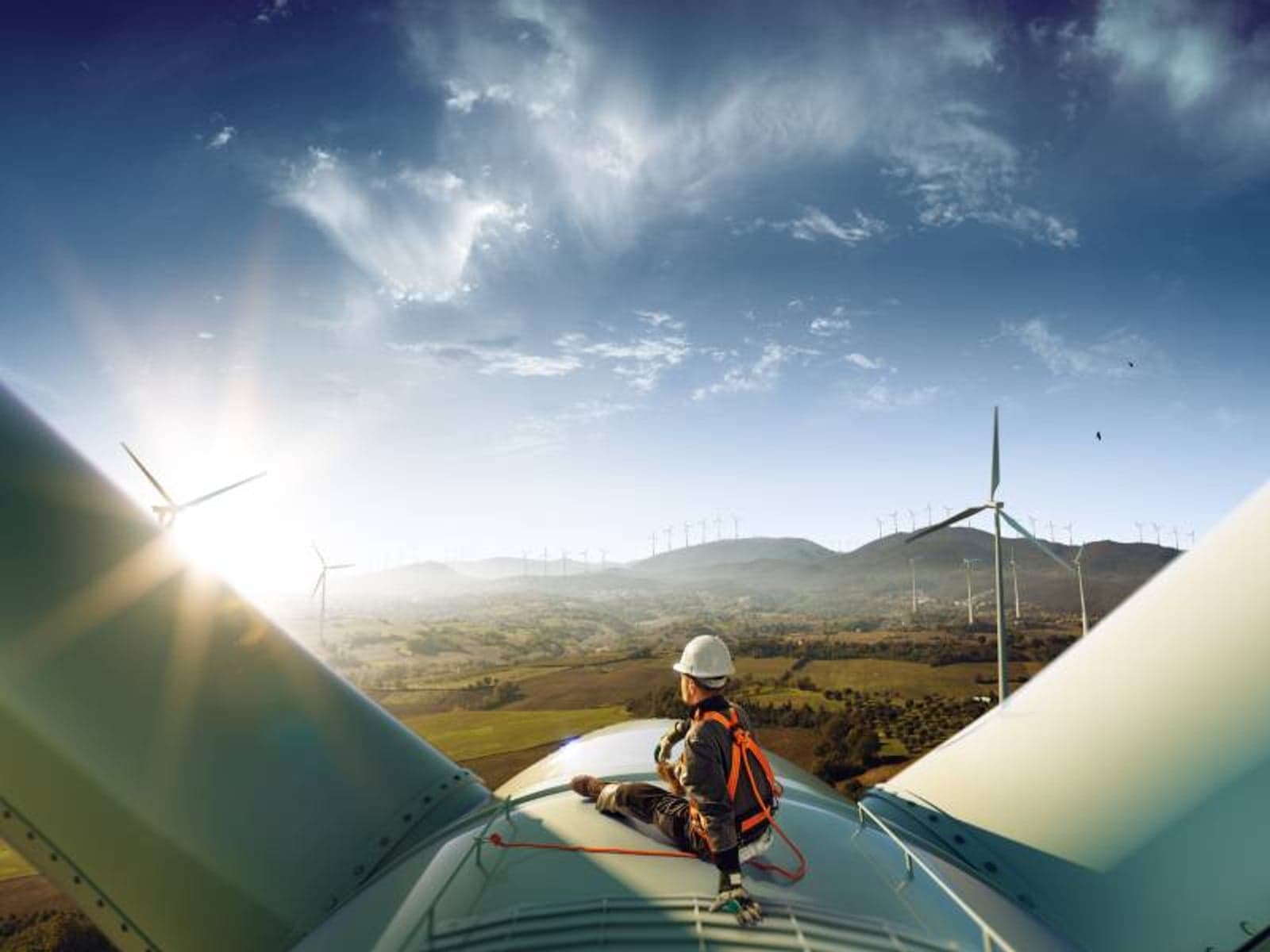
With all eyes on new offshore wind farm developments, Feras Elagha of Atkins asks: are we racing into the future without first maximising the value of existing assets?
Squeezing greater output and longer operations from existing wind farms could be vital in maintaining renewable output and energy security in the short term.
Also essential will be boosting the lifetime value of new developments, applying the latest asset management approaches from the point of design onwards.
As yet, there is no precedent for managing the end-of-life for large commercial offshore wind assets. The appetite for new design is huge and driving exciting developments, but there is still a lot to be learned and gained from assessing our existing farms, extending their operation and maximising their output.
Offshore wind revolution
We’ve come a long way since the first UK wind farms were commissioned in 2004. We’ve gone from just one or two farms to 41 operational farms, with more than 11,000 turbines. Many more are in the pipeline, with a huge drive to achieve 50GW by 2030.
The industry has thrived on designing bigger and better farms, moving from MW to GW in just a few years.
Today, one of the main challenges the industry faces is costly and complex operation and maintenance, with the O&M market predicted to grow significantly in the next decade.
As new projects move further offshore, operations are also likely to increase in complexity, risk and expense and there is a need for innovation to facilitate remote O&M for safety purposes and to bring down costs.
Have you read?
Digital twin for power plant predictive maintenance
Drones twinned with predictive analytics for windfarm solution
To navigate the challenges ahead, we must leverage the efficiency of our installed capacity through effective asset management. If we don’t, we will not meet our net-zero obligations.
Integrating maintenance requirements, for example, at the design stage of a new wind operation, can help reduce the overall lifetime cost and facilitate optimal maintenance. Common maintenance methods are periodic, or reactive, based on standards, and often result in long downtime and high cost.
Proactive maintenance can address the shortcomings of reactive maintenance by addressing potential issues before they become a serious problem and reducing costs in the longer term. A data-driven, digital approach offers predictive maintenance and an opportunity to address this challenge proactively.
Data-driven development
It may not be immediately apparent, but the volumes of data generated during the operation of a wind farm are enormous.
For example, the wind farm operator will be collecting data on environmental conditions to ensure safe access to the assets. Connections to the electrical grid provide performance data. It is even common for some structures to be instrumented with load monitoring sensors for ongoing structural assessment.
In addition, the turbines are highly complex autonomous machines. Multitudes of control algorithms and associated sensors work in parallel to provide each turbine in the farm with the information it needs to generate the maximum power at any given moment.
The amount of data is vast, but often under-utilised. Modern asset management methodologies can provide new opportunities for this data to be leveraged to a greater extent.
Digital developments and AI – i.e. 360-views, digital twins and advanced robotics - are already taking us beyond performance data, offering a holistic view of assets, as well as providing health and safety benefits in relation to inspections and repairs.
This abundance of valuable data can be accessed and analysed to determine the patterns of behaviour of a wind turbine and foundation – assessing how it responds to the environment, its operational load and the O&M activities undertaken. This insight will facilitate data-driven decisions for the risk-based integrity management of offshore wind assets.
Have you read?
Solar ‘living lab’ to spur development of AI and robotic research
Hydropower industry to benefit from advanced manufacturing – report
As we strive for a balance between engineering solutions and financial returns, digital, predictive maintenance solutions are proving valuable in both the short and long term.
Failures can be predicted and prevented, resulting in a significant reduction in maintenance costs, in unplanned maintenance and potentially increasing Remaining Useful Life (RUL).
Coupled with analysis of digital twins and calibration of data, data from the available monitoring systems not only give an alarm when exceeding a threshold value but also enables predictions of the structural behaviour as a whole.
This is a cost-effective, reliable and purposeful solution to guarantee the integrity of the entire floating structure over its service life.
An effective data-driven approach also offers the basis for remote conditional monitoring, negating the need for some on-site inspections and repairs.
There are a lot of wind farms in the UK that can provide us with this valuable data. And it is by adopting a ‘bigger picture’ mindset, that we can become more creative and innovative when exploring different feasibility scenarios - whether that’s full repowering, partial repowering or life extension.
The data can also be fed into the design and commissioning phases of new wind farms, supporting efforts to reduce the Levelised cost of Electricity (LcoE).
Breathing new life into existing assets
There is a double benefit to extending asset life: deferring significant decommissioning costs and increasing revenue (a strong incentive for investors).
It’s an exciting industry to enter and existing offshore wind farms present some unique opportunities for innovation and creativity, like we are seeing in the design of new wind farms.
Furthermore, with the benefit of data, one can conduct lifetime extension analysis for offshore wind substructures in a more reliable manner.
The key is to obtain data from a variety of sources which will lead to updated life and reliability predictions and help inform decisions around lifetime extension.
Related reading: Digitising the wind key to decarbonisation goals
The life expectancy of existing farms sits at around 20 to 25 years. However, there is an implicit conservatism in the offshore design standards that means the more we capitalise on operational data, combined with a creative and innovative mindset, the more we can squeeze out of our existing wind farms.
Where can we replace and strengthen? How can we learn and gain?
There are many opportunities for asset re-valuation and optimisation and also value to be unlocked in both data and additional energy generation, including life extension and re-powering.
To meet the UK’s ambitious targets, we will need to build at an unprecedented rate, for the next 30 years at least. Every person and every GW counts.
But to take us to 2050 and beyond we need to start behaving more proactively: moving from siloed work arrangements to open partnerships that bring together industry-wide experts to look at the ‘whole picture’ with transparency.
We need to establish avenues to invite people in the industry to take on these challenges and inject the same level of creativity and innovation we see in new design into asset management.
Asset management is, after all, the future for our new wind farms.
About the author
Feras Elagha is principal engineer for nuclear and power at Atkins. (Additional contribution from Nick Hucker, Mechanical Engineer, Atkins)