Gridlock: how the Netherlands hit capacity
Yusuf Latief
Posted on: 9 February 2023
What happens when there’s no give on the grid? Dutch utilities have found out, as Yusuf Latief reports.
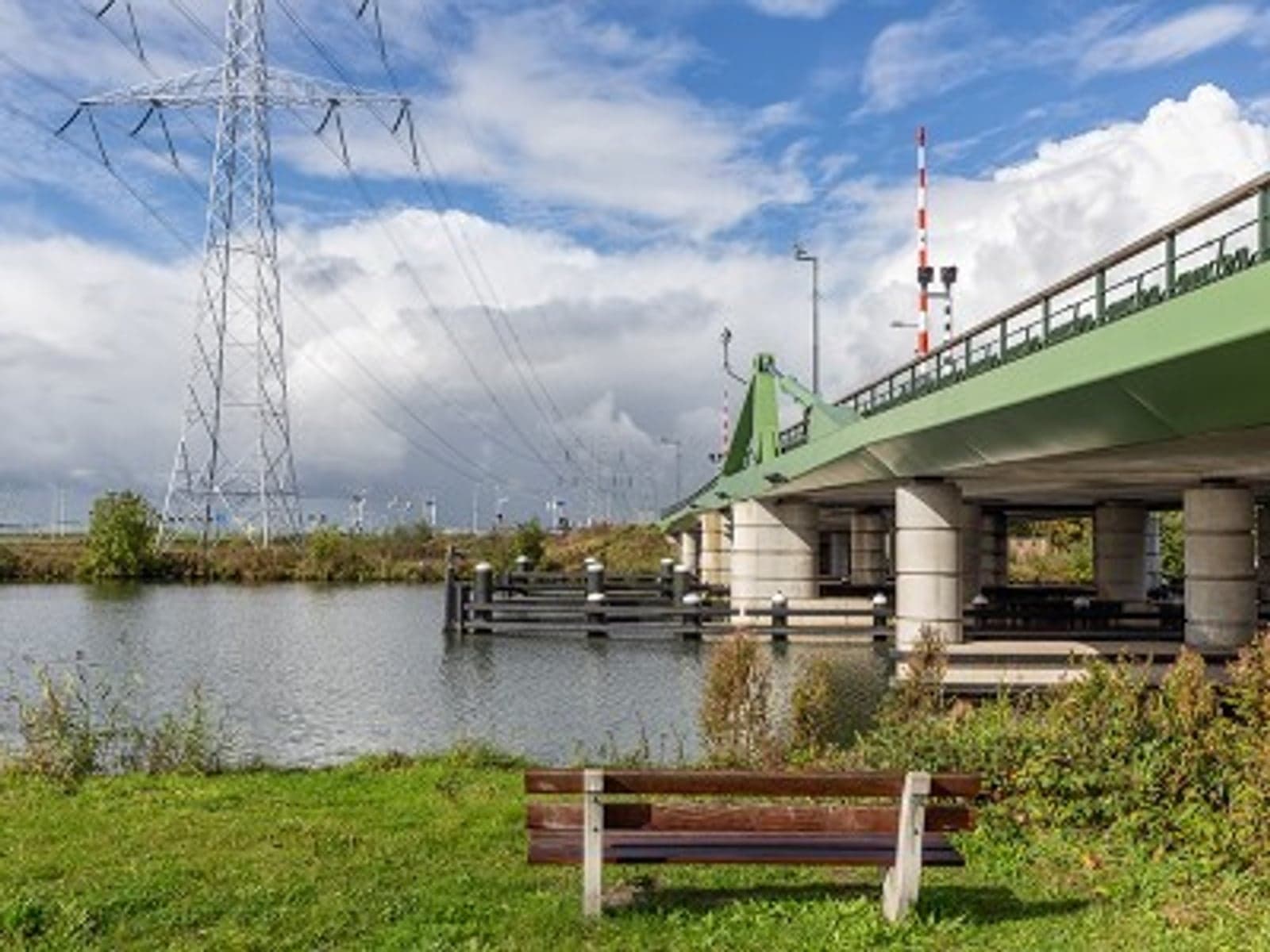
What happens when there’s no give on the grid? Dutch utilities have found out, as Yusuf Latief reports.
The European energy transition is characterised by a plethora of buzzwords – sustainability, green energy, digital innovation, AI and automation, to name a few. But there are two words on the tip of utility tongues that might leave them a little afraid – at capacity.
This heavy phrase refers to the state of the grid when there is no more space for renewable energy integration. The grid being at capacity – for any country – is a cloud blocking out the sunny landscape of our energy transition. Its implications? Immense. Its ETA? Already here.
Grids across the EU aren’t necessarily all at capacity, but in the Netherlands this has, relatively recently, become the case. The small and compact country, which has been making notable strides in its energy transition, has been doing extremely well when it comes to electrification and renewables integration – too well, some might argue.
The last few years have seen the country paying such copious attention to the integration of renewable energy resources – namely solar and wind – that the infrastructure has been somewhat on the periphery.
Although this integration is and will continue to be, a necessity if we are to see climate goals reached, when the infrastructure isn’t adjusted and expanded accordingly, there will be consequences. And such consequences, for the Netherlands, have reared their electric heads as the country’s grid reaches capacity.
The Dutch case
To meet the ever-increasing quantity of renewables coming online, the country’s grid has been similarly evolving. Whereas in the past the grid would grow incrementally on an annual basis, the grid is now hoped and needed to more than double by the time the 2030 targets come around the corner.
Furthermore, the grid not only needs to expand; it needs to be created from scratch. Although expanding is an answer for increasing connections, there is also the elephant in the room of stretches of area that were not electrified when the electric grid was initially built. For such areas, the grid still needs to be rebuilt and extended.
In an interview during Enlit on the Road’s visit to Rotterdam, Arjen Jongepier of Dutch grid operator Stedin, explained that, because of the immense amounts of renewables coming online, grid congestion management has been, and will almost assuredly continue to be, one of the main priorities for the grid to maintain a safe distance from over congestion: “We are receiving a lot of renewable energy connections, [including] solar and wind and on a DSO level that means that we have to create a lot more connections to customers…With these renewable energy sources deeper in our grids, [we need to], on a DSO level, do congestion management,” says Jongepier.
Have you read?
The emobility innovation driving Rotterdam’s energy transition
Think smart; act smart; win smart
How Elia Group is driving grid innovation
Across network companies Stedin, Enexis and Liander, a total of €30 billion will be needed in investments up to 2030 to ensure that the Dutch grid is expanded and reinforced appropriately to ensure climate goals are reached and the grid maintains stability. And although this number might take the wind out of one’s sails – €30,000,000,000 is no small feat – there is evidence of investment action being taken to reinforce the Dutch grid.
According to David Peters, Stedin’s Chief Transition Officer, “increasing the capacity of our grid…[optimising] use of the current grid…digitalisation, flexibility, smart charging…and keeping the grids’ quality high” continue to be priority investments for Stedin. Peters was speaking at an interview during Enlit on the Road in Rotterdam.
In 2021, Stedin invested €687 million to expand and maintain the country’s electricity grid. And although a record investment, it simply has not been enough. As of September 2022 – in an announcement for the country’s Budget Day – the DSO stated how the government had reserved a further €500 million to strengthen their equity and allow them to continue with grid expansion.
Even then, the utility’s CFO, Danny Benima, commented that this is helpful short-term, but “it does not fully meet the capital requirement. Only together can we ensure that there is sufficient capital to continue investing in the energy transition and housebuilding in the Netherlands. It is important that all parties involved work together practically and financially on this major social challenge,” Benima added.
In the meantime, however, bottlenecks have started becoming a problem on the Dutch grid across numerous cities, particularly in Amsterdam, and provinces such as Flevoland, Gelderland and Noord-Holland.
Because of a long lead time and a lack of skilled workers to install new infrastructure, bottlenecks occur where supply far outmatches demand.
As citizens and companies steadily invest in their own green energy generation, the problem keeps on worsening as the positive trend of the energy transition continues to spread. Although it is a big sign of positive progress as citizens, businesses and utilities alike carry on buying into green and clean energy, part of this generated electricity is supplied back into the grid, which is not designed for increasing penetration. And to add to an already complex equation, low-carbon technologies such as heat pumps coming in apace are adding a certain amount of strain as the everyday consumer seeks to contribute to a net-zero future.
Grid operators cannot act quickly enough to resolve this strain. And because of a long lead time and a lack of skilled workers to install new infrastructure, bottlenecks occur where supply far outmatches demand. And so, what used to be a situation of projects only experiencing delays in connection requests is now very stressful because such requests cannot possibly be resolved in certain parts of the country.
Smart grid congestion management
Netbeheer Nederland, the association of all electricity and gas grid operators in the Netherlands, has been bringing attention to this very real situation that is currently playing out. The association emphasises that the Netherlands no longer has unlimited space on the power grid and that it is time to approach the energy grid differently.
In an article published on the Dutch website Cobouw, Hans-Peter Oskam, Director of Policy & Energy Transition at Netbeheer Nederland, commented: “We are moving towards a new situation, in which there is mainly room for parties that handle the electricity connection smartly. That means smart use of energy and feeding back the locally generated energy at the right times.”
For an optimum solution to meet the challenge, the total sum of smart technology needs to be used. Researchers A.N.M.M. Haque, P.H. Nguyen and W.L. Kling, in a study – Congestion Management in Smart Distribution Network – for the Eindhoven University of Technology, state how promising technologies – automated metering, demand side management, distributed intelligence and distributed automation, to name a few – provide an answer for grid congestion management when used together in a smart distribution network.
By establishing and managing such a network, utilities will be able to make maximum use of their assets. Grid expansion and, in certain cases building from scratch, will still be needed along with the investments necessary, but smart grid congestion management and flexibility thinking will allow for more efficient and effective energy coordination.
Whether detecting and proactively preventing potential congestion, enabling consumers to “give back” their energy through virtual power plants, or using an electric vehicle to take, hold onto, and at a later stage discharge energy in line with grid needs – smart has been, and will continue to be, the way to go.
And using such technologies to coordinate flexible and smart mechanisms, supporting DSOs with congestion management, will prove to be the make-or-break factor as we proceed with the energy transition at scale and across continents.
Latest content
+3
FlexPlan: a new methodology and tool for future power system flexibility
All that motivates the FlexPlan Horizon2020 project, which aims at creating an innovative new methodology and a tool supporting the European System Operators in performing mid-long term planning studies (three grid years: 2030, 2040 and 2050) by considering system flexibility as an alternative to new grid investments.
- Guest/partner contributor
- 14/06/2022