Hedging against volatility: The economic case for the SUSHEAT ecosystem
Guest/partner contributor
Posted on: 13 April 2026
The SUSHEAT project is decarbonising industrial heating, not just as an environmental goal but also as a financial necessity.

Long framed as an environmental imperative alone, the decarbonisation of heat is also able to offer vast economic benefits to European industry.
The sector consumes roughly half its final energy as heat, putting it under tremendous pressure to reduce its carbon footprint in alignment with EU 2050 targets on climate neutrality. [1, 2]
For plant managers and CFOs however, the energy transition isn’t just about carbon – it is about economic survival in an era of unpredictable energy markets.
When it comes to heat for industrial processes, fossil fuels are no longer the fully reliable and comparatively cheap resource they once were. They're becoming something of a financial vulnerability, exposing industry to fluctuating natural gas prices. In addition to considerations, such as the EU Emissions Trading System (ETS), this makes long-term opex forecasting near impossible.
Decarbonising industrial heat is no longer just a sustainability metric; it is a critical strategy for economic resilience long-term assurance. By creating a new kind of dynamic ‘heat ecosystem' for industry, capable of delivering process temperatures between 150°C and 250°C, SUSHEAT offers a tangible way to decouple industrial production costs from volatile fossil fuel markets. [3]
Building resilience to volatility
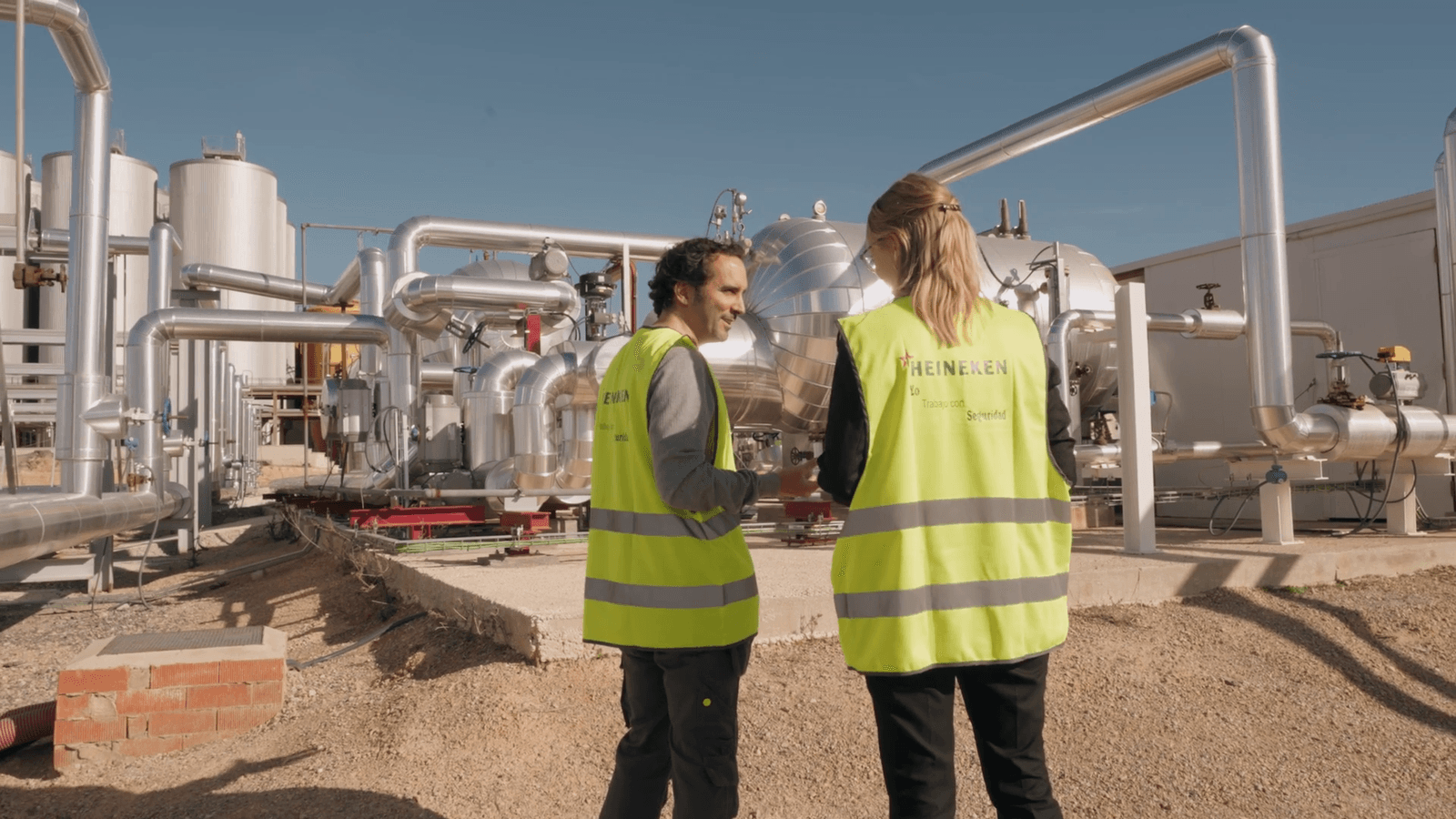
Many industrial processes, such as food and beverage pasteurisation to textile dyeing and chemical pre-treatments, rely on stable and continuous medium to high temperature heat. When the cost of generating that heat swings wildly due to geopolitical events or supply chain disruptions, margins evaporate.
Direct electrification via heat pumps is one tried and tested path to reducing fossil fuel dependence, but electricity markets also experience price volatility. Simply swapping a gas boiler for a heat pump without integrated flexibility exposes a plant to peak electricity pricing. To truly hedge against volatility, industries need the ability to 'bank' energy when it is cheap and deploy it when it is expensive.
This is where the core of SUSHEAT’s economic value proposition lies: in its bio-inspired thermal energy storage (TES) using phase-change materials. This storage acts as a thermal buffer, decoupling heat generation from heat consumption. [4]
In practice, a facility can run SUSHEAT’s Stirling-based high temperature heat pump to upgrade recovered waste heat during off-peak hours when electricity prices are low. The upgraded heat is stored in the high temperature thermal energy storage. When electricity prices peak during the day, the plant can draw the required 180–250°C heat directly from the storage, bypassing peak tariffs.
Furthermore, the integration of linear Fresnel solar thermal collectors adds a zero marginal cost heat source to the mix. On sunny days, solar thermal can directly feed the industrial process or charge the thermal battery, entirely offsetting the need for purchased energy.
The digital twin: A CFO’s best friend
Managing multiple heat sources (waste, ambient, solar) and storage units requires more than just good engineering during its setup; it requires real-time and ongoing financial optimisation. [5] SUSHEAT achieves this through its AI-enabled control and integration twin. This digital brain monitors temperatures and acts as a dynamic economic dispatcher.
By integrating with existing industrial control systems, the digital twin constantly evaluates weather forecasts (for solar availability), real-time electricity prices, and upcoming process demand profiles. This helps it to automatically shift between SUSHEAT’s 14 operating modes to ensure the plant always uses the cheapest, most efficient heating configuration at any given moment. It provides predictive scenarios that allow financial planners to lock in energy strategies that guarantee operational continuity at the lowest possible cost.
The technologies currently being validated at the SUSHEAT pilot sites in Greece and Norway are proving that the 150–250°C thermal gap can be closed in a way that is both economically and environmentally sustainable and viable.
The transition to fossil-free industrial heat indeed requires capital expenditure, but the return on investment is fundamentally changing. By combining high temperature heat pumps, smart thermal storage, solar integration and predictive digital control, SUSHEAT transforms industrial heat from a variable cost liability into a once again manageable, predictable asset. For European industry, this ecosystem approach is the ultimate hedge against an unpredictable future for fuel.
By developing and validating its core technologies at TRL5 at KTH laboratories in Sweden, SUSHEAT is building a robust basis for its future adoption at industrial level. Its integrated concept addresses Europe’s dual challenge of decarbonising industrial heat while maintaining operational stability, facing up to the growing range of fresh pressures on electricity grids across the continent.
To learn more, visit the project website.
References
- International Energy Agency, 2022. Heating.
- European Commission, 2021. Regulation (EU) 2021/1119 of the European Parliament and of the Council establishing the framework for achieving climate neutrality and amending Regulations (EC) No 401/2009 and (EU) 2018/1999 (‘European Climate Law’).
- Madeddu, S. et al., 2020. The CO2 reduction potential for the European industry via direct electrification of heat supply (power-to-heat). Environmental Research Letters, 15(12), 124004.
- International Renewable Energy Agency (IRENA), 2020. Innovation Outlook: Thermal Energy Storage.
- McKinsey & Company, 2022. Digital twins: The art of the possible in product development and beyond.
About the author
Tristan Tiefenbacher-Bath has more than a decade of experience in a diverse range of communications fields, including riverine conservation, communications consulting, journalism and online marketing. His responsibilities at RTDS Group cover dissemination, exploitation and communication activities for EU-funded research projects, including SUSHEAT.
Most popular
Join the community for freeAnd get access to all content
Related projects
Susheat
+3
1 May 2023 - 30 April 2027
View project