Inside SUSHEAT: Connecting waste and renewables for industry
Guest/partner contributor
Posted on: 16 January 2026
SUSHEAT is creating a dynamic heat ecosystem linking waste heat, solar thermal and ambient sources through heat pumps, smart storage and digital control.

Industrial heat decarbonisation is often framed as a matter of replacing fossil fuels with electricity or renewables. But in reality, the challenge is more complex: heat demand fluctuates, sources vary and processes require stability.
The SUSHEAT project, funded under Horizon Europe, is addressing this complexity with an ecosystem approach – a system that connects multiple heat sources, storage units and smart control to deliver reliable, high temperature heat for industry, all while offering the flexibility needed to work with a fluctuating demand and under different conditions.
Two loops, one bridge
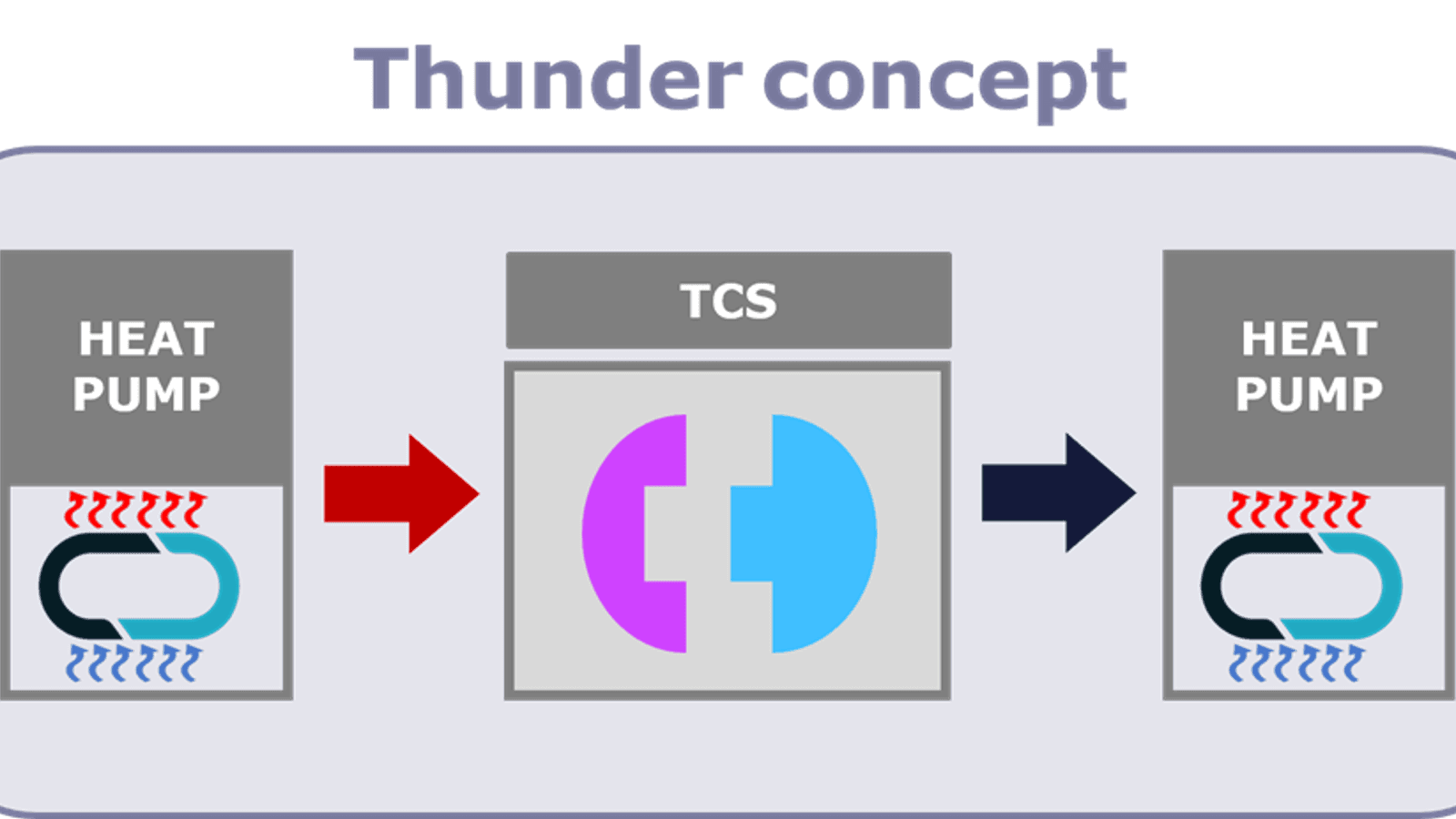
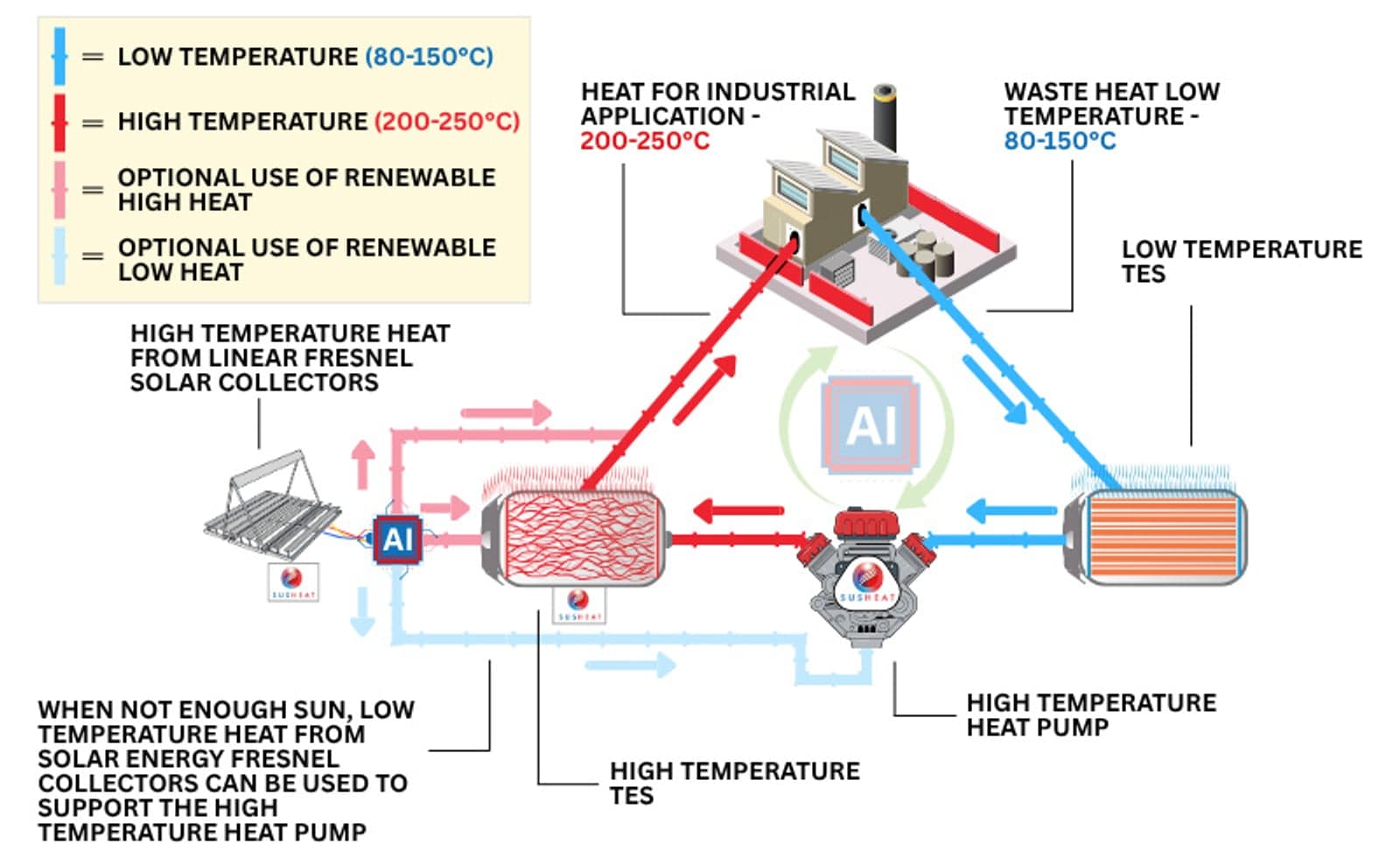
At the heart of SUSHEAT is a two loop architecture.
The cold loop captures waste heat or ambient heat and stores it in a low temperature thermal energy storage (TES).
The hot loop supplies upgraded heat to the industrial process and stores it in a high temperature thermal energy storage.
The high temperature heat pump acts as the bridge, converting low grade heat into process-ready temperatures of 180–250 °C – a range where few solutions exist today.
Beyond single source thinking
The ecosystem doesn’t stop at waste heat. Linear Fresnel solar collectors can supply heat directly to the process or to the hot thermal energy storage and even feed cooler streams to the heat pump when direct supply isn’t possible.
This flexibility is key: SUSHEAT supports three sources – waste, solar, ambient – and multiple storage options, creating a system that adapts to availability, demand and cost signals. This approach makes the suggested solution adaptable to different geographical and weather conditions.
14 ways to operate
How flexible is flexible? SUSHEAT enables 14 distinct operating modes, combining sources, storage and direct supply routes. These modes include configurations such as:
- Direct solar-to-process heating;
- Waste heat recovery with intermediate storage;
- Ambient heat upgrade via high temperature heat pump;
- Hybrid combinations with simultaneous charging and discharging of thermal storage units.
Heat can be stored or delivered immediately, and the system can switch modes dynamically based on real-time conditions. This operational diversity allows industries to optimise for energy cost, carbon footprint and process stability.
Brain behind the ecosystem
While lab tests focus on performance data for individual modes, full automation will be driven by the control and integration twin: a modular digital twin that simulates, predicts and optimises system behaviour.
The control and integration twin integrates with industrial control systems and enables:
- Real time simulation of heat flows and energy balances;
- Predictive control based on weather forecasts, demand profiles and cost signals;
- Dynamic mode switching to maximise efficiency and minimise emissions.
This digital intelligence ensures that the SUSHEAT system doesn’t just work: it works smart.
Innovation where it counts
SUSHEAT is pioneering heat upgrade in the 180–250 °C range, critical for processes like sterilisation, drying and chemical reactions.
Key innovations include:
- Advanced high temperature heat pump design with COP values up to 2.8 under favourable conditions.
- Integrated flexibility, combining multiple sources and storage for resilience and cost optimisation.
- Digital intelligence, enabling predictive control and operational efficiency.
This approach offers a practical alternative to direct electrification, supporting EU climate goals under the Green Deal and Fit for 55.
Industry impact and validation
The SUSHEAT system is being validated at TRL5 in laboratory settings using real world data from industrial partners Pelagia (food processing) and Mandrekas (dairy).
These sectors – and others like plastics, textiles, ceramics and chemicals – often require heat below 250 °C, making them ideal candidates for SUSHEAT deployment.
Research shows the system could theoretically meet 134.92TWh annually of European industrial heat demand, with an estimated CO₂ reduction of 19.4Mt per year.
Closing the loop for industry
Decarbonising industrial heat is not about one single technology – it’s about integration. The SUSHEAT ecosystem closes the loop between waste heat, renewables and industrial demand, turning complexity into opportunity.
With its modular design, predictive intelligence and operational flexibility, SUSHEAT is not just a lab concept – it’s a scalable solution for Europe’s industrial future.
For more about the SUSHEAT ecosystem, visit the project website.